Fair fighting rules worksheet
A fair fighting rules worksheet is a therapy handout that sets out ground rules ...

3
Last Updated: Oct 21, 2026

An ABA intake form systematically collects the developmental, medical, and behavioral information needed for applied behavior analysis treatment planning.
A complete form captures child demographics, diagnostic history, behavioral concerns, family information, current services, and parent or guardian consent.
Digital intake workflows with HIPAA-compliant forms cut paper handling, improve data accuracy, and speed up treatment planning.
Practice management software like Pabau lets you collect structured ABA intake data digitally, with e-signature support and automatic delivery through the client portal.
A comprehensive assessment document capturing the child’s developmental history, medical information, behavioral concerns, family background, current services, and parent/guardian consent for Applied Behavior Analysis therapy.
Download templateBefore a child starts applied behavior analysis (ABA) therapy, the provider needs a clear clinical picture to work from. An ABA intake form gathers that picture in one place — the child’s developmental history, current behaviors, medical background, and the parent or guardian’s consent to treat.
This free ABA child intake form template gives behavior analysts a ready-made starting point. Pair it with practice management software like Pabau and a stack of paper becomes a digital workflow parents can complete from home before the first session. Below, you’ll find what to include, how to use it, and how to keep the data HIPAA-compliant.
An ABA intake form is a structured assessment document that gathers essential information about a child before they start Applied Behavior Analysis therapy. Also called an ABA child intake form when the client is a minor, it captures developmental history, current behavioral concerns, medical information, and family structure, plus consent for treatment. Where motor concerns surface, Beery VMI scoring interpretation explains how visual-motor test results are read.
That creates a clinical baseline behavior analysts use to design individualized intervention plans.
The form does two jobs. It documents informed consent from parents or legal guardians, and it gives behavior analysts the clinical context to understand the child’s strengths, skill deficits, and priority behaviors.
Unlike a generic medical intake form, an ABA intake form template is built for Applied Behavior Analysis workflows. It aligns with Behavior Analyst Certification Board (BACB) professional standards, so the assessment areas that matter — developmental milestones, behavioral patterns, family history, and current therapies — are documented before the first session.
A complete ABA intake form is organized into clear sections, so no clinical detail is missed. Most ABA intake forms, including this template, cover the following:
Follow these five steps to collect complete, clinically accurate intake data:
After completion, therapy practice management systems allow clinicians to flag incomplete sections and auto-send reminders to parents before the appointment. Some platforms also include AI patient intake tools that pre-fill sections from records already on file.
Clinical documentation tip:
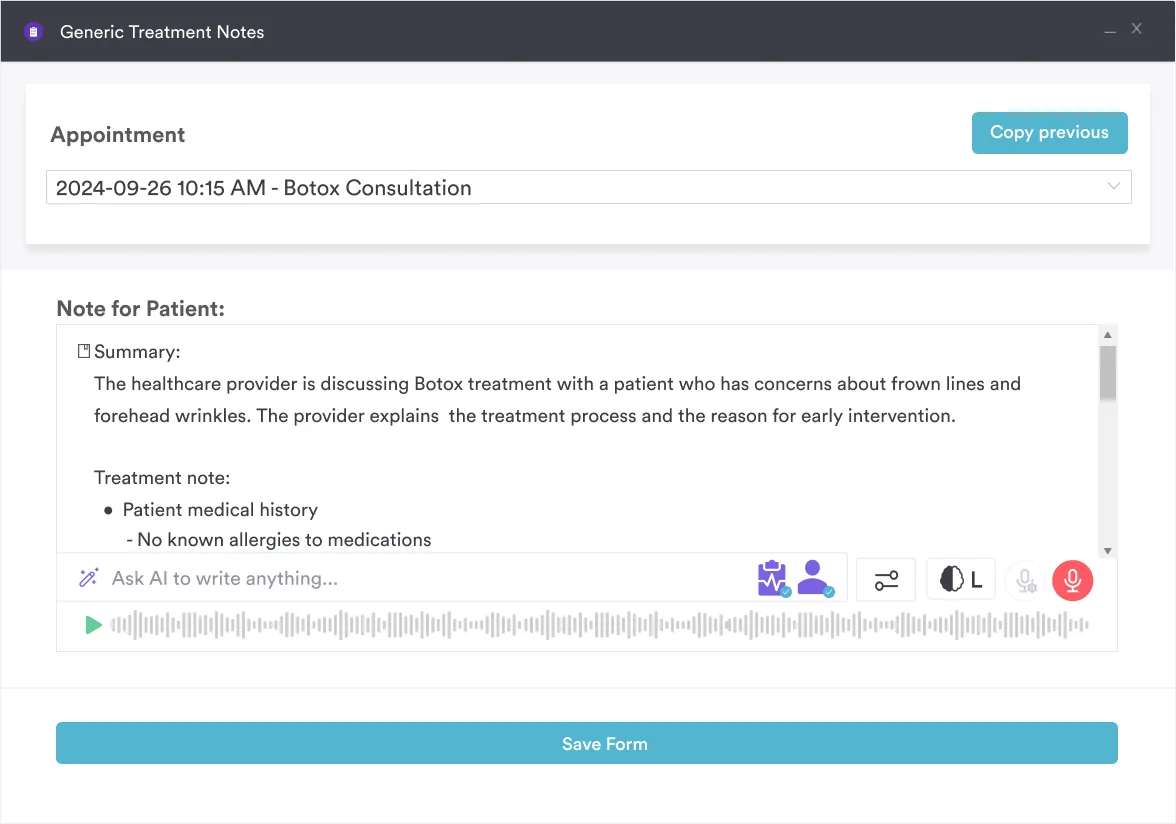
If you are new to digital tooling, start with what practice management software does before digitizing forms like this.

Digital forms, automated parent communication, and structured clinical documentation in one platform.

Board Certified Behavior Analysts (BCBAs) and ADHD practices use this form as their standard intake tool when accepting a child for Applied Behavior Analysis services. It’s equally valuable for Registered Behavior Technicians (RBTs), ABA agencies, school-based ABA programs.
Parents and guardians benefit from the form’s structure too. It signals that the provider takes a systematic, evidence-based approach to assessment. Filling it out prompts caregivers to reflect on their child’s developmental timeline and specific behavioral concerns, which often surfaces insights that guide the first clinical conversation.
Multi-disciplinary teams (speech-language pathologists.
Systematic clinical assessment: A structured intake form ensures no critical information is missed. Every relevant behavioral, medical, and family detail is documented in a consistent format, creating a reliable clinical record for treatment planning and progress monitoring.
Informed consent and legal protection: A signed intake form documents that parents understood the nature of ABA services, potential behavioral side effects, and the behavioral supervision plan before services began. This reduces regulatory and liability risk for the ABA provider.
Insurance pre-authorization and billing accuracy: Completed intake forms provide payers (health plans, state Medicaid programs) with the clinical justification and diagnostic detail needed to approve ABA coverage. Accurate intake documentation improves patient compliance with insurance requirements and accelerates authorization timelines.
Faster treatment plan development: When practices transition to paperless intake workflows, form data is immediately accessible in searchable, structured format. Clinicians spend less time hunting for information and more time designing behavioral intervention.
Flag the top 3 behavioral concerns in the intake form during the intake appointment itself. Ask the parent to prioritize: ‘Which one of these three behaviors, if we reduced it, would have the biggest positive impact on your family’s daily life?’ This priority ranking directly informs which behaviors the BCBA targets first in the treatment plan.
ABA intake forms contain sensitive information: the child’s diagnosis, behavioral descriptions, family contact details, and medical history. All of this is classified as Protected Health Information (PHI) under HIPAA regulations.
When using digital forms, make sure your platform meets three compliance standards:
Many practices pair their digital intake process with a written HIPAA privacy policy so families know exactly how their information is handled.
HIPAA compliance for medical offices includes audit logs showing who accessed the form and when. Request this documentation from any form platform — it proves your compliance during a HIPAA audit. Paper forms stored in locked cabinets also comply, but they create scanning and retrieval delays.
Many health plans and state Medicaid programs require prior authorization before covering ABA services. The intake form is often the primary clinical document insurers review to determine eligibility and medical necessity.
Insurers focus on a few key sections:
Common codes referenced during preauthorization include:
Include a section in your ABA intake packet asking parents to bring insurance cards, the most recent diagnostic report, and any prior authorization letters from other therapy providers.
A well-built ABA intake form is the clinical foundation for effective therapy. It makes sure every developmental, medical, behavioral, and family detail is documented before treatment begins, which protects both the child’s care and the provider’s regulatory compliance.
Moving your ABA intake process online with Pabau’s digital forms and client portal keeps that assessment data secure, searchable, and audit-ready, so you spend less time on paperwork and more time with the children in your care.

Teaching clients to communicate assertively? assertive communication techniques handout This free handout covers four communication styles and seven assertive techniques with role-play scenarios.
Screening for risky alcohol use? AUDIT alcohol screening test This free test covers consumption patterns, dependence symptoms, and risk-zone scoring guidance.
Need a fast alcohol screening tool? AUDIT-C questionnaire This free questionnaire screens drinking frequency and binge patterns with built-in scoring guidance.
Looking for more behavioral health documentation templates? Our CBT worksheet template gives older clients a structured format for cognitive behavioral techniques.
Tracking anxiety alongside autism spectrum concerns? Our anxiety nursing diagnosis template covers the care plan essentials for co-occurring anxiety.
An ABA child intake form collects: child demographics (name, DOB, contact); developmental milestones and history; current medical diagnoses and medications; behavioral concerns with frequency/severity; family structure and contact information; current therapies and services; and parent/guardian consent for ABA treatment, record release, and clinical photography.
The child’s parent or legal guardian completes the intake form, usually 3-5 days before the first appointment. The BCBA or clinical coordinator reviews the completed form during the intake appointment to clarify details and answer questions about the assessment process.
An intake form itself is not “HIPAA compliant” — but the system storing it must be. Completed intake forms contain Protected Health Information (PHI) and must be stored in encrypted, access-controlled systems with audit logging. Digital form platforms should have business associate agreements (BAAs) confirming HIPAA compliance.
Yes. Digital forms delivered via a secure client portal allow parents to complete and e-sign the intake form from home. This reduces paper handling, ensures data accuracy, and speeds up the practice’s intake workflow. Verify your digital form platform is HIPAA-compliant before using it.
Extract the 3-5 priority behavioral concerns identified by the parent, cross-reference them with the BCBA’s direct observation during the intake session, and use functional behavior assessment (FBA) data to understand why the behaviors occur. The intake form provides the context; the FBA provides the function. Together, they guide which behaviors to target first and what replacement skills to teach.
An ABA intake packet usually bundles several documents: the intake and demographic form, a developmental and medical history, a behavioral concerns questionnaire, insurance and consent forms, and release-of-information authorizations. Together they give the behavior analyst everything needed to plan the first sessions.
Not quite. The intake form is the paperwork parents complete beforehand, capturing history and consent. The ABA intake assessment is what the behavior analyst does next: direct observation and a functional behavior assessment (FBA) that interprets the information and identifies why the behaviors occur.