HCPCS code T2043: Hospice continuous home care billing guide
HCPCS code T2043 pays for hospice crisis care by the hour HCPCS code T2043 is th...

Last Updated: Oct 7, 2026
T2030 is the HCPCS Level II code for assisted living, waiver; per month. One unit covers a full month of assisted living services for a resident enrolled in a Medicaid home and community-based services (HCBS) waiver. Medicare does not pay it.
The detail that matters most is the unit. States that price assisted living by the day use T2031 instead, and room and board never belong on either code. Get the unit wrong and a whole month of revenue per resident can stall. Below, you'll find what the rate includes, how the claim moves, and a checklist to run before you submit.
Let Pabau's smart automation suggest the right codes, reduce claim denials, and keep your practice compliant—effortlessly.
Automate repetitive tasks and focus on what matters most—your patients.
Reduce coding errors and ensure compliance with the latest regulations.
Clean claims, fewer denials, and faster reimbursements.
Powerful insights and reporting to help your practice thrive.
HIPAA compliant SOC 2 certified GDPR-compliant Trusted by 4,000+ clinics worldwide

HCPCS code T2030 bills assisted living services under a Medicaid waiver at one unit per month, and Medicare never pays it.
States that price assisted living by the day use T2031, the per diem code, so confirm your waiver’s rate method before the first claim.
Waiver payments cover services only, so room and board must stay off the T2030 claim.
Common denials trace back to a lapsed authorization, a partial month billed as a full one, or eligibility that ended mid-month.
Billing software such as Pabau pre-fills each claim from the resident record and holds it until required fields, such as the authorization number, are complete.
HCPCS code T2030 is the Level II code for assisted living, waiver; per month. It reports one month of assisted living services for a person enrolled in a Medicaid home and community-based services (HCBS) waiver.
T2030 sits in the T-series, which the Centers for Medicare and Medicaid Services (CMS) maintains for state Medicaid agencies. That is why Medicare does not recognize it.
Each state decides whether its waiver covers assisted living at all, who qualifies, and what the monthly rate is. The code only tells the payer which service was delivered, and over what period. So if you bill in several states, read each state’s waiver and billing manual on its own.
T2030 covers the bundle of support a waiver participant receives while living in an assisted living residence. The state writes the exact service definition into its approved waiver. Treat the list below as typical, then check it against your own state’s wording.
Services states commonly bundle into the monthly rate:
What stays off a T2030 claim:
The room and board split matters most. Residents usually pay for housing and food from their own income. Medicaid pays only the services portion under T2030. A monthly charge that blends the two invites a denial, or a recoupment months later.
T2030 and T2031 describe the same service at different units. T2030 pays one unit per month, and T2031 pays one unit per day. The state chooses the unit when it sets the waiver’s rate method. That means you don’t pick between them claim by claim.
Partial months are where the two codes collide. A resident who moves in on the 18th, or spends a week in the hospital, did not receive a full month of service. Your state’s billing manual says whether to prorate the monthly unit, switch to per diem billing, or hold the claim.
Before the first claim, open your state’s approved waiver and read the rate section, which is Appendix I-2 in a 1915(c) application. It states whether assisted living is priced by the month or by the day.
Several neighboring HCPCS T-codes describe other waiver services. Their descriptors read alike in a code list. Always pick the code from the full CMS descriptor, not the short label.
The supported employment codes are a common mix-up. Job coaching for a resident goes on its own claim line, under T2018 or T2019. It never rides inside the assisted living month.
A T2030 claim line for one service month normally carries one unit. Two units for a single month will fail the payer’s edits. So will overlapping dates across two lines.
There is no national rate for T2030. Each state sets the monthly amount through its waiver rate method. Medicaid managed care plans may pay a different contracted rate. Read the figure from your state Medicaid fee schedule or your plan contract. Then recheck it whenever the state publishes a rate update.
State policy, not national rules, decides which modifiers go on T2030. The table lists HCPCS modifiers that states often require on waiver claims, with their official meanings.
The meaning of a U-modifier changes from state to state. U1 in one billing manual can mean a different tier, or a different waiver, in the next. Confirm every modifier with your state Medicaid agency or managed care plan before you append it.
Assisted living under a waiver has to be authorized before it is paid. The approval usually runs through a case manager or the managed care plan, not the residence. If your team is new to this, a primer on how medical billing works shows where the authorization sits in the claim.
What the payer typically needs on file before the first month:
Authorizations often run for a set period, then need renewal. Track the end date for each resident. A month billed after the authorization lapses is denied as unauthorized. Retroactive approval is rarely available.
Auditors check that the month billed matches the month delivered. Keep these six records for each T2030 claim.
Store them inside a medical billing compliance process with locked, timestamped entries. A residency log edited after the fact is hard to defend in an audit.
Monthly billing concentrates risk. One denied line holds up a full month of revenue for that resident. These are the mistakes that cause it most often, and a denial management workflow catches them early.
Many residences still assemble a T2030 claim by hand each month. Staff copy the authorization number, check the resident’s dates and re-key the code into a billing portal. One missed field sends a full month back as a rejection.
Pabau pre-fills the claim from the resident’s record instead. The code comes from its built-in HCPCS lookup library, so nobody re-types it. Pabau’s error-checking claims software also keeps the Send button locked until required fields, such as the authorization number, are complete.
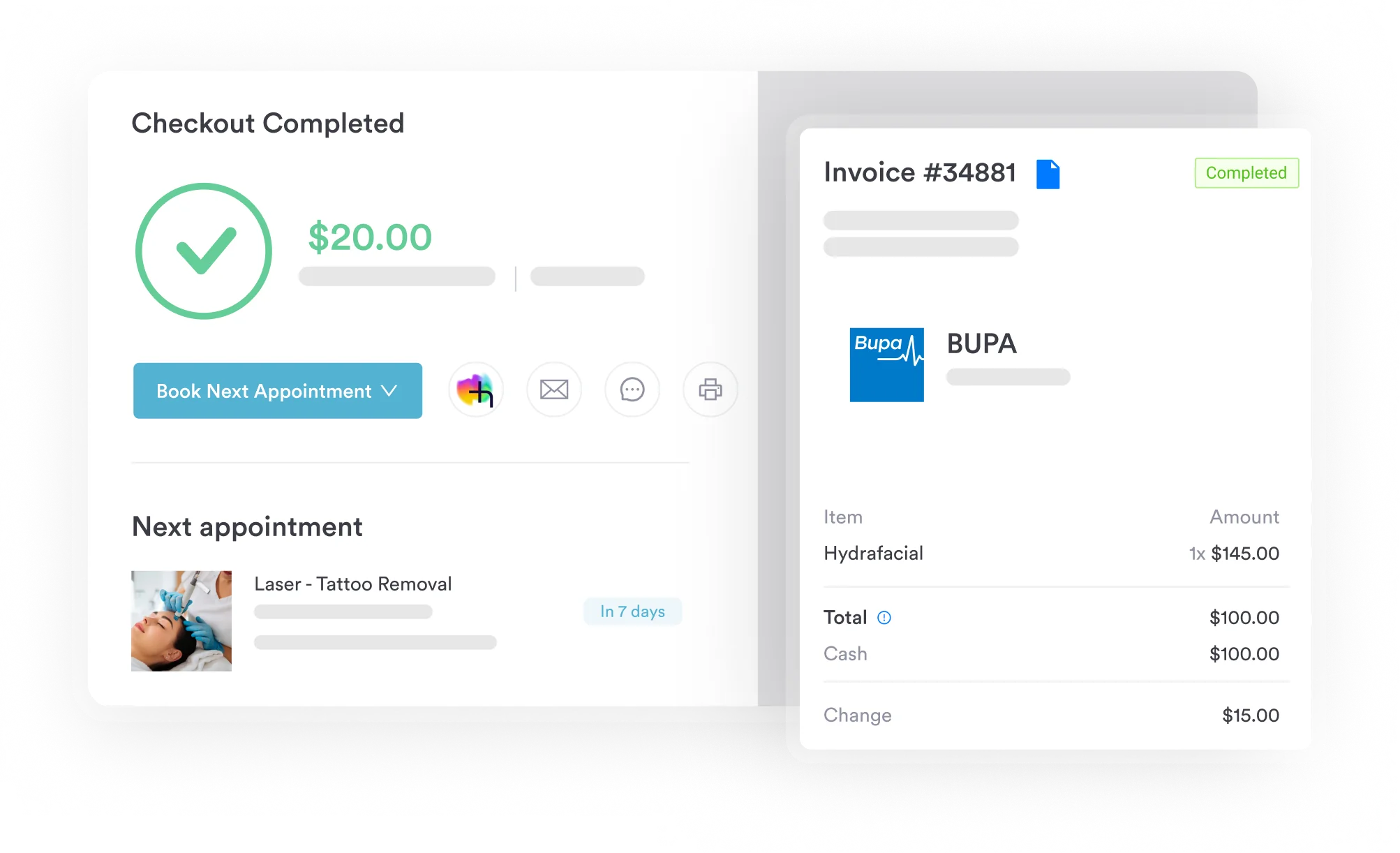
In the US, claims go out through Pabau’s Claim.MD connection. It adds eligibility checks, claim status tracking and remittance posting. A quick eligibility check before each monthly claim catches a mid-month lapse before it becomes a denial. Your team then sends a clean claim the first time.

Pabau pre-fills T2030 claims from the resident record and holds them until the authorization code and other required fields are in place. Fewer months come back rejected.

Start with the unit your state pays. It decides whether T2030 or T2031 is the right code before any other rule applies. Then build each month around three records, namely the authorization, the residency dates and the room and board split.
A check of eligibility and authorization before each claim heads off the denials that cost the most. It takes a few minutes per resident, which is far less than reworking a rejected month. Book a demo to see how Pabau keeps assisted living waiver claims complete before they reach Medicaid.

Billing assisted living by the day? HCPCS code T2031 covers the per diem version of the assisted living waiver service.
Need guidance on managing claim rejections systematically? Denial management in healthcare covers how to build a structured workflow for tracking, appealing, and preventing common denials.
Want to understand what makes a claim pay first time? Clean claim submission outlines the elements every claim must have before it reaches adjudication.
Looking for an overview of Medicaid billing fundamentals? What is medical billing explains how claims move from service delivery through to payment posting.
Got a denial code back on a waiver claim? Denial codes in medical billing explains what each common code means and how to respond.
Yes. T2030 has been in the HCPCS code set since October 1, 2003, and it remains active on the 2026 file. Only Medicaid programs pay it.
Your state’s billing manual decides. POS 13 is the CMS code for an assisted living facility. Some states ask for a different code, or none, on waiver claims.
Usually, but not always. HIPAA requires an NPI from covered health care providers. Some states enroll assisted living residences as atypical providers, which bill with a state-issued Medicaid ID instead.
Federal Medicaid rules cap the filing window at 12 months from the date of service. Many states and managed care plans set shorter limits, so track your payer’s deadline.
Only if your state’s waiver includes it. Some waivers fold memory care units into assisted living services. Others cover them under a separate service with its own code and rate.
Most professional claim formats require at least one ICD-10-CM code. Use the diagnosis that supports the resident’s level-of-care assessment, and follow any state rule on accepted codes.