

HCPCS code E0198: Water pressure pad billing guide
HCPCS code E0198 is a water pad for a standard mattress HCPCS code E0198 is the ...

Last Updated: Oct 13, 2026
T2016 is the HCPCS Level II code for habilitation, residential, waiver; per diem.
Billing it is simple in principle. One day of service equals one unit. The work sits around the code instead. You have to look up a state-set rate, watch authorization dates that expire quietly, and produce a daily note for every unit you bill.
Let Pabau's smart automation suggest the right codes, reduce claim denials, and keep your practice compliant—effortlessly.
Automate repetitive tasks and focus on what matters most—your patients.
Reduce coding errors and ensure compliance with the latest regulations.
Clean claims, fewer denials, and faster reimbursements.
Powerful insights and reporting to help your practice thrive.
HIPAA compliant SOC 2 certified GDPR-compliant Trusted by 4,000+ clinics worldwide

HCPCS code T2016 covers habilitation in a residential waiver setting, billed as one per diem unit for each day of service.
CMS sets no national rate for T2016, so every figure comes from your state Medicaid agency or your managed care contract.
Missing prior authorization and a lapsed individual support plan cause most T2016 denials, and both are avoidable at intake.
T2016 is residential habilitation and T2020 is day habilitation per diem, so mixing the two triggers setting-type claim edits.
Practice management software like Pabau keeps client records, digital forms, and daily notes together, so documentation is ready when an auditor asks.
Habilitation helps someone build, keep, and improve the functional skills daily life asks for. Rehabilitation works the other way. It restores a skill the person already had and then lost.
T2016 applies to residential habilitation. The individual lives in a provider-operated or provider-supervised home and receives structured daily support tied to their individual support plan (ISP).
Most people billed under this code have intellectual and developmental disabilities (I/DD), though some states extend it to other populations.
Services billed under the code usually include:
Those skill-building goals rarely come from residential staff alone. Therapists set the daily living targets, and support workers carry them out shift by shift.
Agencies that also run occupational therapy programs often keep both sets of notes against the same client record. The ISP is then far easier to keep current.
Use the table below as a quick reference before you submit. Every field maps to something your clearinghouse or state Medicaid portal will check.
Counting units is where the per diem rule bites. Picture a 30-day month for one individual in a group home. If they spend three days admitted to a hospital, you bill 27 units rather than 30. Those three inpatient days sit with a different payer, and claiming them anyway invites a takeback later.
Each state’s waiver program decides provider eligibility, not CMS. Eligible provider types generally include:
Three things have to be in place before the first claim goes out. The agency needs active enrollment in the state’s waiver program. It needs current certification or licensure from the state developmental disabilities agency. And every individual billed needs a live ISP or individual plan of care (IPOC).
An ISP usually pulls in more people than the residential team. Behavior clinicians, therapists, and case managers all write toward the same plan. Providers that run psychology services in-house tend to file those notes against the same record. It saves a scramble when the plan comes up for review.
Read your state’s HCBS waiver provider manual before billing T2016. The manual sets the exact unit definition, the maximum units per day, and whether your setting type qualifies. Billing T2016 in a setting the waiver does not recognize as residential habilitation is one of the top denial drivers.
CMS publishes no national rate for T2016. These T-codes are Medicaid waiver codes rather than Medicare procedure codes, so they sit outside the Medicare Physician Fee Schedule.
Rates come from state Medicaid agencies, published in state fee schedules or written into managed care organization (MCO) contracts.
Per diem rates for residential habilitation vary widely. The main things that move the number:
To find your current rate, go to your state Medicaid agency or your state’s HCBS waiver fee schedule. For a searchable view of the T-code range and its neighbors, the AAPC HCPCS lookup is a quick sanity check on descriptors. It will not give you a payable rate, and no national listing will.
Incomplete records are the most controllable source of T2016 denials. Each claim needs a complete, current chain of documents standing behind it before submission.
Daily notes are where most agencies lose ground. Handwritten notes get transcribed twice and then filed somewhere nobody can find at audit.
Moving to digital intake forms removes the retyping step, and a standard format for clinical progress notes keeps every shift writing the same fields.
Retention rules matter as much as content. Waiver records hold protected health information, so storage, access controls, and retention periods all fall under HIPAA compliance alongside your state’s own record-keeping requirements.
Modifiers for T2016 are state-specific. Not every state accepts the ones below, and some require their own. Check them against your provider manual before you bill.
Picking the wrong code from the habilitation range is a common billing error. The table below sets T2016 against its closest neighbors.
The mix-up that costs the most money is T2016 against T2020. Both are per diem, so the claim looks reasonable and still fails the setting-type edit. Three quick tests sort it out.
Two neighbors sit just outside the habilitation group. Personal care delivered on its own, without a habilitation plan behind it, usually belongs on T1020. When a state funds a waiver service that has no dedicated code, it often falls back on falls back on T2025.
Assisted living is its own setting type. A waiver-funded day in an assisted living facility is not residential habilitation, so that day belongs on T2031 per diem.
T2016 denials cluster around a short, predictable list. Fix them systematically and the rework drops across your whole billing cycle.
A monthly denial review turns this list into a habit rather than a firefight. Pull the previous month’s rejections, sort them by reason, and fix the top two at source. A shared medical coding cheat sheet keeps new billers from repeating the same three mistakes.
Most denials are caught in the two minutes before a claim leaves the building. Work down this list for each individual and each billing period.
Seven checks sounds like a lot. In practice a biller runs them in a couple of minutes per individual, and a clean first pass beats a resubmission every time.
Authorization rules for T2016 vary by state and, in managed care states, by MCO. No federal rule requires it. Even so, most HCBS waiver programs do ask for authorization before residential habilitation can be billed.
The process usually runs in four steps:
Deliver services without a valid authorization in a state that requires one and the claims will deny. Retrospective approval is rarely granted, so the agency absorbs the cost of those days.
Standardizing the request itself helps, and a reusable prior authorization form makes sure nobody submits a packet missing a field.
The bigger fix is moving authorization tracking out of billing and into intake. Dates then get logged when the individual is admitted, not when a claim bounces. Automated workflows can fire the renewal reminder for you, well before the end date arrives.
Two examples make the point better than a general warning does.
Hawaii (DDD). The Department of Health Developmental Disabilities Division lists T2016 as an active code in its service rate schedule. Its published service codes document sets per diem rates for residential habilitation, which differ by staffing intensity and residential model. Providers must be DDD-enrolled and working under an approved service agreement. Billing compliance programs work when someone reviews a sample regularly, rather than after a payer letter arrives.
Indiana (IHCP). Indiana Medicaid references T2016 in provider bulletins covering developmental disability waiver services. Rates are updated in the IHCP provider manual and fee schedule, both reachable through the Indiana Medicaid provider portal. Indiana’s billing rules and accepted modifiers differ from Hawaii’s in several places.
Both examples land in the same place. Never bill from a rate you found on a national averages site. Pull the current figure from your state Medicaid fee schedule or your MCO contract. For code status alone, the CMS HCPCS quarterly update is the file to watch, because rate data always lives with the states.
Run a mock documentation audit every quarter. Pull 10 random T2016 billing days from the previous quarter. For each one, check that a dated service note exists, that the ISP was active on that date, and that the authorization covered it. Weak spots show up here instead of in a state audit letter.
Most residential agencies track this in pieces. ISP review dates sit in a spreadsheet, service notes live in a binder at each home, and authorization end dates live in someone’s head. Nothing talks to anything else, so audit season turns into a scavenger hunt.
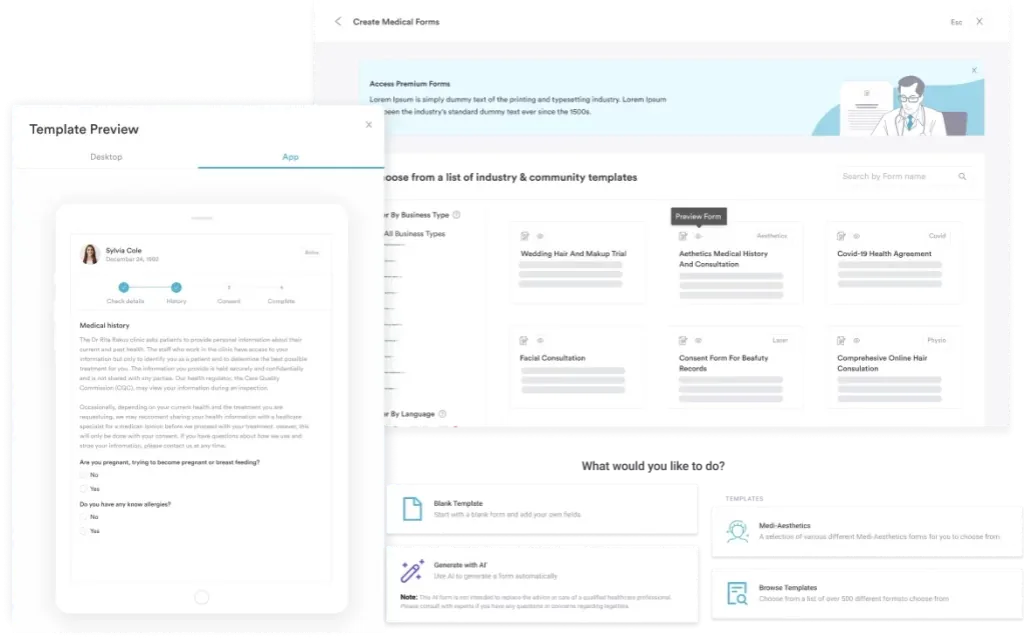
Practice management software like Pabau pulls those pieces into one client record. Signed forms, daily notes, plan documents, and message history all attach to the individual rather than to a filing cabinet. Staff can write the note on a tablet at the end of a shift, and it lands in the record straight away.
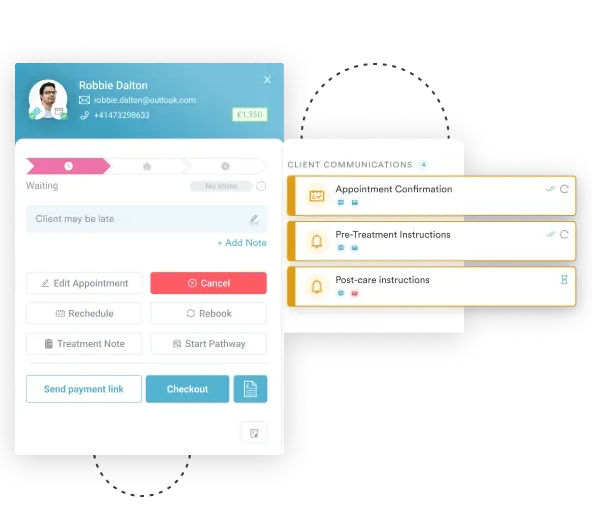
The dates are the other half of the job. You can set automated reminders ahead of a plan review or an authorization end date, so renewals begin before the deadline rather than after it. Built-in reports then show what is falling due this month, so nothing rests on one person remembering.
Claim submission itself still runs through your state portal or clearinghouse. What Pabau covers is everything those claims lean on, held in one place and ready to produce on request.

Pabau brings client records, digital forms, and daily notes into a single system. Automated reminders flag plan reviews and authorization renewals before they lapse.

T2016 rewards agencies that are boring about process. One unit per day, one signed note per unit, one live authorization behind every date of service. Get that rhythm right and the code pays without much drama.
The part worth planning for is state variation. Your rate, your modifiers, and your authorization rules all come from your state’s waiver manual, and they change on their own schedule. Read it once a year, then check again whenever a rate letter arrives.
Documentation is the piece you control outright. Agencies that keep notes, plans, and renewal dates in one system spend far less time rebuilding records for an auditor. Book a demo to see how Pabau keeps that paperwork together for your team.

Adding supported employment to a residential caseload? H2024 sets out how job coaching days are billed and documented.
Supporting people in their own tenancies? H0044 covers supported housing and the monthly unit that goes with it.
Coding anesthesia for major abdominal vessels? CPT code 00770 covers anesthesia for procedures on the abdominal aorta, iliac arteries, and inferior vena cava.
Billing anesthesia for upper abdomen surgery? CPT code 00790 covers intraperitoneal upper abdomen procedures, including laparoscopy, when no more specific anesthesia code applies.
Need the billing reference for CPT 00792? CPT Code 00792 explains the modifiers and ICD-10 pairings that keep upper abdominal anesthesia claims from denial.
No. T2016 pays for habilitation support, not rent, utilities, or food. Section 1915(c) waivers generally cannot fund room and board, so those costs are met from the individual’s own income or another state program. Your waiver manual sets out the split.
No. A per diem code carries one unit per individual per calendar day, however many hours of support were delivered. If your state needs a finer measure, it will point you to the 15-minute residential code instead.
Often yes, because they are separate services with separate providers. Some states restrict same-day billing or require a modifier, so check the waiver manual before you assume it pays. Keep the case management note distinct from the residential service note.
Split the month by dates of service. Each agency bills only the days it delivered support. The transfer date normally goes to one provider rather than both, and your state manual names which. Overlapping claims on that date are a common takeback.
Often, yes. In managed care states the MCO sets the rate and runs the authorization process. It may define its own modifiers too, all through the contract rather than the state fee schedule. Read the contract first, then the waiver manual.



