HCPCS Code T5999: Billing, Medicaid coverage, and documentation guide
HCPCS Code T5999 is the Level II code for a supply, not otherwise specified, bil...

Last Updated: Nov 24, 2026
P2038 is the HCPCS Level II code for mucoprotein, blood (seromucoid) (medical necessity procedure). It bills a serum seromucoid assay, a decades-old test that measures a group of blood glycoproteins.
The last words of that descriptor carry the fact that matters most. Medicare lists the seromucoid assay as obsolete, so it pays only when the physician justifies the medical need. The 2026 national rate is just $4.95. One denied claim can cost more to rework than the test will ever pay. Getting it right comes down to the order, the diagnosis and the documentation behind them.
Let Pabau's smart automation suggest the right codes, reduce claim denials, and keep your practice compliant—effortlessly.
Automate repetitive tasks and focus on what matters most—your patients.
Reduce coding errors and ensure compliance with the latest regulations.
Clean claims, fewer denials, and faster reimbursements.
Powerful insights and reporting to help your practice thrive.
HIPAA compliant SOC 2 certified GDPR-compliant Trusted by 4,000+ clinics worldwide

HCPCS code P2038 reports a blood mucoprotein (seromucoid) assay, a serum glycoprotein test with no link to cell counts or differentials.
Medicare’s NCD 300.1 lists the serum seromucoid assay as obsolete, so it pays only when the physician justifies the medical need.
P2038 is priced on the Clinical Laboratory Fee Schedule, at a national rate of $4.95 for 2026.
The diagnosis on the claim must explain why the physician ordered this test, not just record the result.
When a medical necessity denial looks likely, a signed ABN before the draw lets the lab bill the patient.
HCPCS code P2038 covers one test: a blood mucoprotein assay, also called serum seromucoid. Medicare’s Obsolete or Unreliable Diagnostic Tests policy (NCD 300.1) names the “serum seromucoid assay for cancer and other diseases” as obsolete. A listed test may be paid only if the physician satisfactorily justifies the medical need.
That is why the descriptor ends with “(medical necessity procedure)”. Billers should treat those words as a warning that every claim needs a documented reason. The core reference facts below come from the CMS HCPCS and fee schedule files.
Seromucoid is the group of serum glycoproteins that stays dissolved when other proteins are precipitated with perchloric acid. Most of it is alpha-1 acid glycoprotein, also called orosomucoid. That protein is an acute-phase reactant, so levels tend to rise with inflammation, tissue injury and some cancers.
Laboratories moved away from the method decades ago. Published evaluations found a direct alpha-1 acid glycoprotein immunoassay more precise and less prone to interference. Today, a physician who wants an inflammation marker usually orders C-reactive protein or an erythrocyte sedimentation rate instead.
For billers, the takeaway is practical. A P2038 order is rare, so confirm it really is a seromucoid request before you code it.
Most coding errors here start with a requisition that names a different test. Use the order wording to pick the code.
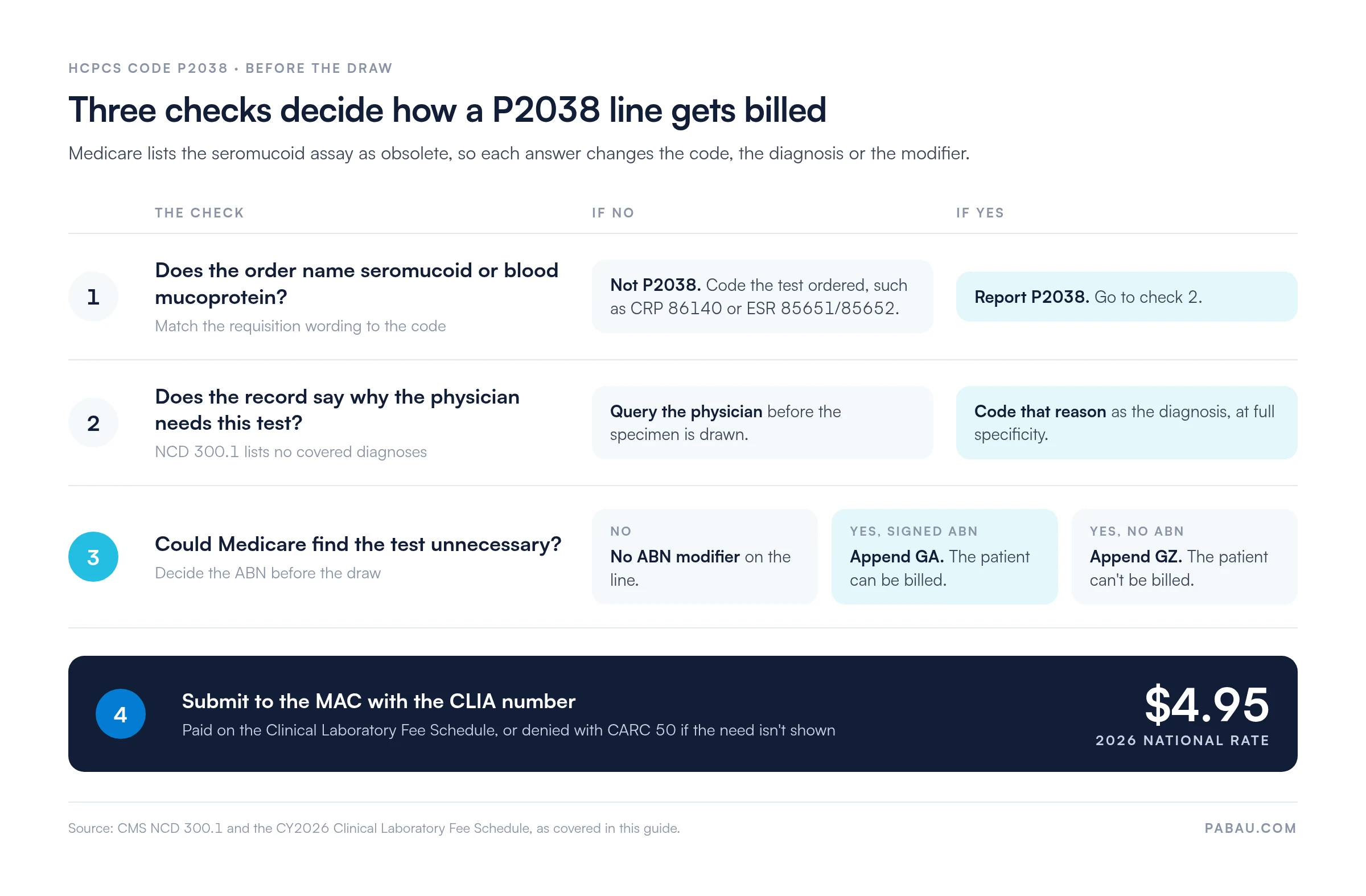
Three checks before the draw decide the code, the diagnosis and the modifier. The chart maps them, and the steps after it follow a clean claim to payment.
Coverage code D on the HCPCS file means special coverage instructions apply. For P2038, those instructions are NCD 300.1. Where the claim isn’t under QIO review, your MAC decides whether the physician’s justification is enough.
Payment sits on the Clinical Laboratory Fee Schedule. The CY2026 file lists P2038 at a national rate of $4.95, the same as the other P2028-P2038 codes. CLFS rates update each January, so check the current file before you set your charge.
An ABN protects the lab when a denial looks likely. Append GA when a signed ABN is on file. Append GZ when you expect a denial but have no ABN, and note that the patient then can’t be billed.
NCD 300.1 lists no covered ICD-10 codes for P2038. The claim stands on the physician’s stated reason, so check your MAC for any local guidance. These are the three situations you’ll meet.
Code to the highest specificity the record supports. A vague symptom code gives the MAC little reason to accept an obsolete test.
P2038 shares its range with four other dated laboratory codes. All five carry the same 2026 CLFS rate.
Low-value claims like P2038 are the ones teams stop chasing. At $4.95, a denial often gets written off rather than worked.
Pabau, a practice management platform with built-in insurance billing, fills the claim form from the patient record. The service code and the diagnoses on the patient’s problem list carry over. Full ICD-10-CM and HCPCS lookup libraries sit inside the claim screen.
Before a claim can be sent, Pabau checks that its required fields are complete. US claims then go out electronically through Claim.MD, the clearinghouse Pabau connects to.
Claim.MD returns ERA remittances and claim status to Pabau. Payments are matched to each claim line, so an unpaid P2038 line stays visible. See how it works in Pabau’s end-to-end claims management.
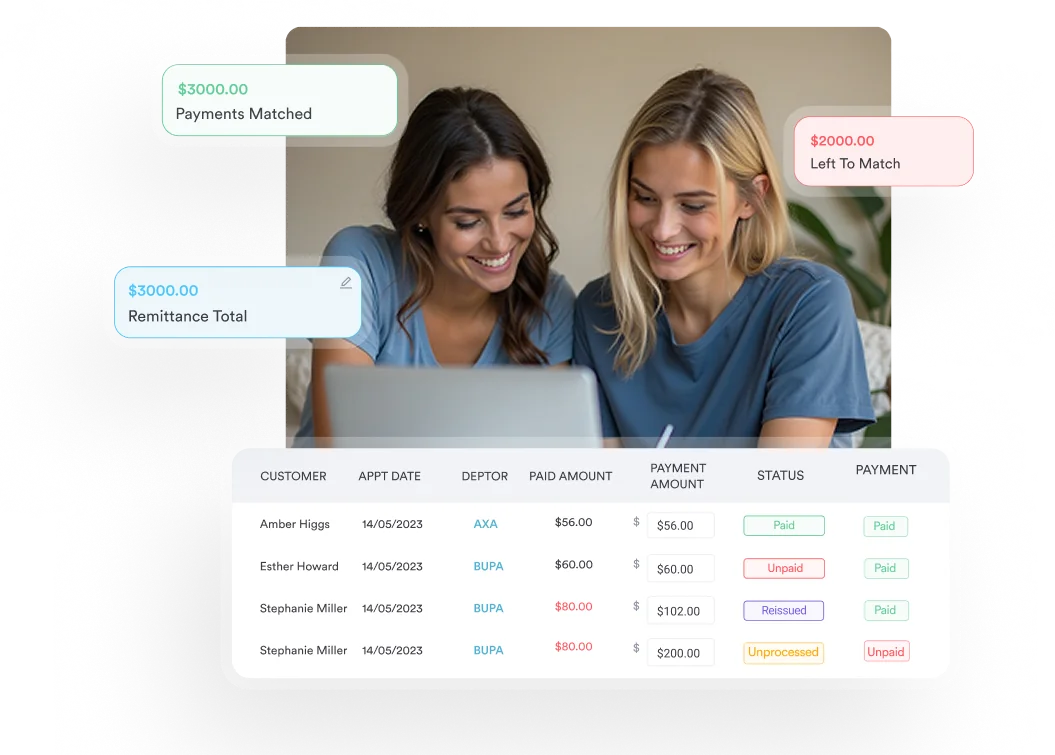

Pabau fills claims from the patient record and checks required fields before they go out. In the US, ERA payments are matched to each claim line, so short-paid lab tests stay visible.

P2038 is a claim where the paperwork matters more than the money. The test is rare, the rate is small, and Medicare starts from the view that the test is obsolete.
So make the call early. If the physician can’t say why seromucoid beats a modern marker, ask before the draw rather than after the denial. If they can, put that reason in the record, issue an ABN when in doubt and code the diagnosis it describes.
Teams that give small lab lines the same care as large ones stop losing them to write-offs. Book a demo to see how Pabau builds claims from the patient record and checks them before they go out.

Billing another legacy blood test? HCPCS code P2033 covers thymol turbidity, another P-range test Medicare lists as obsolete.
Seeing repeat CO-50 or CO-16 denials? Denial management in healthcare shows how to trace denials to their root cause and fix the workflow.
New to how lab claims get paid? Medical billing fundamentals explains how a code moves from charge entry to payment posting.
Want the wider revenue picture? Revenue cycle management breaks down each billing stage and where small claims tend to leak.
Yes. P2038 is active and appears on the CY2026 Clinical Laboratory Fee Schedule, effective January 1, 2026. Its action code shows no maintenance change, so the descriptor has stayed the same for years.
Not quite. Orosomucoid, or alpha-1 acid glycoprotein, makes up most of the seromucoid fraction. Seromucoid also holds other glycoproteins, so a direct orosomucoid immunoassay is a different, more specific test.
Coverage varies by plan. Commercial payers set their own lab policies, and state Medicaid programs publish their own fee schedules. Check the payer’s policy or fee schedule before the specimen is drawn.
It means the code is priced on the Clinical Laboratory Fee Schedule and subject to a national limitation amount. Medicare pays the lower of your charge or that amount.