HCPCS code E0198: Water pressure pad billing guide
HCPCS code E0198 is a water pad for a standard mattress HCPCS code E0198 is the ...

Last Updated: Oct 13, 2026
L0625 is the HCPCS Level II code for lumbar orthosis, flexible, provides lumbar support, posterior extends from l-1 to below l-5 vertebra, produces intracavitary pressure to reduce load on the intervertebral discs, includes straps, closures, may include pendulous abdomen design, shoulder straps, stays, prefabricated, off-the-shelf.
Let Pabau's smart automation suggest the right codes, reduce claim denials, and keep your practice compliant—effortlessly.
Automate repetitive tasks and focus on what matters most—your patients.
Reduce coding errors and ensure compliance with the latest regulations.
Clean claims, fewer denials, and faster reimbursements.
Powerful insights and reporting to help your practice thrive.
HIPAA compliant SOC 2 certified GDPR-compliant Trusted by 4,000+ clinics worldwide

HCPCS code L0625 describes a lumbar orthosis (LO) that is flexible, prefabricated, and off-the-shelf, covering spinal levels L1 through below L5.
Medicare Part B may cover L0625 as a DMEPOS benefit when the beneficiary meets clinical criteria documented under CMS Policy Article A52500.
Modifier KX is required on Medicare claims to attest the patient meets coverage criteria; missing this modifier is the most common denial trigger.
Pabau’s claims management software helps orthotic suppliers and practices track L0625 documentation requirements, modifier usage, and payer-specific billing rules in one place.
The official descriptor for HCPCS code L0625 is: Lumbar orthosis, flexible, provides lumbar support, posterior extends from L-1 to below L-5 vertebra, produces intracavitary pressure to reduce load on the intervertebral discs, includes straps, closures, may include pendulous abdomen design, shoulder straps, stays, prefabricated, off-the-shelf. It is a Level II HCPCS code maintained by the Centers for Medicare and Medicaid Services (CMS), which governs the HCPCS Level II code set.
Prefabricated means the device is not individually fabricated for the patient. Off-the-shelf (OTS) means it requires no significant modification and can be dispensed without professional fitting beyond size selection. The same prefabricated definition applies further up the spine, where HCPCS code L0113 covers a torticollis cranial cervical orthosis.
Practitioners billing this code should verify the device meets the OTS definition. A brace that requires trimming, adding components, or custom fitting shifts the code to a different descriptor and can trigger recoupment if audited.
Medicare reimbursement for HCPCS code L0625 is set through the DMEPOS fee schedule, which CMS updates annually. Rates vary by Medicare Administrative Contractor (MAC) jurisdiction and geographic region. The 2026 figures below reflect general Medicare allowable ranges; always verify the exact rate for your specific jurisdiction through the CMS DMEPOS Fee Schedule or your MAC’s current fee schedule file before submitting claims.
Rates shown above are approximate industry-range estimates for 2026; actual allowable amounts vary by locality modifier and annual CMS adjustments. Rural and urban localities within each jurisdiction carry different fee schedule amounts. Verify current rates through your MAC’s published DMEPOS fee schedule before billing.
Medicare pays 80% of the allowable after the beneficiary meets their Part B deductible. The remaining 20% is the patient’s responsibility unless covered by a supplemental policy. Commercial payer rates for HCPCS code L0625 typically align with or exceed Medicare allowables, though contract terms vary by payer.
Request your MAC’s current DMEPOS fee schedule file at the start of each calendar year. CMS posts updated files in the final quarter of the prior year, and rates can shift between localities even when national figures stay stable. Building a jurisdiction-level rate table into your billing workflow prevents underbilling and claim repricing surprises.
Missing a modifier or filing under the wrong place of service code is the fastest way to generate a denial on HCPCS code L0625. The rules are straightforward once you know them, but they catch suppliers who assume orthotics billing follows the same logic as DME claims for other device categories.
HCPCS code L0625 is billed by enrolled DMEPOS suppliers. Physicians and non-supplier practitioners cannot bill this code directly under Medicare Part B. The supplier must be accredited and hold a valid DMEPOS supplier number. Place of service code 12 (home) is most common, though 11 (office) applies when the device is dispensed at a supplier retail location or a physician’s office that is also an enrolled supplier.
Modifier selection directly affects whether Medicare processes or denies the claim. The table below covers the modifiers most commonly applied to lumbar orthosis billing.
The KX modifier carries legal weight. Appending it to a claim is a supplier attestation that all LCD criteria are met and that supporting documentation exists in the file. Billing KX without adequate documentation creates audit exposure. For practices managing DME compliance workflows, consistent modifier tracking across claim batches is essential.
Whether L0625 is billable to Medicare depends on what the brace is made of, not just how flexible it feels. Per the DME MAC policy article Correct Coding and Coverage – Braces Constructed Primarily of Elastic or Other Fabric Materials, a lumbar support built primarily from inelastic material, such as canvas, cotton, or nylon, that is capable of true immobilization meets Medicare’s statutory brace definition. That device takes the CG modifier and is billable under L0625 when the other coverage criteria are met.
A support built primarily from elastic or stretchable material, such as neoprene, spandex, or Lycra, does not meet that definition, even when it includes stays or panels. Medicare treats it as statutorily non-covered and requires the GY modifier instead. An elastic back brace or neoprene wrap billed under L0625 with a CG modifier will be denied or recouped on audit.

Pabau’s claims management tools help orthotic suppliers and DME practices manage billing rules, documentation requirements, and payer-specific modifier logic in one place. See how it works for your billing team.

CMS Policy Article A52500 sets the documentation standard for lumbar and thoracic-lumbar-sacral orthoses billed to Medicare. Every HCPCS code L0625 claim needs a complete file before the device ships, not after. Retroactive documentation does not satisfy Medicare’s contemporaneous record requirements.
Keeping patient records current and accurate is the foundation of a defensible claim. The checklist below reflects what auditors look for in an L0625 file.
Structuring your medical forms workflow around these requirements at the point of order prevents the frantic documentation scramble that often follows a post-payment audit. Templates that capture all required data fields at intake reduce rework substantially.
No claim for HCPCS code L0625 should leave the billing department without a verified ICD-10 diagnosis code that establishes medical necessity for a lumbar orthosis. Low back pain (historically M54.5) and related spinal conditions are the most frequently paired diagnoses, but the ICD-10-CM 2026 updates have refined the M54 category. Verify against your current LCD and the CDC/NCHS ICD-10-CM web tool before billing.
Note that ICD-10-CM code M54.5 (low back pain) was retired effective FY 2022. Claims submitted with M54.5 on or after October 1, 2021 are technically invalid. The replacement codes M54.50, M54.51, and M54.59 are the correct current options. Cross-reference your billing system’s code library against the current ICD-10-CM tabular list to ensure outdated codes are flagged before submission. The AAPC HCPCS code reference and LCD crosswalk tools can assist in verifying diagnosis code coverage lists per payer.
Using the wrong code in the L0625-L0627 series is a clean-cut upcoding or downcoding scenario. The three codes cover the same prefabricated, off-the-shelf device category but differ entirely on the level of structural support provided. Clinical documentation must justify whichever code is selected.
The key distinction between L0625 and L0626 is structural rigidity. L0625 covers supports built from flexible, inelastic material, such as canvas, cotton, or nylon, that flex with the body while still providing structural support. A device built primarily from elastic or stretchable material does not qualify for L0625 and must carry the GY modifier as statutorily non-covered instead. L0626 requires semi-rigid components such as posterior panel inserts or stays, and L0627 requires a rigid frame providing substantial immobilization. Box-by-box requirements on the professional claim form change by payer, so one filled sample is not a universal template.
If the device has flexible construction but a semi-rigid panel is added post-dispensing, the correct code changes. Document device specifications at the time of dispensing to support the code selected. Practices working with physical therapy, chiropractic, or musculoskeletal patients can reference physical therapy EMR workflows or chiropractic practice software for documentation templates that capture orthosis device characteristics alongside clinical notes.
Medicare Part B may cover HCPCS code L0625 under the DMEPOS benefit when the device is medically necessary and the beneficiary meets the criteria outlined in CMS Policy Article A52500. The policy article governs both lumbar-sacral orthoses (LSO) and thoracic-lumbar-sacral orthoses (TLSO). Coverage is not automatic; it hinges on clinical documentation meeting the standard the MAC requires.
Medicare does not guarantee coverage simply because a physician orders a device. The MAC reviews whether the documentation on file supports the KX modifier attestation, and, where applicable, the CG-versus-GY material distinction. The CMS HCPCS overview and Policy Article A52500 are the authoritative sources for coverage standards applicable to musculoskeletal DME. Maintaining HIPAA-compliant medical records that are complete, timely, and accessible for audit is the baseline for any DME coverage claim.
Post-payment audits on orthotics claims consistently surface the same errors. Most are preventable with checklist-driven workflows and staff training on L-series code rules.
Establishing a pre-submission checklist that flags these error types before claims leave the billing queue catches most denials before they happen.
Orthotics billing involves multiple moving parts: written orders, diagnosis verification, modifier selection, delivery confirmation, and payer-specific rules that differ across MAC jurisdictions. Practices and DME suppliers handling volume claims need systems that flag incomplete records before submission, not after a denial lands.
Pabau’s claims management software gives billing teams a centralized place to track claim status, manage supporting documentation, and flag incomplete records before they become denials. For practices that combine clinical care with device dispensing, Pabau connects patient records directly to billing workflows, reducing the handoff friction that causes documentation to get lost between clinical and administrative teams.
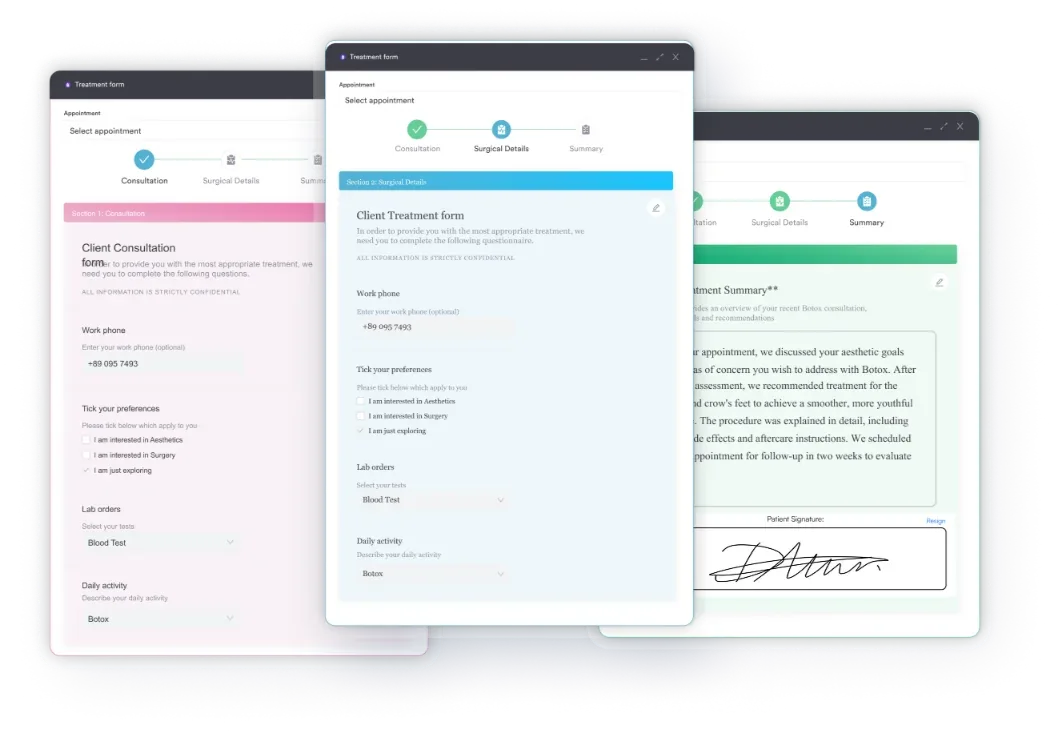
Structured digital intake forms capture the documentation elements required for L0625 claims at the point of order: diagnosis, device details, practitioner credentials, and patient acknowledgement. Forms built around the A52500 documentation checklist reduce the manual review burden at billing time.
For practices already using EHR integration with their billing workflows, connecting clinical notes to claim records closes the disconnect between what the clinician documented and what the billing team sees. Practices benchmarking broader billing efficiency can review features that consistently save practices time in documentation-heavy workflows.
The benefits of going paperless are especially pronounced in DME billing, where audit readiness depends on having complete, retrievable records on demand. Aligning your practice’s workflows with a solid practice management foundation makes L0625 documentation compliance a built-in outcome instead of a reactive scramble.
Build a pre-dispensing documentation checklist specific to L0625 into your order intake process. Confirm: written order is signed and dated, diagnosis code is current and covered, device specifications match the L0625 descriptor, and KX modifier eligibility is confirmed before the device ships. Catching a missing element at order stage costs minutes; catching it post-payment audit costs significantly more.
HCPCS code L0625 is straightforward to bill correctly when the documentation and modifier workflow is locked in. The most preventable denials, missing KX, invalid diagnosis codes, and insufficient clinical records, share one root cause: incomplete documentation that a structured intake process would catch before the claim is submitted.
Pabau’s claims management and digital forms tools help practices that bill orthotics and DME alongside clinical services keep documentation complete and audit-ready. To see how Pabau handles orthotic billing documentation in practice, book a demo with the team.

Billing other DME supply codes alongside orthotics? A4565 walks through the same DMEPOS documentation and modifier logic for medical slings.
Treating ankylosing spondylitis alongside lumbar bracing? M45.7 is a diagnosis code worth pairing with your L0625 documentation.
Need a broader billing reference for your practice? Chiropractic billing cheat sheet rounds up the CPT and ICD-10 codes chiropractors bill most often.
HCPCS code L0625 is used to bill for a lumbar orthosis (LO) that is flexible, prefabricated, and off-the-shelf, covering spinal levels L1 through below L5. It is billed by enrolled DMEPOS suppliers when a patient with a qualifying lumbar diagnosis requires a non-custom flexible back support, and Medicare Part B may cover it when coverage criteria under CMS Policy Article A52500 are met.
The 2026 Medicare allowable for HCPCS code L0625 varies by MAC jurisdiction and geographic locality, with rates generally ranging from approximately $60 to $75 depending on region. Verify the exact current rate for your jurisdiction through your MAC’s published DMEPOS fee schedule or the CMS fee schedule lookup tool, as rates are updated annually and differ by locality modifier.
L0625 covers a flexible lumbar orthosis built from inelastic material such as canvas, cotton, or nylon (elastic or neoprene devices don’t qualify and are billed with the GY modifier instead), L0626 covers a semi-rigid lumbar orthosis (rigid stays or panel inserts), and L0627 covers a rigid lumbar orthosis (hard-frame or full-panel construction providing substantial immobilization). All three are prefabricated and off-the-shelf; the correct code depends entirely on the device’s construction, not clinical preference.
Common ICD-10-CM diagnosis codes that support L0625 billing include M54.50 (low back pain, unspecified), M54.51 (vertebrogenic low back pain), M54.59 (other low back pain), M47.816 (lumbar spondylosis without myelopathy), and M51.16 (lumbar disc disorder with radiculopathy). Note that the formerly common M54.5 was retired effective FY 2022 and is no longer a valid billing code; verify all codes against the current ICD-10-CM tabular list and your MAC’s LCD coverage list.
Yes, modifier KX is required on every Medicare claim for HCPCS code L0625 when the patient meets the coverage criteria specified in the applicable LCD. Submitting L0625 without KX triggers automatic denial. Appending KX is a legal attestation that coverage criteria are met and supporting documentation exists in the file, so billing it without adequate records creates audit risk.
A prefabricated off-the-shelf (OTS) orthosis is a device manufactured in standard sizes and shapes that requires no significant modification to fit the patient beyond size selection. For HCPCS code L0625, the device must be dispensed essentially as manufactured; trimming, adding rigid components, or custom fitting beyond sizing disqualifies it from OTS status and changes the applicable code. The distinction matters because custom-fabricated lumbar orthoses are billed under different HCPCS L-codes with distinct requirements.
Medicare Part B may cover HCPCS code L0625 as a DMEPOS benefit when the patient has a qualifying lumbar diagnosis, the device is ordered by a treating practitioner, the supplier is an enrolled DMEPOS supplier, and documentation meets the standards in CMS Policy Article A52500. Coverage is not guaranteed; it depends on the beneficiary meeting medical necessity criteria and the claim file containing all required documentation elements.