HCPCS Code G0163: Skilled nursing observation and assessment
What is HCPCS Code G0163? HCPCS Code G0163 is a deleted Level II code for skille...

Last Updated: Oct 15, 2026
J9316 is the HCPCS Level II code for injection, pertuzumab, trastuzumab, and hyaluronidase-zzxf, per 10 mg.
Billing this code correctly matters: Phesgo carries one of the highest per-dose acquisition costs in oncology, and errors in unit calculation, modifier use, or place-of-service designation can trigger claim denials or compliance exposure.
Let Pabau's smart automation suggest the right codes, reduce claim denials, and keep your practice compliant—effortlessly.
Automate repetitive tasks and focus on what matters most—your patients.
Reduce coding errors and ensure compliance with the latest regulations.
Clean claims, fewer denials, and faster reimbursements.
Powerful insights and reporting to help your practice thrive.
HIPAA compliant SOC 2 certified GDPR-compliant Trusted by 4,000+ clinics worldwide

HCPCS Code J9316 describes Phesgo (pertuzumab, trastuzumab, hyaluronidase-zzxf), a subcutaneous HER2-targeted therapy distinct from the IV agents it combines.
Medicare reimburses J9316 at ASP+6% in physician office (POS 11) and hospital outpatient (POS 22) settings; rates update quarterly via CMS ASP pricing files.
Modifier JW must accompany any discarded drug units; JZ must be appended when there is zero wastage. Omitting either modifier is a compliance risk flagged by the OIG.
J9316 is always billed with a companion CPT administration code (96401 or 96413/96415); billing the drug code alone is a common denial trigger.
HCPCS Code J9316 has the official long descriptor: Injection, pertuzumab, trastuzumab and hyaluronidase-zzxf, 10 mg/10 mg/200 units. CMS assigned this permanent Level II J-code when Phesgo received FDA approval (BLA 761184) and entered the buy-and-bill market. Understanding medical billing fundamentals helps contextualize why drug-specific J-codes like this one exist: each unit of J9316 represents a fixed ratio of the three active components, not a variable volume.
CMS maintains the HCPCS Level II coding system and publishes quarterly updates. Always verify J9316 code status against the current CMS HCPCS release files before submitting claims, particularly when a Phesgo indication expands or the ASP pricing file updates.
Phesgo is the subcutaneous, fixed-dose combination of pertuzumab, trastuzumab, and hyaluronidase-zzxf, FDA-approved for HER2-positive breast cancer in neoadjuvant, adjuvant, and metastatic settings. The hyaluronidase-zzxf component is a recombinant enzyme that temporarily increases subcutaneous tissue permeability, enabling delivery of a high-volume dose in roughly 5 to 8 minutes rather than the multi-hour IV infusions required by the individual agents.
From a billing standpoint, Phesgo’s subcutaneous route is the reason J9316 exists as a standalone code. Before Phesgo, pertuzumab (J9306) and trastuzumab (J9355) each had separate J-codes for their IV formulations. Phesgo’s fixed-dose SQ combination created a new pharmacological and logistical reality: one code, one vial, one subcutaneous administration.
Each billable unit of J9316 equals 10 mg of pertuzumab / 10 mg of trastuzumab / 200 units of hyaluronidase-zzxf. The standard Phesgo vial contains 1,200 mg pertuzumab / 600 mg trastuzumab / 30,000 units hyaluronidase-zzxf in 15 mL. Calculating the correct number of units to bill requires dividing the amount administered by the per-unit billing increment.
The limiting component drives the unit count. For a standard full-vial dose, the trastuzumab component yields 60 billing units of J9316. Confirm the units billed match the actual dose administered and document the calculation in the patient record to support both the claim and any audit review.
Medicare Part B reimburses J9316 at ASP (Average Sales Price) plus 6% for physician-administered drugs under the buy-and-bill model. CMS updates ASP-based payment rates quarterly; always verify the current rate against the CMS Physician Fee Schedule lookup tool before relying on any quoted figure. After administration and claim submission, reviewing the electronic remittance advice confirms the amount paid and flags any adjustments.
Reimbursement varies by place of service. Physician office settings typically yield a higher net reimbursement because the facility overhead is not split with the hospital. Hospital outpatient departments bill under the Outpatient Prospective Payment System (OPPS), where drug reimbursement may differ from the physician office ASP+6% rate.
Specific dollar rates per unit are not reproduced here because ASP pricing updates quarterly. Practices should pull the current Medicare Part B Drug Average Sales Price file from CMS to calculate expected reimbursement. Submitting electronic claims via Claim.MD allows practices to match claims against the current fee schedule and catch unit calculation errors before they reach the payer.
Modifier selection for J9316 is a compliance area the OIG monitors closely. Every claim for HCPCS Code J9316 must carry either a wastage modifier or a no-wastage attestation. Failing to append the correct modifier is one of the leading causes of J-code claim denials and can trigger denial management workflows that delay reimbursement by weeks.
CMS requires one of two wastage modifiers on every J9316 claim line. The choice depends on whether any drug was discarded after administering the patient’s dose.
Consistent with medical billing compliance best practices, the JW and JZ modifiers require contemporaneous documentation in the patient’s chart. Reconstructing wastage records after the fact exposes the practice to audit risk. The OIG has specifically cited improper drug wastage billing as a fraud and abuse concern in oncology settings.
Document the exact amount of Phesgo drawn, administered, and discarded at the point of care, not at billing time. A note in the clinical record stating ‘X mL drawn, Y mL administered, Z mL discarded’ is sufficient to support the JW modifier and satisfies most MAC audit requests without additional correspondence.
HCPCS Code J9316 covers the drug product only. The subcutaneous injection service is billed separately using a companion CPT administration code. Billing J9316 without an administration code is a common reason oncology claims fail on first submission, generating rework that adds days to the reimbursement cycle. Proper superbill documentation that pre-populates both the drug J-code and its companion administration code reduces this error.
Verify the specific CPT code numbers against current AMA CPT guidelines before billing, as chemotherapy administration code descriptors and applicability rules are updated annually. Most oncology practices billing Phesgo in a physician office setting use 96401 as the primary administration code when Phesgo is the only agent administered that visit.
Phesgo operates under the buy-and-bill model, meaning the practice purchases the drug directly from a specialty distributor, stores it per manufacturer requirements, administers it to the patient, and then bills the payer for both the drug (J9316) and the administration service. Understanding the full revenue cycle management workflow for buy-and-bill drugs prevents cash flow gaps between acquisition cost and reimbursement receipt.
Traditional Medicare (Parts A and B) does not typically require prior authorization for physician-administered oncology drugs billed under Part B, including J9316. Medicare Advantage plans and commercial payers operate differently. Most require prior authorization for Phesgo before the first dose, and many require reauthorization at defined intervals or when the indication changes (for example, moving from neoadjuvant to adjuvant treatment).
Common documentation requirements for prior authorization include: confirmed HER2-positive pathology report, proposed treatment regimen (drug, dose, schedule), clinical notes supporting the treatment setting (neoadjuvant, adjuvant, or metastatic), and prescribing oncologist credentials. Genentech provides reimbursement support through its Phesgo patient services program, which can assist with prior authorization submissions and payer-specific coding guidance.
Commercial payer rates for J9316 vary by contract and plan type. Some plans reimburse at a percentage of AWP (Average Wholesale Price) rather than ASP+6%. Others carve out oncology drug coverage to specialty pharmacy benefit managers, which may redirect Phesgo to a specialty pharmacy distribution model rather than buy-and-bill. Verify each patient’s specific plan benefits and preferred distribution channel before ordering the drug.
Oncology billing for HCPCS Code J9316 involves multiple interdependent steps: unit calculation, modifier assignment, companion code pairing, eligibility confirmation, and claim submission. A single error at any step triggers a denial, and submitting clean claims first time requires that every element is captured correctly before the claim leaves the practice.
Practice management platforms help oncology practices manage this complexity. Pabau’s claims management software allows practices to configure drug billing workflows that pre-populate J-codes, enforce modifier requirements, and pair drug codes with their required administration codes automatically. Practices that handle high volumes of physician-administered oncology drugs benefit from structured billing templates that reduce manual data entry errors, particularly for high-cost agents like Phesgo where a unit miscalculation has a direct and significant financial impact.
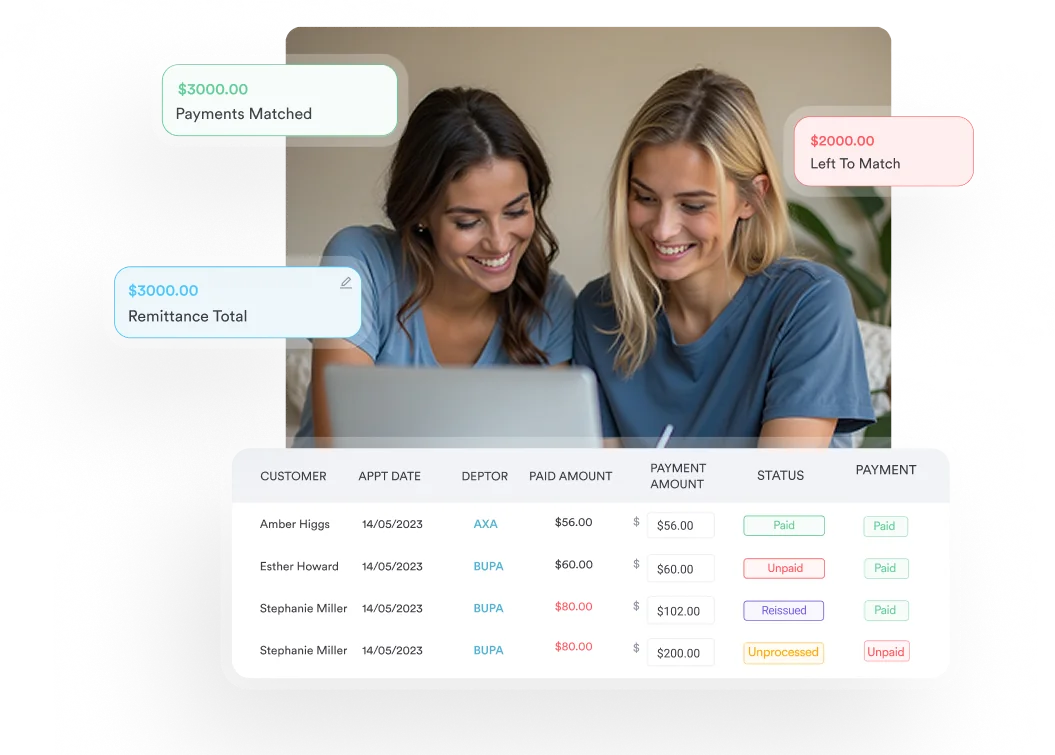
For practices new to J-code oncology billing or expanding their infusion services, revenue cycle management workflows built into practice management software reduce the learning curve and catch common errors before they reach the payer. The denial codes in medical billing most frequently associated with J9316 (missing modifier, incorrect units, companion code mismatch) are all preventable with the right claim-scrubbing logic in place.

Pabau helps oncology and infusion practices manage HCPCS drug codes, modifier rules, and companion code pairings in one billing workflow. See how it works for your practice.

When reviewing a patient’s oncology billing history or building a treatment episode, coders may encounter these related codes alongside J9316. Each serves a distinct purpose and should never be billed in place of J9316 when Phesgo is the drug administered.
For code verification, the AAPC HCPCS code lookup and the CMS list of CPT/HCPCS codes are the primary reference sources. Use these to confirm that J9316 remains active and that no code revisions have affected the descriptor or unit definition in the current year.
Billing HCPCS Code J9316 accurately means getting four things right every time: the unit count, the wastage modifier (JW or JZ), the companion administration CPT code, and the correct place-of-service designation. Miss any one and the claim denies. Pabau’s claims management software helps oncology and infusion practices build these rules into their billing workflow so errors are caught before submission rather than corrected after denial. To see how Pabau handles high-value J-code billing, book a demo with our team.

Need to understand how claims reach payers? Medical claims clearinghouse guide explains how electronic claims are validated and routed before reaching Medicare or commercial insurers.
Dealing with denied J-code claims? Denial management in healthcare covers the systematic approach to identifying, appealing, and preventing recurring claim denials.
Want to understand the revenue cycle behind buy-and-bill drugs? Superbill documentation guide explains how to structure visit-level billing records that support accurate drug and administration code submission.
HCPCS Code J9316 is the billing code for Phesgo (pertuzumab, trastuzumab, and hyaluronidase-zzxf), a subcutaneous fixed-dose combination used to treat HER2-positive breast cancer in neoadjuvant, adjuvant, and metastatic settings. It is a Level II HCPCS J-code used by oncology practices to bill Medicare Part B and commercial payers for this physician-administered drug under the buy-and-bill model.
J9316 covers Phesgo, a subcutaneous formulation manufactured by Genentech that combines pertuzumab, trastuzumab, and hyaluronidase-zzxf in a single vial. It is distinct from the IV formulations of pertuzumab (J9306) and trastuzumab (J9355), which have separate J-codes and should not be substituted for J9316 when Phesgo is the drug administered.
Medicare Part B reimburses J9316 at ASP (Average Sales Price) plus 6% for physician-administered drugs in physician office (POS 11) and hospital outpatient (POS 22) settings. ASP-based rates update quarterly via CMS pricing files, so practices should verify the current payment amount directly through the CMS Physician Fee Schedule lookup tool rather than relying on a cached rate.
Every J9316 claim line requires either modifier JW (drug wastage occurred, billed on a separate line for discarded units) or modifier JZ (zero wastage, attesting that the full dose was administered with nothing discarded). Omitting both modifiers will typically result in claim rejection or denial. The KD modifier applies only in rare DME-related billing scenarios.
Traditional Medicare Part B does not typically require prior authorization for J9316, but Medicare Advantage plans and most commercial payers do. Prior authorization requirements vary by plan and may include HER2-positive pathology confirmation, treatment regimen documentation, and periodic reauthorization. Always verify with the specific plan before ordering Phesgo for a new patient or treatment phase.
CPT code 96401 (chemotherapy administration, subcutaneous or intramuscular; non-hormonal antineoplastic) is the primary companion administration code for Phesgo when administered as a standalone subcutaneous injection. When Phesgo is given on the same day as IV chemotherapy, CPT 96413 (initial infusion, up to 1 hour) and 96415 (each additional hour) may also apply. Verify specific code applicability with current AMA CPT guidelines.
The HCPCS code for the fixed-dose subcutaneous combination of pertuzumab, trastuzumab, and hyaluronidase-zzxf is J9316. This code applies specifically to Phesgo (the SQ formulation). The separate IV formulations of pertuzumab and trastuzumab are coded under J9306 and J9355 respectively and should not be billed using J9316.