CCSD Code B2710: Radical mastectomy including block dissection
CCSD Code B2710: Definition and clinical scope CCSD Code B2710 is the UK private...

Last Updated: Nov 13, 2026
J3243 is the HCPCS Level II code for injection, tigecycline, 1 mg. It bills Tygacil and generic tigecycline, an IV antibiotic for adults. The FDA label covers complicated skin and skin structure infections, complicated intra-abdominal infections and community-acquired bacterial pneumonia.
One billing unit equals 1 mg, so the 100 mg first dose is 100 units and each 50 mg maintenance dose is 50 units. Accord's tigecycline bills under its own code, J3244.
Let Pabau's smart automation suggest the right codes, reduce claim denials, and keep your practice compliant—effortlessly.
Automate repetitive tasks and focus on what matters most—your patients.
Reduce coding errors and ensure compliance with the latest regulations.
Clean claims, fewer denials, and faster reimbursements.
Powerful insights and reporting to help your practice thrive.
HIPAA compliant SOC 2 certified GDPR-compliant Trusted by 4,000+ clinics worldwide

HCPCS code J3243 bills tigecycline (Tygacil) injection at 1 mg per unit, so units always equal the milligrams given.
The standard regimen is a 100 mg first dose (100 units), then 50 mg every 12 hours (50 units per dose).
Tigecycline is IV only and FDA-labeled for adults with complicated skin, complicated intra-abdominal, or community-acquired bacterial pneumonia infections.
Accord’s tigecycline has its own code, J3244, so check the vial’s labeler before you pick J3243.
Report the 11-digit NDC and add JZ when no drug is discarded, or a separate JW line for the wasted milligrams.
HCPCS code J3243 is the Level II drug code for tigecycline injection, billed in units of 1 mg. The Centers for Medicare and Medicaid Services (CMS) maintains it in the HCPCS Level II code set under the descriptor “Injection, tigecycline, 1 mg”. The code reports the drug only, so the infusion service goes on its own claim line.
Tigecycline is sold as Tygacil by Pfizer and as generic tigecycline for injection. One labeler is the exception: Accord Healthcare’s product bills under J3244, a separate code. The table below covers the fields a biller checks first.
Check the descriptor against the annual file on the CMS HCPCS overview page each year.
The Tygacil prescribing information limits the drug to adults aged 18 and older. It lists three indications, and each one maps to the diagnosis you put on the claim:
The label gives one regimen: a 100 mg first dose, then 50 mg every 12 hours. Each dose runs as an IV infusion over about 30 to 60 minutes. Patients with severe hepatic impairment (Child-Pugh C) get 100 mg first, then a reduced 25 mg every 12 hours.
Tigecycline carries a boxed warning for increased all-cause mortality, and the label says to reserve it for cases where alternatives are not suitable. It is not indicated for diabetic foot infections or for hospital-acquired or ventilator-associated pneumonia. Payers read those limits closely, so they shape which claims get paid.
One unit of J3243 equals 1 mg of tigecycline, so the unit count matches the documented dose in milligrams. The trap is the vial: a 50 mg vial is 50 units, not 1. Billing the vial count instead of milligrams underpays the claim by a factor of 50.
Payers differ on whether two doses given on one date of service go on one line or two. Check the payer manual, then apply the same rule to every tigecycline claim. A dose that never reaches the patient is not billed as administered.
Build the unit count into your charge template as milligrams, not vials. A 50 mg dose then reads as 50 units every time, and the vial-count error never reaches a claim.
There is no national coverage determination for tigecycline, so payers judge medical necessity against the FDA label. Pair J3243 with the most specific diagnosis the chart supports for one of the three labeled infections. Add the organism code when culture results identify one.
Two pairings invite a denial because they fall outside the label. A diabetic foot infection, such as E11.621 with an L97 ulcer code, is not an approved use. Neither is ventilator-associated pneumonia (J95.851) or another hospital-acquired pneumonia.
Unspecified codes like L03.90 and J15.9 pass most edits, but site and laterality codes are safer when the note documents them. Code to the highest specificity the record supports.
Medicaid programs require the 11-digit National Drug Code (NDC) on drug claims, and many commercial plans and Medicare contractors ask for it too. The NDC must match the vial given, so record it at the point of administration.
Tigecycline ships in single-dose vials, so the CMS JW and JZ modifier policy applies wherever Medicare pays for the drug separately. Append JZ when the full vial is given. When part of a vial is discarded, bill the wasted milligrams on a second J3243 line with JW, and document the amount in the record.
In a physician office or infusion suite, Medicare Part B pays separately payable drugs at the average sales price (ASP) plus 6%. CMS updates ASP every quarter, so the J3243 rate changes four times a year. Pull the current figure from the CMS ASP pricing files rather than a saved fee sheet.
Traditional Medicare Part B does not run a prior authorization program for tigecycline. Medical necessity is judged on the claim and the record instead. Medicare Advantage, Medicaid and commercial plans set their own rules, and many restrict tigecycline because of its boxed warning.
Before the first outpatient infusion, confirm these points with the plan:
J3243 covers the drug, so the infusion needs its own CPT code on a separate line. Because a tigecycline dose runs 30 to 60 minutes, CPT 96365 for the initial hour of a therapeutic IV infusion is the usual pairing.
Record start and stop times in the administration note, because infusion codes are time-based. When an E/M visit happens the same day, it needs to be significant and separately identifiable to support modifier 25.
The flow below puts the labeler, unit, wastage, NDC and infusion checks in the order a biller works through them on one dose.
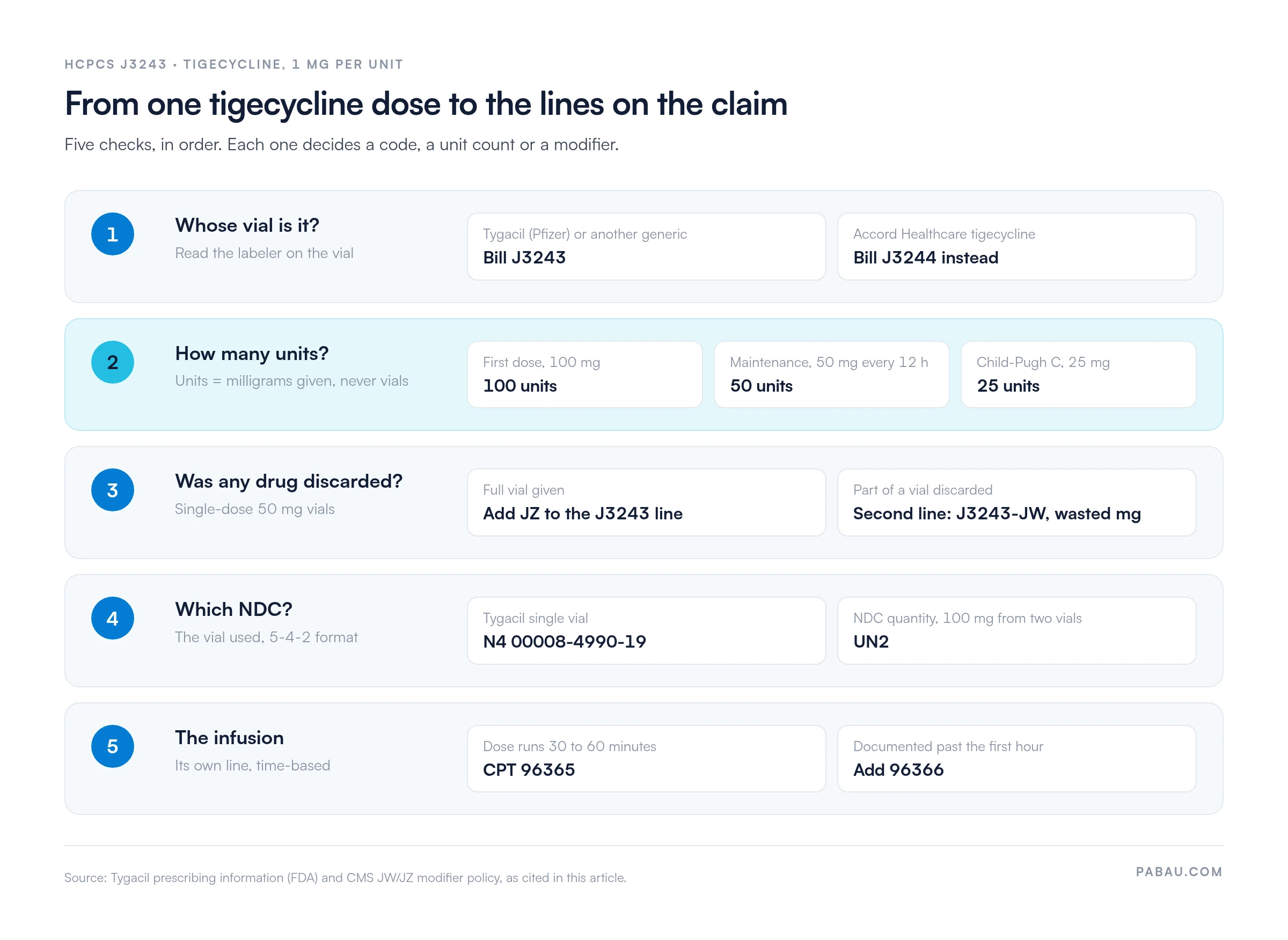
Three nearby codes cause most wrong-code denials on tigecycline claims. The comparison below shows how to tell them apart.
If an antiemetic was given, our guide to HCPCS code J3250 covers it. For dalbavancin, see HCPCS code J0875.
Most J3243 denials trace back to a handful of fixable errors. Use the table below with our list of denial codes to match each remittance code to its cause.
Track denials by type, not just by dollar amount, as part of your denial management process. One unit-count denial often points to a template error affecting dozens of claims. A superbill that pre-fills the NDC and milligram units stops the error at charge capture.
The chart has to support the drug, the dose and the diagnosis on the claim. Keep these elements in every tigecycline record:
A missing element gives the payer grounds for a medical necessity denial and leaves an appeal with little to stand on. A clean claim checklist and a regular compliance audit catch them before a payer does.
Billing tigecycline often means juggling a paper infusion log, a separate billing sheet and a payer portal. Units get typed by vial, NDCs get copied from memory, and wastage goes unrecorded.
Pabau, the practice management and billing platform we build, keeps the infusion record and the charge in one place. Clinicians chart the dose, times and vial details in the patient record. Claims management then builds the claim from that record and tracks denials by code.
The result is fewer resubmissions on a drug where a single unit error can cost the full dose.
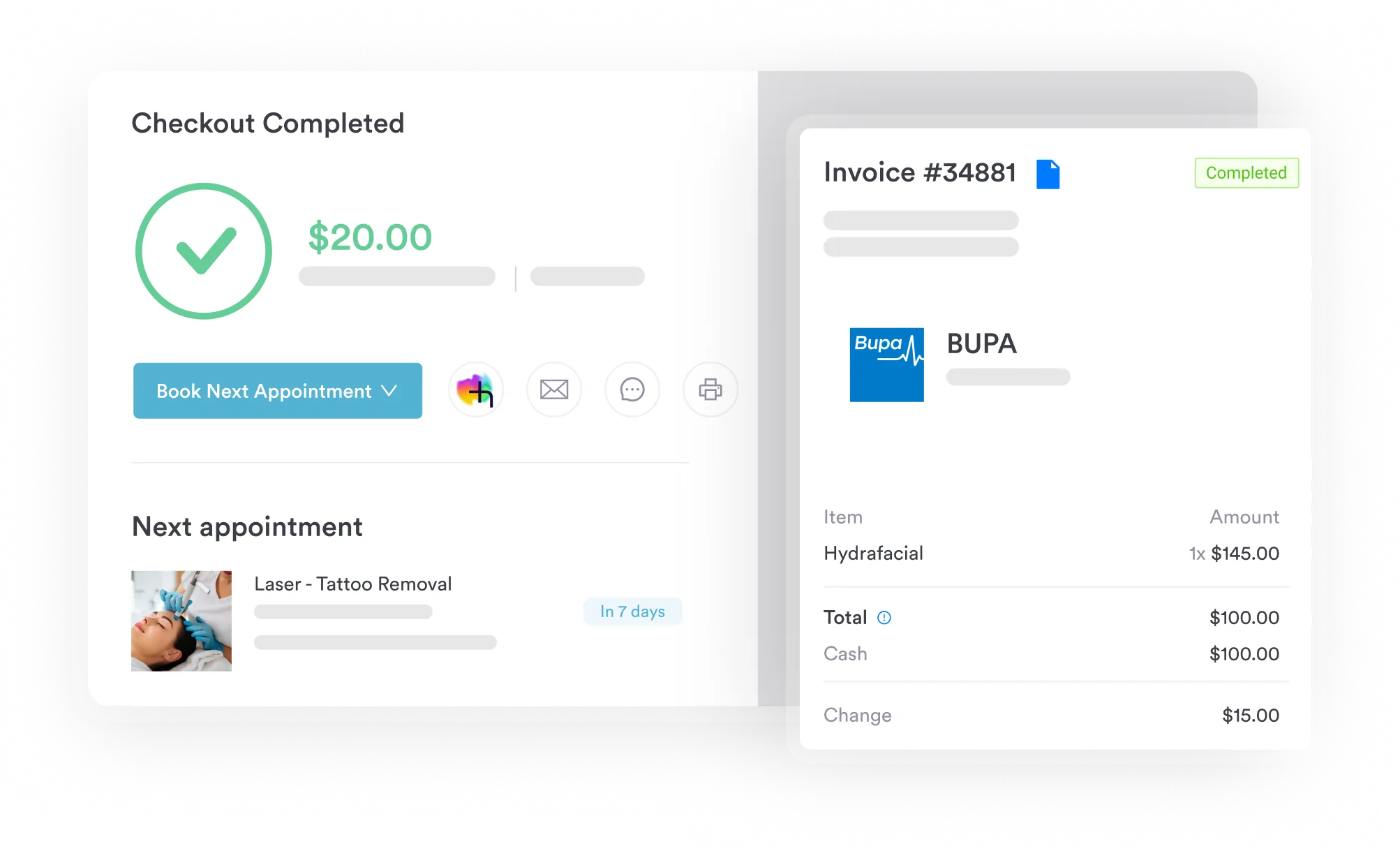

Chart the dose, vials and infusion times once, and let Pabau carry them onto the claim for drugs like tigecycline.

J3243 is simple arithmetic wrapped in strict rules. Units equal milligrams, the diagnosis has to sit inside the label, and the vial decides between J3243 and J3244.
Get those right, add the NDC and the JZ or JW modifier, and tigecycline claims stop bouncing. To see how Pabau carries infusion details onto the claim, book a demo.

Billing another IV antibiotic? HCPCS code J0875 covers dalbavancin unit math, prior authorization and NDC reporting.
Want fewer rejections across all codes? Clean claim submission outlines the pre-submission checks that cut first-pass denials.
Tracking denials across J-codes? Denial management strategies explains how to categorize and resolve recurring denials by code and payer.
HCPCS code J3243 covers tigecycline injection, billed per 1 mg. It reports Tygacil and generic tigecycline, except the Accord product, which bills under J3244. The IV infusion service is billed separately, usually with CPT 96365.
Bill 50 units, because one unit equals 1 mg. The 100 mg first dose is 100 units. Never bill the number of vials as the unit count.
No. J3243 is tigecycline, an IV antibiotic billed per 1 mg. J3250 is trimethobenzamide HCl, an antiemetic billed per 200 mg.
Payers expect a diagnosis for one of the three labeled infections in adults. These are complicated skin and skin structure infections, complicated intra-abdominal infections and community-acquired bacterial pneumonia. Diabetic foot infections and hospital-acquired pneumonia fall outside the label.
Yes, where the drug is separately payable under Medicare Part B. Tigecycline comes in single-dose 50 mg vials. Add JZ when the full vial is given, or bill the discarded milligrams on a separate line with JW.
Traditional Medicare Part B has no prior authorization program for tigecycline. Medicare Advantage, Medicaid and commercial plans often restrict it, so confirm before the first outpatient infusion.