

HCPCS code E0198: Water pressure pad billing guide
HCPCS code E0198 is a water pad for a standard mattress HCPCS code E0198 is the ...

Last Updated: Oct 13, 2026
T1040 is the HCPCS Level II code for medicaid certified community behavioral health clinic services, per diem.
It falls within behavioral health practice billing as a HCPCS Level II code maintained by the Centers for Medicare and Medicaid Services (CMS). The T-code range is reserved for state Medicaid agency-assigned codes, and T1040 specifically applies only to clinics holding Certified Community Behavioral Health Clinic (CCBHC) status.
Let Pabau's smart automation suggest the right codes, reduce claim denials, and keep your practice compliant—effortlessly.
Automate repetitive tasks and focus on what matters most—your patients.
Reduce coding errors and ensure compliance with the latest regulations.
Clean claims, fewer denials, and faster reimbursements.
Powerful insights and reporting to help your practice thrive.
HIPAA compliant SOC 2 certified GDPR-compliant Trusted by 4,000+ clinics worldwide

HCPCS Code T1040 describes Medicaid certified community behavioral health clinic services billed per diem – one claim per qualifying day, not per individual service
T1040 is valid only for CMS-certified CCBHCs participating in the Medicaid demonstration program; standard outpatient behavioral health clinics cannot use it
Reimbursement is set by each state Medicaid agency under a Prospective Payment System (PPS) rate, so dollar amounts vary by state and year
Pabau’s claims management software and digital documentation tools help CCBHC billing teams track per diem triggers, capture required notes, and submit clean T1040 claims
Certified Community Behavioral Health Clinics are a federally designated clinic type created under the Protecting Access to Medicare Act of 2014. CMS, in partnership with the Substance Abuse and Mental Health Services Administration (SAMHSA), certifies CCBHCs and authorizes them to participate in a Medicaid demonstration program that uses a different reimbursement structure from standard outpatient behavioral health clinics. Loop and segment rules in the EDI 837 format decide where a code and its modifiers are carried.
That structure is the Prospective Payment System (PPS). Instead of billing individual service codes for each therapy session or psychiatric evaluation, a CCBHC submits one T1040 claim for every day a qualifying patient receives any covered service.
The PPS rate bundling approach is designed to support clinics serving patients with complex needs, including those with serious mental illness (SMI), substance use disorders (SUD), and co-occurring conditions.
Behavioral health billing teams considering CCBHC certification should confirm their state’s demonstration program status with the state Medicaid agency before attempting T1040 billing.
The per diem rate for HCPCS Code T1040 is designed to bundle an entire day’s worth of qualifying services into one claim. This is a meaningful distinction from fee-for-service billing, where each CPT code corresponds to a discrete encounter. Under T1040, the day triggers the claim, not the service count.
Qualifying services that count toward a billable T1040 day include, but are not limited to:
Not every service a patient receives needs to be itemized on the T1040 claim. The PPS rate covers the day as a bundle. However.
Track each service delivered on a per diem day in your clinical documentation system, even though T1040 bundles them into one claim. If a Medicaid audit requests medical records for a specific date of service, you need granular notes for every service that justified the billable day, not just a check-box confirming the patient attended.
A billing day under HCPCS Code T1040 is triggered when a patient enrolled in the CCBHC program receives at least one qualifying service on a calendar day. The claim is submitted with one unit of T1040, regardless of how many services were delivered that day.
Here is how the billing sequence works in practice:
A common confusion: billing T1040 twice on the same date of service for the same patient is incorrect. One calendar day equals one unit. Multiple same-day services do not generate additional T1040 units. Submitting more than one unit per day is a billing error that may trigger a Medicaid audit or compliance review.
HCPCS Code T1040 and T1041 are adjacent codes in the CCBHC billing range, and they are frequently confused. The distinction between them is the Medicaid demonstration encounter reporting period a state selects for CCBHC billing, not a difference in time of day or care setting. T1040 is used for per diem reporting, and T1041 is used for per month reporting.
A state Medicaid agency selects one reporting period for its CCBHC demonstration program. Using T1041 where your state requires T1040, or vice versa, is a billing compliance issue that can result in claim denials or overpayment recovery requests.
Confirm which encounter reporting period your state Medicaid agency uses for the CCBHC demonstration program. Some states require per diem reporting under T1040, while others require per month reporting under T1041.
This is a program-design choice made at the state level. It is not a distinction between daytime and overnight or residential services, and there is no CMS-recognized “night” CCBHC per diem code. You can look up both codes in the AAPC Codify HCPCS database to confirm current descriptions and status.
Reimbursement for HCPCS Code T1040 is not set by a single national fee schedule. Unlike Medicare Part B rates, which CMS publishes via the Physician Fee Schedule lookup tool, T1040 rates are determined by each state Medicaid agency using the Prospective Payment System methodology.
The PPS rate is calculated based on a CCBHC’s actual operating costs, adjusted for factors such as clinic size, service volume, and regional cost variations. State Medicaid agencies review and update these rates periodically, often annually. For 2025 and 2026, specific per diem rates vary considerably across participating states.
Never rely on a single published rate as universally applicable. Contact your state Medicaid agency’s provider relations office to confirm your clinic’s current PPS per diem rate for T1040 billing.
Modifier requirements for HCPCS Code T1040 vary by state Medicaid policy, and several states require T1040 to be billed with no modifier at all. CMS’s CCBHC demonstration guidance references modifier Q2, which is typically applied to the service-level detail line rather than the T1040 encounter claim line itself.
The additional modifiers below have been seen in select state CCBHC billing manuals. Confirm current requirements with your specific state Medicaid agency before use.
Always reference your state Medicaid CCBHC billing manual before appending a modifier. Incorrect modifier use is one of the most common reasons T1040 claims are denied on first submission.

Pabau helps behavioral health clinics track per diem service documentation, manage HCPCS billing workflows, and maintain the clinical records needed to support clean T1040 claims. See it in action.

A clean T1040 claim depends on complete clinical documentation. Because the per diem rate bundles all services delivered on a single day, the medical record must demonstrate that at least one qualifying CCBHC service was provided on the date of service claimed.
Billing teams using digital intake forms and structured clinical note templates are better positioned to capture required documentation elements consistently. Below are the core documentation requirements most state Medicaid auditors look for when reviewing T1040 claims:
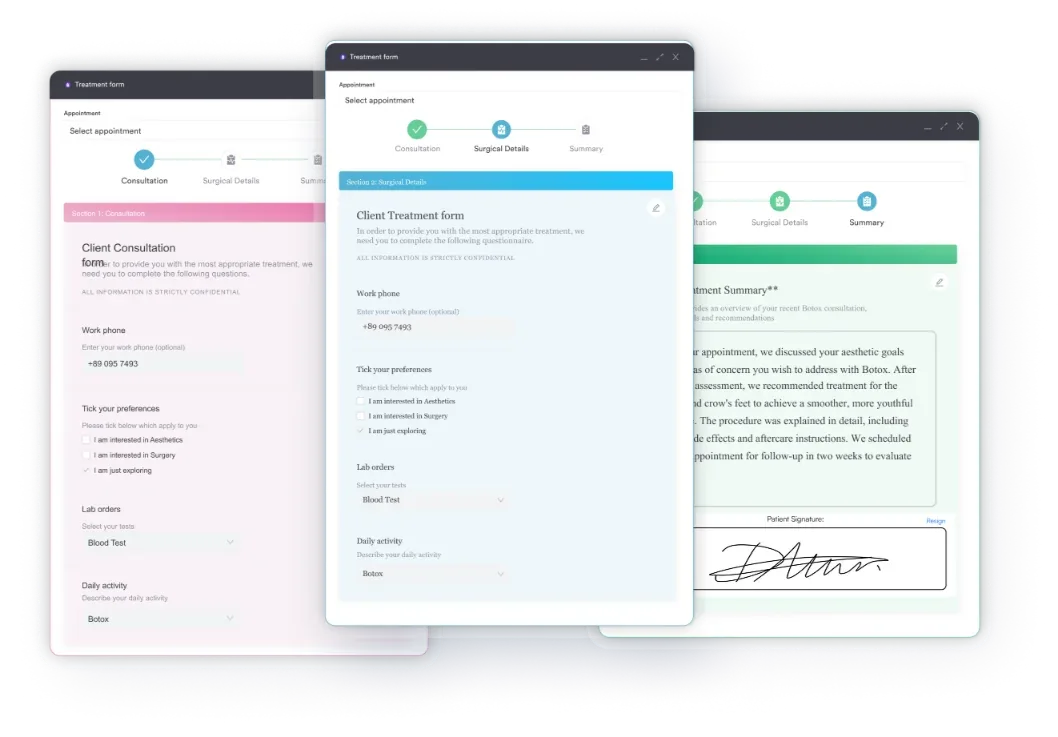
Incomplete documentation is the primary reason T1040 claims fail post-payment audits. Practices that rely on paper charts or disconnected EHR systems often find that individual clinician notes are missing required fields when records are requested. Structured documentation workflows reduce this risk significantly.
Duplicate claim submission is easy to catch. The costliest T1040 errors are the ones that slip through initial edits and surface during a post-payment audit, when CCBHC clinics face recoupment on claims paid months earlier.
Billing staff managing CCBHC claims across mental health EMR systems should watch for these denial patterns:
Run a monthly internal audit of your T1040 claims before submitting to Medicaid. Check for duplicate units on the same DOS, verify modifier consistency across your CCBHC billing staff, and confirm that every claim has a corresponding clinical note documenting the qualifying service. Catching these errors internally costs nothing. A Medicaid audit that catches them for you is far more expensive.
The CCBHC demonstration program is not active in every US state. As of 2025-2026, CMS has expanded the program through Medicaid state plan amendments and continuing demonstration rounds, but CCBHC eligibility and T1040 billing authority depend on each state’s participation status. Practices managing billing across multiple states should review multi-state HIPAA compliance obligations alongside CCBHC billing requirements.
Key state-level variables that affect HCPCS Code T1040 billing include:
Behavioral health clinics navigating CCBHC billing requirements face two parallel challenges: capturing the clinical documentation that supports per diem claims, and maintaining the audit trail that protects those claims if Medicaid reviews them. Pabau’s claims management software is built to address both.
For CCBHC teams specifically, the platform’s structured clinical note templates and automated billing workflows help ensure that every qualifying service delivered on a per diem day is captured in the patient record before a T1040 claim is submitted. This reduces the mismatch between services delivered and services documented, which is the most common source of T1040 audit risk.
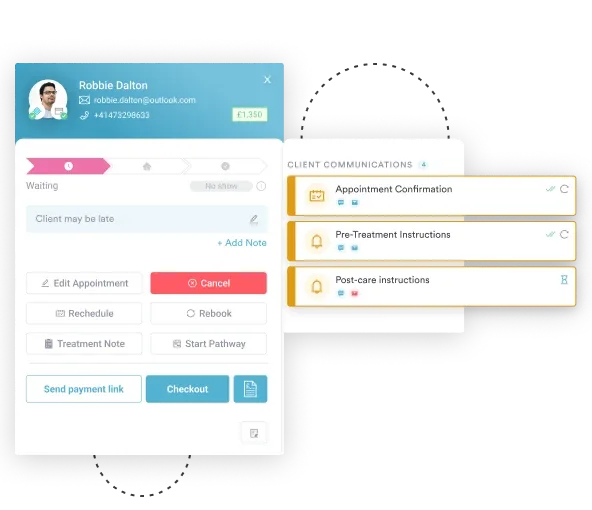
Practices managing psychiatry and behavioral health documentation alongside CCBHC billing also benefit from Pabau’s centralized patient record structure, which keeps treatment plan references.
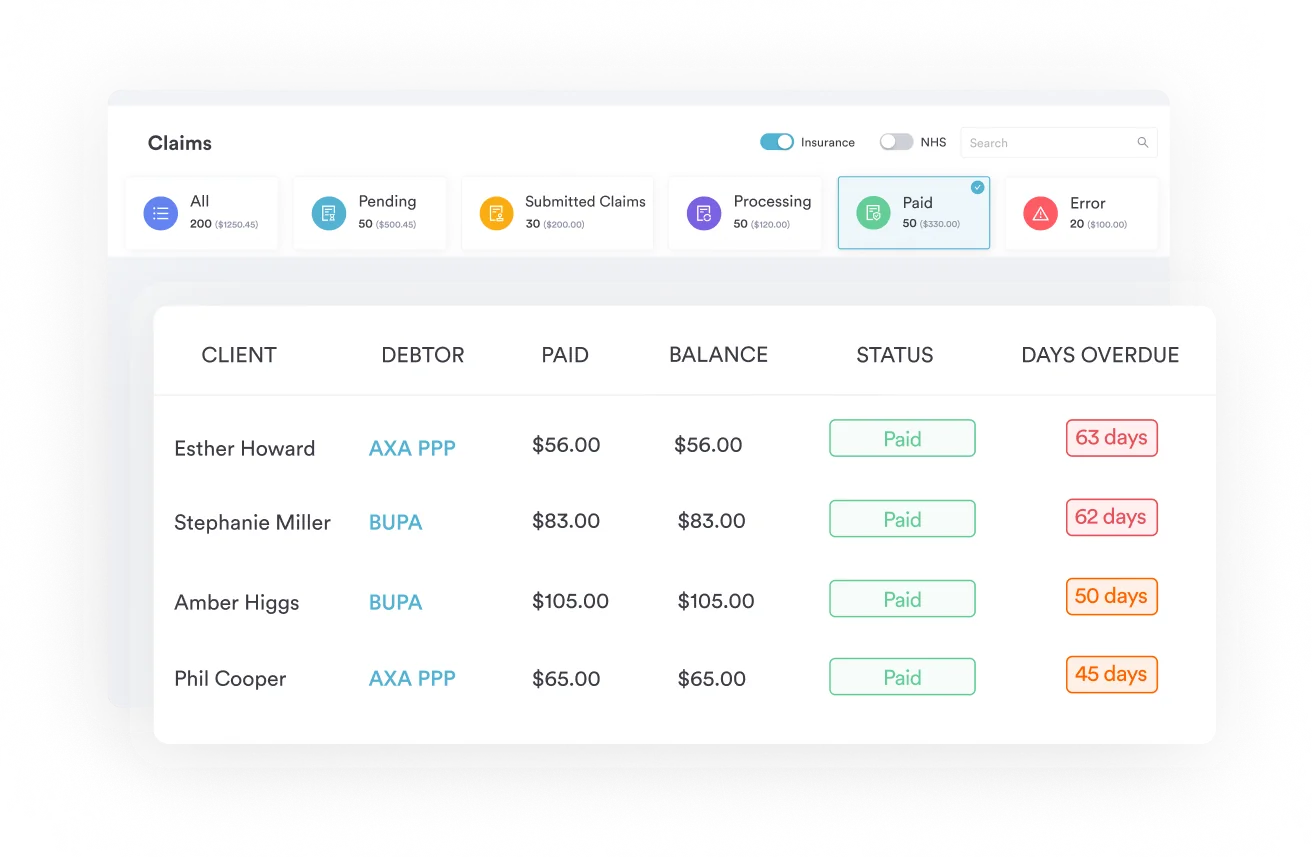
Pabau’s reporting tools also help billing managers track per diem claim submission rates, flag missing documentation before claims are sent, and monitor denial patterns, so T1040 billing errors get caught in-house rather than during a payer review. See the workflow in action by booking a demo with the team.
HCPCS Code T1040 does not exist in isolation. CCBHC billing teams commonly encounter these adjacent codes and should understand when each applies. Diagnosis codes such as ICD-10 Code F69 are frequently paired with T1040 claims to support medical necessity documentation.
For full HCPCS Level II code lookup and current code status, use the NLM Clinical Table HCPCS API, which provides programmatic access to the CMS code database.
HCPCS Code T1040 is a specialized billing code that only applies in a specific programmatic context: Medicaid-certified CCBHCs participating in the CMS demonstration program. Getting the basics right is what separates clinics that collect cleanly from those that face audit recoveries:
Pabau’s claims management and clinical documentation tools are designed for exactly this kind of structured behavioral health billing environment, supporting CCBHC workflows from documentation through clean claim submission. Speak with the team about your clinic’s specific billing setup to see it in action.

Want to see how coding specificity plays out for other procedure codes? CPT Code 97039 breaks down the documentation required for an unlisted physical medicine procedure.
Curious how Medicare coverage determinations affect supply billing? HCPCS Code A4639 covers a case where a national coverage determination excludes payment entirely.
Need a refresher on obstetric diagnosis coding? ICD-10 Code O65.2 details the documentation an obstructed labor diagnosis code requires.
HCPCS Code T1040 is used by Medicaid-certified Community Behavioral Health Clinics (CCBHCs) to bill Medicaid for a day’s worth of qualifying behavioral health services delivered to an enrolled patient. It is a per diem code, meaning one unit covers all covered services provided on a single calendar day.
T1040 and T1041 are both CCBHC billing codes, but they represent different Medicaid demonstration encounter reporting periods, not different times of day. T1040 is used for per diem reporting (billed by calendar day), while T1041 is used for per month reporting (billed by calendar month). There is no CMS-recognized \u201cnight\u201d or overnight CCBHC per diem code. Your state Medicaid agency selects one reporting period for its CCBHC demonstration program, so confirm which one applies to your clinic in the state’s CCBHC billing manual.
Modifier requirements for T1040 are state-specific, and several states require T1040 to be billed with no modifier at all. CMS\u2019s CCBHC demonstration guidance references modifier Q2, which is typically applied to the service-level detail line rather than the T1040 encounter line itself. Other modifiers seen in select state CCBHC billing manuals include U1 (Medicaid level of care), HB (adult non-geriatric program), HE (mental health program), and SA (nurse practitioner in collaboration with physician), but these are not universal. Always verify current modifier requirements with your state Medicaid CCBHC billing manual.
T1040 is billed per diem, not per visit. One unit of T1040 represents all qualifying CCBHC services delivered on a single calendar day. Billing T1040 more than once per day for the same patient is incorrect and will typically trigger a claim denial or audit flag.
T1040 reimbursement rates are not set nationally. Each state Medicaid agency establishes its own CCBHC per diem rate using the Prospective Payment System (PPS) methodology, based on the clinic’s actual operating costs. Rates vary by state and are typically updated annually. Contact your state Medicaid agency or review your state’s CCBHC billing manual for current 2025-2026 rates.
The Certified Community Behavioral Health Clinic demonstration program is a federal Medicaid initiative administered by CMS and SAMHSA that allows specially certified behavioral health clinics to receive enhanced Medicaid reimbursement through a Prospective Payment System. T1040 is the HCPCS billing code that CCBHC-certified clinics use to submit those per diem claims to their state Medicaid agency.



