

HCPCS code E0198: Water pressure pad billing guide
HCPCS code E0198 is a water pad for a standard mattress HCPCS code E0198 is the ...

Last Updated: Oct 13, 2026
H0007 is the HCPCS Level II code for alcohol and/or drug services; crisis intervention (outpatient).
Let Pabau's smart automation suggest the right codes, reduce claim denials, and keep your practice compliant—effortlessly.
Automate repetitive tasks and focus on what matters most—your patients.
Reduce coding errors and ensure compliance with the latest regulations.
Clean claims, fewer denials, and faster reimbursements.
Powerful insights and reporting to help your practice thrive.
HIPAA compliant SOC 2 certified GDPR-compliant Trusted by 4,000+ clinics worldwide

HCPCS code H0007 covers alcohol and/or drug services: crisis intervention (outpatient), a Level II code billed mainly to Medicaid.
Eligible providers include licensed alcohol and drug counselors, licensed clinical social workers, and behavioral health clinicians in Medicaid-approved outpatient settings.
Reimbursement is set by each state Medicaid schedule and each managed care contract, so no national dollar figure applies.
Some state Medicaid programs designate their own crisis codes, so confirm H0007 applies before you bill it.
Pabau’s claims tools build the claim from the encounter, validate it, and submit it electronically to US payers.
H0007 sits in the H-code series, which the Centers for Medicare and Medicaid Services (CMS) maintains for behavioral health and substance use disorder (SUD) services. Those codes are billed primarily to Medicaid rather than to Medicare or commercial plans.
H0007 is not a time-based code, and it is not meant for ongoing counseling or structured treatment sessions. The crisis component decides code selection. If the visit was routine outpatient counseling, a different H code applies.
Each state Medicaid agency sets provider eligibility for H0007. There is no single federal standard. In practice the code is tied to licensed behavioral health and SUD professionals working in Medicaid-approved outpatient programs.
A mental health EMR that keeps license details on the staff record makes rendering-provider information easy to pull for an audit.
Commonly eligible provider types include:
Managed care organizations (MCOs) that contract with state Medicaid programs may add credentialing rules on top of the state fee-for-service standard.
Verify eligibility with the MCO before billing H0007 under a managed care contract. Keeping license type, number.
No national rate exists for H0007. Each state Medicaid fee-for-service schedule sets its own figure, and individual MCO contracts adjust it further.
Rates differ enough between states that a number from one program tells you little about another. Pull the current figure from your state’s Medicaid provider portal or your signed contract.
Before you look up a rate, confirm your state uses H0007 for crisis services at all. Medicaid crisis benefits are built state by state, and some programs route crisis intervention through their own state-defined codes. An HHS analysis of crisis services billed to Medicaid shows how widely that code choice varies. A claim denial and a claim rejection arrive from different places and are worked differently. Each Administrative Contractor publishes its own coverage articles, so a national answer is often the wrong one.
Medicare generally does not cover H0007, because H codes sit outside Medicare’s covered benefit categories. Some Medicare Advantage demonstrations and Section 1115 waiver programs have created narrow exceptions. Those are program-specific, so get written confirmation from the plan before you bill.
Modifier selection is one of the most common denial triggers for H0007. Many state Medicaid plans require at least one behavioral health modifier on every H-code claim. Submitting without a required modifier usually produces an automatic denial rather than a request for more information.
Modifier rules are payer- and state-specific, and not all of these apply everywhere. Check your state Medicaid billing manual and your MCO contract before adding any modifier to an H0007 claim.
Before submitting H0007 claims, pull your state’s current Medicaid billing manual and confirm which modifiers are required versus optional. Some states require HF on every alcohol-specific H-code claim. Missing a required modifier is the single most preventable denial reason for H0007.
Every H0007 claim needs a supporting ICD-10 diagnosis code that establishes medical necessity. Those codes come from the substance use disorder F-code categories in ICD-10-CM. A screening encounter that precedes a crisis is billed differently.
Use the most specific ICD-10 code the documentation supports. Coding to F10.x without a fifth character is a common specificity error that can trigger a medical necessity review. The NLM HCPCS API and published crosswalk tools help validate code pairings.
Insufficient documentation is the second most common denial reason for H0007, after missing modifiers. State Medicaid auditors expect contemporaneous records that justify the crisis component and the medical necessity of the intervention.
Digital intake and assessment forms capture the required data points at the point of care, so the record is complete before billing starts. A consistent risk screen helps too.
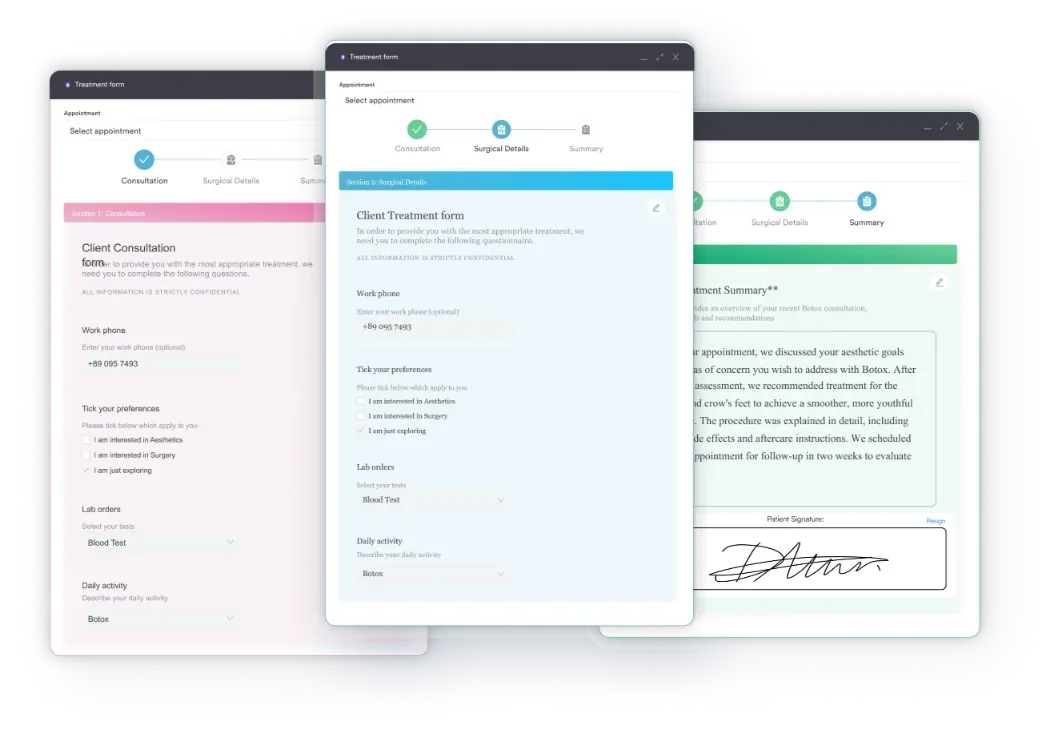
The checklist below reflects best-practice documentation standards. Individual state Medicaid programs may ask for more.
A denied H0007 claim rarely comes down to one error. Most denials pair a documentation problem with a modifier issue or a provider eligibility problem. Knowing the pattern helps billing staff decide what to correct first. NCCI edits also govern which same-day code pairs are separately payable.
H0007 sits inside a wider family of H codes covering the continuum of alcohol and drug services. Knowing the adjacent codes helps when a visit involves assessment, counseling, or case management rather than acute crisis.
H0004 is the code most often confused with H0007. H0004 covers routine outpatient counseling in 15-minute units, while H0007 is reserved for acute crisis. Structured session materials. The AAPC HCPCS lookup carries current official descriptions for the full H-code range.
Review your last 90 days of H0007 claims alongside H0004 claims for the same patients. If a patient shows both codes on the same date of service, read the documentation again. It should either support two separate service types or reveal a coding error. This pattern surfaces quickly in a Medicaid audit.
Practices billing behavioral health alongside other services usually run two systems. Clinical notes sit in one, claims go out from another, and details get retyped in between. That retyping is where diagnosis codes, provider names, and service times drift out of step with the note.
Practice management software like Pabau keeps both in the same record. Its claims management tools build the claim from the encounter, then send it electronically to US payers through Claim.MD. Nothing has to be typed twice, so the claim reflects what the clinician actually documented.
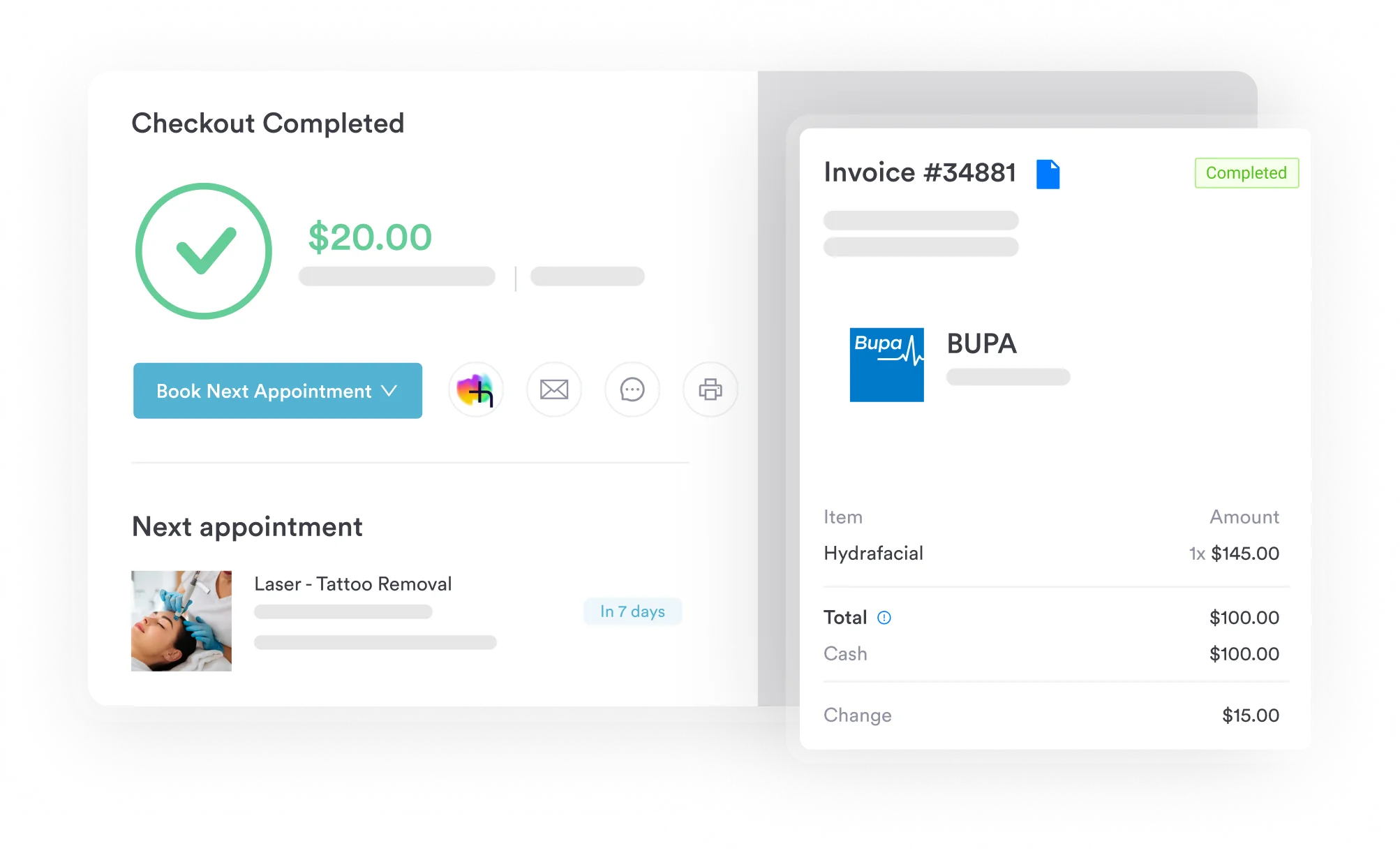
Claims that come back with an error status are easy to find and re-work, because they sit next to the note that produced them.

Pabau builds claims straight from your clinical notes and validates them before they go out. Track every H0007 claim from pending to paid in one place.

Whether an H0007 claim gets paid is decided before the encounter ends, not in the appeals queue. Confirm your state designates the code for crisis services. Confirm the rendering provider is enrolled. Then write the crisis assessment while the detail is still fresh.
Those three checks cost minutes each. Re-working a denial costs a week, and the appeal still depends on documentation you either wrote at the time or did not. That trade-off is the whole argument for doing the work up front.
It gets easier when the note and the claim live in the same record. Pabau’s practice management software connects clinical documentation to claim creation, so H0007 details reach the payer once and correctly. Book a demo to see how Pabau handles behavioral health billing.

Coding a confirmed rectal cancer case? ICD-10 code C20 covers rectal cancer, including adenocarcinoma, lymphoma, and sarcoma, when the rectum is the primary site.
Coding a gallbladder cancer diagnosis? ICD-10 code C23 covers malignant neoplasm of the gallbladder, a digestive-organ cancer diagnosed in roughly 5,000 Americans yearly.
Coding a pancreatic tumor’s location? ICD-10 code C25.7 covers malignant neoplasm of other parts of the pancreas, including the neck of the pancreas.
Coding a tracheal cancer diagnosis? ICD-10 code C33 covers malignant neoplasm of the trachea, a rare cancer distinguished from bronchial tumors by the carina.
Coding a thymus tumor diagnosis? ICD-10 code C37 covers malignant neoplasm of the thymus, including thymoma and thymic carcinoma, excluding thymic carcinoid tumors.
HCPCS code H0007 bills alcohol and/or drug services: crisis intervention in an outpatient setting. It is a Level II HCPCS code maintained by CMS and billed primarily to Medicaid and managed care organizations. It captures acute crisis intervention delivered by licensed behavioral health and substance use disorder professionals.
Eligible providers usually include licensed alcohol and drug counselors, licensed clinical social workers, and licensed professional counselors. Community mental health centers and substance abuse treatment facilities enrolled in Medicaid can bill it too. Each state Medicaid agency and managed care contract sets eligibility, so requirements vary by state.
HF, for a substance abuse program, is the modifier most commonly required. Many state Medicaid programs also require HH for an integrated MH/SUD setting, HT for a multi-disciplinary team, or a state-defined U-code. Requirements vary by state plan and MCO contract, so check your state’s billing manual first.
There is no national rate for H0007. Each state Medicaid fee-for-service schedule sets its own figure, and MCO contracts are negotiated individually, so rates vary widely. To find your current rate, check your state Medicaid fee schedule alongside your signed payer contract.
No, H0007 is generally not covered by Medicare fee-for-service. HCPCS H codes are Medicaid-designated codes. Some Medicare Advantage plans and Section 1115 demonstration programs have created narrow exceptions, but each one needs separate verification. Do not assume Medicare coverage without written confirmation from the plan.
The most common reasons are a missing required modifier, a non-covered provider type, and insufficient documentation. Wrong place of service and missing prior authorization come next. ICD-10 specificity errors also trigger medical necessity reviews, where an unspecified F-code was used and a specific code was available.



