CPT code 93503: Swan-Ganz catheter billing and modifiers
CPT code 93503: Official descriptor and procedure overview In the AMA CPT code s...

Last Updated: Oct 23, 2026
H0013 is the HCPCS Level II code for alcohol and/or drug services; acute detoxification (residential addiction program outpatient).
HCPCS code H0013 bills alcohol and/or drug services for acute detoxification delivered in a residential addiction program’s outpatient setting. It is a Level II code maintained by CMS, and Medicaid is its primary payer. The setting named in the descriptor is the part billing teams most often get wrong.
Let Pabau's smart automation suggest the right codes, reduce claim denials, and keep your practice compliant—effortlessly.
Automate repetitive tasks and focus on what matters most—your patients.
Reduce coding errors and ensure compliance with the latest regulations.
Clean claims, fewer denials, and faster reimbursements.
Powerful insights and reporting to help your practice thrive.
HIPAA compliant SOC 2 certified GDPR-compliant Trusted by 4,000+ clinics worldwide

HCPCS code H0013 covers alcohol and/or drug services for acute detoxification delivered in the outpatient arm of a residential addiction program.
Hospital inpatient acute detoxification is H0009, not H0013. Picking the wrong setting is the biggest source of denials in this code range.
H0013 is a Medicaid-primary code. Commercial coverage varies by plan, so verify it with each payer before you bill.
Missing modifiers (HF, HH, SA) and thin withdrawal management documentation are the two leading causes of H0013 claim denials.
Practice management software like Pabau supports HCPCS Level II submission and payer follow-up tracking for behavioral health teams.
HCPCS code H0013 is a Level II alphanumeric code maintained by the Centers for Medicare and Medicaid Services (CMS). Its official long descriptor is: Alcohol and/or drug services; acute detoxification (residential addiction program outpatient). The parenthetical is part of the code rather than a footnote. It ties H0013 to acute withdrawal management provided through a residential program’s outpatient arm.
The code belongs to the H0001 through H0030 series, which CMS reserves for mental health and substance abuse services that no CPT code describes. Six codes in that series split detoxification by acuity and by setting. H0013 is the acute, residential-outpatient member of the group.
The wider H range also carries a catch-all. H0047 is the not-otherwise-specified entry for alcohol and drug abuse services, and the state Medicaid program sets the unit.
The table below sets out the official CMS descriptions alongside the details coding staff need at the point of submission.
Hospital inpatient acute detoxification is H0009, not H0013. The two codes describe the same clinical service at the same acuity, and differ only in where it happens. H0011 covers acute detoxification during a residential inpatient stay. Reaching for H0013 because the episode was acute, without checking the setting, is the most common way this range gets miscoded.
Because the setting sits inside the descriptor, three things have to agree:
When one contradicts the other two, the payer denies the claim or recovers the payment on audit.
Some state Medicaid agencies layer their own setting definitions on top of the CMS descriptor. Check the state fee schedule and the managed care organization (MCO) billing manual before you assume a setting is payable.
Provider eligibility for H0013 is governed by state Medicaid agency rules and individual payer contracts, not by a single federal standard. That said, the following provider types are commonly recognized as eligible, subject to state-specific credentialing and enrollment requirements.
An inpatient unit that bills H0013 for an admitted patient is denied on setting alone, whatever the clinical picture, because that episode belongs to H0009. A commercial plan that does not recognize HCPCS Level II H-codes will reject the claim too. Confirm Medicaid enrollment and check the payer contract before billing H0013 for the first time. Practices running mental health EMR workflows across several payer contracts need a record of which payers accept H-codes. That check belongs at the front end of the revenue cycle.
Modifiers are where a large share of H0013 denials originate. Many state Medicaid programs require specific behavioral health modifiers to identify the program type, staff credentials, or care level. Submitting H0013 without the required modifier typically results in an immediate denial or bundling error.
Modifier applicability is payer-specific and changes with annual Medicaid fee schedule updates. Verify current requirements in the state Medicaid billing manual or MCO provider guide before each billing cycle. Final authority rests with the payer’s own published guidelines, never with a general modifier lookup tool.
Reimbursement rates for HCPCS code H0013 are set at the state level by each Medicaid agency and vary considerably. Unlike Medicare fee schedule codes, H0013 has no nationally published Medicare rate, because Medicare does not typically cover HCPCS H-series codes. In practice, every state where a facility operates needs its own fee schedule lookup.
Never quote a specific dollar figure to your billing team as the “standard” H0013 rate. State rates can differ by hundreds of dollars per episode and update annually. For current rates, go straight to the state Medicaid agency’s behavioral health fee schedule. Confirm the figure with the payer before anyone quotes it internally. Australian MBS billing follows the same pattern: descriptors and fees change periodically, so last year’s printout is not a safe reference.
Pull your state Medicaid behavioral health fee schedule at the start of each fiscal year and compare it against your contracted MCO rates. Discrepancies between the two are common and affect which payer is primary for multi-payer patients. Flag mismatches before submitting claims, not after receiving denials.
Medicaid is the primary payer for H0013 claims. Federal essential health benefit and parity rules require Medicaid programs to cover substance use disorder treatment. Benefit design, prior authorization, and payable settings are still set by each state’s Medicaid plan or behavioral health waiver.
Key Medicaid coverage rules to verify for each state:
Staying current on state-level Medicaid policy changes is a core compliance duty for any facility billing H0013 regularly. Medicaid policy bulletins update throughout the year, and a change in authorization requirements can affect every pending claim in your queue.
Payers audit H0013 claims more closely than many other behavioral health codes, because acute detoxification is a high-cost, high-volume service category. Incomplete documentation causes denials. The documentation framework below reflects what most Medicaid payers and commercial plans require when they pull H0013 claims for review.
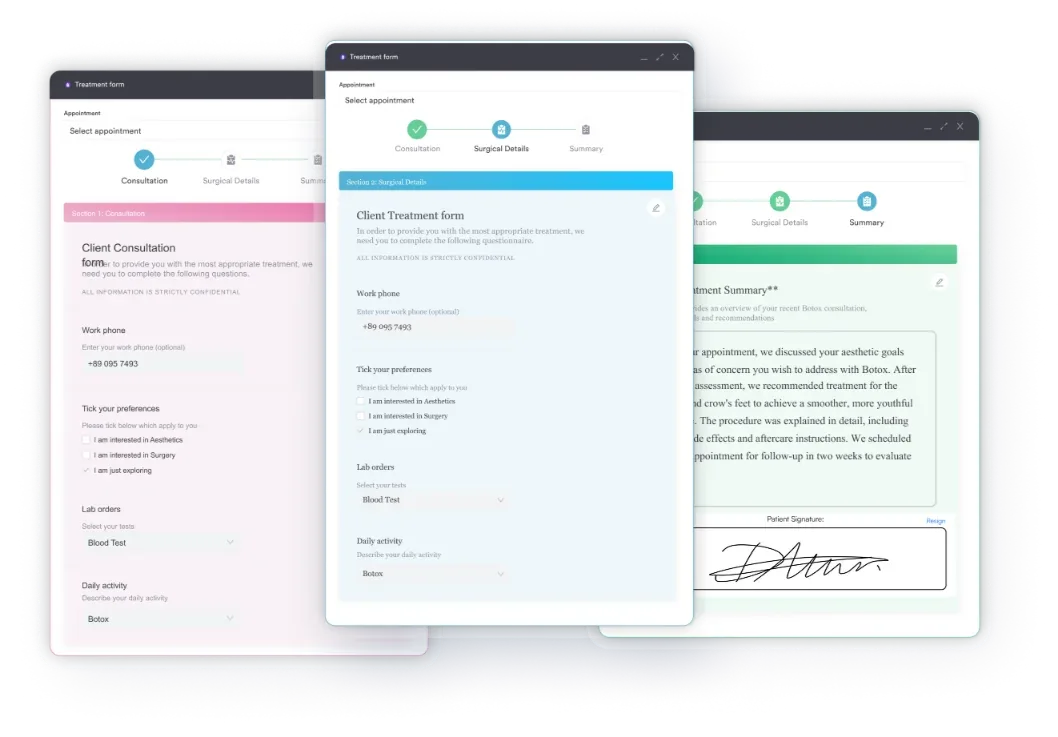
Building this checklist into your intake and admission process stops missing documentation before a claim goes out. Facilities using digital intake forms can structure these fields directly into admission templates, so nothing is missed at the point of care.
HIPAA requires that all clinical records containing protected health information (PHI) be secured under the HIPAA Security Rule. Providers should review their HIPAA compliance procedures before moving behavioral health records to electronic documentation. That matters most where records travel between facilities during detox-to-residential transitions.
The place of service (POS) code on the claim has to agree with the setting written into the H0013 descriptor. A POS code that points to an inpatient stay contradicts the code itself. Payers reject or recover on that mismatch alone, before anyone reviews the clinical record.
States differ on which POS codes they accept with H0013. Pull the accepted list from your state Medicaid fee schedule and load it into your claim scrubber. That way the check happens before submission rather than after a denial.
H0013 must be submitted alongside an ICD-10-CM diagnosis code that establishes the medical necessity for acute detoxification. The diagnosis code communicates which substance is involved and the severity of the disorder. Payer Local Coverage Determinations (LCDs) and Medical Coverage Policies (MCPs) may specify exact required codes. The F10 through F19 series covers the most common pairings.
The ICD-10 codes above follow clinical convention rather than a universal payer mandate. Some payers publish specific code lists in their coverage policies. For the authoritative ICD-10-CM code descriptions and hierarchy, reference the CDC ICD-10-CM web tool. Selecting the most specific code available, including the fifth and sixth characters, is both a clinical accuracy requirement and a medical necessity signal.
H0013 sits inside a tight cluster of detoxification codes that differ only by acuity and setting. Two questions decide the code. Is the withdrawal management acute or sub-acute, and is the care hospital inpatient, residential inpatient, or residential outpatient? Reading the table along those two axes prevents most miscoding in this range.
The most frequent error is billing H0013 for an inpatient episode. H0009 covers hospital inpatient acute detox, and H0011 covers acute detox during a residential inpatient stay. H0014 applies when detox happens outside a residential program with lighter monitoring. Record the setting and the level of medical supervision in the chart, so the code you chose is defensible on audit. For guidance on managing related codes across a behavioral health practice.
Denial patterns for HCPCS code H0013 are predictable. Most billing teams encounter the same errors repeatedly, and each one is preventable with the right pre-submission workflow. The five patterns below account for the majority of H0013 claim rejections seen in behavioral health revenue cycle management. Common claim denial codes repeat by specialty, so the pattern is worth reading before reworking a claim.
A structured denial management process, reviewed monthly, is the most reliable way to catch these patterns before they accumulate into significant revenue leakage. Teams handling high-volume H0013 billing should also revisit whether their psychiatry EMR software fits these claims. They demand audit-ready documentation, and the underlying system has to support that.
Run a monthly denial dashboard filtered by reason code for H0013 specifically. If your denial rate for this code exceeds 10%, pull the top three reason codes. Trace each one back to the pre-auth, modifier, or documentation step. Fixing one upstream process error can resolve dozens of recurring denials at once.
Behavioral health revenue cycle management is more complex than standard medical billing for codes like H0013. It pulls in state-specific Medicaid rules, prior authorization tracking, ASAM-linked documentation, and modifier-level compliance. Generalist billing staff unfamiliar with H-code requirements often introduce errors at the claim level that compound over time.
Purpose-built claims management software reduces this risk by centralizing the pre-submission workflow. That means modifier validation, prior authorization fields linked to the claim, and electronic submission to clearinghouses that accept HCPCS Level II H-codes. Comparing behavioral health software is a useful starting point. It shows whether your current system handles HCPCS code management at the level H0013 requires.
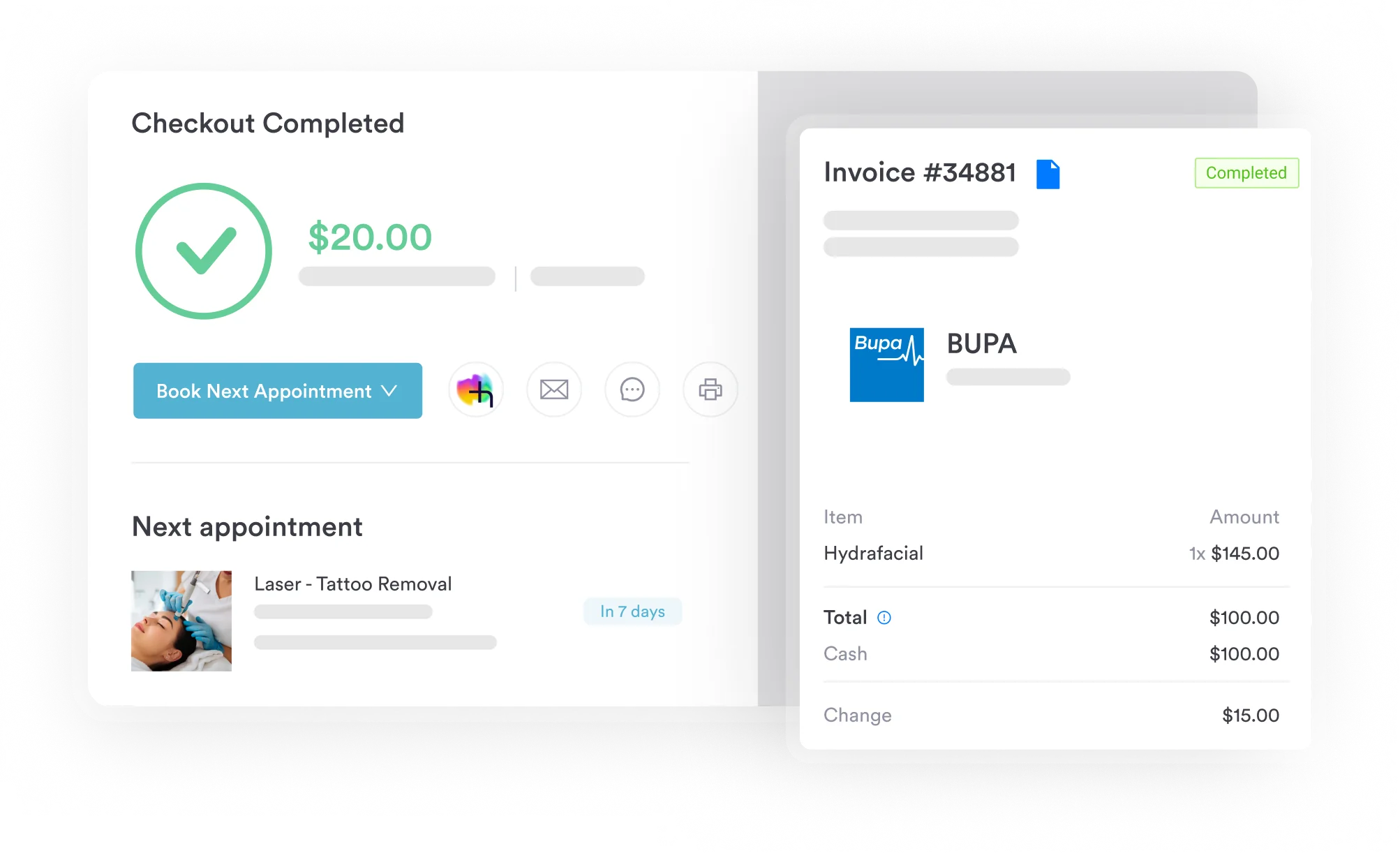
Practice management software like Pabau brings claims management together with digital documentation, payer follow-up tracking. For a facility billing mixed specialties alongside behavioral health, a single system removes the fragmentation that lets modifiers and authorizations slip. A dedicated behavioral health RCM platform will go deeper on Medicaid MCO integration at the H-code level. Pabau suits facilities that want clinical documentation and billing in one place, without running two systems side by side.

Pabau supports HCPCS Level II code submission, modifier management, and payer follow-up tracking. See how claims management works for behavioral health providers.

H0013 denials are rarely clinical. Most are administrative, and the list is short. A missing modifier, an unsigned progress note, an unconfirmed prior authorization, or a setting that does not match the code. Every one of those is detectable before the claim leaves the facility, which is why a pre-submission check pays for itself on this code.
Pabau supports HCPCS Level II submission, modifier tracking, and payer follow-up in one system. That helps behavioral health teams carrying steady H0013 volume. Book a demo to see how it handles H0013 claims day to day.

Coding a confirmed prostate cancer case? ICD-10 code C61 is the billable code for malignant neoplasm of the prostate, the confirmed primary cancer site.
Coding a lateralized kidney tumor? ICD-10 code C64.1 covers a malignant neoplasm of the right kidney, excluding the renal pelvis, when laterality is documented.
Coding a confirmed urethral tumor? ICD-10 code C68.0 covers malignant neoplasm of the urethra, confirmed as the primary tumor site by pathology.
Coding a thyroid cancer diagnosis? ICD-10 code C73 is the single billable code for malignant neoplasm of the thyroid gland, covering every subtype.
Coding cancer spread to lymph nodes? ICD-10 code C77.8 covers secondary cancer in lymph nodes across multiple regions, sequenced alongside the primary site code.
HCPCS code H0013 bills alcohol and/or drug services for acute detoxification delivered in a residential addiction program’s outpatient setting. That setting is part of the official CMS descriptor, not an optional note. It is a HCPCS Level II code, and Medicaid is the primary payer. Some commercial plans accept it, and some do not.
No. Hospital inpatient acute detoxification is H0009. H0013 covers the same acuity of withdrawal management delivered through a residential addiction program’s outpatient arm. If the patient was admitted to a residential program instead, use H0011. Billing H0013 for an inpatient episode is denied on setting alone.
Yes, Medicaid covers H0013 in most states, but the rules vary a great deal. Prior authorization is usually required, length-of-stay limits apply, and payable settings differ by state plan. Managed care organizations often add requirements on top of the state fee-for-service plan. Verify coverage with the state agency or MCO before admission.
Modifiers commonly used with H0013 include HF (substance abuse program) and HH (integrated mental health and substance abuse program). SA applies when a nurse practitioner renders the service in collaboration with a physician. State-assigned modifiers U1 through U9 also apply in many programs. Which one is required depends on the state Medicaid billing manual or the MCO provider guide. A missing modifier is a leading cause of H0013 denials.
The ICD-10-CM codes most often paired with H0013 are F10.230 (alcohol dependence with withdrawal, uncomplicated) and F10.231 (alcohol dependence with withdrawal delirium). F11.20 (opioid dependence, uncomplicated) and F19.20 (other psychoactive substance dependence, uncomplicated) are also common. Choose the most specific code the documentation supports. Some plans publish a required diagnosis list for H0013, so check payer policy.
H0013 claims need a completed ASAM withdrawal management assessment, a clinician order for detox services, and an individualized treatment plan. You also need notes for each service day, a discharge summary, and proof of prior authorization. Provider credentials showing Medicaid enrollment and any required SUD certification must be on file too. Auditors look hardest at the ASAM assessment and at progress notes copied forward.
H0013 covers acute detoxification delivered through a residential addiction program’s outpatient arm. H0014 covers ambulatory detoxification, which happens outside a residential program with less intensive monitoring. The distinction rests on the program type and the level of supervision recorded in the ASAM assessment. Billing H0013 for an episode that fits H0014 is an upcoding risk and a common audit finding.