CPT code 21011: Excision of soft tissue tumor of the face
CPT code 21011: Official descriptor and procedure overview CPT code 21011, as pu...

Last Updated: Oct 8, 2026
G0237 is the HCPCS Level II code for therapeutic procedures to increase strength or endurance of respiratory muscles, face to face, one on one, each 15 minutes (includes monitoring).
It does not quote a flat payment amount, because Medicare publishes none. G0237 pays on the Medicare Physician Fee Schedule, so the figure moves with your locality and your Medicare Administrative Contractor (MAC).
Let Pabau's smart automation suggest the right codes, reduce claim denials, and keep your practice compliant—effortlessly.
Automate repetitive tasks and focus on what matters most—your patients.
Reduce coding errors and ensure compliance with the latest regulations.
Clean claims, fewer denials, and faster reimbursements.
Powerful insights and reporting to help your practice thrive.
HIPAA compliant SOC 2 certified GDPR-compliant Trusted by 4,000+ clinics worldwide

HCPCS Code G0237 covers individual, face-to-face therapy to increase respiratory muscle strength or endurance, billed in 15-minute units.
Medicare pays G0237 only in approved outpatient settings, and hospital outpatient departments (POS 22) are the main one.
Direct physician supervision is required, though 42 CFR 410.47 allows real-time audio-video presence instead of a physician in the building.
The pulmonary rehabilitation benefit is capped at 36 sessions per lifetime, extending to 72 with documented medical necessity.
Practice management software like Pabau helps rehabilitation programs track session counts, keep documentation audit-ready, and cut G0237 denials.
G0237 sits in the Level II Healthcare Common Procedure Coding System (HCPCS), the G-code series CMS maintains for Medicare services.
The official CMS description reads: “Therapeutic procedures to increase strength or endurance of respiratory muscles, face-to-face, one-on-one, each 15 minutes (includes monitoring of the treatment).”
Each billed unit equals 15 minutes of direct, face-to-face, one-on-one therapy. Monitoring of the treatment is included in the unit, so a separate monitoring charge is not appropriate. The code lives within the HCPCS Level II G-code series maintained by the Centers for Medicare and Medicaid Services (CMS).
Medicare Part B covers HCPCS Code G0237 as part of a comprehensive pulmonary rehabilitation program. The governing national policy is NCD 240.8, Pulmonary Rehabilitation Services.
Staffing, supervision, and individualized plan requirements sit in 42 CFR 410.47. NCD 20.10 is the cardiac rehabilitation policy, so citing it on a pulmonary claim is a common mix-up.
Three things have to line up before G0237 is payable. The patient needs a physician-prescribed individual treatment plan and a documented pulmonary condition on the covered list. The service also has to be delivered in an approved outpatient setting under direct physician supervision.
Medicare pays 36 pulmonary rehabilitation sessions in a patient’s lifetime. Up to 36 more can be approved where the treating physician documents continued medical necessity. That ceiling of 72 is a lifetime figure too, not one that resets.
Every G0237 claim requires a covered ICD-10-CM diagnosis code to establish medical necessity. The primary covered diagnoses are chronic obstructive pulmonary disease, emphysema, and chronic bronchitis. Coverage also extends to certain other pulmonary conditions under the applicable MAC’s Local Coverage Determination (LCD).
Each MAC publishes a billing-and-coding article next to its LCD, such as CMS Article A52770. Covered diagnosis lists vary by jurisdiction, so check your own MAC’s current version first. Objective test results help here.
Confirm the code pairing against your MAC’s current covered-diagnosis list before the claim goes out. A diagnosis that was payable last year can drop off when the LCD is revised.
An EHR suited to primary care templates wellness visits and screenings, which is where most G-codes are earned.
Billers frequently confuse G0237 with its sibling codes G0238 and G0239. Choosing the wrong code in any session is one of the top denial triggers for pulmonary rehabilitation programs. The distinction comes down to session type and procedure content.
When G0237 applies: the patient is receiving one-on-one training aimed at respiratory muscle strength or endurance. Inspiratory muscle threshold loading and pursed-lip breathing with progressive resistance both qualify.
When G0238 applies: the one-on-one session involves a pulmonary rehabilitation procedure that G0237 does not describe. Breathing retraining, energy conservation strategies, and airway clearance training all sit here.
Bundling caution: G0239 bundles G0237 and G0238 for group settings. Billing G0237 and G0239 on the same date for one patient may trigger National Correct Coding Initiative (NCCI) bundling edits. Confirm current NCCI edits against CMS guidance before submitting.
The same timed-unit logic runs through other therapy codes. Reading one of those alongside G0237 makes the unit rules easier to hold on to.
Document each G0237 unit with a start and stop time in the progress note. CMS auditors frequently flag claims where total billed time cannot be reconstructed from the medical record. A single missing time entry on one session can prompt a broader medical review of the entire episode of care.
Medicare reimburses G0237 under the Medicare Physician Fee Schedule (MPFS). Rates update every year through the MPFS Final Rule in the Federal Register. There is no single flat national figure to quote, because payment is adjusted by locality and administered by your MAC.
So the table below shows what drives your rate rather than a dollar amount. Pull the current figure for your own locality from the CMS MPFS lookup tool before you build a revenue forecast.
Because G0237 is billed in 15-minute units, a 60-minute one-on-one session generates four billable units. A 45-minute session generates three. Units must reflect the time delivered, not a default session length. Billing from a preset session template instead of the documented time is an audit risk.
Medicare restricts HCPCS Code G0237 to specific care settings. Billing with the wrong place-of-service (POS) code is a leading denial trigger.
Programs inside a physical therapy practice should confirm the facility’s POS designation before billing. A hospital-based outpatient department carries POS 22. A free-standing practice with no hospital attachment may not qualify.
Comprehensive outpatient rehabilitation facilities are a separate case with their own code set. Rehabilitation departments that also run occupational therapy services bill those visits under their own timed codes, never under G0237.
Documentation failures cause more G0237 denials than any other issue. Every claim needs evidence that the service was medically necessary, properly supervised, and delivered in the correct time increments.
A SOAP progress notes template gives every session the same skeleton, which makes an incomplete one easy to spot.
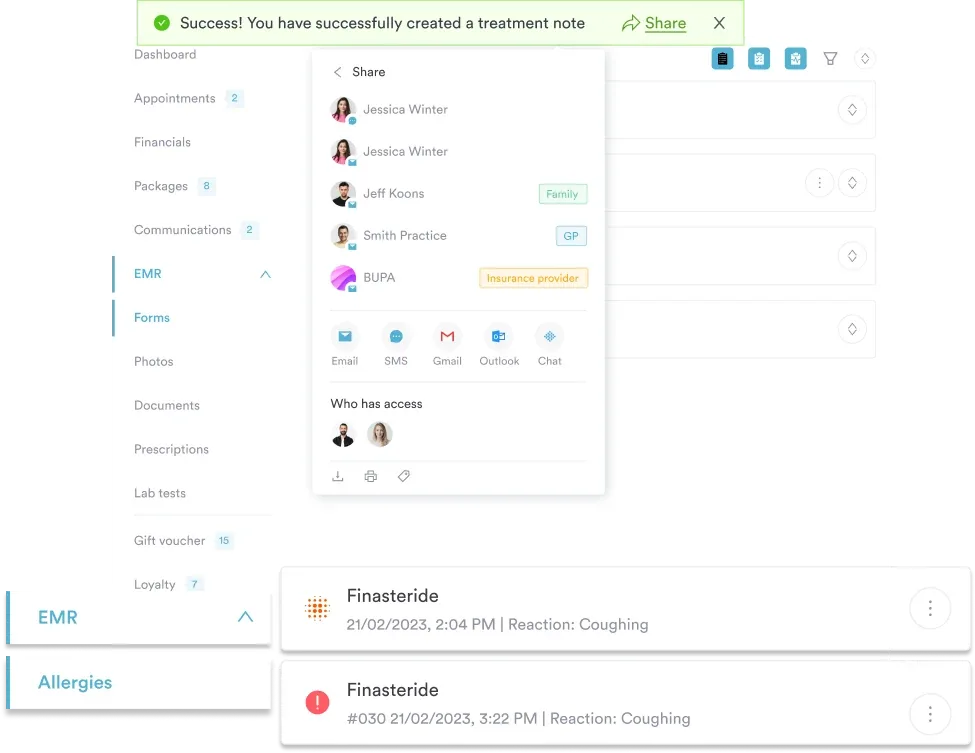
Session notes carry protected health information, so storage and transmission both have to be secure. The same HIPAA compliance checklist used in primary care applies to a rehabilitation program.
Clean G0237 claims follow a consistent workflow. Deviating from any step increases denial risk, particularly for first-time or episodic billers unfamiliar with pulmonary rehabilitation coding rules.
Automatic unit calculation from logged start and stop times removes the most common arithmetic error in G0237 billing.
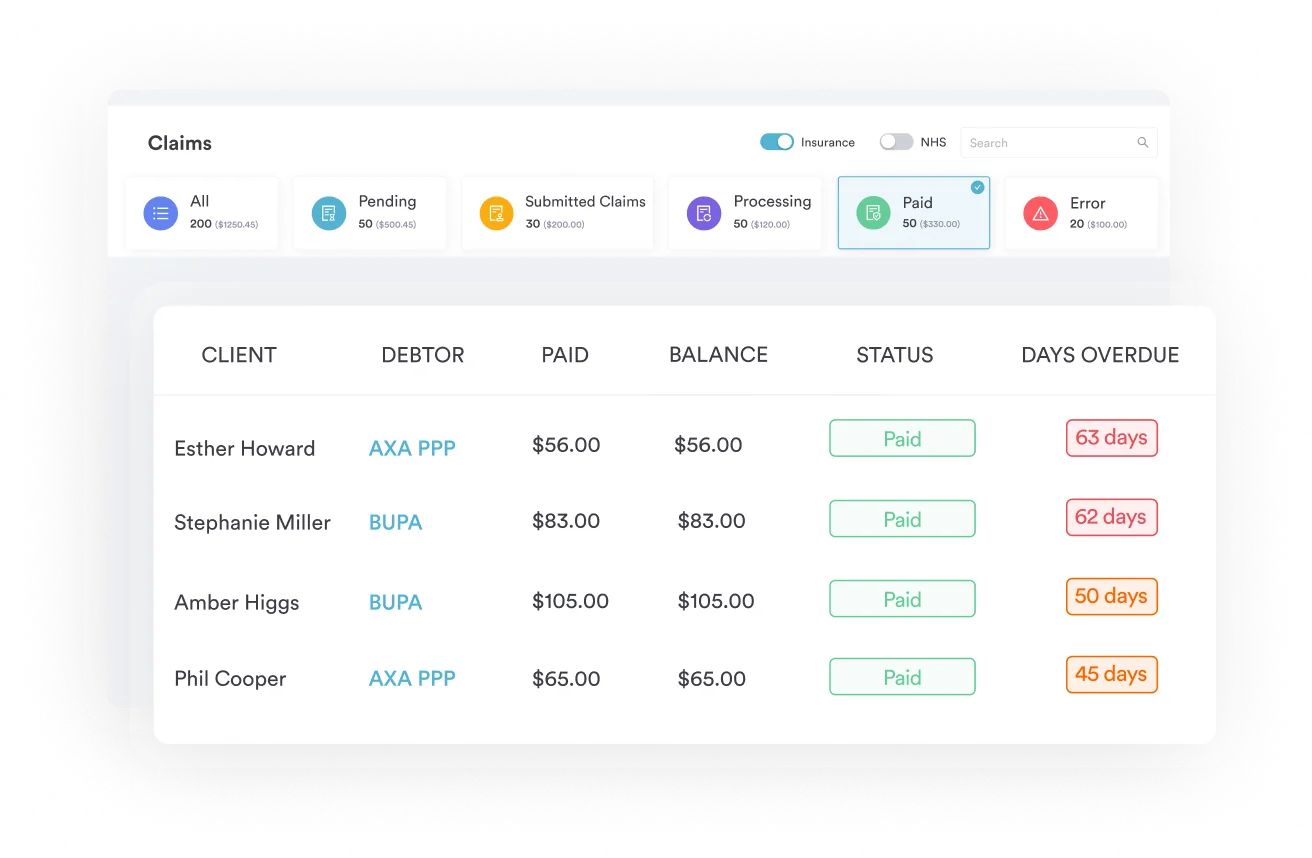
Understanding why G0237 claims get denied is as valuable as knowing how to file them. These are the most frequent denial patterns reported by pulmonary rehabilitation billing departments.
Appeals for denied G0237 claims go in at the Redetermination level, within 120 days of the denial notice. Include the complete medical record for the denied session, the physician order, and the treatment plan.
A well-documented appeal with contemporaneous records resolves most documentation-related denials without escalation.
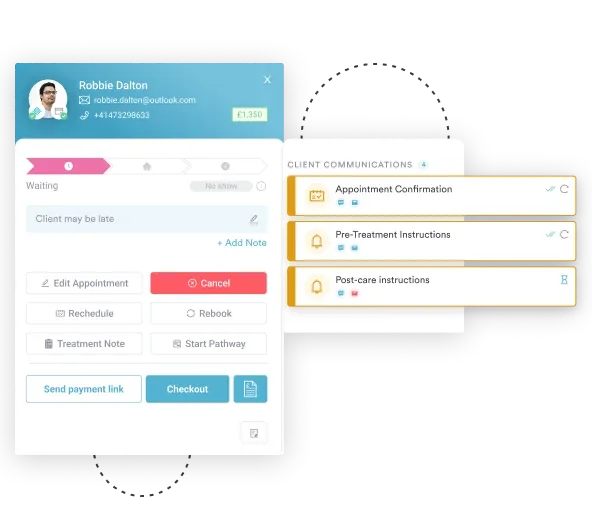
Track G0237 session counts per patient in your billing system from day one. Many programs only notice the lifetime limit after a claim is denied. Set a workflow alert at session 30 to start the physician re-authorization process, leaving a six-session buffer before the cap.
Pulmonary rehabilitation billing has an unusual shape. One session produces several G0237 units, and each unit has to trace back to a documented time and a supervising physician. Most programs reconstruct that trail after the fact, from paper session sheets and a scheduling spreadsheet.
Practice management software like Pabau structures the session note around the fields a CMS reviewer asks about. That means start and stop times per unit, the supervising physician’s attestation, the covered diagnosis, and the plan’s last update. Pabau’s digital intake forms capture those details at the point of care instead of at month end. The CARC denial code list is short enough to learn, and most rework traces to a handful of entries.
Session counts are the other trap, because the 36-session ceiling is a lifetime one. An alert can fire as a patient approaches it, so re-authorization starts before a claim is refused. Pulling scheduling and billing together helps too.
The outcome is a smaller manual load on your billing staff. Every billable session has a matching documented encounter in the practice management platform before the claim leaves the building.

Pabau’s practice management platform helps pulmonary rehabilitation programs track 15-minute billing units, automate session documentation, and submit cleaner claims. See how it works.

G0237 denials are rarely about eligibility. Almost all of them trace back to the record. A missing physician attestation stops payment. So does a unit count that does not match the clock, or a treatment plan too generic for a MAC review. The code is simple to use, and the paperwork around it is where programs lose money.
If you fix one thing this quarter, make it the time record. Start and stop times per unit, captured while the session happens, answer most of what a reviewer will ask. Book a demo to see how Pabau handles timed billing units and session documentation for rehabilitation programs.

Wondering how Medicare frequency caps work on other G-codes? G0118 shows how a screening code’s coverage limits and documentation rules fit together.
Billing therapy time outside a hospital outpatient department? G0159 walks through timed physical therapy billing in the home health setting.
Running a program with its own session limits? H0035 covers partial hospitalization billing, where program structure and supervision decide payment.
Billing iron sucrose infusions correctly? Iron sucrose injection billing guide walks through the unit-of-service math and wastage modifier rules that keep these claims from denial.
Need the diagnosis side documented as well? R84.4 explains how abnormal respiratory specimen findings are coded and supported.
HCPCS Code G0237 covers individual, face-to-face therapy to increase the strength or endurance of respiratory muscles. It is billed in 15-minute units, and monitoring of the treatment is included in the unit. Pulmonary rehabilitation programs use it for patients with COPD, emphysema, chronic bronchitis, and other covered pulmonary conditions under Medicare Part B.
G0237 covers individual therapy aimed specifically at respiratory muscle strength or endurance. G0238 is the residual individual code for other pulmonary rehabilitation procedures that G0237 does not describe. Breathing retraining, energy conservation training, and airway clearance therapy sit under G0238. Both bill in 15-minute units, and both can be billed on the same day for distinct procedures.
Units follow the time documented in the progress note, with each unit equaling 15 minutes of face-to-face therapy. A 60-minute session supports four units. A 45-minute session supports three. Units must match documented start and stop times, and they cannot be estimated from a standard session template. CMS expects billed units to reflect the time delivered, and overstating them is an audit risk.
Direct physician supervision is required, as defined by CMS under 42 CFR 410.27. The physician must be immediately available to help during the session. For pulmonary rehabilitation, 42 CFR 410.47 also allows that presence to be virtual, through real-time audio and video. Audio-only contact does not qualify, and neither does a physician who is simply reachable by phone.
G0237 is approved in hospital outpatient departments, which carry place-of-service code 22. Certain other approved outpatient settings also qualify, as confirmed by your Medicare Administrative Contractor. Under standard Medicare Part B, physician offices and home settings are not covered. Submitting G0237 with POS 11 is a common denial that needs a corrected claim.
Six causes account for most G0237 denials. Missing or weak direct-supervision documentation is the largest of them. The others are the wrong place-of-service code, a non-covered ICD-10 diagnosis, and billing G0237 with G0239 for one patient on one day. Claims submitted past the 36-session lifetime limit without extended authorization also fail. So do unit counts that do not match the documented session times.
Medicare Advantage plans must cover what Original Medicare Part B covers, including pulmonary rehabilitation. Individual plans can still apply their own prior authorization rules, network restrictions, and payment rates for G0237. Verify coverage criteria, prior authorization, and rates with the specific plan before you bill.