CPT code 21011: Excision of soft tissue tumor of the face
CPT code 21011: Official descriptor and procedure overview CPT code 21011, as pu...

Last Updated: Oct 8, 2026
G0118 is the HCPCS Level II code for glaucoma screening for high risk patient furnished under the direct supervision of an optometrist or ophthalmologist.
Let Pabau's smart automation suggest the right codes, reduce claim denials, and keep your practice compliant—effortlessly.
Automate repetitive tasks and focus on what matters most—your patients.
Reduce coding errors and ensure compliance with the latest regulations.
Clean claims, fewer denials, and faster reimbursements.
Powerful insights and reporting to help your practice thrive.
HIPAA compliant SOC 2 certified GDPR-compliant Trusted by 4,000+ clinics worldwide

HCPCS Code G0118 covers glaucoma screening for a high-risk Medicare patient, performed under an optometrist’s or ophthalmologist’s direct supervision.
Four high-risk categories qualify: diabetes mellitus, family history of glaucoma, African Americans aged 50 and older, and Hispanic Americans aged 65 and older.
Bill G0117 when the provider performs the screening personally, and G0118 when a staff member performs it under supervision.
Medicare pays for one screening every 12 months, counted from the last service date rather than the calendar year.
Patients still owe coinsurance and the Part B deductible, so glaucoma screening is not a zero-cost preventive benefit.
HCPCS Code G0118 is an HCPCS Level II G-code maintained by the Centers for Medicare and Medicaid Services, or CMS. It is not a CPT code.
G-codes cover Medicare services with no equivalent CPT descriptor. G0118 sits in the preventive services category under Medicare Part B.
The official CMS descriptor for HCPCS Code G0118 is: Glaucoma screening for high risk patient furnished under the direct supervision of an optometrist or ophthalmologist.
The phrase that decides the code is “direct supervision.” The supervising optometrist or ophthalmologist must be in the office suite and immediately available. They do not conduct the examination themselves.
Choosing between G0117 and G0118 comes down to one question. Who physically performs the glaucoma screening? The CMS preventive services chart lists G0117 as the screening by an optometrist or ophthalmologist.
G0118 is the same screening under their direct supervision. Both codes need a qualifying provider, in different roles.
Practices that use ophthalmic technicians for initial tonometry or visual field screening will most often bill G0118. The supervising provider may review the findings afterward. Who performed the screening still decides the code, so the billing workflow should ask that question first.
Medicare does not cover glaucoma screening for the general beneficiary population. Only patients who meet at least one of four CMS-defined high-risk criteria are eligible. A claim for anyone outside those four criteria will be denied. Clean coding does not rescue an ineligible patient.
A patient can qualify under more than one criterion. Only one qualifying diagnosis has to appear as the reason for the screening. The record must show that status before the claim goes out.
An EHR suited to primary care templates wellness visits and screenings, which is where most G-codes are earned.
Every G0118 claim requires a supporting ICD-10-CM diagnosis code that establishes the patient’s high-risk status. The diagnosis code communicates medical necessity to the Medicare Administrative Contractor (MAC) processing the claim. Using an unrelated or non-covered ICD-10 code is a guaranteed denial.
Always check covered diagnosis codes against the current Local Coverage Determination, or LCD, for your MAC jurisdiction. Covered code lists change between fiscal years. Established glaucoma codes such as H40.9 or H42 may also appear once a screening finds disease. Confirm MAC acceptance before you rely on those pairings.
Medicare Part B covers G0118 once every 12 months for a qualifying high-risk beneficiary. The window runs from the date of the last covered screening, not from January 1. Practices that treat it as a calendar-year benefit rebill too early and get denied.
Glaucoma screening is not one of the preventive services Medicare covers at no cost to the patient. CMS lists coinsurance and the Part B deductible as applying to both G0117 and G0118. Tell patients that before the visit rather than after the statement arrives.
Storing each patient’s screening history in electronic client records lets billing staff check the 12-month clock before the appointment. Other Medicare screening codes such as G0106 run on the same clock, so one frequency check can cover several services.
Track each patient’s last G0118 screening date as its own flag rather than relying on appointment history. Medicare’s 12-month window runs from the exact service date. A patient seen on March 15 is not eligible again until March 16 the next year. Automated frequency alerts stop premature rebilling.
Medicare reimbursement for HCPCS Code G0118 is set annually through the Medicare Physician Fee Schedule, or MPFS. Rates are adjusted using geographic practice cost indices, so a practice in Manhattan sees a different allowable amount than one in rural Mississippi.
Any dollar figure published in a third-party billing resource may be out of date by the time you read it.
Query the current year’s MPFS directly with the CMS fee schedule tool. Enter G0118 with your MAC locality code. The code carries a facility rate for outpatient hospital and ambulatory surgery center settings, and a separate non-facility rate for a physician office. The non-facility rate is usually higher because it includes practice overhead. Where a practice does not bill the payer directly, the patient needs an itemized statement carrying this code and its charge.
Rates change each January 1 and can shift mid-year through the conversion factor update. Pull fresh MPFS data at the start of each year and after any CMS correction. The AAPC HCPCS lookup is a useful cross-reference for descriptors and coverage notes. Confirm payment rates at the CMS source itself.
Getting G0118 paid on the first submission takes more than the right code. Each item below is a documented denial reason for this code across MAC jurisdictions.
Code-level rules built into the place where the note is written shorten the trip from documentation to a clean claim. That is the part of the medical billing process a practice controls most directly. Several other G-codes also turn on who furnished the service, G0128 among them, so the same question belongs in every claim review.
Medicare expects specific elements in the record behind a G0118 claim. Missing one of them is enough for a MAC to recoup payment on audit.

Practices with separate EHR and billing systems hit a familiar problem. The clinical note lives in one system, the claim is built in another, and nobody reconciles the two before submission.
Diabetes diagnoses and family history often arrive from a primary care practice. Your own record still has to carry them, because a MAC reviews what you documented.
G0118 denials follow predictable patterns. Billing teams that flag these specific scenarios in their pre-submission edit process will catch the majority of preventable rejections before they reach the MAC.
Denial review belongs in your revenue cycle management routine. Pull the G0118 denial rate monthly and sort the denials by error type. Then fix the top two or three root causes instead of reworking claims one at a time. Practices that track denials at the code level see patterns a general billing review would miss.
Audit your G0118 claims quarterly. Pull everything submitted in the last 90 days and sort the denials by reason code. If more than 20 percent share one root cause, you have a workflow problem rather than a one-off error. Fixing the upstream input step clears the whole category.
Ophthalmology and optometry practices that code G0118 by hand carry a structural risk. The facts that decide the claim sit in three different places, and nobody reconciles them before submission. The exam record, the screening history, and the risk factor all have to line up.
Pabau keeps all three in one place, inside the clinical record. Pabau’s claims management software attaches G0118 to the encounter as the note is written. The ICD-10 code that establishes high-risk status is chosen in the same step, so the note and the claim leave together.
Three workflows carry most of the load for practices billing G0118 regularly:
It is worth reviewing which practice management features reach past scheduling into claims work. That is where a G0118 denial pattern stops.
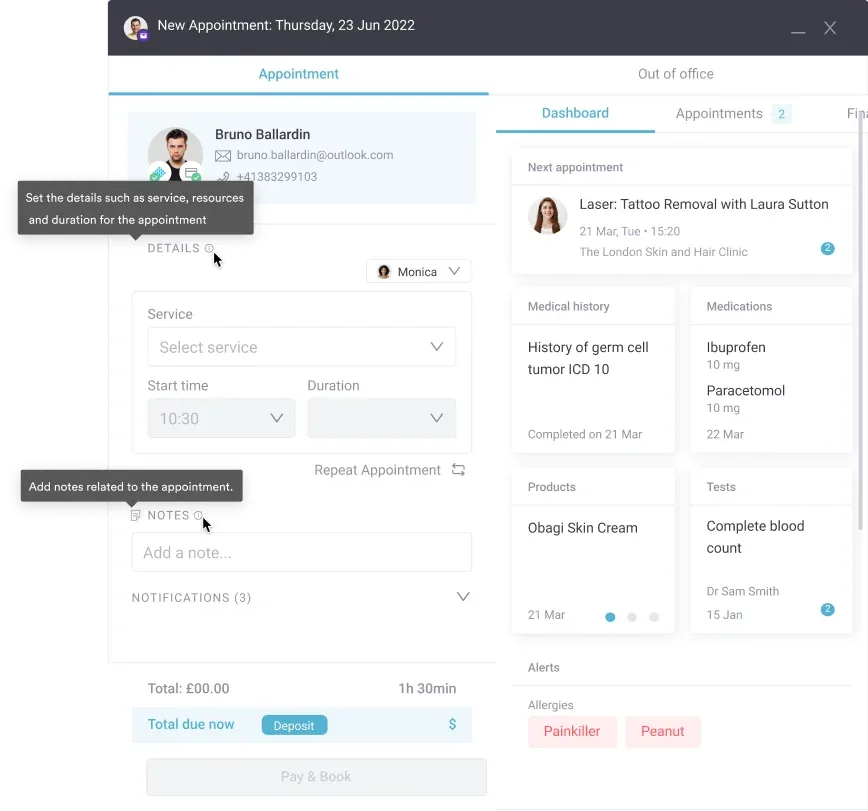

Pabau links the HCPCS code, the supporting diagnosis, and the clinical note in one step. Your billing team can see the frequency clock before the claim goes out.

Three checks decide whether G0118 gets paid. Confirm who performed the screening, attach a diagnosis that proves high-risk status, and count 12 months from the last service date. Build those checks into the workflow and the denial queue stops refilling itself.
Tell patients about the coinsurance before the visit as well. That one conversation prevents most of the billing complaints that follow a screening. Book a demo to see how Pabau links the code, the diagnosis, and the record on every G0118 claim.

Billing a thoracic arthrodesis? CPT code 22532 covers lateral extracavitary arthrodesis at one thoracic segment.
G0118 bills a Medicare glaucoma screening for a high-risk beneficiary when a staff member performs it. The supervising optometrist or ophthalmologist stays on site. It is an HCPCS Level II G-code covered under Medicare Part B.
G0117 applies when the optometrist or ophthalmologist performs the screening personally. G0118 applies when another staff member performs it under that provider’s direct supervision. Billing the wrong one is the most common denial reason for these claims.
Four categories qualify: diabetes mellitus, a documented family history of glaucoma, African Americans aged 50 and older, and Hispanic Americans aged 65 and older. The record must show which one applies, with a supporting diagnosis or history code.
Once per 12-month period, measured from the date of the last covered glaucoma screening. The calendar year does not reset eligibility. A second claim inside 12 months denies on the frequency limit.
Yes. CMS lists coinsurance and the Part B deductible as applying to glaucoma screening, so this is not a zero-cost preventive service. Tell the patient before the visit.
The optometrist or ophthalmologist must be in the office suite and immediately available throughout the procedure. They do not have to be in the room. General supervision, which allows off-site availability, is not enough.
Yes. CMS recognizes optometrists as qualifying supervising providers alongside ophthalmologists. State scope-of-practice rules on supervising technical staff vary, so confirm your state’s position before submitting.