CPT code 21011: Excision of soft tissue tumor of the face
CPT code 21011: Official descriptor and procedure overview CPT code 21011, as pu...

Last Updated: Oct 8, 2026
E0370 is the HCPCS Level II code for air pressure elevator for heel.
Plenty of product listings and coding blogs call E0370 an alternating pressure mattress pad. That descriptor belongs to other codes. E0370 sits in the hospital beds and associated supplies range, next to bed rails and bed accessories.
The code is maintained by the Centers for Medicare and Medicaid Services (CMS) as part of HCPCS Level II. It was added on January 1, 1997, and it is still active in the July 2026 file.
Two facts then shape every E0370 claim. The code has no local coverage determination and no national coverage determination. It also has no line on the Medicare DMEPOS fee schedule.
Let Pabau's smart automation suggest the right codes, reduce claim denials, and keep your practice compliant—effortlessly.
Automate repetitive tasks and focus on what matters most—your patients.
Reduce coding errors and ensure compliance with the latest regulations.
Clean claims, fewer denials, and faster reimbursements.
Powerful insights and reporting to help your practice thrive.
HIPAA compliant SOC 2 certified GDPR-compliant Trusted by 4,000+ clinics worldwide

HCPCS code E0370 is an air pressure elevator for heel. The device offloads the heel in bed, and mattress overlays carry different codes.
No current local coverage determination, policy article, or national coverage determination lists E0370. Its HCPCS coverage code is C, meaning carrier judgment.
E0370 has no line on the July 2026 DMEPOS fee schedule. Its pricing indicator is 00, so Part B does not price it separately.
The KX modifier does not belong on an E0370 claim. KX attests that a medical policy was met, and this code has no policy.
E0370 is absent from the CMS required prior authorization list, the master list, and the face-to-face and written order list.
The long descriptor is air pressure elevator for heel and the short descriptor is air elevator for heel. Both come from the July 2026 HCPCS Level II alpha-numeric file published by CMS.
That record carries more than wording. Several fields in it decide how the code behaves once it reaches a claim.
Coverage code C and pricing indicator 00 are the two that matter. Together they say Medicare has left this code to contractor discretion and set no national price for it.
Clinically, an air pressure heel elevator is an inflatable boot or cushion. Air fills a chamber under the calf so the heel hangs free. The calcaneus then carries no load while the patient lies in bed.
That matches what wound care guidance asks for. The international pressure injury guideline recommends distributing the weight of the leg along the full length of the calf. No direct pressure should reach the Achilles tendon, popliteal vein, or peroneal nerve.
The same guideline asks for the knee in 5 to 10 degrees of flexion. It also warns against rolled blankets and towels, because they press on the back of the foot.
The heel is one of the most common sites for a pressure injury. Skin over the calcaneus is thin and the bone sits close to the surface, so tissue has little to cushion it. Once an ulcer opens.
The table below puts E0370 next to the codes suppliers most often reach for instead. Picking the wrong one is the leading source of denial in this group.
One line in that table trips suppliers up. The CMS orthoses policy article is explicit about one case. A walking boot must be coded A9283 when it is used solely to prevent or treat a lower extremity ulcer. A9283 is then denied as noncovered. Fitted as a brace for an orthopedic condition.
The mattress descriptor pinned on E0370 in search results belongs to E0197: air pressure pad for mattress, standard mattress length and width. E0181 is the same idea with a pump and an alternating cycle added.
So three separate products sit behind the confusion. A powered alternating overlay is E0181. A nonpowered air overlay is E0197. An inflatable heel elevator is E0370.
The swap changes more than the code on the claim line. E0181 and E0197 are group 1 support surfaces with published criteria in LCD L33830. E0370 has no policy at all, so the whole claim has to be built differently.
Copying a code out of a vendor catalog is usually how the swap happens. Check the descriptor against the official CMS file before you build the order.
Medicare has no published coverage policy for E0370. No current local coverage determination lists it, no LCD-related policy article mentions it, and no national coverage determination addresses it. Broader Medicare billing guidance explains the claiming channels and payer rules that apply once a coverage decision is made.
You can verify that yourself. CMS publishes the whole Medicare Coverage Database as a download. E0370 returns no matches across current LCDs, current policy articles, or NCDs.
The HCPCS file says the same thing in a single character. E0370 carries coverage code C, which means carrier judgment. The DME MAC decides each claim on its own merits.
Four DME MACs handle these claims. Noridian administers jurisdictions A and D. CGS administers jurisdictions B and C, and the four share no policy text on this code. So two jurisdictions can land on different answers for the same device.
Compare that with E0181 and E0197. Both fall under LCD L33830 and policy article A52489, so their criteria are written down. A supplier can read them before delivery and know where the claim stands.
The practical route for E0370 is different. Ask your DME MAC for written guidance before you deliver. Then document the clinical need as though a reviewer will read it, because one probably will.
Because the claim record doubles as the audit trail, HIPAA-aligned documentation matters as much here as clinical accuracy does.
Heel pressure injuries are coded in the L89.6 subcategory. The subcategory identifies the heel, the next digit gives the side, and the last digit gives the stage.
Stage values run 1 through 4. A 0 means unstageable, a 6 means pressure-induced deep tissue damage, and a 9 means unspecified stage.
No LCD also means no published list of covered diagnoses for this code. The diagnosis you report has to match the findings in the chart, because nothing else backs it up.
The codes below are the ones that fit a heel offloading device.
A diabetic or arterial heel ulcer is not a pressure injury, so it belongs in L97.4 rather than L89.6. Inflammatory ulcers coded L88 sit outside both groups. Sequence E11.621 first, then the ulcer site code.
Use the staged code whenever the clinician documented a stage. An unspecified-stage code invites a review request, because the reviewer cannot tell what the device is treating.
With no coverage criteria to satisfy, documentation carries the whole claim. A reviewer has no policy checklist to work from, so the chart has to make the case by itself.
Start with what is no longer required. Certificates of medical necessity and DME information forms were discontinued for dates of service on or after January 1, 2023. Claims that still carry CMN data elements are rejected and returned.
What an E0370 claim needs instead:
E0370 is also absent from the CMS face-to-face and WOPD list. No face-to-face encounter is mandated for this code. The standard written order rule still applies to every DMEPOS item.
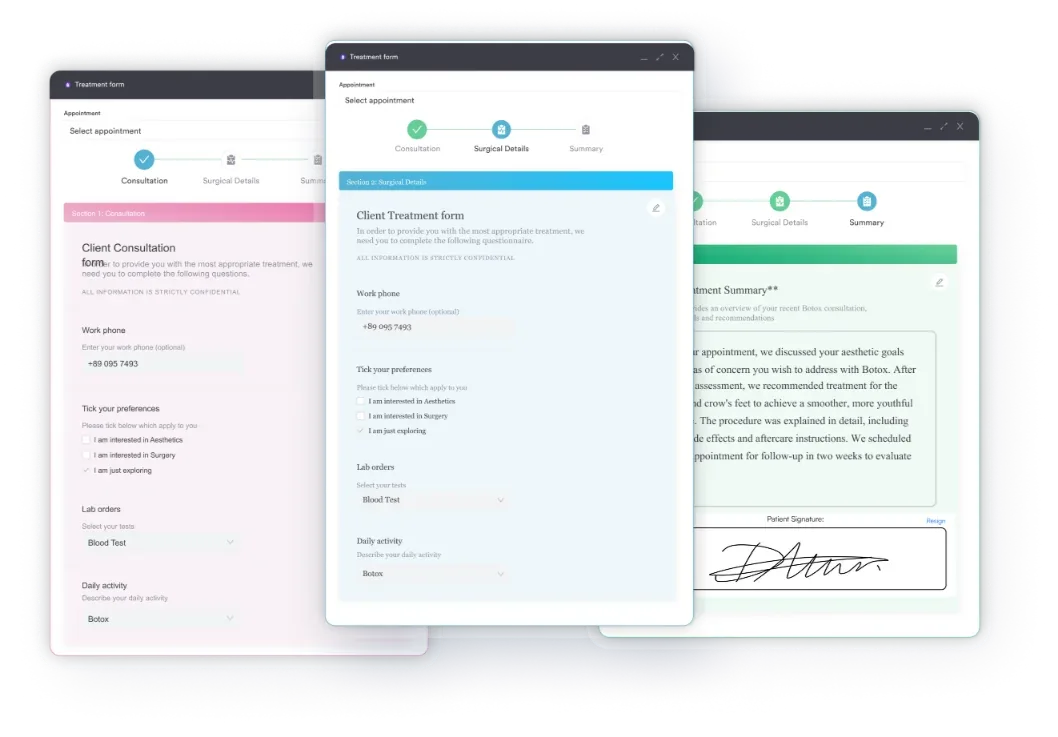
Teams that use digital intake forms can produce these records faster during an audit or appeal. Structured fields for heel staging, laterality, and prior interventions remove most of the back-and-forth.
Before an E0370 delivery, write one short paragraph in the chart that answers three questions. Which heel is at risk, and at what stage? What was tried first, and why did it fail? Who ordered the device, and on what date? A reviewer with no LCD to follow will decide from that paragraph.
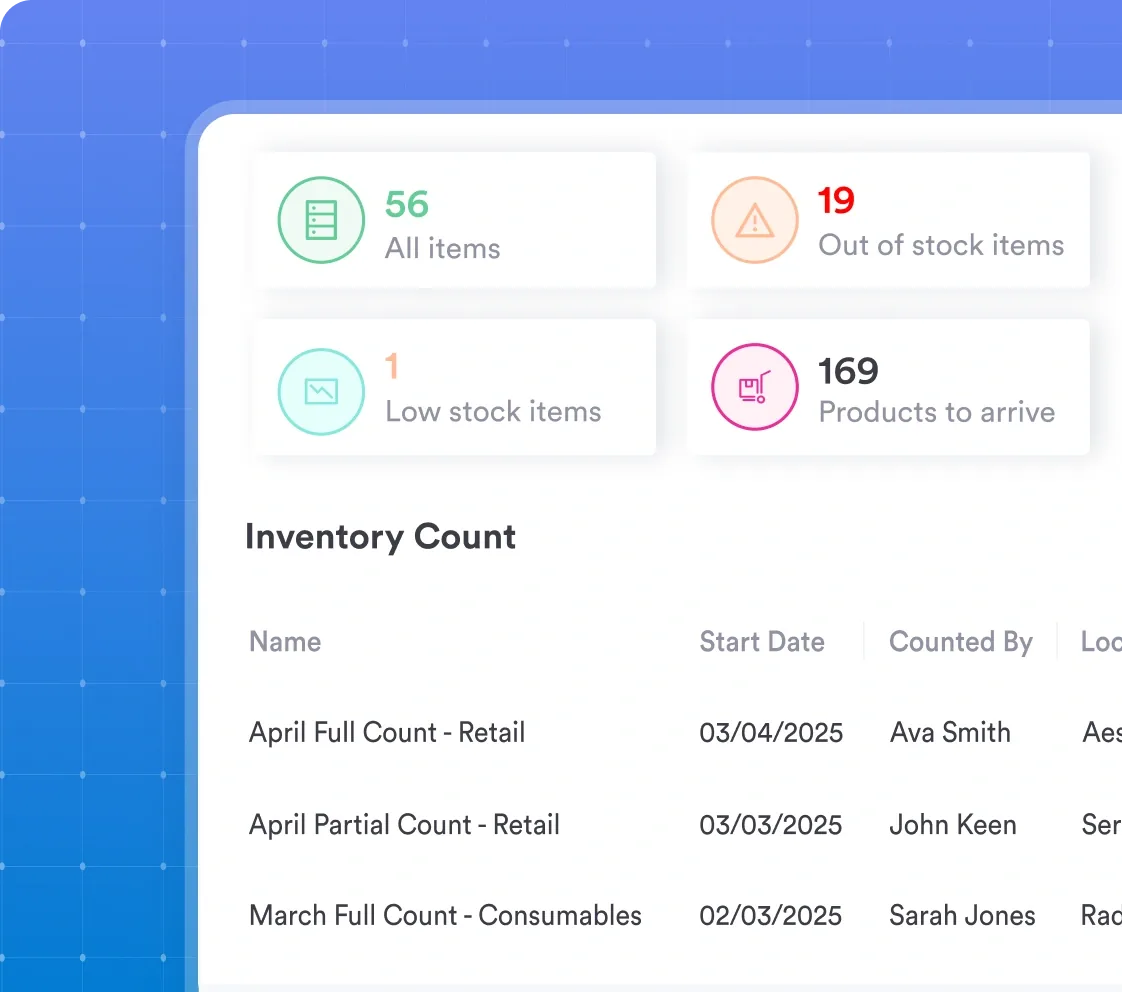
An inventory management tool ties each dispensed item to a patient and a billing code, ending stockroom guesswork.
E0370 takes laterality and equipment modifiers. It does not take a KX.
That surprises people who bill support surfaces every day. KX means the requirements specified in the medical policy have been met. E0370 has no medical policy, so KX has nothing to attest to.
Units are the other trap. The E0370 descriptor does not say each, while E0191 does. Ask your DME MAC how to report a bilateral supply before you split it across two lines.
Submit E0370 on the CMS-1500 claim form or its electronic equivalent, the 837P transaction. The HCPCS code and its modifiers go in Box 24D, and the supporting ICD-10-CM code goes in Box 21.
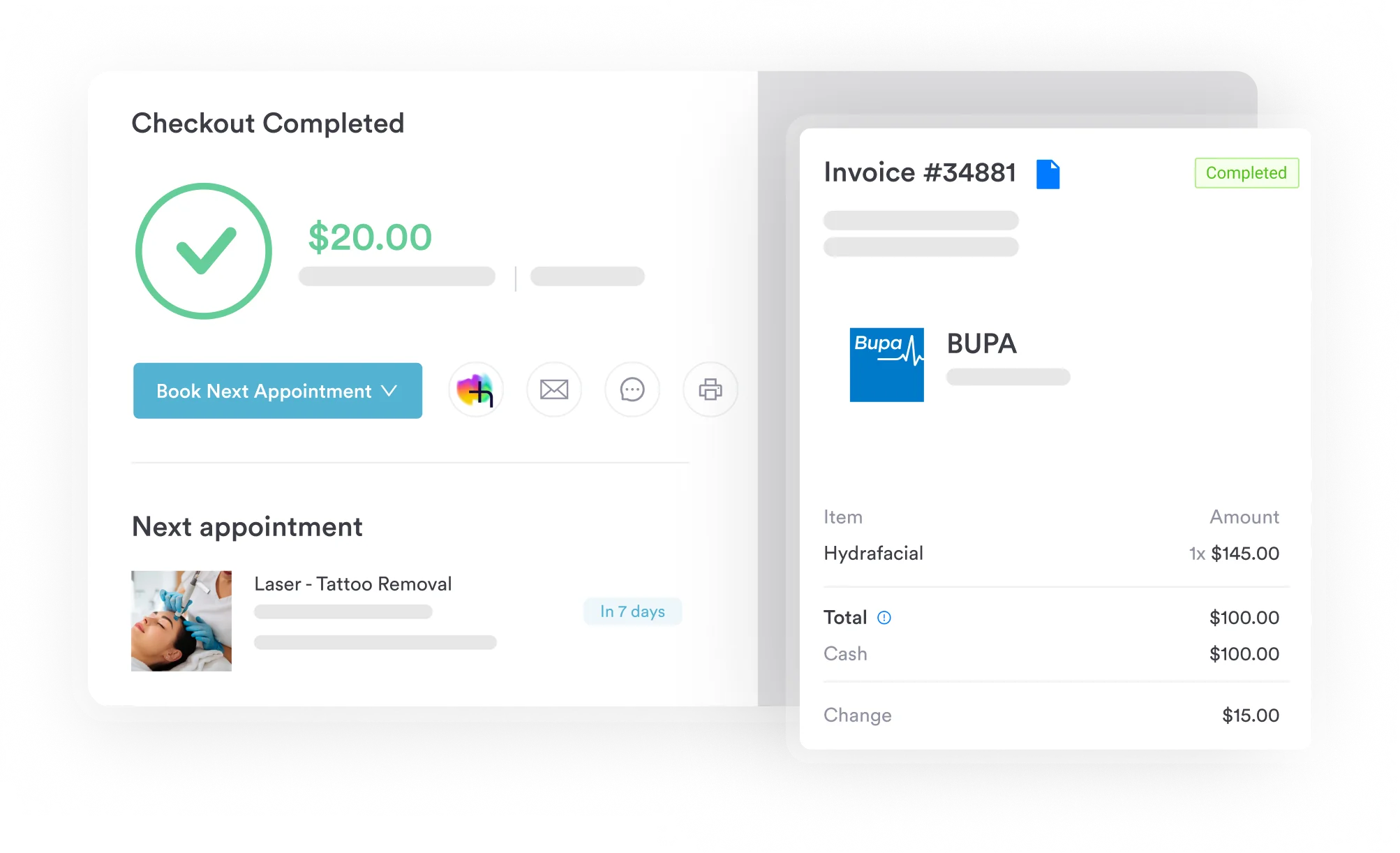
Some teams run DME billing alongside clinical operations. Practice management software like Pabau ties claims management to the patient record. Modifiers, diagnosis codes, and documentation then travel with the claim from order through reimbursement.
There is no Medicare allowed amount for E0370. The code does not appear on the July 2026 DMEPOS fee schedule at all.
The HCPCS file agrees with that. E0370 carries pricing indicator 00, which means the service is not separately priced by Part B.
That is unusual for a code in this range. E0181, E0191, E0197, and E0277 all have published lines on the DMEPOS fee schedule. E0370 has none.
So any Medicare payment on E0370 is a contractor decision on the individual claim. Confirm how your DME MAC treats the code before you promise a patient anything.
Other payers price it differently. Several state Medicaid programs publish an E0370 allowance, and commercial plans set their own rates. Read the payer’s own fee schedule rather than a third-party code listing.
Three practical routes are open when Medicare will not pay:
Billing teams that track expected reimbursement per patient get more from practice management software that ties fee data to the record. Anything outside the normal range gets flagged before the claim goes out.
Most E0370 denials trace back to one of two things. Either the wrong code was chosen, or the chart never explained why the device was needed.
The errors that come up most often on these claims:
Track E0370 denials separately from your support surface denials. The two code families fail for different reasons, so a single number hides both. A quarterly medical chart audit on this code family catches the pattern early. Practices using structured medical forms assemble the appeal package in minutes rather than days. When a claim on this code comes back unpaid, the denial reason codes on the remittance name the cause.
Add one question to your order entry screen for this code family. Did the patient receive something that goes on the bed, on the foot, or over the heel? Bed points to E0181 or E0197. Foot points to A9283 or an L-code walking boot. Heel in bed points to E0370 or E0191. Answering it once prevents most denials in this range.
In most billing teams, an E0370 claim is assembled from three places. The order sits in one system, the clinical notes in another, and proof of delivery in a shared drive. Every audit request then becomes a search.
Pabau keeps all of it on the patient record. Structured intake and clinical forms capture the heel assessment, the laterality, and the practitioner attestation as fields you can report on.
Automated workflows handle the chasing. Pabau can prompt for a missing signature, remind a practitioner about an outstanding order, and log every message it sends. When a reviewer asks what happened and when, the timeline is already there.
The outcome is a shorter path from order to payment. Fewer claims stall for a document nobody can find, and fewer appeals start from scratch.
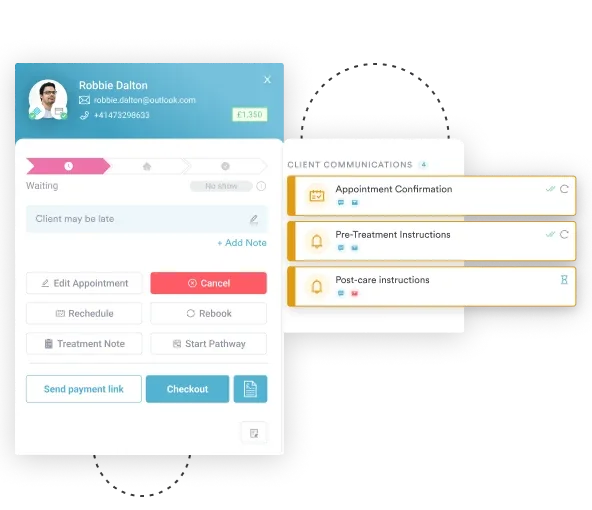

Pabau keeps orders, heel assessments, signed forms, and claims on one patient record, so the documentation is complete before delivery. See how it fits your billing workflow.

E0370 is a small code carrying an outsized amount of confusion. The official descriptor is air pressure elevator for heel, and nothing in the CMS file mentions a mattress.
Two habits protect the claim. Verify every descriptor in this range against the CMS HCPCS file rather than a vendor catalog. And treat the missing LCD as a documentation obligation rather than a free pass.
The trade-off is a slower intake for a much shorter payment cycle. If your team handles DME claims at volume and wants to cut the rework, book a demo and see how Pabau keeps the documentation together.

Stepping up to a group 2 support surface? E0277 covers the powered pressure-reducing air mattress and its prior authorization process.
Billing therapy visits in the home? G0159 sets out the physical therapist home health rules that sit alongside DME claims.
Coding a postpartum lactation failure case? ICD-10 code O92.3 for agalactia covers the absence of breast milk after childbirth and billing for FY2026.
Coding disseminated intravascular coagulation in a newborn? ICD-10 code P60 covers DIC in newborns, a code with no sub-codes and clear documentation requirements.
E0370 covers an air pressure elevator for heel. That is an inflatable device that lifts the heel clear of the bed, so the calcaneus carries no load. It sits in the hospital beds and associated supplies range of HCPCS Level II.
No, despite how often it is described that way online. The official CMS descriptor for E0370 is air pressure elevator for heel. A nonpowered air mattress overlay is E0197, and a powered alternating overlay with a pump is E0181.
Coverage is a contractor decision. No current LCD, policy article, or NCD addresses E0370, and its HCPCS coverage code is C for carrier judgment. Ask your DME MAC before delivery, and have the patient sign an ABN.
There is no published amount. E0370 is absent from the July 2026 DMEPOS fee schedule. Its pricing indicator is 00, so Part B sets no separate price for it. Any payment is decided on the individual claim.
No. E0370 does not appear on the CMS required prior authorization list, the master list, or the face-to-face and written order list. Prior authorization applies to group 2 support surfaces such as E0193, E0277, and E0371.
E0370 is an inflatable heel elevator that suspends the heel above the bed. E0191 is a heel or elbow protector, each, which pads the surface the heel rests on. Only E0191 carries a fee schedule amount.
It depends on the device. A9283 covers a shoe-like item, an item used inside a shoe, or an item attached to a shoe. CMS policy also puts a walking boot under A9283 when it is used solely for ulcer care.