CPT code 51797: Intra-abdominal voiding pressure add-on
What CPT code 51797 covers CPT code 51797 is the add-on code for intra-abdominal...

Last Updated: Oct 19, 2026
E0300 is the HCPCS Level II code for pediatric crib, hospital grade, fully enclosed, with or without top enclosure.
According to the Centers for Medicare and Medicaid Services (CMS), HCPCS Level II codes like E0300 govern billing for durable medical equipment. Only an accredited DMEPOS supplier enrolled with Medicare can bill the code.
Let Pabau's smart automation suggest the right codes, reduce claim denials, and keep your practice compliant—effortlessly.
Automate repetitive tasks and focus on what matters most—your patients.
Reduce coding errors and ensure compliance with the latest regulations.
Clean claims, fewer denials, and faster reimbursements.
Powerful insights and reporting to help your practice thrive.
HIPAA compliant SOC 2 certified GDPR-compliant Trusted by 4,000+ clinics worldwide

HCPCS code E0300 describes a pediatric crib, hospital grade, fully enclosed, with or without top enclosure.
E0300 is not a hospital bed, even though it sits inside the E0250-E0373 hospital beds grouping range.
Medicare has paid E0300 as a capped rental item under pricing indicator 36 since April 1, 2014.
Rental runs for up to 13 months of continuous use, after which ownership transfers to the patient.
CMS retired the Certificate of Medical Necessity in 2023, so the written order and medical record now carry the claim.
Practice management software like Pabau keeps the order, clinical notes, and delivery proof in one audit-ready record.
HCPCS code E0300 has one official CMS long descriptor. It reads pediatric crib, hospital grade, fully enclosed, with or without top enclosure. The short descriptor on the CMS file reads “Enclosed ped crib hosp grade”.
The item is durable medical equipment for an infant or child at risk of falls or unsafe exit from an open crib. Suppliers bill it for use in the patient’s home. Billers and pediatric patient care management teams reach for E0300 when a standard domestic crib cannot keep the child safe.
E0300 sits inside the E0250-E0373 range, which CMS groups as Hospital Beds and Associated Supplies. The name of the range is not the descriptor of the code. A grouping range collects related DME categories for payment policy, and it does not turn every code inside it into a bed.
The “with or without top enclosure” language matters when you procure equipment. A crib with a canopy-style top and one without both map to E0300, so no second code is needed for the two configurations. The hospital-grade designation means the crib meets clinical safety standards rather than residential ones.
Medicare covers E0300 under the Part B durable medical equipment benefit when three conditions are met at once:
A diagnosis on its own never carries the claim. The record has to connect the diagnosis to the need for a fully enclosed crib.
Coverage detail comes from Local Coverage Determinations, which vary by Medicare Administrative Contractor (MAC). CMS does not publish a single national policy for every pediatric DME item. Check your MAC’s LCD and policy article before you promise a family that the crib is covered.
Reliable medical forms and documentation workflows are the foundation of a defensible necessity case. The practitioner’s notes must tie the specific diagnosis to the clinical need for an enclosed crib, not simply confirm that the diagnosis exists.
Medicare pays E0300 as a capped rental item. CMS assigned the code pricing indicator 36, capped rental DME with a price subject to floors and ceilings, effective April 1, 2014. Before that date the fee schedule treated E0300 as inexpensive or routinely purchased equipment. Transmittal 2902 made the change, so any workflow still built on purchase logic is out of date. A rejected electronic claim never reaches adjudication, so it does not appear in denial reporting.
Capped rental pays a monthly amount for up to 13 months of continuous use. The standard formula pays 10% of the allowed purchase amount for months one through three. Months four through 13 pay 7.5%. Ownership transfers to the patient after the 13th paid month, and the rent stops.
A break in medical need can restart the rental period. The break has to run longer than 60 consecutive days plus the days left in the last paid rental month. Shorter interruptions do not reset the 13-month count.
Billing E0300 as a one-time purchase creates an overpayment, and overpayments invite recoupment. Bill each rental month in sequence with the correct modifier instead. After title transfers, repairs and replacement parts are billed separately and need their own documentation.
Set a reminder at rental month four. That is where the payment rate drops to 7.5% and where the KJ modifier replaces KI. Most capped rental underpayments and rejections on E0300 happen at that one handover point.
A patient management system reminds you when issued equipment is due for review, replacement, or return.
CMS publishes the E0300 allowable in the DMEPOS fee schedule and updates it each January. Because E0300 is a capped rental code, the fee schedule carries a monthly rental amount rather than a purchase price.
Rates are locality-adjusted, so the allowable in rural Montana differs from urban California. Verify your locality rate with the CMS DMEPOS fee schedule before you submit.
State Medicaid programs set their own rates for pediatric DME. Some publish a full HCPCS fee schedule, and others defer to the CMS amounts. Many also require prior authorization for an enclosed crib, so read the state DME manual before delivery.
The sequence below reflects Medicare rules. Commercial plans follow a similar shape, with their own authorization and timing requirements.
Do not append NU to an E0300 claim. NU signals new purchased equipment, and a capped rental code has no purchase month to attach it to.
Medicare no longer accepts a Certificate of Medical Necessity for E0300. CMS discontinued CMNs and DME Information Forms for dates of service on or after January 1, 2023. A claim that still carries CMN or DIF data is rejected and returned to the supplier. Old templates now cause the denial they were written to prevent.
Medical necessity is shown through the practitioner’s order and the medical record instead. Keep the following on file.
Medicare’s Required Prior Authorization List does not currently name E0300, so check the current list rather than assuming either way. Commercial requirements differ from Medicare in both directions. Some plans ask for less.
Product-level coding is worth verifying too. The PDAC coding verification process confirms that a specific crib model meets the criteria for E0300 before you bill it. A child who also receives enteral nutrition carries separate claims.
No ICD-10 code guarantees payment for E0300. The diagnoses below are the ones that most often appear on these claims, and each still needs supporting narrative in the chart.
Confirm the codes your MAC or plan accepts before you build them into a template. LCD-covered diagnosis lists change, and a retired code on an otherwise clean claim still triggers a denial.
Six errors account for most E0300 rejections. Each one is cheap to prevent and expensive to appeal.
E0300 is the only HCPCS code for a fully enclosed, hospital-grade pediatric crib. Its neighbors in the numbering sequence describe something else entirely.
E0301 through E0304 are heavy-duty and extra-heavy-duty adult hospital beds, separated by weight capacity and by whether a mattress is included. They share the E0250-E0373 grouping range with E0300 and nothing more.
The genuinely comparable codes sit further along the range. E0328 and E0329 cover pediatric hospital beds with 360-degree side enclosures. Both include a mattress, and both are beds rather than cribs. Confirm every descriptor against the current-year CMS HCPCS file before you bill.
Reach for E1399 only when a child needs a modified enclosure that the E0300 descriptor does not cover. Attach a narrative description to that claim.
A capped rental code gives you 13 chances to lose a claim. Every month needs evidence that the child still needs the crib. An auditor can also ask for the order, the notes, and the delivery record at any point. When those documents live in separate systems, the request takes days to answer.
Pabau is practice management software for healthcare providers. Its digital intake forms capture structured clinical detail at the point of care, including the fields that support medical necessity for a DME order. The result is a retrievable record instead of handwritten notes waiting to be transcribed.
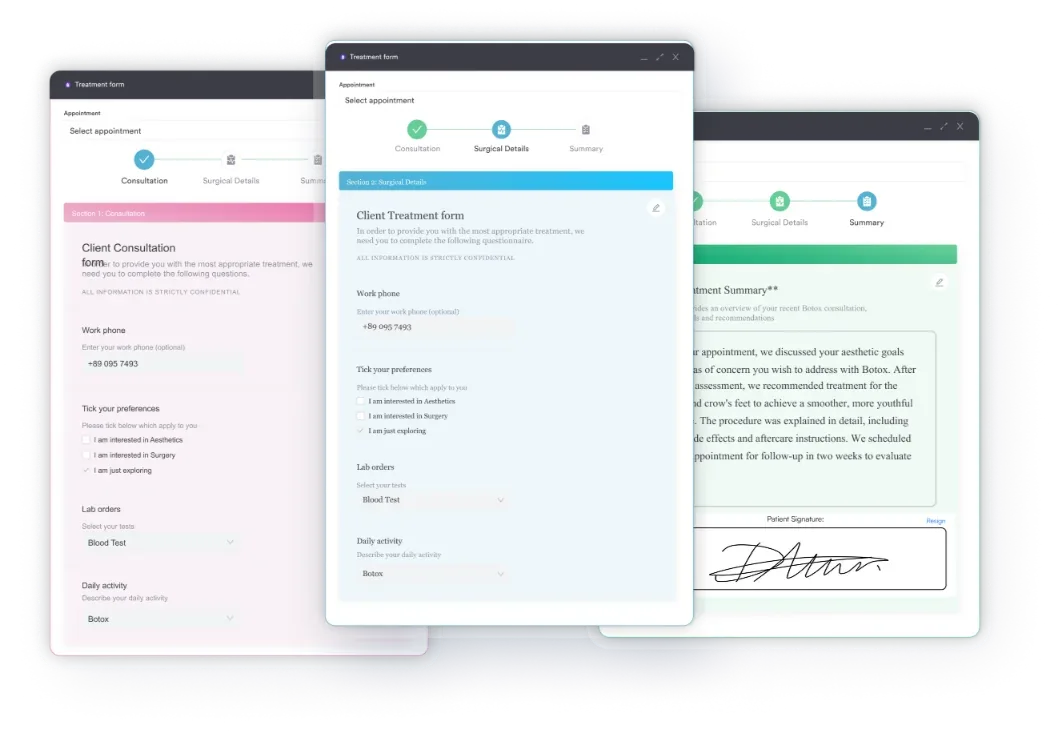
The platform’s client record management keeps a complete audit trail, so every note, form, and record update is timestamped and searchable. During a DMEPOS audit you can produce the documentation for a specific rental month in the format that matches what you billed.
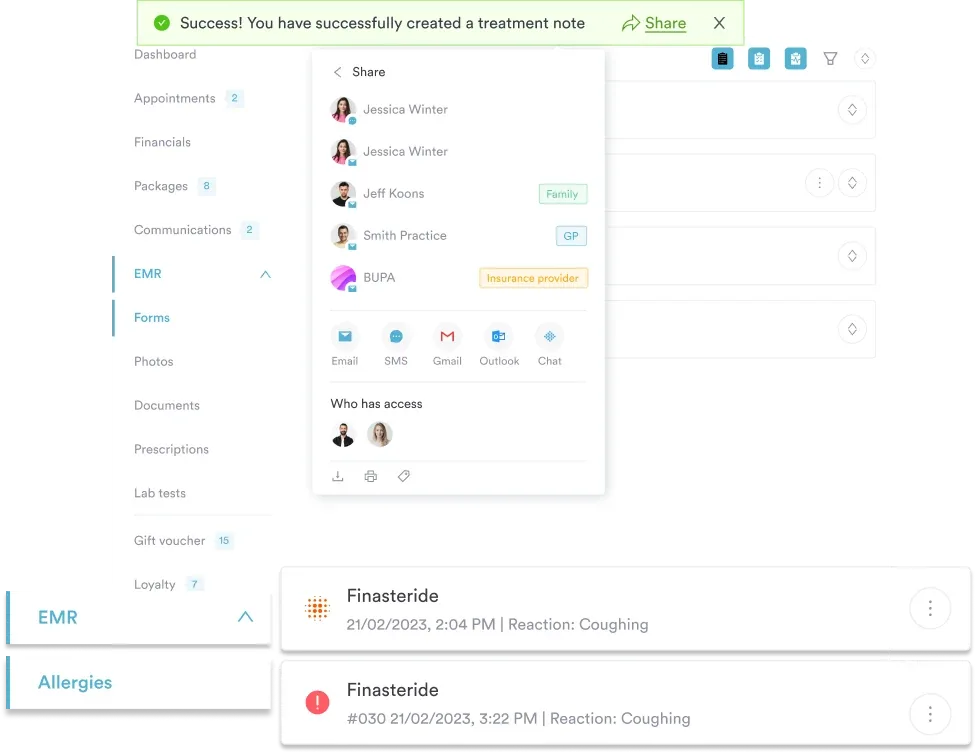
For practices extending their practice management software features into insurance billing. Pabau’s claims tools support structured submission and flag missing documentation before a claim goes out, rather than after a denial arrives.
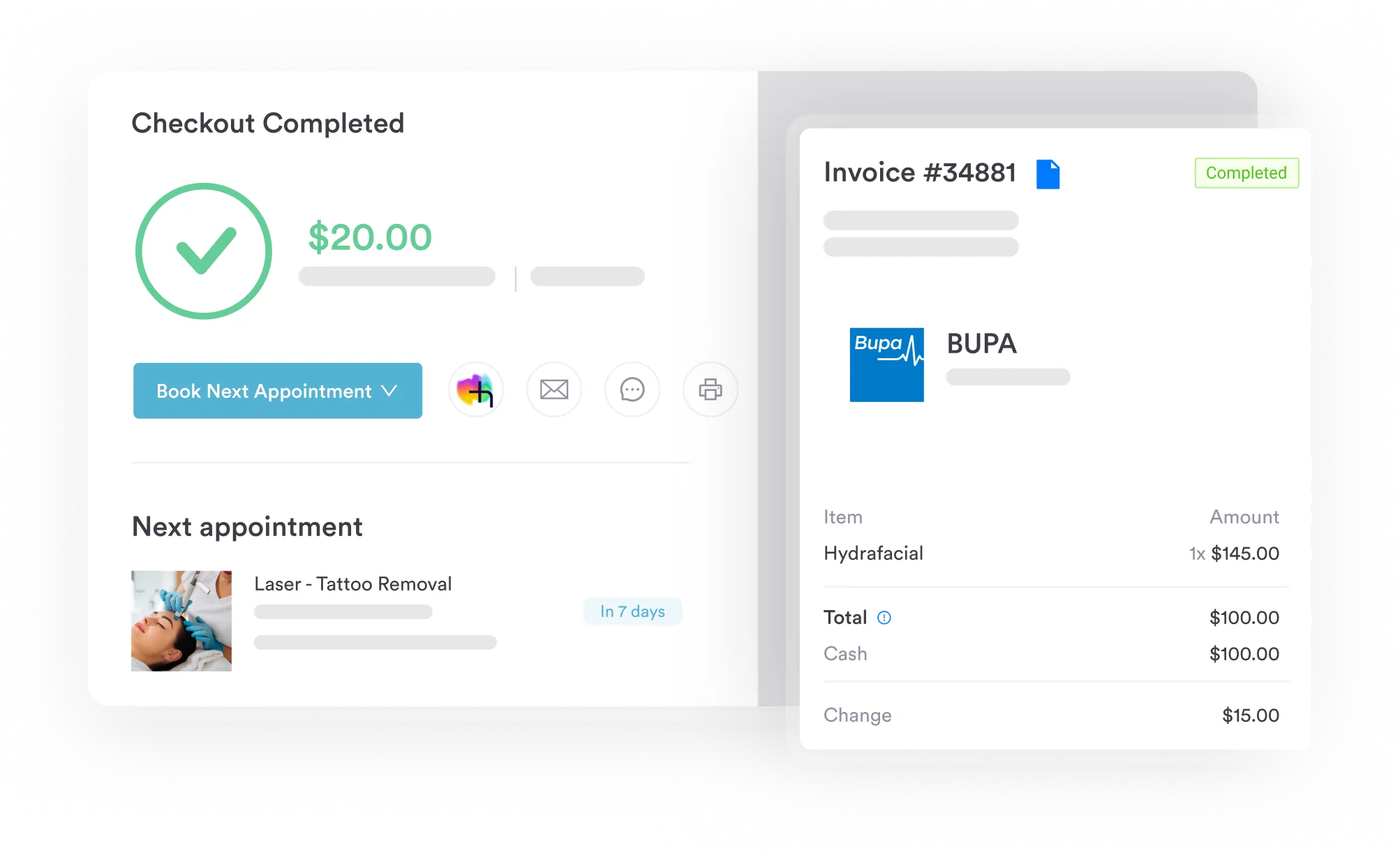
Build the E0300 checklist into your intake workflow rather than your billing queue. Capture the written order, the necessity narrative, and the signed delivery proof at the point of care. That habit cuts turnaround on all 13 rental months.

Pabau helps healthcare practices manage clinical documentation, billing workflows, and compliance records in one place. See how it supports accurate claim submission and audit-ready record keeping.

E0300 rewards suppliers who treat the crib as a 13-month relationship rather than a single sale. The rental sequence, the modifier switch at month four, and the record of continued need all sit on one timeline. Build that timeline into the workflow once and the code stops generating rework.
The trade-off is front-loaded effort. Capturing the order, the necessity narrative, and the signed delivery proof before the first claim takes longer than billing a purchase. It also spares you the month-seven appeal that swallows an afternoon.
Pabau’s digital forms and paperless record keeping hold that evidence in one place from month one. Book a demo to see how Pabau handles clinical documentation and claim workflows for DME suppliers.

Billing home nutrition for the same child? B4149 covers enteral formula made from blenderized natural foods.
Working through parenteral nutrition claims? B4216 covers the additives and how suppliers bill them.
Coding a pediatric skeletal diagnosis? Q78.8 covers other specified osteochondrodysplasias and the detail your notes need.
Coding discoid lupus erythematosus? Discoid lupus coding guide covers this billable subcode, used in place of the non-billable parent code L93.
Coding an unspecified crystal arthropathy? Crystal arthropathy coding guide covers this billable code, valid for the 2026 fiscal year across rheumatology and orthopedic practices.
HCPCS code E0300 describes a pediatric crib, hospital grade, fully enclosed, with or without top enclosure. It is durable medical equipment for an infant or child at risk of falls or unsafe exit from an open crib. Accredited DMEPOS suppliers bill it for use in the patient’s home.
No. E0300 is a fully enclosed pediatric crib. It sits inside the E0250-E0373 range that CMS groups as Hospital Beds and Associated Supplies, which is why it is often mistaken for a bed. The grouping range describes where the code is filed, not what the equipment is.
Medicare pays E0300 as a capped rental item. CMS assigned it pricing indicator 36 effective April 1, 2014, when the code moved out of the routinely purchased category. Rental runs for up to 13 months of continuous use, and ownership then transfers to the patient. Billing it as a purchase creates an overpayment.
No. CMS discontinued Certificates of Medical Necessity and DME Information Forms for dates of service on or after January 1, 2023. Medical necessity is now shown through the standard written order and the medical record. A claim that still carries CMN data is rejected and returned to the supplier.
Use RR on every month, since E0300 is never paid as a purchase. Add KH to the first rental month, KI to months two and three, and KJ to months four through 13. Add KX where your MAC’s policy article requires it. Never append NU to a capped rental claim.
CMS publishes a locality-adjusted monthly capped rental allowable and updates it each January. Months one through three pay 10% of the allowed purchase amount, and months four through 13 pay 7.5%. Verify your locality figure in the CMS DMEPOS fee schedule lookup for the current year.
The closest genuine relatives are E0328 and E0329, pediatric hospital beds with 360-degree side enclosures that include a mattress. E0301 through E0304 are adult heavy-duty and extra-heavy-duty beds that only share the same grouping range. E1399 is a last resort for a custom enclosure no listed code describes.
Seizure disorders, cerebral palsy, and developmental disabilities with fall or self-injury risk all appear on covered claims. So do unsafe egress from a standard crib, post-surgical recovery, and dependence on oxygen or feeding equipment. The practitioner must document why an open crib is unsafe. Local Coverage Determinations add criteria by region.