CPT code 93503: Swan-Ganz catheter billing and modifiers
CPT code 93503: Official descriptor and procedure overview In the AMA CPT code s...

Last Updated: Oct 23, 2026
B4149 is the HCPCS Level II code for enteral formula, manufactured blenderized natural foods with intact nutrients, includes proteins, fats, carbohydrates, vitamins and minerals, may include fiber, administered through an enteral feeding tube, 100 calories = 1 unit.
The descriptor is short, but the claim behind it is not. B4149 needs a caloric unit count, a physician statement that no other formula code requires, and the right modifier for the route of administration. Get one wrong and the claim comes back.
Start with the descriptor, because every field on the claim traces back to it.
Let Pabau's smart automation suggest the right codes, reduce claim denials, and keep your practice compliant—effortlessly.
Automate repetitive tasks and focus on what matters most—your patients.
Reduce coding errors and ensure compliance with the latest regulations.
Clean claims, fewer denials, and faster reimbursements.
Powerful insights and reporting to help your practice thrive.
HIPAA compliant SOC 2 certified GDPR-compliant Trusted by 4,000+ clinics worldwide

HCPCS code B4149 covers manufactured blenderized natural foods with intact nutrients, given by feeding tube and billed per 100 calories.
Medicare Part B pays for B4149 under the prosthetic benefit, and only when a permanent gastrointestinal impairment requires tube feeding.
Blenderized formula needs a physician statement explaining why commercial formula will not work, and a missing statement drives most denials.
B4149 sits outside the CMS prior authorization program, so a signed order and face-to-face notes carry the claim.
Practice management software like Pabau validates the fields an insurer claim needs, then holds the submission until they are complete.
CMS publishes one long descriptor for this code. The first half reads enteral formula, manufactured blenderized natural foods with intact nutrients.
The rest lists what is in it, includes proteins, fats, carbohydrates, vitamins and minerals, may include fiber, administered through a feeding tube, 100 calories. The short descriptor is Blenderized nat food, 100 cal.
Four phrases in there decide how the claim looks.
B4149 opens a family of enteral formula codes that runs through B4162. Each one describes a different composition or caloric density. The CMS HCPCS overview explains how Level II codes are structured and updated each year.
Medicare Part B pays for enteral nutrition under the prosthetic benefit rather than the drug or equipment benefit. That classification decides which local coverage determination governs the claim, and what the file has to prove.
Under CMS policy article A58833, the patient needs a permanent impairment of the gastrointestinal tract that requires tube feeding.
Permanent is the word doing the work. A temporary feeding need after surgery will not qualify, however sound the clinical order looks. The physician also has to document that oral intake cannot meet the patient’s nutritional needs.
State Medicaid programs write their own coverage rules and rates. Do not carry Medicare criteria across to a Medicaid claim without checking the state policy first.
Dysphagia is the qualifying diagnosis you will see most, and the swallow assessment behind it usually comes from a speech-language pathologist. Practices running those assessments in speech therapy software can attach the report straight to the patient record, where the supplier can find it.
One unit of B4149 is 100 calories of formula ordered. The quantity on the claim is never the number of cans, cartons, or bags you shipped.
Take a patient on 1,500 calories a day across a 30-day month. That comes to 45,000 calories, so the claim carries 450 units. Enter 450 in Box 24G on the CMS-1500, or the matching quantity field on an electronic claim.
Billing containers instead of caloric units is the quickest route to a rejection on this code. Per-unit supply codes behave the same way across DMEPOS.
The caloric prescription is the number every unit count rests on. Nutrition-led practices logging it in metabolic health software keep it on the patient record, so the supplier is not reading it off an email thread.
Three modifiers do the work on enteral formula claims. CGS Medicare’s coding guidance sets out the route-of-administration rules that apply across the B4149 to B4162 range.
Policy sets these requirements, but contractor edits still differ, so confirm yours with your Medicare Administrative Contractor. Suppliers who also bill glucose or nebulizer supplies will know KX from those claim types.
Every step below happens before the claim is built. Skipping one is what turns a routine refill into an appeal.
Calculate units before every submission. Multiply the daily caloric prescription by the days in the billing period, then divide by 100. Record the caloric density of the specific blenderized product in the file, because your contractor will ask for it on review.
The best medical practice management systems tie supply usage to invoices, so dressing changes stop being free.
B4149 carries a heavier file than the rest of the B-series, because blenderized formula needs a second layer of justification. A signed order on its own will not carry it. The record has to say why this patient cannot tolerate a commercially prepared formula.
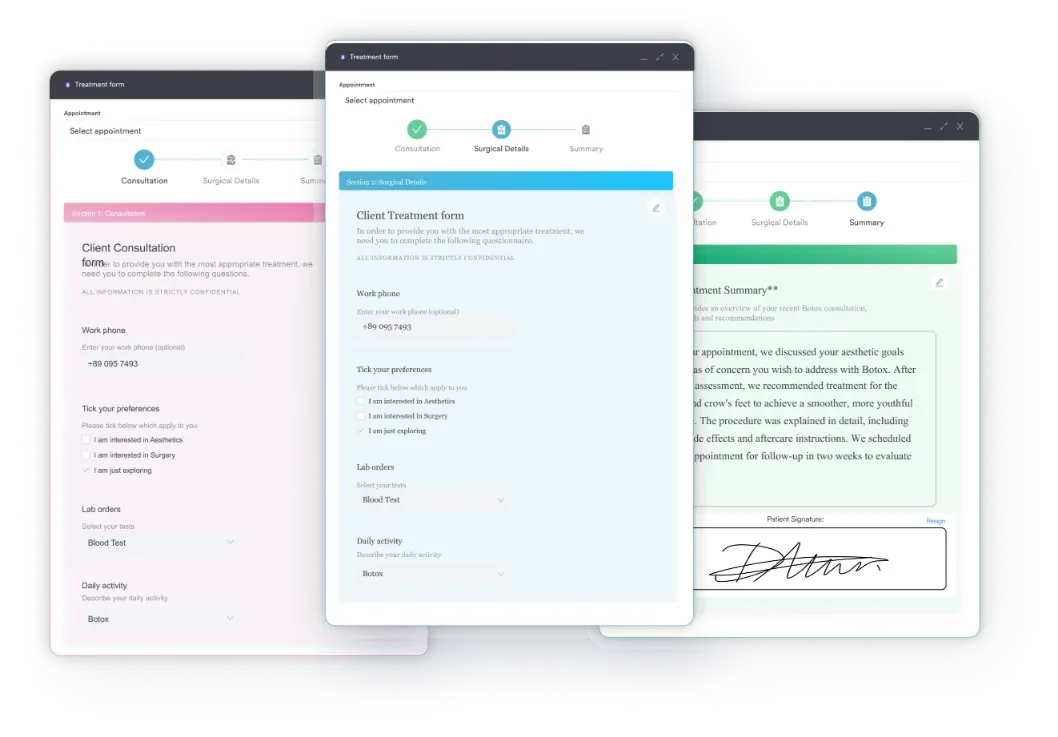
Structured intake beats free-text notes here. Teams on patient intake software can build a B4149 checklist into the form itself.
Keep the file for at least seven years from the date of service. Suppliers covering several sites lean on EHR integration so an audit request does not turn into a hunt through folders. Storage sits under the same privacy rules as the rest of the chart.
Medicare sets the rate per 100 calories, adjusts it by locality, then updates it each January. Two suppliers in different states can be paid different amounts for the same formula and the same patient.
Run the earlier example through it. At a hypothetical $0.55 per unit, 450 units allow $247.50 before deductible and coinsurance. Medicare pays 80% of the allowed amount once the patient clears the Part B deductible. The remaining 20% falls to the patient or a secondary plan.
DMEPOS rates live in their own CMS files, separate from the physician fee schedule. That makes the CMS fee schedule lookup a starting point rather than an answer. Pull your confirmed 2026 locality rate from the DMEPOS files, or ask your contractor for it in writing.
Every B4149 claim needs at least one diagnosis code listed in your contractor’s local coverage determination. The diagnosis has to describe a permanent GI impairment, or a condition that makes tube feeding necessary. A clinically correct code that sits outside the list still denies.
These are the categories that come up most, not the full accepted list. Check each code against your contractor’s current enteral nutrition determination before the claim goes out.
Composition picks the code, not caloric content. Two products can each deliver 100 calories per unit and still belong to different codes.
A clear-liquid electrolyte product is not blenderized food, so it never bills under B4149. That product belongs to B4102, which Medicare counts by volume and treats as non-covered. B4102 is the adult code, so a child on the same clear liquids bills under B4103 instead.
Read the composition line before you pick, because coding a hydrolyzed product as blenderized is an audit trigger. The AAPC HCPCS lookup carries searchable descriptors for the whole range.
Denials on this code cluster in a short list, and nearly all of them are catchable at claim prep.
Pre-claim review catches nearly all of it. Suppliers who build the claim from the same record that holds the documentation see fewer denials.
B4149 does not appear on the CMS Required Prior Authorization List. That list covers power mobility devices, pressure-reducing support surfaces, lower-limb prosthetics, and selected orthoses. Enteral nutrition B-codes are absent from it, so no authorization number is needed before delivery.
What the code does require is a face-to-face encounter and a written order prior to delivery. Both belong in the file before the formula ships. CMS revises the authorization list periodically, so check with your contractor rather than assuming nothing has changed.
A long-running DMEPOS account builds up years of protected health information. Choose patient data security tools that keep the file retrievable for audit and locked down the rest of the time.
Enrolled DMEPOS suppliers submit B4149. Physicians, hospitals, and home health agencies do not. The supplier needs a valid Medicare DMEPOS supplier number, accreditation from a CMS-approved body, and compliance with the DMEPOS Quality Standards.
Physicians still carry weight on the claim. They order the nutrition, document the permanent impairment, and sign the justification, while the claim itself stays with the supplier. A home health agency giving skilled nursing alongside tube feeding does not bill the formula code either.
Home tube feeding also depends on whoever runs the pump at 6am. A written caregiver care plan records who was trained and on what. That helps when a contractor asks how the therapy is managed day to day.
Five minutes here beats six weeks of appeals. Work down the list before the claim leaves your queue.
Most of the work on a B4149 claim happens before the claim exists. The order arrives by fax or email, the justification sits in a letter, and the caloric prescription lives in somebody’s inbox. Practice management software like Pabau pulls those pieces onto one patient record.
On the billing side. Anything incomplete stays unsent, and a status dashboard shows where every claim sits. Nobody has to remember which one is waiting on what.
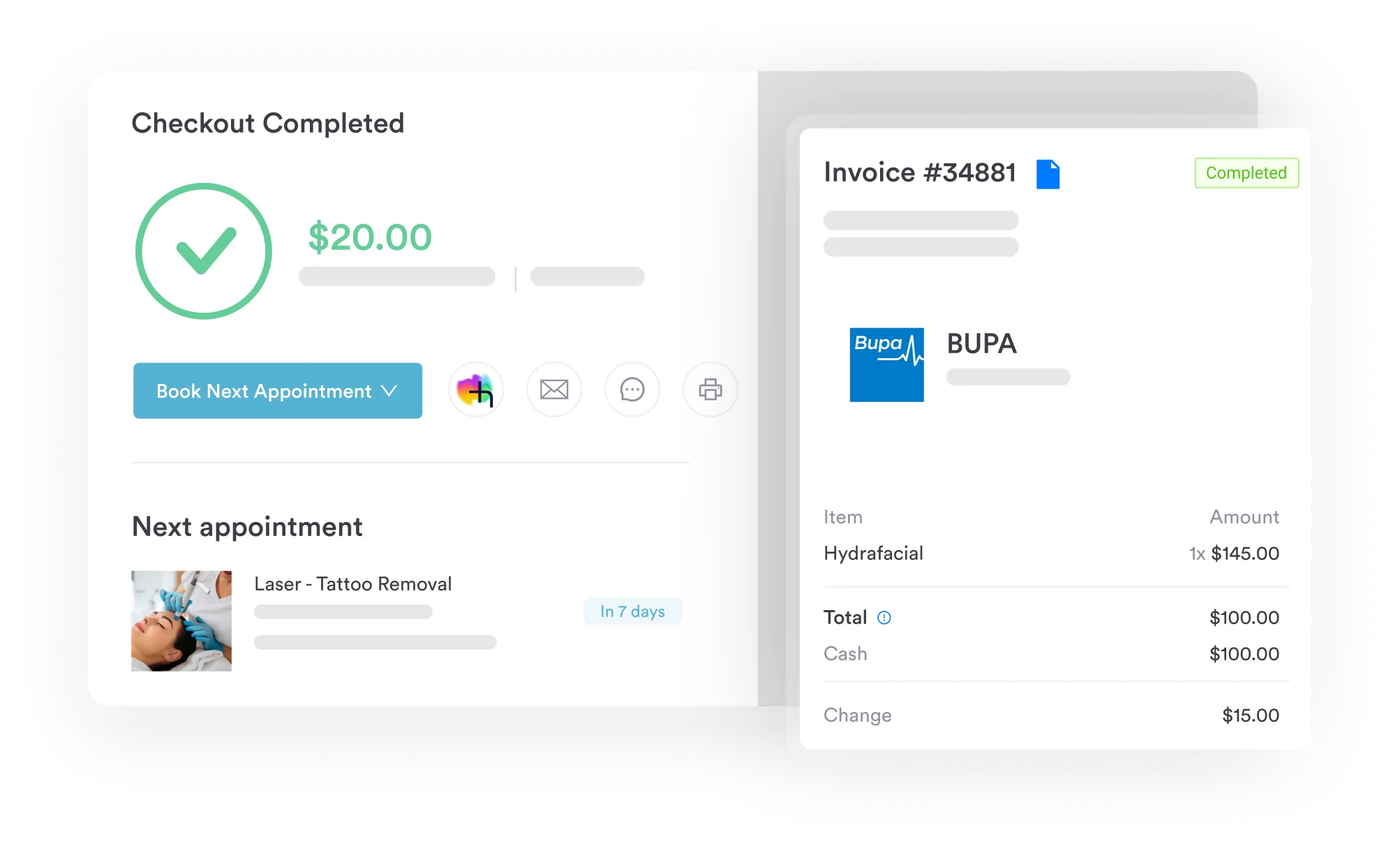
Follow-up runs on the same record.
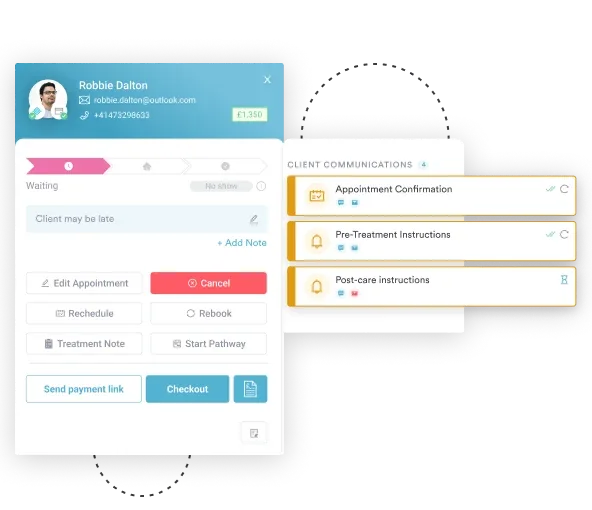
The result is a shorter path from order to payment. Your team spends its time on the two documents a reviewer reads closely, the order and the justification, instead of rebuilding either from scratch.

Pabau checks every claim against the fields an insurer submission needs, then holds it until they are complete. A status dashboard shows where each one sits, so nothing stalls unnoticed.

B4149 rewards preparation far more than it rewards appeals. The caloric unit count, the physician’s justification for blenderized formula, and a diagnosis inside the coverage determination settle the claim before anyone submits it. What happens after that is mostly paperwork about paperwork.
The trade-off worth remembering is time. Assembling the file properly on the first order takes longer than shipping the formula and hoping. It also means the monthly refills behind it run close to automatic, and that is where the margin on this code sits.
If your documentation and your claims live in separate systems, that first order costs you twice. Book a demo to see how Pabau keeps the order, the justification, and the claim on one patient record.

Billing another per-unit DMEPOS supply? A4218 walks through metered-dose quantities and the nebulizer codes it pairs with.
Need the KX and KS modifier rules in one place? A4234 sets out how supply modifiers work on home monitoring claims.
Handling incontinence supply claims too? T4522 covers sizing, quantity limits, and the documentation those claims need.
Billing an off-the-shelf hand orthosis? hand finger orthosis guide covers the ready-made device descriptor and when size selection alone qualifies for this code.
Billing an unlisted upper limb brace? upper limb orthosis billing guide explains when to use this miscellaneous code and the PDAC verification Medicare requires.
Yes. The formula, the daily supply kit, and the pump bill on separate lines with their own codes. Pump codes sit in the B9000 range, and enteral supply kits run from B4034 to B4036. Each line carries its own quantity.
No. Homebound status belongs to the home health benefit, not to Part B enteral nutrition. The patient needs a permanent gastrointestinal impairment and a signed physician order. Where they spend their day makes no difference to coverage.
Split the calculation. Count the days at the old prescription and the days at the new one, convert each to units, then add them together. File the revised order beside the original so the quantity can be traced.
B4149 covers manufactured blenderized natural foods. B4150 covers a nutritionally complete formula with intact nutrients, meaning the standard commercially prepared product. Both use intact nutrients and a 100-calorie unit, so composition and preparation decide the code.
No. B4149 describes a manufactured product, so a kitchen-blended formula has no code to bill under. Families often choose home blends anyway, but Medicare will not reimburse them.