

HCPCS code E0198: Water pressure pad billing guide
HCPCS code E0198 is a water pad for a standard mattress HCPCS code E0198 is the ...

Last Updated: Oct 13, 2026
J0885 is the HCPCS Level II code for injection, epoetin alfa, (for non-esrd use), 1000 units.
Most J0885 denials start with the unit descriptor. Epoetin alfa is billed per 1,000 units under J0885 and per 100 units under Q4081. Darbepoetin alfa, a different drug, is billed per microgram. Carry the math from one code to another and the claim is wrong before it leaves the office.
Let Pabau's smart automation suggest the right codes, reduce claim denials, and keep your practice compliant—effortlessly.
Automate repetitive tasks and focus on what matters most—your patients.
Reduce coding errors and ensure compliance with the latest regulations.
Clean claims, fewer denials, and faster reimbursements.
Powerful insights and reporting to help your practice thrive.
HIPAA compliant SOC 2 certified GDPR-compliant Trusted by 4,000+ clinics worldwide

HCPCS code J0885 covers injection of epoetin alfa for non-ESRD use, billed per 1,000 units administered.
Medicare Part B pays J0885 at ASP plus 6%, and dialysis-dependent ESRD patients bill under Q4081 instead.
The three ESA codes carry three different unit descriptors, which is where most units errors start.
Every claim needs a documented baseline hemoglobin, a covered ICD-10-CM diagnosis, and a signed order naming dose and route.
Practice management software like Pabau checks J0885 units and modifiers before a claim leaves the office.
HCPCS code J0885 is the Level II code for: Injection, epoetin alfa, (for non-ESRD use), per 1,000 units. It covers the erythropoiesis-stimulating agent (ESA) epoetin alfa, marketed as Epogen (Amgen) and Procrit (Janssen). It also covers the FDA-approved biosimilar Retacrit (epoetin alfa-epbx, Pfizer). Co-claiming restrictions in the Australian schedule decide which items can appear on the same day. Common claim denial codes repeat by specialty, so the pattern is worth reading before reworking.
The non-ESRD qualifier is the defining clinical criterion. Dialysis-dependent patients have their own separate code, and using J0885 for one of them is a denial waiting to happen.
According to the CMS HCPCS Level II coding system, J0885 is a drug administration code in the J-code series, maintained annually by CMS. It is billed under Medicare Part B and reported on professional claims (CMS-1500) and outpatient institutional claims (UB-04).
J0885 applies to non-dialysis patients only. Medicare’s Local Coverage Determinations (LCDs) list two primary covered indications. They are chemotherapy-induced anemia and anemia of chronic kidney disease (CKD) in patients not yet on dialysis.
J0885 is not appropriate for dialysis-dependent ESRD patients. Those patients bill under Q4081, which covers epoetin alfa for ESRD dialysis in any setting. Mixing the two codes is one of the most audited errors in ESA billing.
The per-1,000-units structure trips up billing teams used to flat-dose codes. Units billed must reflect the dose actually administered, rounded according to CMS rounding guidelines.
Calculation formula: divide the dose administered in units by 1,000. The result is the number of billing units you report in the units field.
Verify the ordered dose in the physician’s order or administration record before billing. The units billed must match the documented dose exactly, not the vial size purchased. Using vial size instead of administered dose is the single most common J0885 units error.
The same discipline applies to every J-code on your fee schedule. Codes such as J1364 and J0600 carry their own descriptors, so read the descriptor before you divide.
Modifiers signal the route of administration and the drug source. Most payers require at least one route modifier on every J0885 claim.
JA and JB are mutually exclusive, so use one per claim line. In an IV therapy practice JA is the usual default, but the administration record still has to confirm the route. Commercial payers vary, so check the plan’s billing guide before submitting.
Medical necessity for J0885 must be supported by a covered ICD-10-CM diagnosis code. CMS LCDs list the covered conditions, and claims without a matching diagnosis are denied outright.
The AAPC HCPCS code lookup includes crosswalk tables linking J0885 to supported diagnosis codes.
Always list the underlying malignancy or CKD stage code alongside the anemia code. A standalone D63.0 without the neoplasm diagnosis is a common cause of medical necessity denials.
Medicare Part B covers J0885 under the drug reimbursement methodology. Payment is set at ASP+6% (Average Sales Price plus 6%), updated quarterly.
Because the rate moves every quarter, verify it with the CMS Physician Fee Schedule lookup tool rather than trusting a fixed dollar figure.
CMS hemoglobin thresholds govern whether therapy may continue. Under current LCD guidance, ESA therapy should generally be withheld once Hgb reaches 11 g/dL in CKD patients. It should not be used to target Hgb above 11 g/dL in chemotherapy patients either.
Those thresholds reflect the FDA black box warning on ESAs. The warning flags increased risk of death, myocardial infarction, stroke, venous thromboembolism, and tumor progression at higher hemoglobin targets.
Check the CMS ASP Drug Pricing File every quarter. CMS publishes it each January, April, July, and October. A claim submitted on an outdated rate may be underpaid or flagged for review. Set a calendar reminder tied to the CMS release schedule and update your billing system before claims go out.
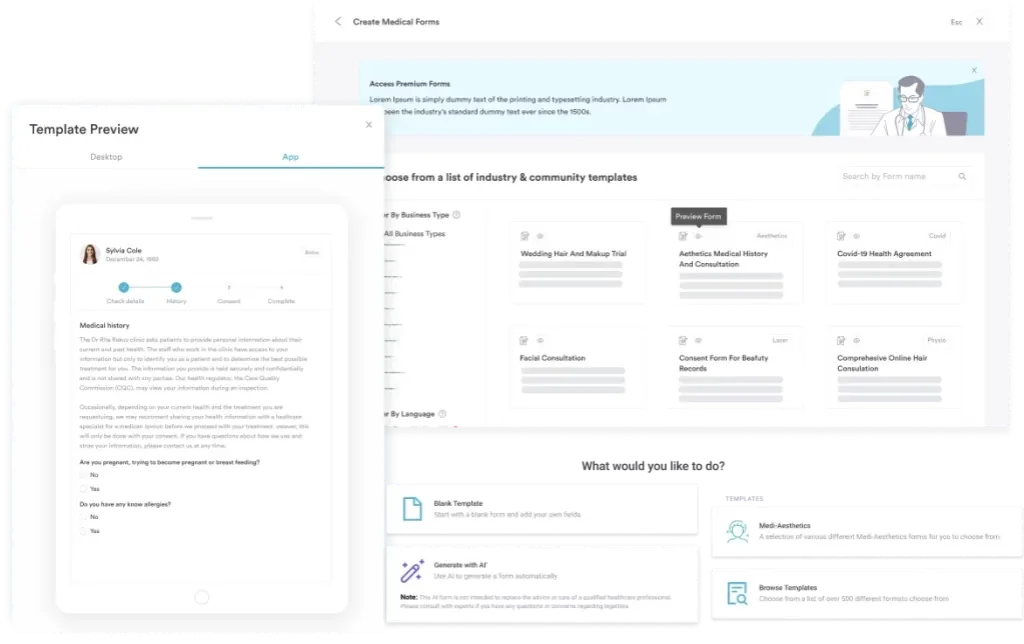
Inadequate documentation is the number-one reason J0885 claims clear adjudication and then fail on audit. The medical record has to support every element of medical necessity before the claim goes out. Keeping medical forms for your practice in a structured EHR reduces that audit exposure.
Practices that use digital forms can build ESA monitoring templates into the patient workflow. Each element above gets captured at the visit rather than reconstructed months later. Storage rules for those records sit under HIPAA-compliant clinical documentation.
Traditional Medicare Part B does not require prior authorization for J0885, though Medicare Advantage plans often do. Commercial requirements vary by plan and formulary year. Never assume PA is unnecessary without checking the individual plan’s policy.
Step therapy is common in commercial plans. Payers may require documented inadequate response to a biosimilar such as Retacrit before approving Epogen or Procrit. Send the hemoglobin trend, the diagnosis, and the ordered dose with the request, since those are what the reviewer checks.
PA submissions send protected health information to the payer, so the usual patient data security rules apply. Automated billing workflows can flag claims that need PA before they reach submission.
Using J0885 for an ESRD patient, or Q4081 for a non-ESRD patient, creates a compliance problem as well as a likely denial. The table below maps the correct code by drug, indication, and setting. Billing teams covering both nephrology and oncology should read it closely.
There is no separate epoetin alfa code for home dialysis. Q4081 covers ESRD dialysis patients wherever the drug is given, including at home.
Take one 10,000-unit dose and run it through both epoetin alfa codes. Under J0885 you report 10 units. Under Q4081 the same dose is 100 units, because that descriptor counts in hundreds. Same drug, same syringe, and a claim line that differs by a factor of 10.
J0881 is a different drug again, billed per microgram rather than per unit. The CMS annual CPT/HCPCS code list confirms the current status and definition of each ESA code every fiscal year.
ESA claims are a frequent target of Medicare audits. These are the denial patterns billing teams hit most often with J0885.
The habits that prevent these errors carry across every Part B item you bill, from J-codes through to equipment codes like equipment codes like E0607. EHR integration for billing accuracy is what stops them being rebuilt by hand each month.
A units error on J0885 usually surfaces when the remittance advice comes back. The claim was keyed from a vial count, and nobody checked it against the administration note. Fixing it costs more time than the original entry ever did.
Pabau is an all-in-one practice management system that keeps the clinical record and the claim in the same place. The dose your clinician charts is the dose your biller sees, so a 10,000-unit administration never becomes one vial on the claim line.
Pabau’s claims management software checks each line before it goes out. A J0885 claim with no route modifier gets flagged inside the practice instead of by the payer. The hemoglobin that justifies the dose is already attached to the visit.
The outcome is fewer reworked claims and faster payment on a drug your practice has already bought and administered.

Pabau’s claims management tools help oncology and nephrology practices track J0885 units, flag missing modifiers, and run documentation checks before claims are submitted.

J0885 is not a hard code to bill correctly. It asks for the same three things every time. Divide the administered dose by 1,000, add the route modifier, and record the hemoglobin that supports the therapy.
What makes it expensive is how easy each of those steps is to skip when a claim is keyed from memory. The unit descriptor is the one to watch hardest, because J0885, Q4081, and J0881 all count differently for what looks like the same treatment.
Build the three checks into the workflow once and the denials stop arriving in batches. Book a demo to see how Pabau validates HCPCS units and modifiers before your claims go out.

Bronchitis not documented as acute or chronic? ICD-10 code J40 covers bronchitis coding when the documentation does not specify acute or chronic.
Coding chronic bronchitis without obstruction? ICD-10 code J42 covers chronic bronchitis coding and the Excludes1 rule against pairing it with J44.
Billing the chemotherapy administration alongside the drug? CPT code 96401 sets out the administration rules that sit next to J0885 on an oncology claim.
Billing other per-unit injectables? J0153 walks through a descriptor with its own unit math and its own rounding traps.
Need a wider view of Part B drug billing? J0561 covers coverage criteria, documentation, and the quarterly ASP rate cycle for another Part B injectable.
HCPCS code J0885 is used to bill injections of epoetin alfa in non-ESRD patients, billed per 1,000 units administered. Covered indications include chemotherapy-induced anemia, anemia of non-dialysis chronic kidney disease, and AZT-related anemia in HIV patients under Medicare Part B.
J0885 covers epoetin alfa (Epogen, Procrit) billed per 1,000 units, while J0881 covers darbepoetin alfa (Aranesp) billed per 1 microgram. Both treat non-ESRD anemia, but they are different drugs with different dosing structures and cannot be substituted for each other on claims.
Divide the dose administered in units by 1,000 to get the number of billing units. A 10,000-unit dose is 10 billing units. Always base the calculation on the administered dose recorded in the physician order or administration note, not the vial size.
The two codes use different descriptors for the same drug. J0885 is defined per 1,000 units and Q4081 is defined per 100 units. A 10,000-unit dose is therefore 10 units of J0885 or 100 units of Q4081, so recalculate whenever the code changes.
Modifier JA (intravenous administration) or JB (subcutaneous administration) is required on most J0885 claims to indicate the route. Modifier GA is added when a signed Advance Beneficiary Notice (ABN) is on file. Modifier GZ is used when the service is expected to be denied as not medically necessary.
Yes. Medicare Part B covers J0885 for chemotherapy-induced anemia in patients with non-myeloid malignancies receiving myelosuppressive chemotherapy. The documented hemoglobin has to sit below the CMS coverage threshold, and the chart must carry the covered diagnosis and a signed order.
Traditional Medicare Part B does not require prior authorization for J0885, but many Medicare Advantage and commercial plans do. Requirements vary by payer and plan year, so verify the plan’s PA policy before each treatment course. Step therapy against a biosimilar is common in commercial plans.



