CPT code 93503: Swan-Ganz catheter billing and modifiers
CPT code 93503: Official descriptor and procedure overview In the AMA CPT code s...

Last Updated: Oct 23, 2026
E0243 is the HCPCS Level II code for toilet rail, each.
So the workflow is short. You quote the rail to the patient, submit any Medicare claim with a GY modifier, and check whether a second payer covers it.
The Centers for Medicare and Medicaid Services (CMS) maintains HCPCS Level II and updates the code set through the year. So check the descriptor and payment status before you bill.
Let Pabau's smart automation suggest the right codes, reduce claim denials, and keep your practice compliant—effortlessly.
Automate repetitive tasks and focus on what matters most—your patients.
Reduce coding errors and ensure compliance with the latest regulations.
Clean claims, fewer denials, and faster reimbursements.
Powerful insights and reporting to help your practice thrive.
HIPAA compliant SOC 2 certified GDPR-compliant Trusted by 4,000+ clinics worldwide

HCPCS code E0243 describes a toilet rail, each, a safety rail fitted to a toilet or toilet frame.
Medicare Part B does not cover E0243, because a toilet rail is a self-help item rather than a medical one.
There is no Medicare fee schedule amount for E0243, so the code carries pricing indicator 00 and no Part B allowable.
Submit a noncovered E0243 line with the GY modifier, never KX, and quote the rail to the patient as a cash item.
A commode chair (E0163 or E0165) is covered when the patient physically cannot use regular toilet facilities. That covers confinement to one room, to a home level with no toilet, or to a home with no toilet at all.
Practice management software like Pabau keeps orders, notes, and insurance claim records in one patient file.
E0243 describes one safety rail affixed to a toilet or to a toilet frame. The rail gives a patient something solid to hold during a sit-to-stand transfer.
It sits in the E0240-E0249 bathing and toileting supplies range, inside the wider E0100-E0599 durable medical equipment (DME) series. The AAPC HCPCS Level II reference lists the full E-series groupings if you need to place a neighboring code.
The descriptor ends in “each,” so two rails dispensed together are two units. A toilet safety frame with a rail on either side of the seat is the usual example. Confirm the product really is two separate rails before you bill two units.
Medicare does not pay for a toilet rail because the item fails the statutory definition of durable medical equipment. Section 1861(n) of the Social Security Act limits DME to equipment used primarily and customarily for a medical purpose. A grab rail on a toilet is a safety and convenience aid, so it never enters the benefit.
CMS applies the same reasoning across the bathroom. Grab bars, bath tub rails, raised toilet seats, and tub benches are all treated as self-help devices. E0243 sits in that group, alongside E0244 for a raised toilet seat. The tub bench under HCPCS E0245 is noncovered for the same statutory reason.
The exclusion is statutory rather than clinical. Under Part B, no physician order, diagnosis, or functional assessment makes E0243 payable. An appeal arguing medical necessity will fail, because the item was never a Medicare benefit.
No local coverage determination sets criteria for a toilet rail. The nearby commode policy is sometimes read as one, so it is worth being precise about what it actually covers.
The Commodes LCD (L33736) and its policy article (A52461) cover the commode chair codes E0163 through E0175. The article separately confirms two noncovered items. A raised toilet seat (E0244) and a toilet seat lift mechanism (E0172) both fail the “not primarily medical in nature” test.
Nothing in that policy extends coverage to E0243. So there are no criteria to meet, no documentation threshold to clear, and nothing for a KX modifier to attest to.
One nearby item is covered. A commode chair.
The Commodes LCD accepts three forms of that confinement:
The distinction turns on why the patient needs the item. A rail helps someone reach the bathroom safely, and Medicare treats it as a convenience. A commode chair exists because the patient cannot reach a toilet at all, which makes it medical.
So ask where the patient’s toilet is and whether they can reach it before you quote a rail. If they cannot, you may be looking at a payable claim rather than a cash sale.
Add two questions to your intake script for any bathroom safety order. Can the patient reach a toilet, and is there one on the level of the home where they stay? If the answer is no, a commode chair (E0163 or E0165) may be covered where a toilet rail never will be. Those two questions separate a cash sale from a payable claim, and they take ten seconds to ask.
Bill E0243 with the GY modifier when the patient asks you to submit a claim to Medicare. GY tells the payer the item is statutorily excluded, so the denial returns quickly and the patient becomes liable. You are not obliged to file a claim for a categorically excluded item at all.
Most suppliers file one anyway. The denial gives the patient a paper trail for a secondary plan, and it settles the price question before an invoice dispute starts.
An Advance Beneficiary Notice of Noncoverage (ABN) is not mandatory for a statutorily excluded item. Issuing a voluntary ABN is still worth the two minutes, because it puts the price in writing before the rail leaves your facility. Suppliers using claims management software can attach that signed notice to the claim record rather than a folder. Accounts receivable aging shows which codes are slow to pay long before anyone calls it a denial problem. Common claim denial codes repeat by specialty, so the pattern is worth reading before reworking.
Modifiers tell the payer why a line looks the way it does. On a noncovered item the list is short, and one of the six is a compliance risk rather than a tool.
The KX modifier is the one to watch. KX attests that a policy’s coverage criteria are met, and there are no criteria on a noncovered item. Adding it to an E0243 line is a false attestation, which is a worse outcome than the denial you were trying to avoid.
Good compliance management software flags a modifier mismatch before submission. That is cheaper than explaining the attestation later.
A patient management system reminds you when issued equipment is due for review, replacement, or return.
It says nothing, and that is the answer. CMS has not established a fee for E0243, so there is no national allowable, no locality adjustment, and no 80/20 split to quote a patient.
The code carries pricing indicator 00 on the CMS DMEPOS fee schedule files. That indicator means Part B does not separately price the code. Coding databases say the same thing in plainer words, listing E0243 as not covered with no Medicare fee established.
This is where E0243 differs from other noncovered accessories. Some carry a fee schedule amount that Medicaid and commercial plans borrow. E0243 does not, so any payer covering the rail sets its own rate.
In practice that leaves you with three numbers to manage:
Skip the Physician Fee Schedule look-up tool for this code. It prices physician services, not DMEPOS items, so it would be the wrong tool even if E0243 had a fee.
Medicare Advantage plans, state Medicaid programs, workers’ compensation carriers, and commercial plans set their own DME rules. Several pay for a toilet rail where Part B will not. Check the plan’s policy and its prior authorization list before you deliver.
A Medicare denial is often the first document a secondary payer asks for. Filing the GY claim early gives the patient that paper without holding up delivery. A physical therapy practice that recommends the rail can set the price expectation at the visit, before the patient calls a supplier.
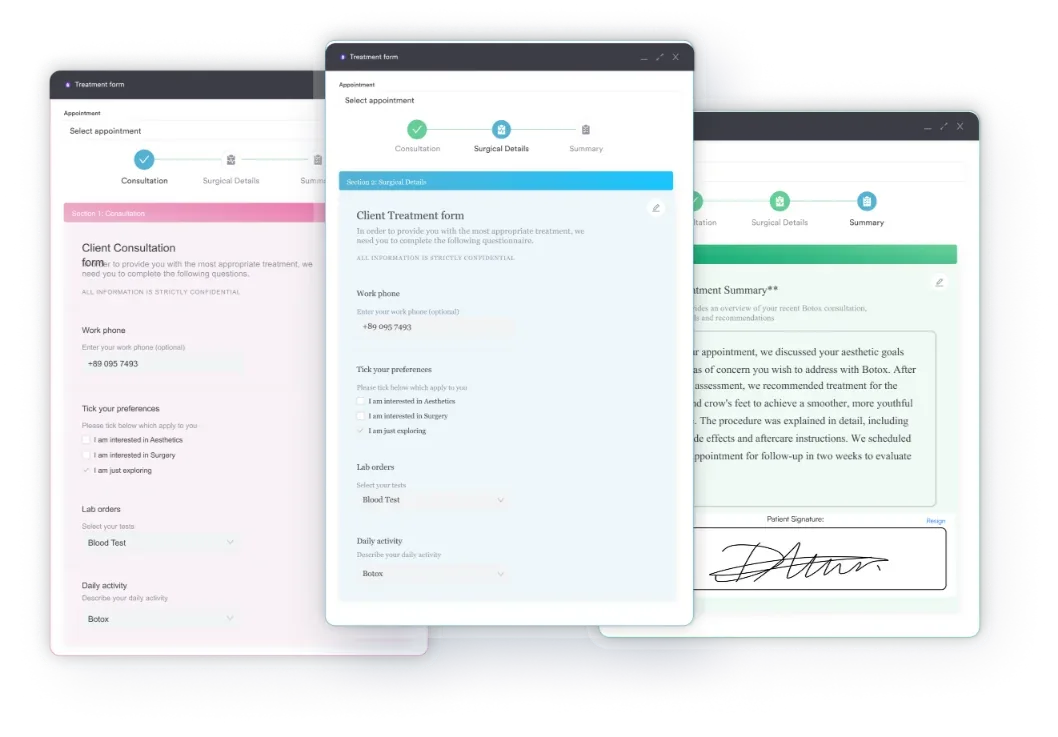
Keep the same records you would keep for a covered item. A payer that does cover the rail will ask for them, and so will an auditor reviewing a covered item on the same claim. Keeping a checklist inside your medical forms workflow makes this manageable at scale.
Do not chase a Certificate of Medical Necessity. CMS eliminated CMNs and DME Information Forms for all durable medical equipment on January 1, 2023. Claims that still carry CMN data are rejected and returned to the supplier, so the form has no place in a 2026 workflow.
Everything the CMN used to capture still has to sit in the medical record. A face-to-face encounter note is the usual home for it.
Retention rules outlast the claim. Medicare supplier standards require ordering and referring documentation to be kept for seven years from the date of service. State law can require longer.
A diagnosis code will not make Medicare pay for E0243. It still earns its place, because a Medicaid or commercial reviewer wants to see why the patient needs the rail.
The codes below are the presentations that usually sit behind a toilet rail order. Linking diagnoses to orders inside your practice management software keeps the pairing consistent across a team.
Every diagnosis on the claim has to reflect the patient in front of you. Listing a supported code that the chart does not back up is upcoding, whether or not the line ever gets paid.
Seventh characters matter when an injury diagnosis supports E0243. S72.001A above is an initial encounter, while ICD-10 Code S63.631D covers a subsequent visit for a left index finger sprain.
The codes around E0243 look interchangeable on a delivery ticket and are not. Choose by where the item mounts and what it does for the patient, then check the coverage column before you promise anything.
Read the row before you quote. Six of these eight items are the patient’s own cost, and two of them are payable when the patient cannot use a regular toilet.
A patient may take a rail and a raised seat on the same visit. Each item then goes on its own claim line, under its own code, with its own modifier.
E0243 is a simple code that still generates avoidable work. Almost every problem traces back to treating it as a covered item.
Two of these are worth a standing check. Any E0243 line carrying KX needs correcting today, and any line without GY will sit in a payer queue longer than it should.
Pull ten E0243 lines from the last quarter and look at nothing but the modifier field. A KX on any of them is a false attestation on a noncovered item, and it is worth fixing before someone else finds it. If the pattern repeats, the fix belongs in your claim scrubber rather than in a staff reminder.
The paperwork behind one toilet rail usually sits in four places. The order arrives by fax and the clinical note lives in the chart. The signed price notice is on paper, and claim status sits in a payer portal. When someone asks for the file, a staff member rebuilds it by hand.
Practice management software like Pabau keeps those records in one patient file. Forms, notes, photos, and correspondence attach to the same record, so the order history is one click from the appointment. Pabau tracks each insurance claim from submission through to payment, so claim status sits beside the order.
Pabau is built for a practice’s own insurance billing rather than DMEPOS claim submission. A supplier still sends its equipment claims through its own system. What Pabau holds is the clinical evidence behind the order, which is what a payer or an auditor asks the practice for.
The outcome is a shorter records request. Every document behind an E0243 order is retrievable from one screen, so nobody digs through folders, inboxes, and fax confirmations to answer a payer.
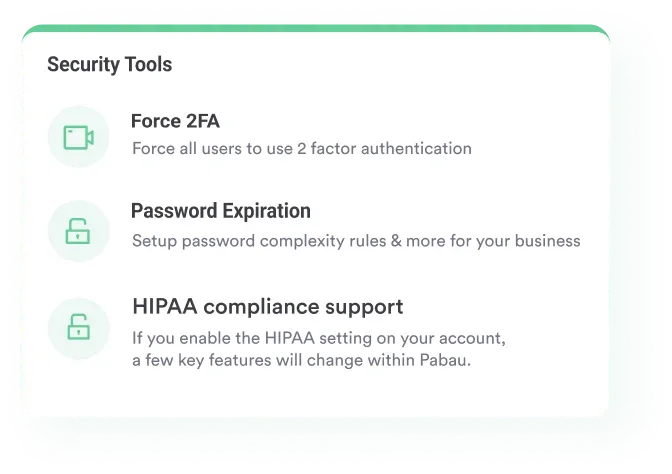

Pabau brings patient records, forms, and insurance claims into one system. The documentation behind an equipment order is ready when a payer asks for it, so your team stops hunting through folders.

The useful thing to know about E0243 is that no workflow makes Medicare pay it. A toilet rail is a self-help item, and the exclusion sits in the statute rather than in a coverage policy. Once you accept that, the job gets simpler.
So you quote the rail as a cash item and get the notice signed. File a GY claim only if the patient wants the denial on paper. Then check whether Medicaid or the patient’s Medicare Advantage plan funds bathroom safety equipment.
The question worth asking first is whether the patient can reach a toilet at all. If they cannot, a commode chair is payable where the rail never was. Asking it at intake turns some cash sales into covered claims.
Where the clinical evidence lives is the part a practice still controls. Book a demo to see how Pabau keeps orders, notes, and insurance claims in one patient record.

Billing another rail code? HCPCS code E0310 covers bed side rails, where the coverage test follows the bed rather than the rail.
Coding other toileting equipment? HCPCS code E0275 works through the bed pan descriptor and the unit rules that go with it.
Supplying a hospital bed accessory? HCPCS code E0274 sets out the over-bed table rules and the documentation a payer expects to see.
Billing an elbow orthosis for a patient? HCPCS code L3761 covers elbow orthosis billing and the coding mistakes that trigger the most claim denials.
Billing a Zarxio biosimilar injection? HCPCS code Q5101 covers Zarxio billing and the modifier and rate errors that cause claim denials.
HCPCS code E0243 reports a toilet rail, each, a safety rail fitted to a toilet or a toilet frame. It is a Level II code classified as durable medical equipment. Medicare treats the item as noncovered, so most E0243 claims exist only to document the denial.
No. Medicare Part B treats a toilet rail as a self-help item rather than durable medical equipment, because it is not primarily medical in nature. The exclusion is statutory, so documentation and appeals cannot change it. The patient pays, or another payer does.
Submit the line with the GY modifier, which tells Medicare the item is statutorily excluded. The claim denies and the patient becomes liable. You are not required to file at all, but many suppliers do so the patient holds a denial for a secondary plan.
No. An Advance Beneficiary Notice of Noncoverage is not required for a statutorily excluded item. A voluntary ABN or a written price quote is still worth issuing, because it shows the patient was told the price before delivery.
There is no rate. CMS has not established a fee for E0243, and the code carries pricing indicator 00, meaning Part B does not separately price it. So there is no allowable amount and no 20% coinsurance figure to quote a patient.
GY is the modifier that matters, because it flags a statutorily excluded item. NU, RR, and UE describe purchase, rental, and used equipment for a payer that does cover the rail. KX must never appear on an E0243 line, since no policy sets criteria to attest to.
E0243 is a rail affixed to the toilet or toilet frame, billed per rail. E0244 is a raised toilet seat, which adds height and carries no rail. Medicare treats both as noncovered self-help items, so each is submitted with GY on its own claim line.
Yes, a commode chair. E0163 and E0165 are covered when the patient physically cannot use regular toilet facilities. That means confinement to a single room, to a home level with no toilet, or to a home with none at all. Seat lift mechanisms over a toilet (E0172) and raised toilet seats (E0244) stay noncovered, as does the E0243 rail.
No. The Commodes LCD (L33736) and policy article A52461 cover commode chair codes E0163 through E0175. The article also confirms E0244 and E0172 as noncovered. Neither document sets coverage criteria for a toilet rail, so there is nothing for KX to attest to.
Two units. The descriptor ends in “each,” so a toilet safety frame with a rail on either side of the seat is two units. Confirm the product really is two separate rails, and match the count to the signed delivery receipt.
Some Medicare Advantage plans fund bathroom safety items through a supplemental or over-the-counter benefit. State Medicaid programs, workers’ compensation carriers, and some commercial plans also pay. Confirm the plan in writing before delivery, because Part B rules do not carry over.