HCPCS Code L0472: Hyperextension TLSO billing guide
HCPCS code L0472: Official descriptor and device definition HCPCS code L0472 des...

Last Updated: Nov 5, 2026
E0194 is the HCPCS Level II code for an air fluidized bed. The bed floats the patient on silicone-coated beads kept in motion by warm, pressurized air, which holds interface pressure low. E0194 differs from E0193, a powered air flotation bed for low air loss therapy, and from E0197, an air pressure pad for a standard mattress.
Medicare covers it as the only Group 3 support surface under LCD L33692. The patient needs a stage 3 or 4 pressure ulcer and a month of conservative treatment without progress. Prior authorization applies from October 28, 2026.
Let Pabau's smart automation suggest the right codes, reduce claim denials, and keep your practice compliant—effortlessly.
Automate repetitive tasks and focus on what matters most—your patients.
Reduce coding errors and ensure compliance with the latest regulations.
Clean claims, fewer denials, and faster reimbursements.
Powerful insights and reporting to help your practice thrive.
HIPAA compliant SOC 2 certified GDPR-compliant Trusted by 4,000+ clinics worldwide

HCPCS Code E0194 describes an air fluidized bed, a different device from the E0193 powered air flotation bed and the E0197 mattress pad.
Medicare covers E0194 as the only Group 3 support surface under LCD L33692, starting with a stage 3 or 4 pressure ulcer.
From October 28, 2026, E0194 needs prior authorization nationwide, plus a face-to-face encounter and a written order before delivery.
E0194 is billed as a capped rental using modifier RR, with KH on month 1, KI on months 2-3, and KJ from month 4 onward.
Claims management software such as Pabau helps billing teams submit each monthly E0194 rental claim and track it to payment.
HCPCS Code E0194 is an active Level II HCPCS code maintained by the Centers for Medicare and Medicaid Services (CMS). The official descriptor reads: Air fluidized bed. The code falls within the E0100-E0199 range of durable medical equipment codes and is classified under the Medicare Part B DME benefit. Medicare pays for it as a capped rental only when the patient meets the Group 3 criteria in LCD L33692. From October 28, 2026, it also needs prior authorization.
Medicare sets the 2026 allowable for HCPCS Code E0194 in the DMEPOS fee schedule, which CMS updates each year. Check the current rate in the CMS DMEPOS fee schedule rather than a third-party lookup, which may lag official updates.
Medicare covers HCPCS Code E0194 only when the patient meets the Group 3 criteria in LCD L33692 (Pressure Reducing Support Surfaces – Group 3). The ICD-10-CM codes that support it sit in the companion policy article, A52468.
The patient must meet every one of these conditions:
The month of conservative treatment is where most E0194 files fall short. A patient admitted to home care with a stage 4 sacral ulcer does not qualify until the record shows that month without progress. The notes must document the treatment itself, not only how severe the wound is.
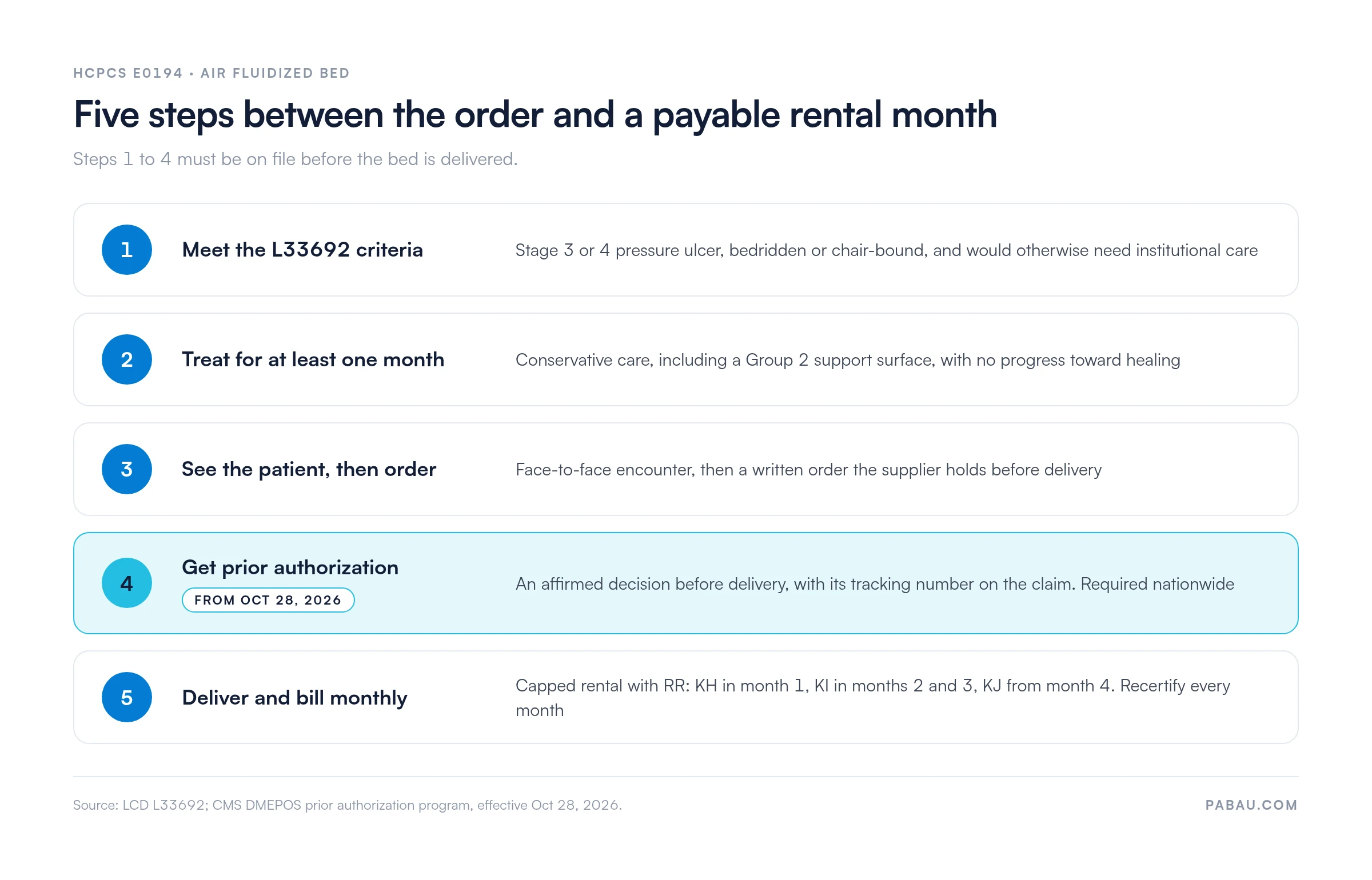
The five steps below run in order, and the first four must be on file before the bed is delivered.
The device itself must meet the technical definition of an air fluidized bed. It is a dry flotation system that uses silicone-coated beads fluidized by warm, pressurized air to create a support surface with low interface pressure. That mechanism separates E0194 from the E0193 powered air flotation bed and the E0197 air pressure pad. Both fall under other LCDs.
E0193 and E0197 are the two codes most often confused with E0194, and each sits in a different Medicare group. Billing E0197 when the patient received an air fluidized bed is a coding error that neither a modifier nor an appeal will fix.
The decision turns on the whole patient, not on wound severity alone. E0194 needs a stage 3 or 4 ulcer, a bedridden or chair-bound patient, and a month of conservative treatment without progress. That month must include a Group 2 support surface. A patient who would not otherwise need institutional care does not qualify, however severe the ulcer.
HCPCS Code E0194 is billed to Medicare Part B as a capped rental. Each claim carries the RR modifier plus one of three month modifiers, applied in a fixed monthly order.
The RR modifier signals that the item is being rented rather than purchased. It stacks with the KH, KI, or KJ modifier depending on the month in the rental sequence. Missing RR on a rental claim results in the payer processing it as a purchase, triggering an overpayment or denial.
The SNF consolidated billing rule is a persistent source of E0194 claim errors. Always confirm the patient’s Part A status before submitting a Part B DME claim for a skilled nursing facility resident.
CMS added E0194 to its Required Prior Authorization List, effective nationwide from October 28, 2026. The same date puts E0194 on the Required Face-to-Face Encounter and Written Order Prior to Delivery list. Both lists are national, so the rules do not change between DME MAC jurisdictions.
An E0194 claim filed without an affirmed prior authorization decision is denied. The CMS DMEPOS prior authorization page lists the codes and the operational guide.
Documentation failures cause more E0194 denials than incorrect coding. Group 3 support surfaces set a demanding medical billing compliance standard. The record must tell a complete clinical story without the reviewer needing to make inferences. Use this checklist before submitting.
Run a documentation checklist at the point of physician order, not at the point of claim submission. By the time you are billing E0194, the wound measurements and the conservative treatment record should already be in the chart. Retrospective chart chasing for Group 3 criteria is the most avoidable delay in DME revenue cycle management.
E0194 denial rates are high relative to simpler DME codes because the coverage criteria are layered and documentation-intensive. The table below maps the most common denial reasons to their causes and prevention actions. Structured denial management workflows cut rework, and the denial code reference explains each code a payer sends back.
Every E0194 claim must carry at least one ICD-10-CM diagnosis code that substantiates medical necessity. The diagnosis code links the device to the clinical condition driving the need. Submitting HCPCS Code E0194 without an accepted diagnosis code results in a medical necessity denial regardless of documentation quality.
The ICD-10-CM codes that support E0194 are listed in policy article A52468, which accompanies LCD L33692. The L89 rows below show the pressure ulcer sites, so confirm each code against the article before you bill.
Use the most specific code available. L89 codes have no seventh character. The fourth character names the site, and the fifth and sixth characters give laterality or subsite and the ulcer stage. Check article A52468 before you report an unstageable code, because the accepted list lives there.
E0194 claims fail more often on process than on clinical eligibility. Teams that track documentation by hand miss prior authorization deadlines and send rental claims with the wrong modifier for the month.
Pabau’s claims software for billers helps teams submit claims and track each one after it leaves the practice. The written order, the face-to-face note, and the wound records sit on the same patient record as the claim. Your billers can check that record before each monthly rental claim goes out, which supports clean claim submission.
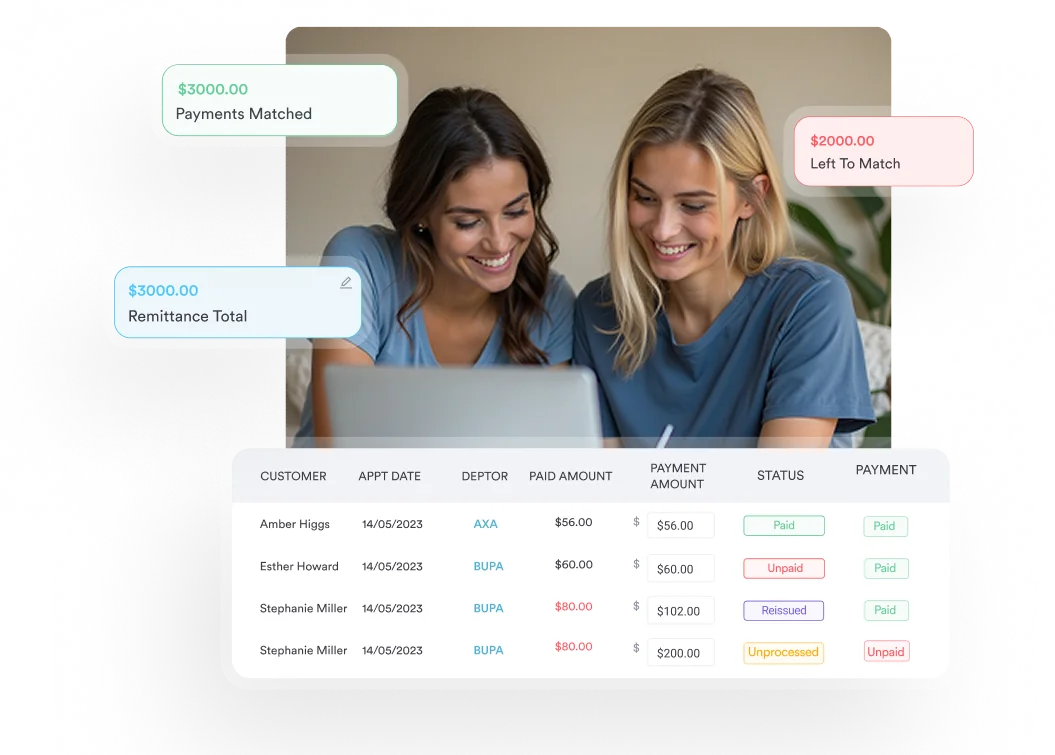
For practices running revenue cycle management across several payers, keeping each claim next to its documentation saves billers time. They stop chasing records for high-documentation codes like E0194.

Pabau’s claims management helps your team submit each monthly E0194 claim and track it to payment. The order, the encounter note, and the wound records sit on the same patient record.

E0194 pays when the record proves the L33692 criteria before the bed arrives. From October 28, 2026, that means an affirmed prior authorization, a face-to-face encounter, and a written order on file before delivery.
Build the file at the point of order rather than at billing. It costs more work up front, and in exchange each rental month pays without a denial to chase.
Book a demo to see how Pabau helps your team submit and track E0194 rental claims.

Need a framework for reducing billing rejections? Denial management in healthcare covers the operational systems that keep denial rates low across code types.
Unsure how DME billing fits into the broader revenue cycle? Revenue cycle management fundamentals explains the end-to-end claims workflow from eligibility through payment posting.
Looking for clean claim submission best practices? Clean claim submission breaks down the elements that determine whether a claim pays on first pass.
Weighing a Group 2 bed instead? E0193 covers the powered air flotation bed and the criteria it is billed under.
HCPCS Code E0194 is the Medicare billing code for an air fluidized bed. It is a Group 3 pressure-reducing support surface. Warm, pressurized air fluidizes silicone-coated beads, which keeps interface pressure low for patients with severe pressure ulcers.
Yes, when the patient meets every Group 3 criterion in LCD L33692. The patient needs a stage 3 or 4 pressure ulcer and must be bedridden or chair-bound from severely limited mobility. Without the bed, they would need institutional care. A written order must follow at least one month of conservative treatment without progress. A trained caregiver, monthly recertification, and ruled-out alternatives are also required. From October 28, 2026, prior authorization is required too.
The most common reasons are missing prior authorization and thin medical necessity records, especially a missing record of the month of conservative treatment. Wrong rental modifiers and place-of-service errors for SNF residents during a Part A stay also cause denials.
LCD L33692 is the local coverage determination for Group 3 pressure reducing support surfaces, which covers HCPCS Code E0194. It sets the clinical criteria and documentation requirements for air fluidized beds. The covered ICD-10-CM codes sit in its companion policy article, A52468.