HCPCS code E0198: Water pressure pad billing guide
HCPCS code E0198 is a water pad for a standard mattress HCPCS code E0198 is the ...

Last Updated: Oct 13, 2026
C1758 is the HCPCS Level II code for catheter, ureteral.
Let Pabau's smart automation suggest the right codes, reduce claim denials, and keep your practice compliant—effortlessly.
Automate repetitive tasks and focus on what matters most—your patients.
Reduce coding errors and ensure compliance with the latest regulations.
Clean claims, fewer denials, and faster reimbursements.
Powerful insights and reporting to help your practice thrive.
HIPAA compliant SOC 2 certified GDPR-compliant Trusted by 4,000+ clinics worldwide

HCPCS Code C1758 is the Level II C-code describing a ureteral catheter, used only in hospital outpatient departments and ambulatory surgery centers (ASCs).
C1758 is an active outpatient PPS code maintained by CMS. It cannot be billed in a physician office or on a DME claim.
Every claim needs medical necessity documentation, a physician order, and a supporting ICD-10 diagnosis code. Local coverage determinations may add more.
A packaged ASC payment indicator produces a zero-paid line rather than a denial, so C1758 revenue can disappear without an alert.
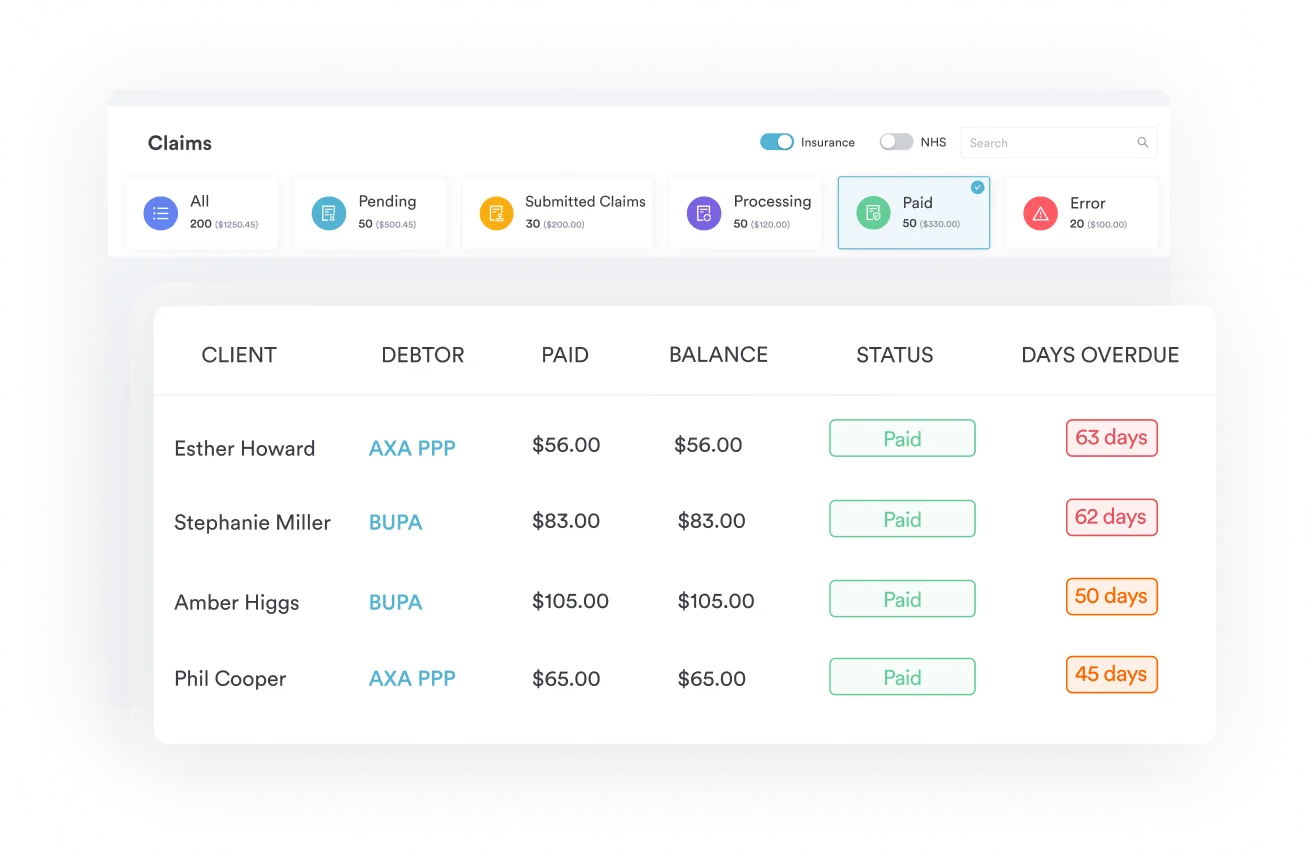
Practice management software like Pabau submits and tracks each claim, and keeps the order and procedure note on the patient record.
HCPCS Code C1758 is a HCPCS Level II C-code with the official descriptor “Catheter, ureteral.” It reports the ureteral catheter used during a urological procedure in a hospital outpatient department or an ambulatory surgery center.
The Centers for Medicare and Medicaid Services (CMS) maintains C1758 as part of the Outpatient Prospective Payment System (OPPS) code set. C-codes apply only to hospital outpatient departments (HOPDs) and ambulatory surgery centers. They are not valid for physician office billing or durable medical equipment (DME) claims.
Two things decide whether a C1758 line gets paid. The setting has to be institutional, and the code’s ASC payment indicator has to still be separately payable that year. The second one is the trap, because a packaging change pays zero without generating a denial.
Submitting C1758 on a physician-office claim triggers an automatic denial, because the setting restriction is built into payer edits.
The table below summarizes the administrative attributes coders need before submitting a C1758 claim.
Code status can change between OPPS rule cycles. Verify C1758 against the current CMS HCPCS master file before submitting, especially at the start of a calendar year.
C1758 can be billed in a hospital outpatient department or an ambulatory surgery center, and nowhere else. CMS created the C-code category specifically for the OPPS environment, so the setting restriction is part of the code’s definition.
Confirm the ASC payment indicator for C1758 against the current CMS OPPS Addendum B. Indicator values can change between annual rule updates.
A value such as “N” typically means the item is packaged, with no separate payment. Indicators like “J1” or “J2” reflect different payment methodologies. Submitting C1758 without checking the current indicator is a common source of zero-payment remittances.
Office-based urology and pelvic health practices bill the procedure with CPT codes instead of C-codes. Payer systems apply the setting edit automatically, so there is no manual override.
Check the CMS OPPS Addendum B each October when the new rule is finalized. The ASC payment indicator for C1758 is updated annually. A flip from separately payable to packaged eliminates reimbursement without any denial alert.
Medicare Part B is the primary federal payer for outpatient supplies billed under HCPCS Code C1758. Payment rates for C-codes in the OPPS environment are governed by the Ambulatory Payment Classification (APC) system rather than the Physician Fee Schedule.
Coverage for C1758 is not blanket. Medicare Administrative Contractors (MACs) administer claims regionally, and local coverage determinations (LCDs) may impose additional requirements or restrict coverage to specific diagnosis codes. A claim that is payable under one MAC jurisdiction may require additional documentation under another. An out-of-network claim rests on the paperwork the practice hands over, so what a superbill includes matters.
CMS updates OPPS payment rates each January through the annual OPPS final rule. For 2026 rates, check the OPPS Addendum B file published alongside the Calendar Year 2026 final rule.
Addendum B lists the national unadjusted payment rate and the status indicator for each code. Your actual payment is adjusted by the wage index for your locality.
This guide does not publish a static rate, because the figures change every year. Download the OPPS Addendum B file for the current calendar year and look up C1758 directly.
Rate lookup stays a manual step. Practice management software like Pabau tracks each submitted claim through to payment, with the physician order and procedure note held on the patient record.
Every claim for C1758 must include at least one ICD-10 diagnosis code that establishes medical necessity for the ureteral catheter. Without a supporting diagnosis, payers will deny the claim as lacking medical necessity documentation.
The ICD-10 codes most commonly paired with C1758 cover urological conditions that require ureteral catheterization. The table below lists frequently used diagnoses. Always verify against your MAC’s applicable LCD before submitting, since coverage lists differ by jurisdiction.
This crosswalk is not exhaustive. MAC LCDs govern which diagnoses satisfy medical necessity for ureteral catheter billing, and a code that works in one jurisdiction may not in another.
Documentation deficiencies are the leading cause of C1758 claim denials that survive initial submission. Payers expect to see a clear chain from clinical decision to supply usage, and auditors look for this chain when reviewing records.
The following checklist reflects standard Medicare supply documentation requirements. Requirements vary by payer and MAC jurisdiction. Confirm against the applicable LCD before submitting.
A timestamped order and note give you an audit-ready trail without extra administrative work.
C1758 is one of several HCPCS codes covering catheter supplies in outpatient urology. Confusing a ureteral catheter with a urethral or intermittent catheter is a common coding error. It usually ends in a downcode or a denial.
The intermittent urinary catheter codes (A4351, A4352, A4353) belong to the DME benefit and use a different billing pathway. Billing one on an HOPD claim gets the line rejected for the wrong benefit category.
C1729 describes a drainage catheter, and it applies when the scenario involves drainage rather than ureteral access. In the same C-code family.
C1758 describes the supply, and a CPT code describes the procedure. The two are not interchangeable, even when the same physical catheter is involved.
An HOPD billing team often submits both codes on the same UB-04 claim. The CPT code covers the urological procedure, such as ureteroscopy, and C1758 covers the catheter. Whether C1758 pays separately or gets packaged into the procedure’s APC depends on the current ASC payment indicator.
For descriptor lookups, the AAPC HCPCS lookup is a quick reference, and the AMA publishes the matching CPT descriptors. The two systems run in parallel on the same claim.
Practices that bill both professional and facility claims run two code sets side by side.
C1758 denials cluster around a short list of mistakes. Each one is easy to catch before submission, and each one is expensive to unpick afterwards. Most of them are basic medical billing hygiene rather than urology-specific coding.
Reworking a denied claim costs far more staff time than checking it once. That is the case for tightening revenue cycle management.
Run a quarterly audit on your C1758 remittances. Filter for zero-paid lines, not just denied lines. A supply code that shifts from separately payable to bundled shows up as zero-paid, which standard denial reports never flag.
Most outpatient billing teams track C1758 in two places at once. The order and the procedure note sit in the clinical record, while claim status lives in a spreadsheet or a payer portal. Reconciling the two is manual work.
Pabau’s claims management software keeps both on the same patient record. Digital forms capture the physician order and the procedure note at the point of care. Pabau then submits the claim and tracks it through to payment.
Coding decisions stay with your coders. Pabau does not pick the code or set the diagnosis pointer. What it changes is the follow-up, so you can see which C1758 lines were paid, denied, or returned at zero.
That works the same way for a hospital outpatient urology service and for a standalone men’s health practice. Catching a zero-paid line this quarter beats finding it a year later.

Pabau keeps the physician order and procedure note on the patient record, then submits and tracks each claim. You can see what was paid, denied, or zero-paid in one place.

Getting C1758 right is mostly a matter of discipline before the claim goes out. Confirm the setting, check the ASC payment indicator for the current year, and get the order and procedure note signed first.
The trade-off worth remembering is that C1758 can stop paying without ever being denied. Denial reports will not show it. A quarterly look at zero-paid lines will, and that habit is worth more than any single coding rule above.
Pabau keeps the documentation and the claim status in one place, so those zero-paid lines surface early. Book a demo to see how outpatient and ASC billing runs in Pabau.

Billing another OPPS device code? C1814 walks through retinal tamponade device billing and the same packaging question.
Need the pass-through rules for an implanted device? C1840 covers intraocular lens billing under OPPS and ASC payment.
Reporting an implantable joint device on a facility claim? C1776 sets out the documentation and indicator checks for that C-code.
Not sure which supply code fits? A4649 explains when a miscellaneous surgical supply code is the right choice.
Working out where the DME benefit starts? E0153 shows how a DME supply claim differs from an outpatient facility claim.
HCPCS Code C1758 is a Level II C-code with the official descriptor “Catheter, ureteral.” CMS maintains it under the Outpatient Prospective Payment System. Hospital outpatient departments and ambulatory surgery centers use it to report a ureteral catheter used during a urological procedure.
C1758 may be covered under Medicare Part B when billed from an eligible HOPD or ASC setting. The claim needs a supporting ICD-10 diagnosis code and medical necessity documentation. Coverage is not blanket. It depends on the applicable MAC jurisdiction’s local coverage determination. Verify the LCD for your region before billing.
Commonly paired ICD-10 codes include N13.2 (hydronephrosis with renal and ureteral calculous obstruction), N20.1 (calculus of ureter), and N11.1 (chronic obstructive pyelonephritis). The supported diagnosis list varies by payer and MAC LCD. Always verify your jurisdiction’s coverage policy before submitting.
Required documentation typically includes a physician order with a stated indication and a procedure note confirming the catheter was used. You also need an ICD-10 diagnosis code establishing medical necessity, plus confirmation of the outpatient or ASC setting. Some MAC jurisdictions may also require a Certificate of Medical Necessity or prior authorization. Confirm requirements under the applicable LCD for your region.