CPT code 21011: Excision of soft tissue tumor of the face
CPT code 21011: Official descriptor and procedure overview CPT code 21011, as pu...

Last Updated: Oct 8, 2026
C1776 is the HCPCS Level II code for joint device (implantable).
On its own, the code pays nothing. Drop it from a device-intensive claim anyway, and the whole claim comes back unpaid.
Three things decide the outcome: the setting you bill from, the device-to-procedure edit, and the operative note. Anchors and fixation screws sit under different codes, so mixing them in causes the same rejection.
Let Pabau's smart automation suggest the right codes, reduce claim denials, and keep your practice compliant—effortlessly.
Automate repetitive tasks and focus on what matters most—your patients.
Reduce coding errors and ensure compliance with the latest regulations.
Clean claims, fewer denials, and faster reimbursements.
Powerful insights and reporting to help your practice thrive.
HIPAA compliant SOC 2 certified GDPR-compliant Trusted by 4,000+ clinics worldwide

HCPCS code C1776 covers a joint device (implantable), an artificial joint such as a finger or toe implant.
Hospital outpatient departments and Medicare-certified ASCs report C1776 on the facility claim, and Medicare pays it under OPPS.
C1776 carries status indicator N in the CY2026 OPPS Addendum B, so the device is packaged into the procedure’s APC rate.
Device pass-through for C1776 ran from October 1, 2000 to December 31, 2002, and hospitals still report the line.
Practice management software like Pabau keeps treatment notes, device details, and claims in one patient record.
The full descriptor reads “Joint device (implantable).” CMS uses the same wording for the short descriptor, so nothing gets abbreviated away in the code tables.
C1776 is a Level II code in the HCPCS code set, which the Centers for Medicare and Medicaid Services maintains. CMS groups it with assorted devices, implants, and systems. That group covers outpatient facility billing, and physician professional services use CPT instead. Billing compliance programs work when someone reviews a sample regularly, rather than after a payer letter arrives. The CARC denial code list is short enough to learn, and most rework traces to a handful of entries.
CMS also publishes a plain-language definition for the category. A joint device is an artificial joint, such as a finger or toe, implanted as a substitute for the natural one.
That definition draws the boundary coders need. A joint device does not oppose soft tissue to bone, tendon to bone, or bone to bone. Anchors do that work, and they belong to C1713.
Pull the descriptor from the current-year CMS HCPCS release before you build any internal reference. Descriptors and code status change between annual files, and the quarterly HCPCS update is where those changes land first.
C-series codes report the device. CPT reports the operation that put it there. Teams moving from physician-office billing to hospital outpatient billing hit that split first. The two code sets land on different claims.
Both code sets usually describe the same operation. The surgeon reports the arthroplasty, and the facility reports the implant that went in. The AAPC HCPCS lookup confirms which C-code sits next to the one you are considering.
C1776 draws no separate Medicare payment. The implant cost is packaged into the Ambulatory Payment Classification (APC) rate for the procedure it supports.
The January 2026 OPPS Addendum B lists C1776 with status indicator N, which means packaged payment. The line carries no APC assignment, no relative weight, and no payment rate.
C1776 held device pass-through status from October 1, 2000 to December 31, 2002. The CMS device category list records it as entry 67, with those exact dates.
Statute limits pass-through payment to between two and three years. Once it expires, CMS moves the device code to packaged payment. C1776 has been packaged since the start of 2003.
A line that pays nothing looks droppable, and some teams drop it. That decision can cost the whole claim.
CMS is explicit here. Device category C-codes stay active after pass-through expires. Hospitals still have to report them whenever the device goes in during an OPPS-paid procedure.
The claim editor returns any claim that reports a device-intensive procedure without a device code on it. Nobody gets paid, and somebody has to rework it.
There are narrow exceptions. Modifiers 52, 73, and 74 cover an interrupted procedure where no device went in. Modifier CG bypasses the edit on certain device-intensive procedures when nothing was implanted.
The charge on the line matters too. CMS builds future APC rates from submitted claims data. Under-report the implant charge this year, and you push down the payment for small joint arthroplasty later.
Check the status indicator for C1776 in the Addendum B that matches your date of service, not the current one. Facilities reworking prior-year claims get caught by this, because Addendum B is republished quarterly and rates shift each January.
Report C1776 when a hospital outpatient department or Medicare-certified ASC implants an artificial joint under OPPS. Four rules cover the rest.
On the professional side, the surgeon bills an implant arthroplasty code. CPT 26531 covers metacarpophalangeal arthroplasty with a prosthetic implant, and 26536 covers the interphalangeal joint.
Larger joints work the same way. CPT 27130 covers total hip arthroplasty. Both are billed alongside C1776 on the facility side.
Foot and ankle work counts too. CPT 28291 covers hallux rigidus correction with an implant.
The implant is logged in the operating room record with its manufacturer, model, and identifier. Charge capture then posts it to the patient account. The chargemaster maps that item to C1776 and attaches the acquisition cost.
From there the line rides out on the institutional claim with the surgical CPT code. Medicare’s Integrated Outpatient Code Editor, known as the I/OCE, runs the device-to-procedure edits before anything is priced.
Clear the editor and the APC for the surgery pays. The C1776 line shows a zero allowed amount, which is the expected result rather than a denial.
Before you submit, check the device-to-procedure edit list published with the annual OPPS addenda. It tells you whether the procedure you are billing needs a device code at all.
A C1776 line carries no routine modifier. What changes the reporting is a manufacturer credit on the implant.
Report value code FD when that credit covers 50 percent or more of the device cost. Put the credit amount in the value code’s amount field.
Value code FD replaced modifiers FB and FC on OPPS claims effective January 1, 2014. Modifier FB still applies on ASC claims, so a facility running both settings handles each one differently.
Three categories of documentation carry the most weight with Medicare and commercial payers on an implanted joint device. Each one answers a different question a reviewer will ask.
Name the joint that was replaced and the device that went into it. Manufacturer, model, and size all belong in the note.
Reviewers look for a direct line between the implant and the procedure billed. A generic template that never names the device will not carry that weight. Solid medical forms at the facility level build the audit trail payers expect.
The Unique Device Identifier, known as the UDI, appears on the implant label and packaging. Record it in the patient’s implant log while the packaging is still in the room.
That record is what supports a recall check or a revision years later. Strong documentation practices keep the chain intact from the shelf to the claim.
Traditional Medicare rarely requires prior authorization for a packaged device line under OPPS. Medicare Advantage plans and commercial payers often do, and they authorize the procedure rather than the implant.
So support the procedure in the chart. Record the joint destruction or deformity, the pain and function limits, and the conservative care that failed first.
These are the errors that show up most often on device code audits. Each one is cheaper to catch before submission than to appeal afterward.
Building these checks into your practice management software beats relying on individual biller memory. A pre-submission checklist catches the same errors every time, whoever is on shift.
Run a quarterly review of every C-series code your facility bills, C1776 included. CMS republishes Addendum B and the device-to-procedure edit list each quarter, and a code that was fine last quarter can move. Put the review on the billing calendar rather than leaving it to whoever notices a denial first.
Most C1776 miscoding comes from the codes sitting next to it. Four of them cause the trouble.
Neighboring device categories follow the same reporting logic. C1760 describes a vascular closure device.
Verify each descriptor against the current CMS file before you rely on it. The NLM HCPCS API confirms a code still exists and still reads the way you remember.
In many outpatient teams the operative note lives in one system, the implant log in another, and the claim in a third. Orthopedic and sports medicine teams feel it most, because every implant case carries its own device paperwork.
Practice management software like Pabau brings clinical records, documents, and billing into one patient record. Structured intake and consent forms capture detail during the visit, so whoever builds the claim reads what the clinician wrote.
Pabau’s claims management software then checks the fields an insurer needs before anything goes out. The send option stays disabled until they are complete, and a status dashboard shows where each claim sits.
The record side sits with compliance management. Role-based access controls who opens a chart, audit trails log every change, and notes and photos are timestamped as they are created.
So when a payer asks who recorded an implant and when, the answer is already there. Nobody has to reconstruct it from three systems and a memory.
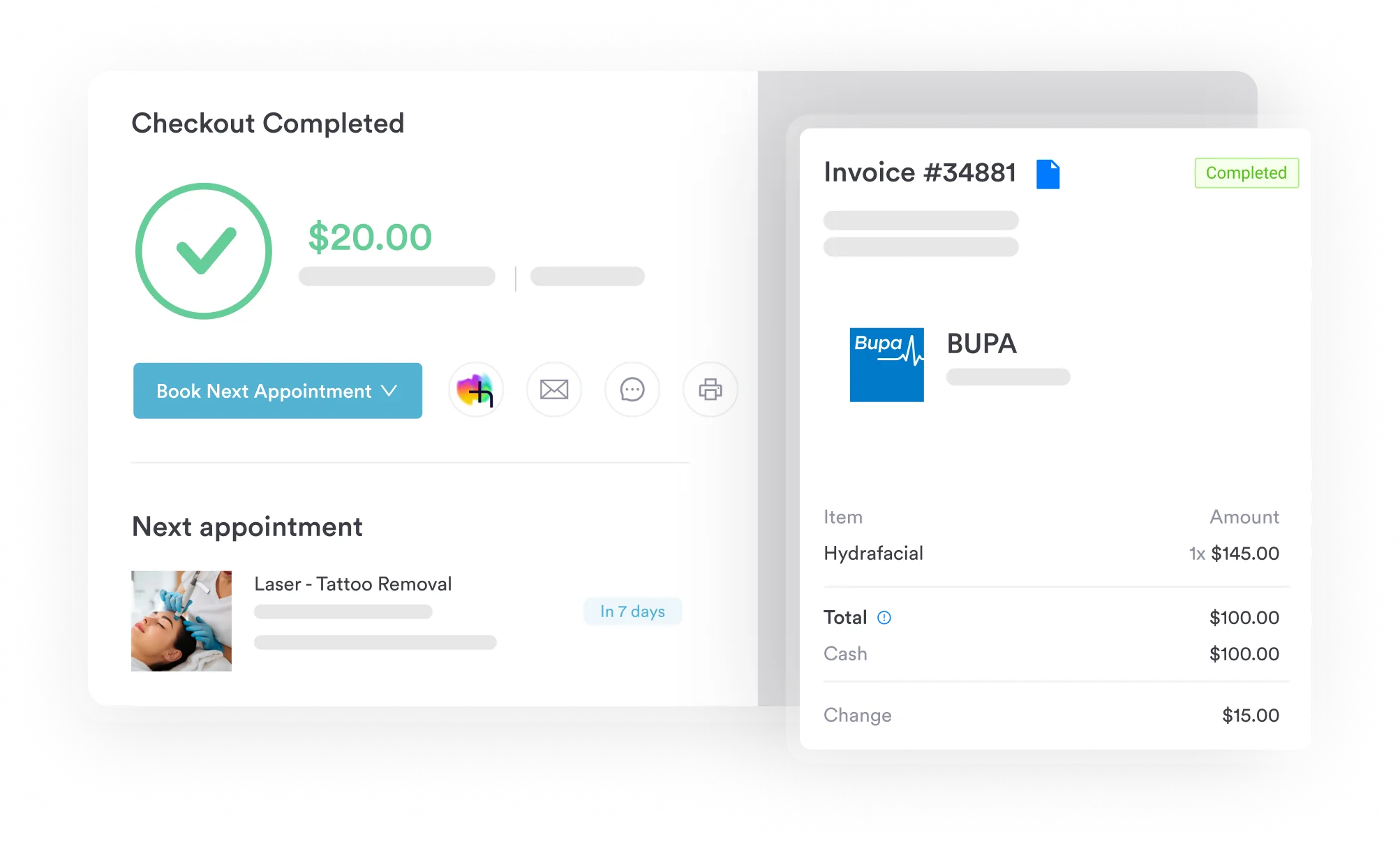

Pabau brings treatment notes, device documentation, and billing into a single patient record. Claims are checked for the fields your insurer needs before the send option unlocks.

C1776 is a narrow code with a narrow test. An artificial joint went into a patient in an outpatient setting. Put that in the note, and the billing follows.
What trips teams up is procedural rather than clinical. A packaged line someone deleted, a UDI nobody captured, a manufacturer credit nobody reported. All three are avoidable, and all three are cheaper to prevent than to appeal.
If your notes, implant records, and claims live in three separate systems, that check stays manual every time. Book a demo to see how Pabau holds all three in one record for outpatient billing teams.

Coding an intraocular lens implant? HCPCS code C1840 covers the telescopic lens device line for ophthalmology cases.
Reporting an electrophysiology catheter? HCPCS code C1732 explains the device line for diagnostic and ablation catheters.
Coding graft material on the surgical side? CPT code 20931 covers the structural allograft add-on that surgeons report.
Billing a larger bone graft? CPT code 20902 sets out how a major or large bone graft is reported.
Using ultrasound to stimulate bone healing? CPT code 20979 covers the low intensity ultrasound stimulation code and its documentation.
Most facilities report it under revenue code 0278 for other implants. Medicare requires a HCPCS code on that revenue line, so a 0278 line with no device code is denied. A few payers prefer 0274, so check the billing guide.
The implant arthroplasty codes. CPT 26531 and 26536 cover the finger joints, and 28291 covers hallux rigidus with an implant. CPT 27130 and 27447 cover total hip and total knee arthroplasty.
In the chart. The UB-04 has no field for a Unique Device Identifier, so it lives in the operative record and the implant log. Reviewers ask for it in the documentation, not on the claim line.
Not always. Medicare Advantage plans and commercial payers write their own device policies. Some accept C1776, some want L8699 instead, and some ask for the manufacturer invoice before they pay the surgical claim.
Yes. C1776 appears in the CY2026 HCPCS file. The January 2026 OPPS Addendum B still carries it with status indicator N for packaged payment. Its pass-through window closed in 2002, but the code was never deleted.