

HCPCS code E0198: Water pressure pad billing guide
HCPCS code E0198 is a water pad for a standard mattress HCPCS code E0198 is the ...

Last Updated: Oct 13, 2026
A4649 is the HCPCS Level II code for surgical supply; miscellaneous.
Three things decide whether an A4649 claim is paid. They are the composition test, the modifiers on the claim line, and the documentation behind both. Solid medical documentation workflows make all three easy to produce months later, when a reviewer asks.
Let Pabau's smart automation suggest the right codes, reduce claim denials, and keep your practice compliant—effortlessly.
Automate repetitive tasks and focus on what matters most—your patients.
Reduce coding errors and ensure compliance with the latest regulations.
Clean claims, fewer denials, and faster reimbursements.
Powerful insights and reporting to help your practice thrive.
HIPAA compliant SOC 2 certified GDPR-compliant Trusted by 4,000+ clinics worldwide

HCPCS code A4649 covers a surgical supply that no other HCPCS Level II code describes.
For a dressing made of mixed materials, A4649 applies when no single material makes up more than 50% of the weight.
Claim lines for A4649 are rejected without an A1 through A9 modifier naming how many wounds the dressing covers.
A4649 carries no fee schedule amount, so every claim is priced and processed manually by the DME MAC.
Practice management software like Pabau keeps supply documentation attached to the patient record, so audit requests are quick to answer.
A4649 is the miscellaneous catch-all for surgical supplies in the HCPCS Level II A-series. Its full descriptor, as maintained by the Centers for Medicare and Medicaid Services (CMS), is Surgical supply; miscellaneous.
The A-series covers medical and surgical supplies used at home or in a clinical setting. Almost every code in it names a specific product. A4649 sits at the end of the series because it has no defined product category at all.
A4649 covers supplies, not services and not equipment. A service belongs on a CPT code or a HCPCS service code such as G0166. Durable medical equipment and its accessories take an E-code.
Unlike the rest of the A-series, A4649 has no product-specific definition. CMS expects billers to exhaust the code set before reaching for it. Choosing A4649 because a lookup takes time is the behavior DME MAC auditors watch for.
A4649 is a last-resort code. Noridian Healthcare Solutions and CGS Administrators run all four DME MAC jurisdictions between them. Both state that A4649 applies only when no other HCPCS code describes the supply. Using it when a specific code exists is incorrect coding, and it invites a denial or a post-payment audit. The authorization requirement sits with the plan, not the code, so it varies between patients. Denial codes in medical billing group the reasons a payer refuses, and the group decides the fix.
A Vabra aspirator shows the rule in action. The single-use vacuum device used for endometrial sampling has its own supply code, A4480, so A4649 never applies to it.
Work through this sequence before you select A4649:
Supplies billed under A4649 fall into three groups. There are dressings built from unclassified materials, custom-fabricated items with no established code, and new products still waiting on a code assignment. Wound care work in skin clinics and surgical practices generates most of these claims.
Billing supply codes accurately starts with inventory management software that knows what actually left the shelf.
For a dressing made of more than one material, the DME MACs apply a weight test. Code to the material that makes up more than 50% of the product’s weight. Use that material’s own HCPCS code.
Two situations send the product to A4649 instead. The first is a product where no single material passes the 50% mark. The second is a product with a predominant material that has no specific HCPCS code of its own.
This test is why two dressings that look alike can carry different codes. A calcium alginate pad that is mostly alginate belongs on A6196. Blend that same pad so alginate, collagen, and a gelling agent each sit under half the weight, and it belongs on A4649.
Run the test before you write the claim, and keep the manufacturer’s composition sheet on file. It is the one document that proves the code choice was right.
Medicare coverage for A4649 is conditional. CMS Policy Article A54563, which governs surgical dressings, requires both medical necessity and confirmation that no more specific HCPCS code exists. Without both on the record, the claim will be denied.
A4649 has no fee schedule amount. It carries no set rate on the DMEPOS fee schedule, so the DME MAC prices each claim on individual consideration. Claims are processed manually rather than adjudicated automatically.
Manual pricing changes what the claim has to carry. Describe the product in the claim narrative, name the manufacturer and brand, and state what you paid. Reviewers set the allowance from that description, so vague wording costs money.
Medicaid coverage for A4649 varies by state, and each program sets its own rules and rates for miscellaneous supply codes. Check the state fee schedule before you bill. An EHR for private practices with a built-in billing module makes that cross-payer check faster.
Before you submit an A4649 claim, save the manufacturer’s composition sheet to the patient record and note the date you ran the code search. Those two items answer most DME MAC information requests without a second round of correspondence.
Documentation is where most A4649 claims fail. The code is deliberately vague, so the DME MAC asks for supporting evidence with every claim. The standard set is:
Noridian’s correct-coding guidance for dressings with unclassified materials asks for the brand name and the material description. Missing either one is enough for a denial.
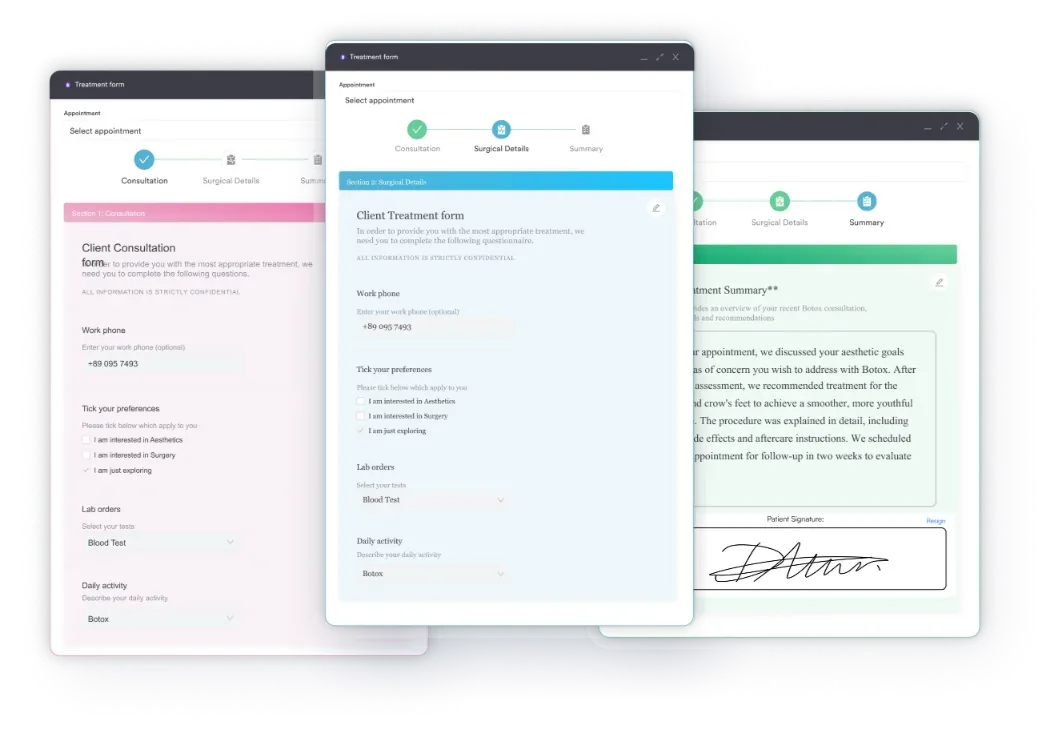
Post-payment review can start months after a claim is paid, so storage matters as much as capture.
The most frequent A4649 mistakes share one cause. The code gets used for convenience rather than as a genuine last resort, and denials follow.
Tracking denials by code in practice management software surfaces an A4649 pattern early, before one habit becomes a systemic billing problem. The same records answer a payer that wants to know how a coding decision was made.
Modifier selection for A4649 follows standard DME billing rules, with one addition that catches suppliers out. Surgical dressing lines need a wound-count modifier from the A1 to A9 range, or the line is rejected before anyone reviews it.
The A1 to A9 modifier is the one that rejects claims outright, so check it first. KX comes next, because it tells Medicare that the coverage criteria in the surgical dressings policy are met. Local DME MAC policies vary, so confirm the full modifier set before you submit.
These are the codes billers skip past on the way to A4649. Check every one before deciding that nothing fits. All of them cover surgical dressings and supplies from the A-series.
A dressing with several components needs a component-level check. If one component carries its own code, bundling the whole product under A4649 can read as unbundling on audit. Device codes used in hospital outpatient billing.
Three miscellaneous codes get mixed up with each other. They are A4649, A9270, and J3490. Each covers a distinct category of supply or service, and picking the wrong one is a common source of denials.
A9270 is not really a billing code. It exists to trigger a formal non-covered denial, which a patient’s supplemental insurer may need before it will pay. Never reach for A9270 when coverage is possible. Use A4649 with the right modifiers and let the payer decide.
J3490 applies to drugs and biologics with no assigned J-code. It never applies to a surgical supply, whatever the product is made of.
This workflow follows Noridian and CGS correct-coding guidance. Working through it in order lowers denial risk and leaves a trail that survives an audit.
Practices that bill CPT services alongside HCPCS supply codes should keep the two workflows separate. The code sets carry different payer policies, documentation standards, and edit systems. Mixing them makes it easy to apply the wrong modifier or the wrong coverage test.
Wound care teams and plastic surgery practices tend to carry the heaviest mix.
Where supply billing runs at volume, automated billing workflows can route every A4649 line for a second documentation check before it leaves the practice.
A4649 claims fail on paperwork more often than on coding. The composition sheet sits in an email and the code search was never written down. When the DME MAC asks for evidence six months later, someone has to reconstruct it.
Practice management software like Pabau keeps all of it on the patient record instead. Digital intake and consent forms capture the product details and the clinical indication at the point of care. Treatment notes and uploaded supplier documents attach to the same file, so nothing lives in a separate folder.
Pabau’s claims management software then pulls what is already on the record into a pre-filled claim. It tracks the claim’s status once you submit it. It will not pick the code for you or run the composition test.
What it does is stop the supporting evidence from scattering. For a practice billing miscellaneous supplies every week, that is hours back on every payer request.
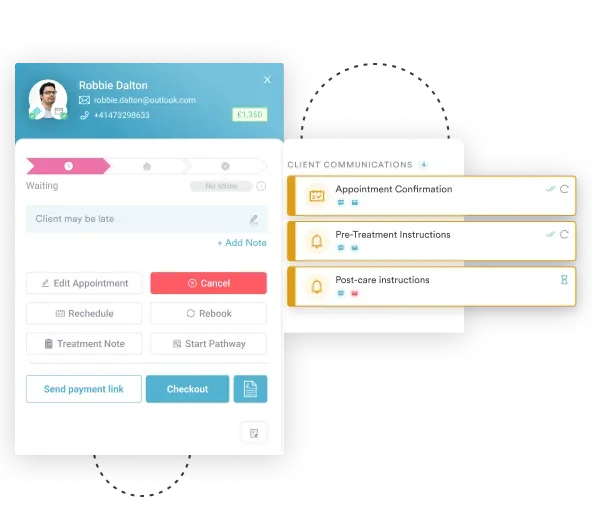

Pabau keeps the product details and medical necessity behind an A4649 claim on one patient record. Answer a DME MAC information request without hunting through email.

A4649 is one of the easiest codes to reach for and one of the hardest to defend. The work that decides the outcome happens before submission. Run the composition test, record the codes you ruled out, and put the wound-count modifier on the line.
Do that consistently and the code stops being an audit liability. Skip it, and the DME MAC sees a pattern long before you do.
If the same product keeps landing on A4649, stop billing it that way and ask the PDAC for a code assignment. Book a demo to see how Pabau keeps the documentation behind every supply claim on the patient record.

Billing another immune globulin claim? Gamunex-C/Gammaked billing guide explains the modifier, NDC, and unit errors that turn a J1561 claim into a denial.
Billing an Octagam infusion claim? Octagam immune globulin billing guide covers Medicare coverage, the JW/JZ modifier rules, and ICD-10 pairings for J1568.
Billing Gammagard for two routes? Gammagard Liquid billing guide explains the modifier, ICD-10, and documentation errors behind most J1569 denials.
HCPCS code A4649 covers a surgical supply that no other HCPCS Level II code describes. It sits in the A-series and goes to the DME MAC on a Medicare Part B claim. Use it only after a code search confirms that nothing more specific fits.
Use A4649 only after confirming that no specific A-series code describes the supply. For a dressing made of several materials, apply the 50% weight test first. Code to the material that makes up more than half the product. A4649 applies when no material passes that mark, or when the predominant material has no code of its own.
Medicare covers A4649 only when the supply is medically necessary and no more specific HCPCS code describes it. Coverage is not automatic. CMS Policy Article A54563 governs surgical dressing coverage, and your DME MAC may add local requirements. Check those before you submit.
You need the brand and product name plus the manufacturer’s composition sheet showing the material breakdown. A clinical note from the ordering provider must document medical necessity. Record the codes you reviewed and ruled out, and keep the supplier invoice on file. Missing any of these is grounds for denial.
A4649 carries no fee schedule amount, so there is no published rate to look up. The DME MAC prices each claim on individual consideration and processes it manually. The allowance comes from the product description in your claim narrative and the supplier invoice. Describe the item precisely.



