

CCSD code G5100: Bypass of duodenum billing guide
CCSD code G5100 bills a bypass that leaves the duodenum in place CCSD code G5100...

Last Updated: Oct 16, 2026
C1765 is the HCPCS Level II code for adhesion barrier.
Verify current rates directly with CMS's HCPCS program page before submitting claims, since OPPS rates update each calendar year.
Let Pabau's smart automation suggest the right codes, reduce claim denials, and keep your practice compliant—effortlessly.
Automate repetitive tasks and focus on what matters most—your patients.
Reduce coding errors and ensure compliance with the latest regulations.
Clean claims, fewer denials, and faster reimbursements.
Powerful insights and reporting to help your practice thrive.
HIPAA compliant SOC 2 certified GDPR-compliant Trusted by 4,000+ clinics worldwide

HCPCS code C1765 describes an adhesion barrier: a bioresorbable surgical supply placed during abdominal, pelvic, or orthopedic procedures to prevent post-operative scar tissue.
C1765 is an HCPCS Level II C-series code billed exclusively by hospital outpatient facilities under the Medicare OPPS, not by the treating physician.
Medicare reimburses C1765 through the Hospital Outpatient Prospective Payment System (OPPS); rates vary by geography and are updated annually in the CMS OPPS final rule.
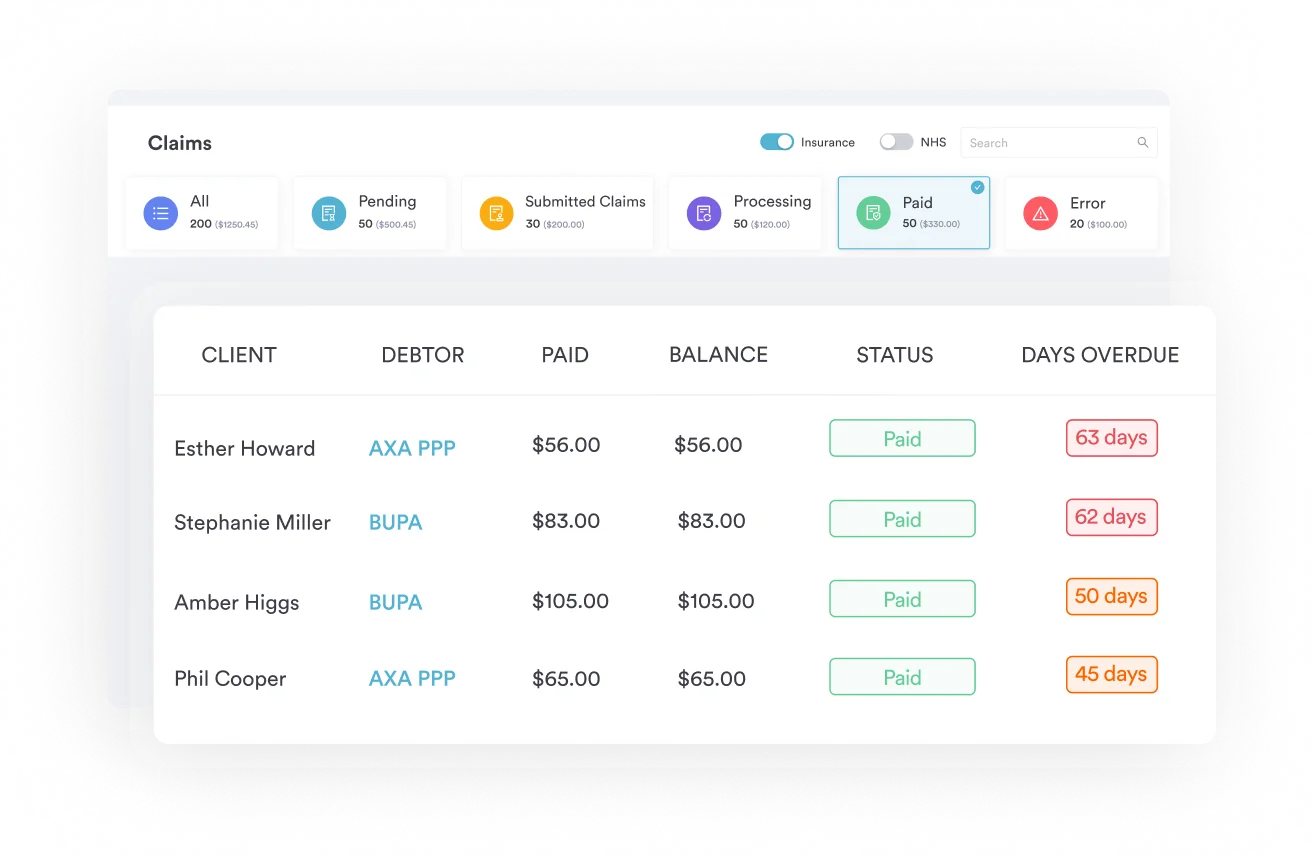
Practice management software like Pabau helps the surgeon’s own practice keep the consult notes and consent records that support their separate professional-fee claim for the same procedure.
HCPCS code C1765 carries the official short description “Adhesion barrier.” It belongs to the C-series of HCPCS Level II.
C-series codes are maintained by CMS to support OPPS payment for implantable devices and supplies that lack a permanent HCPCS or CPT designation. C1765 is one of these temporary codes, billed exclusively by the hospital facility.
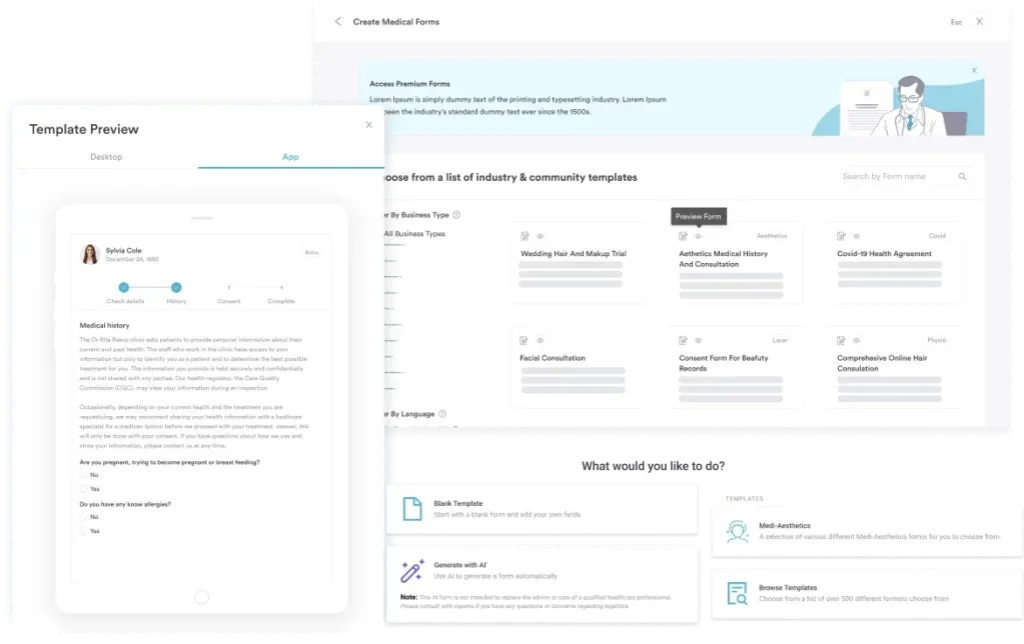
The surgeon’s own professional fee for the same procedure is billed separately under CPT. Practice management software like Pabau helps the surgical practice keep the consult notes, consent forms, and referral records that support that claim, so nothing is missing when it’s time to bill the visit.
An adhesion barrier is a bioresorbable material placed directly at a surgical site to reduce post-operative scar tissue formation.
Post-operative adhesions are a well-documented complication following abdominal, pelvic, and certain orthopedic procedures, and adhesion barriers are designed to create a temporary physical separation between tissue surfaces while healing occurs.
Post-surgical rehab for these cases is often coordinated through practices using physical therapy EMR software.
Practices that specialize in gynecologic surgery.
C1765 is reported by the hospital outpatient facility at the time the adhesion barrier product is placed during the qualifying surgical procedure.
The operative note must document the specific product used and the anatomical site of placement. Thorough documentation at the point of care is the single most effective way to prevent downstream claim denials for supply codes like C1765.
Orthopedic cases are often confirmed with a standard workup. Anesthesia for these cases is billed separately under CPT code 00450, distinct from any facility-side device charge.
Medicare reimburses HCPCS code C1765 through the Hospital Outpatient Prospective Payment System. Under OPPS, CMS assigns each covered service or supply to an Ambulatory Payment Classification (APC) group.
The payment rate for C1765 reflects the APC-level packaged or separately payable amount, depending on how CMS classifies the code in the applicable OPPS final rule year.
Geographic payment adjustments apply through the hospital wage index, so the Medicare payment for C1765 differs by facility location. Private payer contracted rates are negotiated separately and can differ materially from the Medicare OPPS rate.
Always verify the rate in effect for your facility’s region using CMS’s Hospital Outpatient PPS regulations and notices page, which links to the current OPPS Addendum A and B files. Good billing compliance practices include documenting the rate source each time a HCPCS supply code is added to the CDM.
Solid practice management software for medical teams means every miscellaneous code carries the notes a payer will ask for.
CMS updates OPPS payment rates annually through the OPPS/ASC final rule, typically published in November for the following calendar year. The authoritative source for the 2026 payment rate for C1765 is CMS OPPS Addendum B, which lists all separately payable OPPS codes with their national average payment amounts.
Third-party aggregator sites may show estimated or historical rates that do not reflect the current CMS OPPS Addendum B figures. Always pull directly from the CMS source. Use the AAPC HCPCS code lookup to cross-reference the code description, but for payment amounts, the CMS Addendum B is the only authoritative source.
Outpatient facilities managing multiple HCPCS device codes benefit from EHR integration workflows that keep CDM entries synchronized with annual rate updates.
Build a recurring calendar reminder each November to review the CMS OPPS final rule when it publishes. Update your charge description master (CDM) for all C-series codes, including C1765, before January 1 to avoid billing the prior year’s rate into the new OPPS period.
C-series HCPCS codes are facility-side codes. The hospital outpatient facility reports C1765 on a UB-04 claim form (or its electronic equivalent, the 837I transaction). The physician performing the surgery does NOT separately bill C1765 on a CMS-1500 claim. Conflating these two claim types is one of the most frequent causes of denial for adhesion barrier charges.
Modifiers for HCPCS code C1765 follow standard OPPS modifier rules. Modifier requirements can vary by payer and should be verified against individual payer policies and current CMS transmittals.
Beyond these, standard OPPS modifiers for bilateral procedures or multiple units may apply depending on clinical circumstances. Check with your MAC (Medicare Administrative Contractor) or your facility’s compliance team for the most current modifier guidance.
Maintaining accurate modifier logic within your digital documentation workflow reduces the risk of submitting a claim without a required modifier.
Several other HCPCS C-series codes cover related surgical supplies and implantable devices. Knowing the key differences helps coders select the most specific code and avoids upcoding or undercoding for adhesion barrier products.
If the adhesion barrier product used during the procedure has its own distinct HCPCS code assigned by CMS, report that specific code rather than C1765. Use C1765 when the product is an adhesion barrier and no more specific code applies.
Review the current CMS HCPCS file annually, since new product-specific codes are added each year. Coders managing a broader mix of C-series codes may also need HCPCS code C1730 for electrophysiology catheter claims, a distinct billing scenario.
Outpatient coding teams that manage multiple surgical supply codes benefit from integrated practice management platforms that centralize code library updates.
Getting the documentation right before claim submission is faster than correcting a denial after the fact. These steps apply to the standard OPPS workflow for C1765.
Facilities using structured billing compliance checklists as part of their pre-bill review process catch most of these errors before submission rather than after. A secure data workflow that links operative documentation to the billing record also makes audit responses faster.
Denial patterns for adhesion barrier claims tend to cluster around a short list of avoidable errors. Recognizing them before submission is more efficient than managing appeals.
Periodic internal coding audits that include a sample of C1765 claims help surface these patterns before they accumulate into underpayment or compliance risk. Reviewing denial trend reports by reason code on a regular cadence catches C-series coding issues within days rather than weeks.
Run a quarterly HCPCS code C1765 denial report filtered by denial reason code. If CO-4 (procedure inconsistent with modifier) or CO-B9 (patient is enrolled in a hospice) appear consistently, review your GV/GW hospice-related modifier logic before the next billing cycle.
The hospital facility bills C1765 directly to Medicare under OPPS — that side of the claim never touches the referring practice’s system. But the surgeon or specialist who performs the procedure still bills their own professional fee separately under CPT, and that claim depends on the same operative documentation, consent forms, and referral notes the practice already collects. A superbill form is not a claim form, but it carries the same data the patient insurer will ask for.
Practice management software like Pabau’s claims management tools keep those records — consult notes, signed consent forms, and referral correspondence — attached to the patient’s chart, so the practice’s own billing team has everything it needs to submit a clean professional-fee claim without chasing down paperwork after the fact.
For practices juggling referrals to multiple facilities, having consent and documentation centralized in one record cuts down on the back-and-forth when a claim is questioned or a facility requests supporting notes.

Pabau’s claims management software helps private practices keep consult notes, consent forms, and referral records organized and attached to the patient record, so the practice’s own claims go out clean the first time.

C1765 claims fail for avoidable reasons: the wrong claim form, a missing modifier, an outdated CDM rate. Catching them before submission takes documentation discipline and a process that runs the same way every time.
Get the operative note right at the point of care, keep the CDM rate current every January, and confirm the bill type before the claim leaves the building. Do that consistently, and C1765 stops showing up on the denial report.
The same discipline applies on the practice side, where the professional-fee claim for the same procedure runs through a different system entirely. Book a demo to see how Pabau keeps a referring practice’s consult notes, consents, and referral records organized for clean claims.

Coding a different implantable device? HCPCS code L0457 covers billing and coverage for a flexible TLSO, another facility-side supply code.
Handling a DME claim instead? HCPCS code A4459 walks through billing for a transanal irrigation system.
Need an ICD-10 code for a musculoskeletal deformity? ICD-10 code M95.8 covers other specified acquired deformities.
Coding diabetic neuropathy correctly? Diabetic neuropathy coding guide explains when coders should reach for this unspecified neuropathy diagnosis code.
Coding an organic mental disorder? Unspecified mental disorder coding guide explains when this code applies if the presentation does not fit F01 through F06.
HCPCS code C1765 is a Level II C-series code with the official description “Adhesion barrier,” used by hospital outpatient facilities to report bioresorbable surgical supply products placed during abdominal, pelvic, or orthopedic procedures to prevent post-operative scar tissue formation. It is billed under the Medicare Hospital Outpatient Prospective Payment System (OPPS).
An adhesion barrier is a bioresorbable material placed at a surgical site to physically separate tissue surfaces during the initial healing phase, reducing the risk of post-operative adhesion formation. It is commonly used in abdominal, pelvic, gynecologic, and certain orthopedic procedures where scar tissue development could cause complications or limit function.
C1765 is billed by the hospital outpatient facility on a UB-04 (837I) claim form with a hospital outpatient bill type. The physician does not bill C1765 separately on a CMS-1500. Medicare reimburses the code through the OPPS APC payment system, and the applicable rate is found in CMS OPPS Addendum B for the current calendar year.
Commonly applicable modifiers include FB (item provided without cost to the provider), FC (partial credit received for replaced device), and GK (item associated with an ABN situation). Modifier requirements vary by payer, so verify with your MAC and individual payer contracts before submitting.
The authoritative 2026 payment rate for HCPCS code C1765 is in CMS OPPS Addendum B, published with the CY2026 OPPS/ASC final rule. Download it directly from CMS rather than relying on third-party aggregator estimates, which may not reflect the current year’s rate.
HCPCS Level I consists of CPT codes (five-digit numeric codes maintained by the AMA) used primarily to report physician services and procedures. HCPCS Level II codes are alphanumeric codes maintained by CMS used to report supplies, equipment, drugs, and non-physician services not covered by CPT, including C-series codes like C1765 for hospital outpatient devices.



