

HCPCS code E0198: Water pressure pad billing guide
HCPCS code E0198 is a water pad for a standard mattress HCPCS code E0198 is the ...

Last Updated: Oct 13, 2026
A4427 is the HCPCS Level II code for ostomy pouch, drainable; for use on barrier with locking flange, with filter (2 piece system), each.
Let Pabau's smart automation suggest the right codes, reduce claim denials, and keep your practice compliant—effortlessly.
Automate repetitive tasks and focus on what matters most—your patients.
Reduce coding errors and ensure compliance with the latest regulations.
Clean claims, fewer denials, and faster reimbursements.
Powerful insights and reporting to help your practice thrive.
HIPAA compliant SOC 2 certified GDPR-compliant Trusted by 4,000+ clinics worldwide

HCPCS Code A4427 describes an ostomy pouch, drainable, for use on a barrier with locking flange, with filter (2-piece system) – a permanent Level II HCPCS supply code that has been active since January 1, 2004
Medicare Part B covers A4427 when medically necessary following surgery that creates a permanent ostomy opening (colostomy or ileostomy), per LCD L33828
A4427 and A4426 are often confused, but both use a locking-flange barrier – the key distinction is the filter: A4427 includes a built-in filter, A4426 does not. Mixing up the filter status (or confusing either with A4425, the true non-locking filtered code) is a common claim denial trigger
Practice management software like Pabau helps practices keep the documentation trail – physician orders, diagnosis codes, delivery records – organized and audit-ready, which supports accurate ostomy supply billing, even though Pabau isn’t built as a DMEPOS-specific claims platform
Every HCPCS Level II code has a verbatim long description used for documentation and a condensed short description used in billing software and claim forms. For A4427, these are fixed by CMS and should be referenced exactly when submitting claims.
The filter is the significant detail in the long description. A4427 includes a built-in gas filter that vents flatus and reduces pouch ballooning, while A4426 – the otherwise identical locking-flange code – does not include one.
Both A4426 and A4427 use a locking flange, so billers should confirm whether the dispensed product has a filter, not the flange type, before choosing between the two.
Medicare reimburses A4427 under the DMEPOS fee schedule, administered by the Centers for Medicare and Medicaid Services (CMS). Rates vary by locality and are updated annually.
The figures below reflect 2026 general Medicare allowable ranges based on available fee schedule data; verify current amounts with your DME MAC before submitting a claim.
Rate data from commercial sources like PayerPrice and HCPCSdata.com can provide directional estimates, but the authoritative source is always the CMS DMEPOS fee schedule file for the current fiscal year. Rates for 2026 should be confirmed directly before claim submission.
Medicare Part B covers ostomy supplies, including the drainable pouches described by HCPCS Code A4427, when they are medically necessary per Local Coverage Determination (LCD) L33828.
Coverage is not automatic: the patient must meet specific qualifying criteria, and documentation must support those criteria before a claim is submitted. Strong patient care management processes are essential for maintaining the documentation trail.
Ostomy patients are often followed by more than one provider – the surgeon who performed the procedure, a GP office or private practice handling ongoing care. Documentation needs to travel cleanly between all of them, not just sit with whoever placed the original order.
The core coverage requirements under LCD L33828 include:
Coverage for non-Medicare payers varies. Medicaid programs differ by state, and commercial payers have their own medical necessity criteria. Always verify plan-specific requirements before submitting claims to non-Medicare payers.
With built-in inventory tracking, every dressing or catheter billed under these codes matches recorded stock movement.
Incomplete documentation is the leading cause of A4427 claim denials. CMS and DME MAC auditors look for specific records before approving payment. Using digital intake forms and structured documentation workflows reduces the risk of missing required elements at the time of claim submission.
Required documentation for A4427 claims typically includes:
Billers should also note that Medicare imposes per-month quantity limits on ostomy supplies. The specific limits are defined in LCD L33828 and its related Policy Article. Exceeding those limits without prior authorization or a documented medical justification will result in denial. Every payer sets its own timely filing window, and a correctly coded claim still fails once that window closes.
Audit your A4427 claims monthly for two frequent denial codes: CO-97, meaning the service is bundled into payment for another procedure already adjudicated, and CO-50, meaning the service isn’t considered medically necessary. CO-50 denials on ostomy claims usually trace back to a missing physician order or a quantity that exceeds the LCD limit – both preventable with a pre-submission documentation checklist. A CO-97 denial more often signals overlapping billing with another ostomy pouch code (such as A4426) for the same date of service, so it’s worth checking your claim scrubbing rules for duplicate code conflicts.
For comprehensive HCPCS claims workflow guidance, the AAPC Codify HCPCS lookup provides billing tips, payer-specific notes, and related code cross-references alongside the code description.
Selecting the correct HCPCS code depends on both the type of ostomy and the product design. A4427 applies specifically to drainable pouches used with locking-flange barriers. Understanding which code fits which ostomy type prevents mis-billing and reduces denial rates.
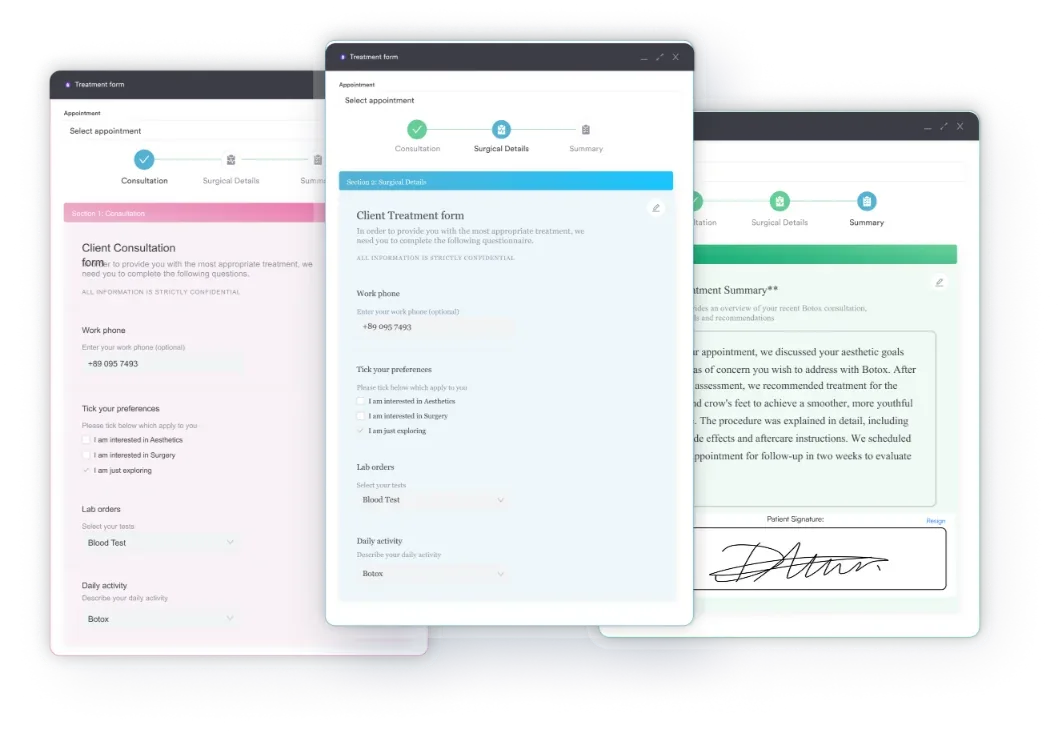
Accurate medical forms documentation at intake should capture the ostomy type and barrier system in use.
A4427 does not apply to urostomy pouches. Urostomy drainage requires codes in the A4428-A4432 range, which describe pouches designed specifically for urinary output with different barrier and faucet-type tap configurations. On the same locking-flange two-piece barrier that A4427 uses, the urinary equivalents are A4433 and A4434.
This is one of the most common coding confusions in ostomy supply billing, but not for the reason many billers assume. A4426 and A4427 both describe drainable ostomy pouches for use with a two-piece, locking-flange barrier system – the flange type is the same for both codes.
The sole differentiator is the filter: A4427 includes a built-in gas filter, and A4426 does not. The true non-locking, filtered counterpart to A4427 is a separate code, A4425, not A4426.
Before billing A4427, confirm from the product specification sheet that the pouch includes a built-in filter. Both A4426 and A4427 use a locking-flange barrier, so the locking mechanism itself does not distinguish the two codes.
Submitting A4427 for a product with no filter constitutes a coding error and creates audit exposure. The product manufacturer’s literature or the PDAC (Pricing, Data Analysis and Coding) contractor can verify HCPCS code assignments for specific products.
The A4420-A4435 range covers the full spectrum of ostomy pouch and barrier codes. Billers managing multiple ostomy patients need to navigate this range accurately. The table below covers the codes most frequently billed alongside or instead of A4427. For a complete code listing with payer notes, the PGM HCPCS lookup provides free CMS-sourced data.
Billers handling a full DME supply catalog also run into codes well outside the ostomy family.
Accurate claim submission for A4427 requires more than selecting the correct code. Billers need to configure their practice management software to capture the diagnosis code, physician order, and delivery confirmation that payers require. Missing any one of these is what causes most ostomy supply claims to fail at first submission.
A well-configured billing workflow for A4427 follows this sequence:
Modern practice management software features including automated claim scrubbing, modifier validation, and quantity limit alerts significantly reduce the manual oversight burden for high-volume DMEPOS billing.
The same intake discipline extends well past ostomy claims – a diagnosis code like L26 needs capturing at the same visit, not backfilled later. Reviewing your system’s HCPCS supply code configuration against current LCD requirements at the start of each benefit year is good practice.

Practice management software like Pabau helps practices capture physician orders, diagnosis codes, and treatment records in one place, so the documentation behind every ostomy supply claim is organized and easy to produce during an audit.

Check the PDAC (Pricing, Data Analysis and Coding) contractor assignment for any ostomy product you bill. The DME MAC PDAC publishes a searchable product classification database that maps manufacturer product codes to HCPCS codes. If a product is PDAC-verified for A4427, that verification is your strongest audit defense – print it and keep it in the patient file.
HCPCS Code A4427 is straightforward in principle but easy to mis-bill in practice. The filter-vs-no-filter distinction separates it from A4426 (both use a locking flange), the urostomy exclusion rules out A4428-A4432, and the documentation requirements under LCD L33828 determine whether a claim pays or denies.
Pabau brings together the documentation capture and record-keeping – physician orders, diagnosis codes, treatment notes – that support accurate ostomy supply billing, even though it’s built for general practice management rather than DMEPOS-specific claims processing. To see how it fits your practice’s documentation workflow, book a demo.

Billing a biologic injectable like Fasenra? Fasenra injection billing guide covers J0517, where a wrong unit count or modifier can trigger denial.
Handling other DME supply codes alongside ostomy claims? A4326 is the billing guide for male external catheters, another commonly confused DMEPOS supply code.
Billing a penicillin G benzathine injection? Penicillin G benzathine billing covers J0561, where unit conversion is the most common source of errors.
HCPCS Code A4427 is a Level II Healthcare Common Procedure Coding System code that describes an ostomy pouch, drainable, for use on a barrier with a locking flange, with a built-in filter (2-piece system). It has been an active, permanent HCPCS Level II code since January 1, 2004, and is used to bill Medicare, Medicaid, and commercial payers for this specific ostomy supply product when provided to patients with a permanent colostomy or ileostomy.
Both A4426 and A4427 use a two-piece, locking-flange barrier system – the flange type is the same for both codes. The key difference is the filter: A4427 includes a built-in gas filter, while A4426 does not. (The true non-locking, filtered counterpart to A4427 is a separate code, A4425.) Confirm whether the dispensed product has a filter from the manufacturer’s specification sheet before selecting between A4426 and A4427.
Required documentation includes a signed Standard Written Order (SWO) specifying product type and quantity, medical records confirming the ostomy-creating surgery (operative report or discharge summary), proof of delivery with beneficiary signature, and the KX modifier for Medicare claims attesting that coverage criteria under LCD L33828 are met. CMS replaced the older Detailed Written Order (DWO) with the SWO for all DMEPOS effective January 1, 2020.
No. A4427 does not apply to urostomy pouches. Urostomy supply billing uses codes in the A4428-A4432 range, which describe pouches designed for urinary output. Using A4427 for a urostomy patient is a coding error and will result in a claim denial.
The Medicare allowable amount for A4427 varies by DME MAC jurisdiction and is updated annually in the DMEPOS fee schedule. Verify the current 2026 rate for your geographic area using the CMS DMEPOS fee schedule lookup tool or through your DME MAC’s published fee schedule, as rates differ by locality. Ostomy supplies aren’t yet subject to DMEPOS competitive bidding, though CMS has finalized a new nationwide program targeted to begin by January 1, 2028.
The primary ostomy supply codes fall in the A4421-A4435 range. A4421-A4422 cover miscellaneous supplies and absorbent material. A4423 is a closed pouch with a locking flange and filter. A4424-A4427 cover drainable colostomy/ileostomy pouches, distinguished by piece count, flange type, and filter (A4424: 1-piece, with filter; A4425: 2-piece, non-locking flange, with filter; A4426: 2-piece, locking flange, no filter; A4427: 2-piece, locking flange, with filter). A4428-A4432 cover urinary (urostomy) pouches with various barrier and faucet-type tap configurations. The correct code depends on the pouch type (closed, drainable, or urinary), piece count, flange type (locking vs non-locking), and whether a filter is present.



