

HCPCS code E0198: Water pressure pad billing guide
HCPCS code E0198 is a water pad for a standard mattress HCPCS code E0198 is the ...

Last Updated: Oct 13, 2026
G0180 is the HCPCS Level II code for physician or allowed practitioner certification for medicare-covered home health services under a home health plan of care (patient not present), including contacts with home health agency and review of reports of patient status required by physicians and allowed practitioners to affirm the initial implementation of the plan of care.
Most physicians don't realize they can bill separately for certifying a patient's need for home health services. Medicare reimburses that clinical act under HCPCS code G0180, but the claim depends on airtight documentation. Skip a signature on the plan of care or confuse G0180 with G0179, and the claim is denied before review even begins.
Let Pabau's smart automation suggest the right codes, reduce claim denials, and keep your practice compliant—effortlessly.
Automate repetitive tasks and focus on what matters most—your patients.
Reduce coding errors and ensure compliance with the latest regulations.
Clean claims, fewer denials, and faster reimbursements.
Powerful insights and reporting to help your practice thrive.
HIPAA compliant SOC 2 certified GDPR-compliant Trusted by 4,000+ clinics worldwide

HCPCS code G0180 reimburses physicians for certifying a patient’s initial need for Medicare-covered home health services.
G0180 is billed once per 60-day certification episode; G0179 handles recertifications and cannot be used interchangeably.
A signed Form CMS-485 (plan of care) is required before submitting a G0180 claim – missing signatures are the most commonly cited denial trigger.
Pabau, practice management software for medical practices, offers digital forms and automated workflows that help practices track certification documentation and reduce G0180 denial risk.
HCPCS code G0180 describes physician certification for Medicare-covered home health services (initial certification). According to the Centers for Medicare and Medicaid Services (CMS), G0180 reimburses the physician’s work in reviewing, approving, and signing the initial plan of care that establishes a patient’s need for skilled home health services under Medicare Part A or Part B. When a claim on this code comes back unpaid, the denial reason codes on the remittance name the cause.
The code falls under HCPCS Level II, the alphanumeric code set maintained by CMS. G0180 is a G-code, meaning CMS created it specifically to cover a service not addressed by CPT. It covers a distinct clinical act: confirming, in writing, that a patient meets the criteria for home health care at the start of a new certification period.
G0180 and G0179 cover the same home health certification workflow at different points in the care timeline. Billing the wrong code is one of the most common HCPCS G-code errors practices make.
A useful way to remember the distinction: G0180 opens the episode, G0179 keeps it open. If your practice tracks home health patients across multiple 60-day periods, use practice management software with episode-level tracking to avoid billing G0180 on a recertification visit.
Before HCPCS code G0180 can be billed, the patient must meet all four of Medicare’s home health eligibility criteria. Certifying a patient who doesn’t qualify exposes the practice to post-payment audit recovery.
CMS governs these criteria under the Medicare Benefit Policy Manual, Chapter 7. Maintaining HIPAA-compliant documentation practices alongside the clinical record is essential – Medicare auditors review both the clinical necessity documentation and the privacy compliance posture of the billing practice.
CMS specifies which provider types may certify home health services and bill G0180. The eligible provider list has expanded over time to include non-physician practitioners, though CMS rules set a federal floor and state law may add restrictions depending on qualification.
One important constraint: the certifying physician must be the patient’s attending physician or have a relationship with the patient’s care. A physician who has never treated the patient cannot sign the plan of care and bill G0180 simply as a paperwork function. Auditors flag this pattern specifically.
Incomplete documentation is the most commonly cited reason G0180 claims are denied. CMS requires three distinct documentation elements before a claim can be submitted.
CMS doesn’t mandate a specific form for the home health plan of care – any format containing the required elements satisfies the certification requirement (Medicare Benefit Policy Manual, Chapter 7, Section 30). Form CMS-485 is the commonly used, MAC-accepted template for this purpose, and the physician must review and sign it before the home health agency begins services.
Required elements on Form CMS-485 include:
The physician’s signature date must fall within the certification period. A signature dated after the episode has ended creates a retroactive certification problem that most MACs will deny. Good patient data security practices also require that the signed CMS-485 be stored in a system with audit-trail functionality so the practice can demonstrate when the document was signed.
The clinical record must support why the patient meets homebound status and requires skilled services. Progress notes, recent office visit documentation, and any hospital discharge summaries relevant to the home health episode are all fair game in an audit.
A diagnosis code alone. Vague language (“patient is elderly and weak”) without objective clinical findings is a red flag for Medicare reviewers.
CMS requires documentation of a face-to-face encounter between the patient and the certifying physician (or eligible NPP) that occurred no more than 90 days before or 30 days after the start of the home health episode.
This encounter note must include the clinical findings – such as a vital signs record and functional assessment – that support homebound status and the need for skilled care.
Submitting a clean G0180 claim requires the correct claim form fields, place of service (POS) code, and modifier configuration. Digital forms that validate required fields before submission significantly reduce denial rates.
G0180 typically requires no modifier. The exception is when a substitute physician performs the certification on behalf of the regular attending – in that case, Q5 (reciprocal billing) or Q6 (locum tenens) may apply. GV and GW are hospice modifiers used with G0182 (physician supervision of a hospice patient); they do not apply to G0180.
If a substitute physician certifies on your behalf, confirm with your MAC whether Q5 (reciprocal billing) or Q6 (locum tenens) applies. The two describe different coverage arrangements and are not interchangeable – using the wrong one can trigger a modifier-mismatch denial.
Medicare reimburses HCPCS code G0180 under the Physician Fee Schedule (MPFS). Rates are locality-adjusted, so a physician billing G0180 in Manhattan receives a different reimbursement than one billing in rural Alabama. The non-facility rate applies when the certification review occurs in an office setting, which is the most common scenario.
Specific 2026 dollar amounts for G0180 should be confirmed using the CMS Physician Fee Schedule lookup tool, as rates change annually with the final physician fee schedule rule published each November. The indicative national non-facility reimbursement for G0180 has historically been in the $40-60 range, but geographic adjustment factors can shift this materially.
Always pull current locality-specific rates before informing patients or auditing payment accuracy.
For free code lookups, the AAPC Codify HCPCS lookup and PGM Billing’s HCPCS tool both provide current G0180 code information and can serve as a quick reference between annual fee schedule updates.
G0180 is one of four closely related G-codes covering home health and hospice physician services. Selecting the correct code from this family is a common source of billing confusion.
G0181 is frequently confused with G0180, but they cover entirely different activities. G0180 is a one-time certification at episode start; G0181 reimburses the ongoing care plan oversight work a physician does throughout a home health episode. Both can be billed in the same period by the same physician, but they require separate documentation.
Medicare is not the only payer for that oversight work. Medicaid programs and some commercial plans cover it under HCPCS code S0271, a 30-day case rate for physician management of home care or hospice. For a home care patient outside hospice, the matching code is S0270, the standard monthly case rate per 30 days.
Using time-saving practice features to manage billing cycles helps prevent G0181 and G0180 from being conflated in the claim queue.
G0180 claims are denied more often than most G-codes because the required documentation spans two clinical entities: the physician’s office and the home health agency. When documentation ownership is unclear, requirements get missed. Strong compliance management practices catch those omissions before claims are submitted.
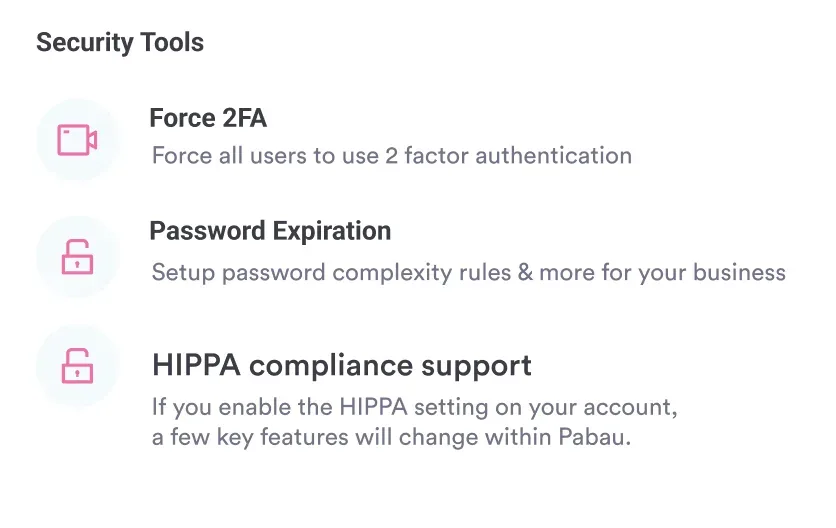

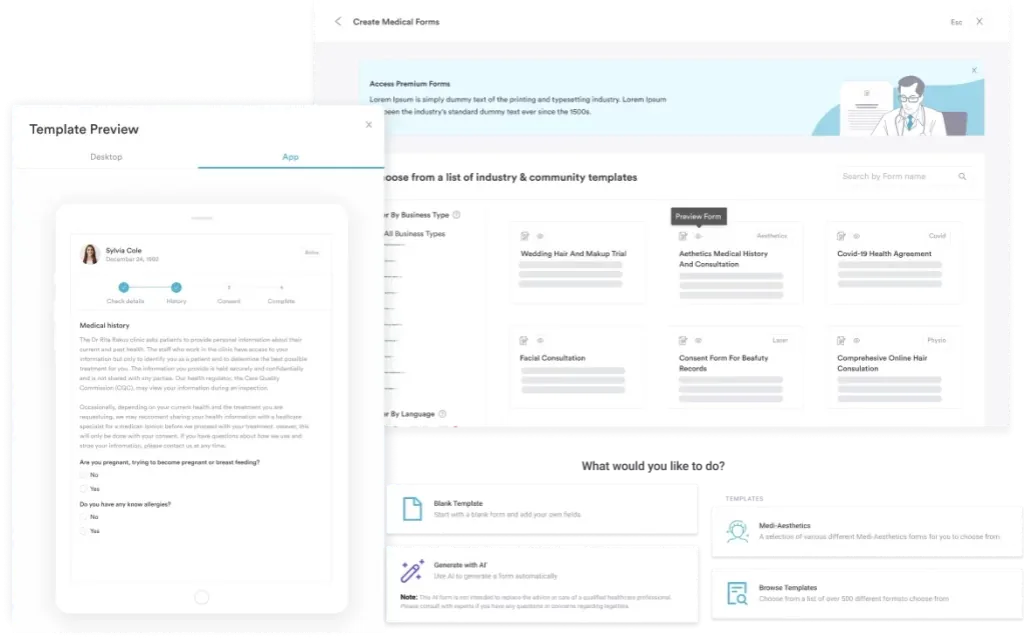
Pabau’s digital forms and automated workflows help physician practices track certification documentation, capture e-signatures, and keep records audit-ready. See how it works for home health billing workflows.

The most common G0180 denials are documentation failures, not coding errors. In one case, a physician signed the plan of care two days after the episode started. In another, the face-to-face note sat in a different system and wasn’t attached to the claim.
Elsewhere, a home health agency returned the CMS-485 six weeks later with no tracking in the practice’s workflow. These are process problems, not knowledge problems.
Pabau’s digital forms platform and automated workflows address each of these problems directly. E-signature collection is tracked with timestamps, so the practice always knows whether the CMS-485 has been signed and when.
Automated reminders flag incomplete documentation before the claim submission window closes. Because the documentation lives in the same system as the billing record, there’s no lag between clinical sign-off and claim readiness.
For practices managing a high volume of home health patients, Pabau’s reporting tools can also track which patients are approaching the end of their 60-day certification period, helping billers distinguish upcoming G0179 recertifications from G0180 initial certifications. That distinction prevents one of the most common HCPCS G-code billing mistakes before it happens.
HCPCS code G0180 reimburses a clinical service that many physicians perform without billing for it correctly. The code is straightforward, but the documentation requirements are precise: signed CMS-485, medical necessity in the record, face-to-face encounter in the right window. Miss any one of these and the claim is denied.
Practices that build a structured documentation workflow around G0180 see significantly fewer denials. Pabau’s digital forms and automated workflows were built to support exactly this kind of documentation-driven billing. If you want to see how it fits your home health billing workflow, book a demo with the Pabau team.

Also billing an injectable medication? Alprostadil suppository billing guide covers billing one unit per alprostadil suppository and the Medicare self-administered drug exclusion.
Also billing a calcitonin injection? Calcitonin salmon injection billing guide covers billing up to 400 units of calcitonin salmon and the matching ICD-10 pairings.
Also billing a hormone injection? Depo-estradiol injection billing guide covers billing a single intramuscular depo-estradiol cypionate injection under Medicare Part B.
G0180 is the Medicare code reimbursing physicians and non-physician practitioners for certifying a patient’s initial need for home health services. It covers reviewing and signing the plan of care (Form CMS-485) at the start of a new 60-day episode.
G0180 is billed for the initial certification at the start of a home health episode; G0179 is billed for each subsequent recertification after the first 60-day period. They are not interchangeable, and billing the wrong one results in a claim denial.
Three elements: a signed Form CMS-485 (plan of care) dated within the certification period; clinical records documenting medical necessity and homebound status; and a face-to-face encounter note from a visit within 90 days before or 30 days after the home health start of care.
G0180 is billed once per initial certification episode; each subsequent 60-day renewal uses G0179. If a patient is discharged and later readmitted as a new episode, G0180 can be billed again for that episode’s initial certification.
Common triggers include a missing or late physician signature on Form CMS-485, a face-to-face encounter outside the 90/30-day window, incorrect code selection (G0179 instead of G0180), insufficient medical-necessity documentation, and an incorrect place-of-service code on the claim.
G0180 usually needs no modifiers. GV and GW are hospice modifiers (they apply to G0182, physician supervision of a hospice patient), not to home health certification. If a substitute physician certifies, Q5 (reciprocal) or Q6 (locum tenens) may apply. Always confirm with your MAC.



