

CCSD code G5100: Bypass of duodenum billing guide
CCSD code G5100 bills a bypass that leaves the duodenum in place CCSD code G5100...

Last Updated: Oct 16, 2026
A4421 is the HCPCS Level II code for ostomy supply; miscellaneous.
It is a catch-all, not a default: billers must work through the A4361-A4432 range first, since skipping that step is one of the most common triggers for claim denial.
Let Pabau's smart automation suggest the right codes, reduce claim denials, and keep your practice compliant—effortlessly.
Automate repetitive tasks and focus on what matters most—your patients.
Reduce coding errors and ensure compliance with the latest regulations.
Clean claims, fewer denials, and faster reimbursements.
Powerful insights and reporting to help your practice thrive.
HIPAA compliant SOC 2 certified GDPR-compliant Trusted by 4,000+ clinics worldwide

HCPCS Code A4421 is a Level II HCPCS code for ostomy supply; miscellaneous, used when no more specific ostomy supply code applies.
Medicare Part B covers A4421 under LCD L33828 for patients with a colostomy, ileostomy, or urostomy when medical necessity is documented.
A4421 is a catch-all code: billers must exhaust all specific ostomy HCPCS codes before defaulting to A4421 or risk claim denial.
Pabau’s claims management software helps DME suppliers and practices track ostomy supply billing, attach ICD-10 codes, and submit clean claims.
HCPCS Code A4421 is a Level II HCPCS code maintained by the Centers for Medicare and Medicaid Services (CMS). The official descriptor is “Ostomy supply; miscellaneous.” This code belongs to the A-series of HCPCS Level II codes, which cover medical and surgical supplies, including durable medical equipment (DME) supplies billed under Medicare Part B.
A4421 functions as a catch-all within the ostomy supply category. Its purpose is to capture medically necessary items that do not fit any of the more specific ostomy HCPCS codes. Billers should treat it as a last resort within the code hierarchy, not a default.
A4421 covers miscellaneous ostomy supplies not described by a more specific HCPCS code. Ostomy types covered include colostomy, ileostomy, and urostomy. The supplies themselves span a broad range of items a patient may need to manage their ostomy at home.
Examples of items that may fall under A4421 include:
Critical rule: Billers must first work through all specific ostomy supply codes in the A4361-A4432 range. Only use A4421 when no specific code accurately describes the item. Reaching for A4421 as a convenience code is an audit trigger. Coding compliance rests on the note supporting the code, every time, not on the code being plausible.
Medicare Part B covers HCPCS Code A4421 when the beneficiary has a surgically created ostomy (colostomy, ileostomy, or urostomy) and the item supplied is medically necessary for ostomy management. Coverage is not automatic — it requires both an eligible diagnosis and documented medical necessity.
Good patient care management practices, including structured documentation at each visit, reduce the risk of retroactive denials.
Ostomy patients often move between practice types during care: a primary care team, running on general practice management software, typically writes the initial prescriber order.
The governing coverage policy for Medicare ostomy supply billing is LCD L33828, maintained by CMS in the Medicare Coverage Database. Key coverage criteria under L33828 include:
CMS updates LCD coverage criteria periodically. Always verify the current version on the CMS HCPCS overview page before billing.
Supply billing leaks revenue quietly, and medical practice management software catches unbilled items before they’re written off.
Every A4421 claim requires a supporting ICD-10-CM diagnosis code that establishes medical necessity. The codes below reflect the ostomy status diagnoses most commonly linked to A4421 under LCD L33828. Note that ICD-10 code lists are updated annually — confirm current valid codes via the CDC/NCHS ICD-10-CM web tool before submitting claims.
Beyond the status codes above, payers may also accept underlying condition codes — a malignancy. Urostomy claims that follow a cystectomy also carry a separate anesthesia code. Link the ICD-10 code to the specific type of ostomy present — not a general gastrointestinal diagnosis.
Insufficient documentation is the leading cause of A4421 denials. LCD L33828 sets clear expectations, and Medicare contractors audit ostomy supply claims regularly. Maintaining thorough records in digital intake forms and patient charts reduces audit exposure and supports faster appeals when denials occur.
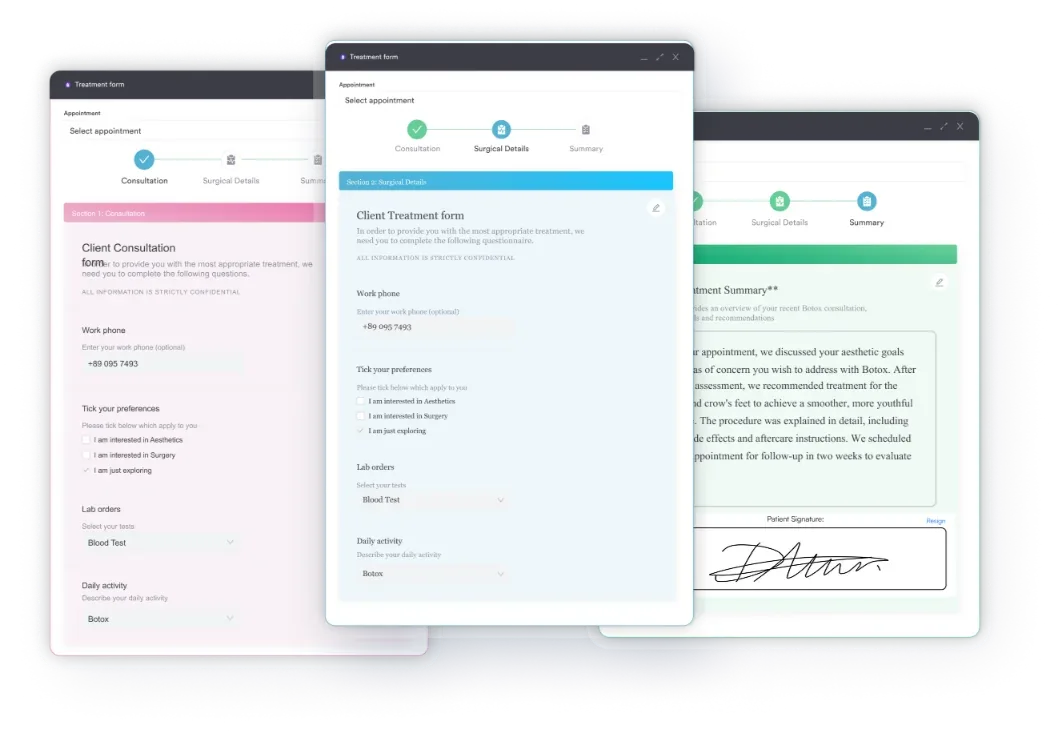
Required documentation for each A4421 claim includes:
Structured digital medical forms that capture ostomy type, prescriber signature, and supply details at the point of care reduce transcription errors and ensure documentation is complete before the claim is submitted. Keeping patient records up to date also protects practices during retrospective audits .

Pabau’s claims management tools help DME suppliers and practices track ostomy supply orders, attach supporting ICD-10 codes, and maintain the documentation trail Medicare auditors expect. See how it fits your workflow.

Medicare reimbursement for HCPCS Code A4421 is set through the CMS DMEPOS (Durable Medical Equipment, Prosthetics, Orthotics, and Supplies) Fee Schedule. Rates are updated annually on January 1 and vary by jurisdiction — the fee in one Medicare Administrative Contractor (MAC) region may differ from another.
Because A4421 is a miscellaneous supply code, payment rates are generally based on the actual acquisition cost of the item plus an allowable markup, rather than a fixed national fee. Payers may request invoice documentation to substantiate the claimed amount. For current rates, use the DMEPOS fee schedule tool and select the applicable jurisdiction.
Key reimbursement considerations:
Coverage for A4421 is not uniform across payers. Each program applies its own rules, and billing teams need to check payer-specific policies before submitting. The HIPAA compliance software standards that govern electronic claim submission also affect how payer-specific rules are applied at the transaction level.
Medicaid policies are state-specific. A blanket assumption that Medicaid covers A4421 the same way across all states leads to claim denials. Always consult the relevant state Medicaid DME policy bulletin before billing. Some Medicaid programs instead route a retail-bought supply with no specific code to HCPCS code T1999, so the bulletin decides which one you bill.
Before using A4421, billers must work through the specific ostomy supply codes. The table below lists the most common codes in the A4361-A4432 range. A4421 applies only when none of these specific codes accurately describes the item. A one-piece urinary pouch with an attached skin barrier and a faucet-type tap valve, for example, bills under A4431.
Swap that plain barrier for an extended wear one with built-in convexity, and the descriptor that fits is A4430. Neither version belongs on A4421, because a specific code already describes it.
The AAPC HCPCS lookup tool is useful for confirming descriptors before selecting a code.
Urostomy-specific pouches.
A4421 generates a disproportionate share of DME supply denials because its catch-all nature attracts both legitimate use and avoidable errors. The following mistakes recur across DME suppliers and billing teams. Maintaining patient data security and clean records is a prerequisite for defending these claims if audited.
Practices that transition to going paperless in healthcare environments report fewer transcription errors and faster retrieval of supporting documentation during audits, which directly reduces the time spent on appeals for denied DME claims.
Before submitting any A4421 claim, run a three-point check: (1) Confirm no specific ostomy HCPCS code in the A4361-A4432 range applies to the item. (2) Verify the claim carries a current, valid ostomy status ICD-10 code linked to the patient’s chart. (3) Confirm the quantity billed is within LCD L33828 monthly limits. This 60-second check prevents the majority of A4421 denials.
Accurate billing for miscellaneous DME codes depends on clean patient records, complete documentation at every encounter, and a clear audit trail from prescriber order through claim submission. Practices relying on paper-based or fragmented systems face the highest risk of A4421 denials, because missing documentation is harder to catch before the claim goes out.
Pabau’s claims management software helps DME-adjacent practices and suppliers maintain structured records for each patient encounter, attach supporting ICD-10 codes directly to supply orders, and flag incomplete documentation before submission. For practices managing complex patient populations with ongoing ostomy care, this reduces the manual overhead of keeping claims clean across high-volume billing cycles.
Explore how practice management software supports accurate, auditable DME billing workflows.
HCPCS Code A4421 is a legitimate but frequently misused code. The core risk is using it as a default rather than a last resort within the ostomy supply hierarchy. Getting it right means confirming no specific code applies, linking a valid ICD-10 status code, documenting medical necessity clearly, and staying within LCD L33828 quantity limits.
Pabau’s digital intake forms and structured patient records give DME suppliers and practices the documentation foundation to submit clean A4421 claims and defend them under audit. To see how Pabau handles billing documentation workflows, book a demo with the team.

Billing activity therapy in 15-minute units? Activity therapy billing guide covers H2032 and the documentation that avoids the most common denials.
Billing a residential substance use treatment program? Drug treatment program billing covers H2036, where a single missing progress note can void a day’s reimbursement.
Billing an anti-VEGF eye injection? Aflibercept injection billing guide covers J0178, paired with CPT 67028, and the unit count that avoids denials.
HCPCS Code A4421 is a Level II HCPCS code used to bill for miscellaneous ostomy supplies under the DME benefit. It applies when a patient with a colostomy, ileostomy, or urostomy needs a supply item that is not described by any more specific ostomy HCPCS code in the A4361-A4432 range. Billers must exhaust specific codes before using A4421.
Yes, Medicare Part B covers A4421 under LCD L33828 when the patient has a surgically created ostomy and medical necessity is documented. Quantity limits apply, a physician order is required, and the claim must carry a valid ostomy status ICD-10 code. Coverage is not automatic without these elements.
Required documentation includes a physician or authorized prescriber order, confirmation of the ostomy type in the patient’s medical record, a medical necessity statement explaining why no specific code applies, the quantity dispensed within LCD limits, and a supporting ICD-10 ostomy status code. Commercial payers may also require prior authorization.
The primary ICD-10 codes are Z93.2 (ileostomy status), Z93.3 (colostomy status), and Z93.50-Z93.59 (cystostomy and urostomy status codes). The ICD-10 code on the claim must match the patient’s actual ostomy type. CMS updates covered ICD-10 code lists annually, so verify the current list via the CDC/NCHS ICD-10-CM tool before submitting.
A4421 reimbursement is set through the CMS DMEPOS fee schedule and varies by MAC jurisdiction. Because it is a miscellaneous code, payment is generally based on the actual acquisition cost of the item. Rates update annually. Always check the current CMS DMEPOS fee schedule lookup for the applicable jurisdiction before billing.
Yes, A4421 can appear on the same claim as other ostomy supply codes when the patient needs multiple distinct items and each is medically necessary. However, each code must have its own documented medical necessity, and the combination must not exceed LCD L33828 quantity limits. Payers may audit claims with multiple ostomy codes on a single billing period.
Medicaid coverage for A4421 varies by state. Each state Medicaid program sets its own DME coverage criteria, prior authorization requirements, and reimbursement rates independently. Never assume uniform Medicaid coverage across states. Verify with the relevant state Medicaid agency or DME policy bulletin before billing.



