



HCPCS code E0198: Water pressure pad billing guide
HCPCS code E0198 is a water pad for a standard mattress HCPCS code E0198 is the ...

Last Updated: Oct 13, 2026

CPT Code 25110 covers excision of a lesion of the tendon sheath, forearm and/or wrist.
Medicare assigns the code 3.94 work RVUs and 10.11 total RVUs in the 2026 fee schedule.
Medicare marks the office rate as not applicable, so 25110 pays the facility rate in every setting.
The code carries a 90-day global period, so routine post-op visits are bundled into the surgical payment.
Site and extent decide the code. A wrist ganglion belongs to 25111, and the hand or finger belongs to 26160.
CPT Code 25110 covers the excision of a lesion of the tendon sheath, forearm and/or wrist. It belongs to the 25000 musculoskeletal series of the Current Procedural Terminology (CPT) code set. Medicare treats the procedure as major surgery, so it carries a 90-day global period.
The code applies to a lesion growing on the sheath itself. It does not cover the joint capsule, the bone, or a wrist ganglion that arises from the joint. That one distinction decides whether the claim pays or comes back for review.
The payment side holds a surprise that catches out even experienced coders. Medicare marks the non-facility practice expense for 25110 as not applicable. In plain terms, the office rate that most surgical codes carry simply does not exist for this one.
The tendon sheaths of the forearm and wrist are synovial-lined tunnels that let tendons glide without friction. A lesion can grow on the sheath itself. Surgeons remove it once splinting, injection, or activity change has failed to settle the symptoms.
CPT Code 25110 applies when the surgeon excises that lesion in the forearm or wrist region. Anatomy drives the code choice. A tendon sheath lesion of the hand or finger routes to CPT 26160, which covers both sites, not the finger alone.
The procedure usually happens under regional or general anesthesia in a hospital outpatient department or an ambulatory surgery center. Coders at orthopedic and sports medicine practices should confirm the operative report names the tendon sheath as the source of the lesion. A capsule origin points to 25105 instead.
Adjacent code confusion is the leading denial trigger for wrist soft tissue excisions. Two questions settle it every time. Which structure did the lesion come from, and how much tissue did the surgeon remove?
Note what 25115 and 25116 do not split on. Neither code involves resection of bone. They divide the wrist into the flexor side and the extensor side. Code 25116 also covers transposition of the dorsal retinaculum when the surgeon performs it.
The operative note has to name the anatomical site and the structure that was excised. A ganglion documented as arising from the dorsal wrist joint supports 25111, not 25110. Procedures on the digits move into the 26000 series, where CPT 26080 handles arthrotomy of the interphalangeal joint.
Practices charting musculoskeletal procedures in Jane often compare Jane App alternatives once billing and caseloads get heavier.
Payers need a supported ICD-10-CM diagnosis to establish medical necessity. The codes below pair with CPT Code 25110 most often. Pairing one does not guarantee coverage, because each payer’s Local Coverage Determination sets its own accepted list.
Code to the highest specificity the chart supports. A note reading “right wrist ganglion cyst” calls for M67.431 rather than the unspecified M67.40. The same discipline applies across the musculoskeletal chapter. An unspecified entry such as M89.9 invites a request for records. A laterality-specific code such as S52.131B does not.
Medicare pays for CPT Code 25110 through the Resource-Based Relative Value Scale. The figures below come from the 2026 Physician Fee Schedule relative value file, April release. You can download the same file from the CMS relative value files page.
The math is straightforward. Multiply the 10.11 total RVUs by the 2026 conversion factor of $33.4009 and you get $337.68. That is a national figure before any geographic adjustment.
The Geographic Practice Cost Index then moves the number by locality. A practice in Manhattan collects more than one in rural Alabama for identical work. Never hard-code a dollar figure into a billing policy. Pull the locality rate from the CMS Physician Fee Schedule lookup for the year you are billing.
Most surgical codes carry two practice expense values, one for the facility and a higher one for the office. CPT 25110 does not. CMS flags its non-facility practice expense as not applicable, which is the agency’s way of saying the procedure is not performed in an office.
The practical effect is simple. Whatever place of service you report, the physician payment lands at the same 10.11 total RVUs. There is no office premium to chase, and no setting that quietly pays more for the same operation.
A claim for 25110 billed with POS 11 will draw attention, because the procedure needs sterile surgical conditions. Confirm the place of service matches the operative report before you submit. Billing teams at physical therapy and musculoskeletal practices that coordinate referrals can catch a mismatch at the scheduling stage.
CPT Code 25110 carries a 90-day global surgical period under the CMS major surgical global package. The surgeon’s payment therefore covers related pre-operative and post-operative care for 90 days after the procedure date.
Practices that run several procedures per patient need the 90-day clock visible to whoever books the follow-up. Put the surgery date and the global end date on the patient record, not in a coder’s spreadsheet. A front desk that can see the window will stop booking post-op visits as billable office visits.
Modifier choice on CPT Code 25110 affects both payment and claim integrity. A missing or wrong modifier leads to a denial, and sometimes to a compliance problem. Apply each one only when the clinical circumstances genuinely warrant it.
Medicare gives 25110 a bilateral surgery indicator of 1, so the 150% payment rule applies. Bill modifier -50 on one line, or use two lines with -LT and -RT. Check your Medicare Administrative Contractor‘s preference first, because the convention varies by jurisdiction.
Medicare does not require prior authorization for CPT Code 25110 under standard fee-for-service. Commercial plans and Medicare Advantage are another matter. Many of them pre-authorize elective musculoskeletal surgery, soft tissue excisions of the wrist included.
That conservative treatment history is worth billing properly in its own right. A steroid injection into the sheath is reported with CPT 20551. Both create the documented trail a payer asks for when the surgical request lands.
Authorization rules change often, so never assume last year’s policy still holds. Check the payer portal or call provider relations before you schedule an elective case. Tracking authorization status next to the appointment stops same-day cancellations.
Every CPT Code 25110 claim needs an operative report that supports the code. Payers audit surgical claims for completeness, and a thin note is the quickest route to a medical necessity denial or a post-payment recoupment.
Specimen handling deserves its own line in the checklist. Codes that hinge on what came out of the wound. The pathology report never made it onto the claim.
A checklist review at the coding stage catches most of this before submission, which beats amending records later. Storing the operative note, the pathology result.
Audit your 25110 claims against their operative reports once a month. Check three fields only: the lesion site, whether laterality in the note matches the ICD-10 code, and whether the pathology report is attached. Those three account for most medical necessity denials on wrist soft tissue excisions.
Most CPT Code 25110 denials trace back to a short list of recurring mistakes. Once you know the patterns, a pre-submission checklist catches nearly all of them.
Staying current on National Correct Coding Initiative edits is not optional. The AAPC CPT code lookup gives coders a quick cross-reference for edit conflicts before submission. Practices with high musculoskeletal volume get further with automated claim scrubbing than with manual spot checks.
The coding decisions on this page happen in the operative note. The billing problems happen afterwards, when nobody can tell which claims went out, which were accepted, and which quietly errored two weeks ago. Most practices find that out from a remittance, not from a dashboard.
Practice management software like Pabau keeps the surgical record and the claim in one place. Your clinicians record the codes on the treatment note. It checks the required fields are populated before submission, so a claim does not fail on a missing detail.
From there you can watch each claim move through submitted, processing, paid, or error, without logging into a separate portal. A biller can see the stuck 25110 claims in the morning and work them the same day. That is the difference between chasing reimbursement and simply collecting it.
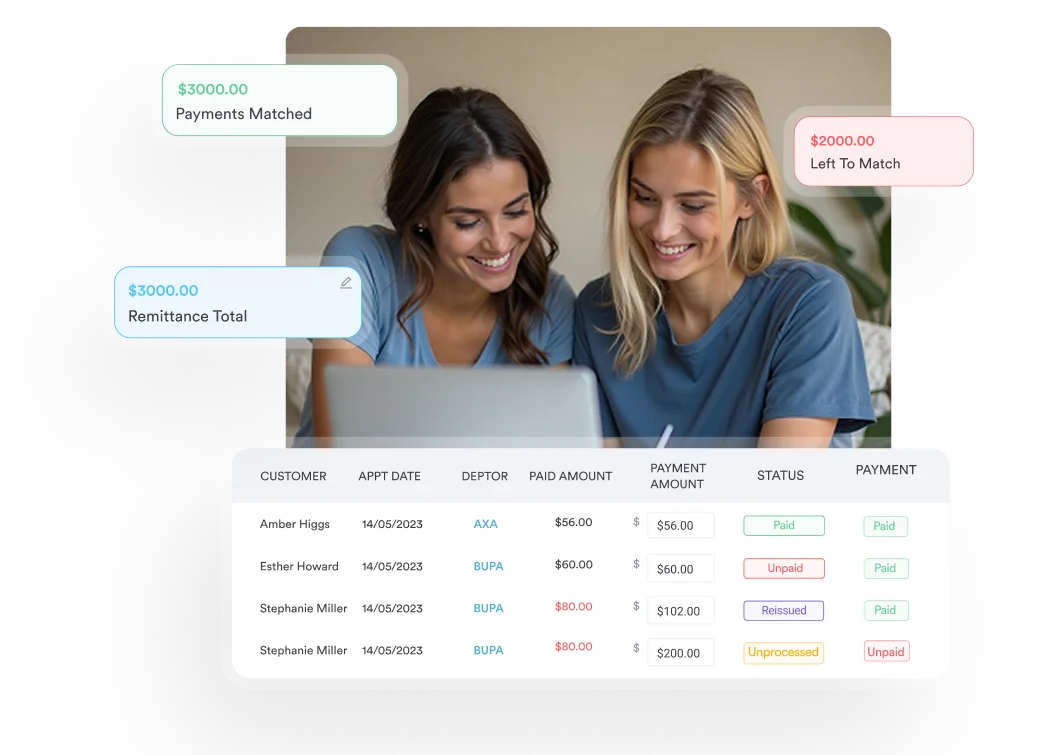

Pabau pulls the codes already on your treatment note into a pre-filled claim, checks the required fields, and tracks each submission through to payment. Your billers spend their time on the claims that stalled.

CPT Code 25110 has a plain descriptor and a stubborn denial rate. Almost every rejection comes back to the same two lines in the operative note: which structure the lesion grew from, and which wrist it was.
Get those two right and the rest follows. The RVUs are fixed at 10.11, the setting does not change the physician payment, and the 90-day window is predictable once someone owns it. The trade-off worth remembering is that none of this is a coding problem you can fix at the coding stage. It is a documentation habit, and it is set in the operating room.
Practices that tighten the note and keep claim status in front of the billing team see the rework on musculoskeletal claims drop. Book a demo to see how Pabau connects surgical records to claim tracking for orthopedic and sports medicine teams.

Coding a soft tissue flap on the digits? CPT code 14350 sets out the documentation and modifier rules for filleted finger and toe flaps.
Sending tissue from a musculoskeletal case to pathology? CPT code 20200 explains how specimen documentation drives payment on biopsy claims.
Billing an upper limb fracture alongside wrist surgery? CPT code 23605 covers manipulation, global periods, and the modifiers that apply.
Coding a forearm wound after the treatment has finished? ICD-10 code S51.801S shows how the sequela seventh character changes the claim.
Documenting a forearm fracture that failed to unite? ICD-10 code S52.209K walks through nonunion coding and the records payers ask for.
CPT Code 25110 describes excision of a lesion of the tendon sheath, forearm and/or wrist. It is a Category I surgical code in the CPT musculoskeletal series. Typical cases include a giant cell tumor of the tendon sheath, a fibroma, or an inflammatory nodule left behind after conservative care has failed.
Medicare assigns CPT 25110 a total of 10.11 RVUs in the 2026 Physician Fee Schedule. At the 2026 conversion factor of $33.4009, that comes to roughly $337.68 nationally. The figure is identical in facility and non-facility settings, because CMS marks the non-facility practice expense as not applicable. Your locality’s geographic indices then move the final amount, so check the CMS lookup tool for your area.
Yes. Medicare gives 25110 a bilateral surgery indicator of 1, so a bilateral case pays at 150% of the single-procedure rate. Bill modifier -50 on one line, or use two lines carrying -LT and -RT. Confirm your Medicare Administrative Contractor’s preference first, because bilateral billing conventions vary by jurisdiction.
The work RVU for CPT Code 25110 is 3.94 in the 2026 Medicare Physician Fee Schedule. That value is the same in facility and non-facility settings. Practice expense adds 5.39 and malpractice adds 0.78, which brings the total to 10.11 RVUs. CMS republishes these values every year, so pull the current file before you model surgeon compensation.
Not always. A wrist ganglion arising from the joint, dorsal or volar, belongs to CPT 25111 for a first excision, or 25112 if it has recurred. CPT 25110 applies when the lesion sits on the tendon sheath itself. The operative report has to name the structure the lesion came from, or the coder is guessing.



