CCSD code H3322: Laparoscopic abdominoperineal resection
CCSD code H3322: Definition and procedure scope CCSD code H3322 is the private h...

Last Updated: Oct 27, 2026

CPT code 21263 reports periorbital osteotomies for orbital hypertelorism performed with bone grafts and forehead advancement.
Every code in the 21260 to 21263 family includes bone grafts, so approach and forehead advancement are what separate them.
A 090-day global period follows the surgery, which bundles routine follow-up care into the surgical fee.
Q75.2 is the primary ICD-10-CM diagnosis, with syndromic and craniosynostosis codes added only where the record supports them.
Pabau’s claims management software builds the claim from the client record and checks required fields before it goes out.
CPT code 21263 reports periorbital osteotomies for orbital hypertelorism, performed with bone grafts and forehead advancement.
Surgeons use it for the craniofacial reconstruction that moves both orbits toward the midline and rebuilds the frontal contour above them. The code belongs to a small family whose descriptors read almost identically.
That resemblance is where claims go wrong. Payers read the operative note against the descriptor word for word, then apply a 90-day global period to everything that follows.
Getting paid turns on the descriptor match, the modifier set, and the diagnosis you attach.
The American Medical Association (AMA) defines the code as periorbital osteotomies for orbital hypertelorism, with bone grafts; with forehead advancement.
It sits in the Musculoskeletal System chapter, under the skull, facial bones and temporomandibular joint subsection, in the Repair, Revision, and/or Reconstruction category.
Orbital hypertelorism is a congenital condition in which the eye sockets sit abnormally far apart. Correcting it means cutting the bone around each orbit and moving the orbits closer together.
Bone grafts fill the structural defects left behind, and forehead advancement restores the frontal contour. A craniofacial surgeon and a neurosurgeon usually operate together over a long session.
Because the code bundles three components, the operative report has to document all three. Look for the periorbital osteotomies, the bone grafts, and the forehead advancement. If the forehead was not advanced, the case belongs on a different code in the same family.
So build those three elements into the operative note template in your plastic surgery EMR. A dictated note that mentions grafts in passing rarely survives a payer review.
Run through the table below before the claim leaves your queue. It holds the attributes a payer checks first.
Most 21263 claims go out with no modifier at all. The exceptions come down to who operated, how hard the case ran, and what else happened in the same session.
Check each one against the payer’s own policy before you submit.
With modifier -62, both surgeons submit their own claim for 21263 and both append the modifier. The operative note has to spell out what each surgeon did. Payers request the report on almost every co-surgeon claim at this level.
Modifier errors are also the fastest route to a rejection at the clearinghouse, before a human ever reads the file. A clean claim clears those automated edits on the first pass.
Before appending modifier -22 to CPT code 21263, draft a cover letter summarizing the specific factors that increased operative time or complexity. Payers often request this documentation upfront for complex craniofacial cases rather than after denial. Including it with the original claim reduces the back-and-forth.
Medicare pays for 21263 through the CMS Physician Fee Schedule, which assigns relative value units, or RVUs, to every code.
Total payment is those RVUs multiplied by the annual conversion factor and a geographic adjustment for your locality.
Orbital hypertelorism correction carries substantial work RVUs because of its complexity. Dollar figures still move each year, and they differ by locality and by facility versus non-facility setting.
Skip third-party rate estimates on a claim this size. Pull current numbers from the CMS lookup tool or the FastRVU lookup tool.
Commercial payers usually pay a multiple of the Medicare rate, and every contract sets its own multiplier. Many of them also require approval up front for a congenital indication.
Start the prior authorization process before the case is scheduled, not after.
CPT code 21263 carries a 090-day global surgery period. Routine care inside that window is already paid for by the surgical fee, so it cannot be billed again.
The clock starts the day after surgery, under Chapter 12 of the CMS Claims Processing Manual. The day immediately before surgery also sits inside the package. Everything routine in between belongs to the original claim.
One point gets missed often. The package covers the operating surgeon’s follow-up, not the whole craniofacial team. Speech and feeding therapy runs on its own codes, which is why speech therapy practices bill those visits under separate claims.
Global period errors are a leading audit trigger for craniofacial practices. Flag the surgery date in your billing system so every follow-up is checked before a separate claim is created.
That one flag prevents most of the duplicate billing a medical billing compliance review turns up.
Q75.2, orbital hypertelorism, is the primary diagnosis on almost every 21263 claim. It names the exact condition the surgery corrects, which is why payers expect it in the first position.
Secondary codes apply when the surgery also addresses associated craniofacial anomalies. Verify each pairing against a crosswalk such as CrossCoder and against any coverage policy your payer publishes.
A valid pairing still does not guarantee payment. Some payers publish local coverage determinations that limit reimbursement to a named primary diagnosis.
A mismatch comes back as a medical necessity rejection, and the denial codes on the remittance tell you which rule you tripped.
CPT prints this family as an indented set, and that convention causes most of the miscoding.
The parent phrase here is “periorbital osteotomies for orbital hypertelorism, with bone grafts”. It carries down to every code beneath it, and only the wording after the semicolon changes.
So 21260, 21261, and 21263 all include bone grafts.
Plenty of coding references describe 21260 as the version without grafts, and that is simply wrong. The three separate on surgical approach and on whether the forehead was advanced.
Read the full descriptors side by side in AAPC’s code lookup before you commit.
If the note documents osteotomies and grafts through an extracranial approach, with no forehead advancement, the answer is 21260. Billing 21263 for that case is upcoding.
Craniofacial cases also carry soft tissue work with codes of its own. Adjacent tissue transfer around the eyelids or nose is 14060, and intermediate repair of a facial wound is 12051.
Closure of the coronal incision is part of the approach, so it is not separately reportable. Scalp adjacent tissue transfer, adjacent tissue transfer, 14020, applies only to a distinct defect repaired outside the primary procedure.
Denials on this code trace back to the same handful of items. Walk the list below before the claim goes out.
Those details all land on the CMS-1500 form for professional billing. Two mistakes repeat more than any others in that box work.
One is a follow-up visit billed inside the global window with no modifier and no unrelated diagnosis. Another is modifier -22 sent with nothing attached to justify it. Both are avoidable in a five-minute read of the operative note.
Run a quarterly audit of your CPT code 21263 claims against the operative note archive. Confirm each claim documents all three components: periorbital osteotomies, bone grafts, and forehead advancement. Claims missing any one element are vulnerable to post-payment recovery requests.
Craniofacial practices bill few of these claims, and each one is worth a lot. A single 21263 denial ties up serious money while the appeal runs. Most teams rebuild the claim by hand from the chart, and that is where transcription errors creep in.
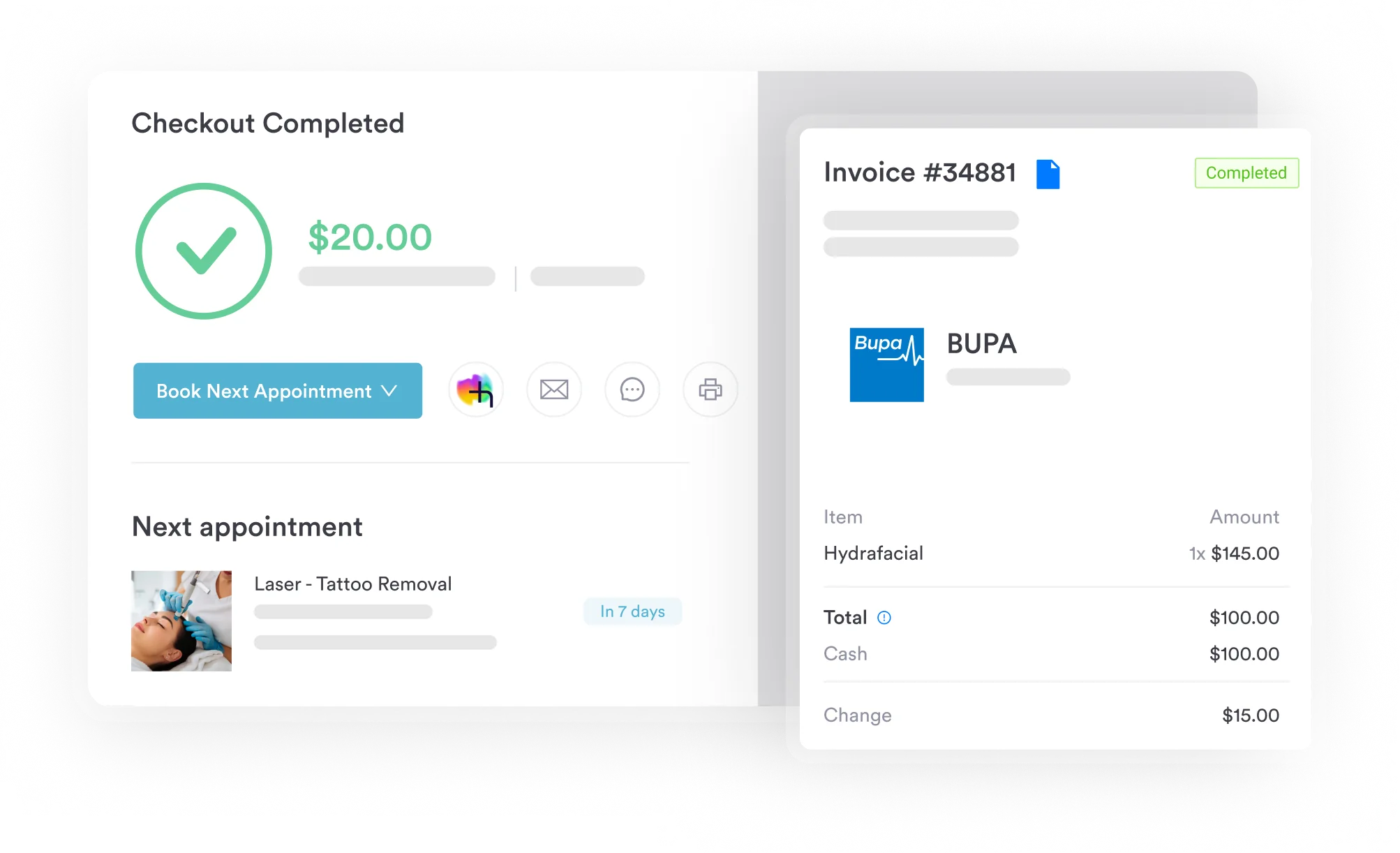
Practice management software like Pabau takes a different route. Pabau’s claims management software builds the claim from the client record.
The CPT code attached to the service lands on the charge line, and the diagnoses recorded on the chart seed the ICD-10 boxes. Built-in ICD-10-CM and CPT lookup libraries sit behind a search icon when a coder needs to check one.
Before the send button unlocks, Pabau checks that the claim’s required fields are complete, including authorization numbers and membership details.
US claims then go out through the Claim.MD integration, which handles eligibility checks, remittance posting, and claim status tracking. You can see whether a 21263 claim is pending, processing, paid, or in error without calling the payer.
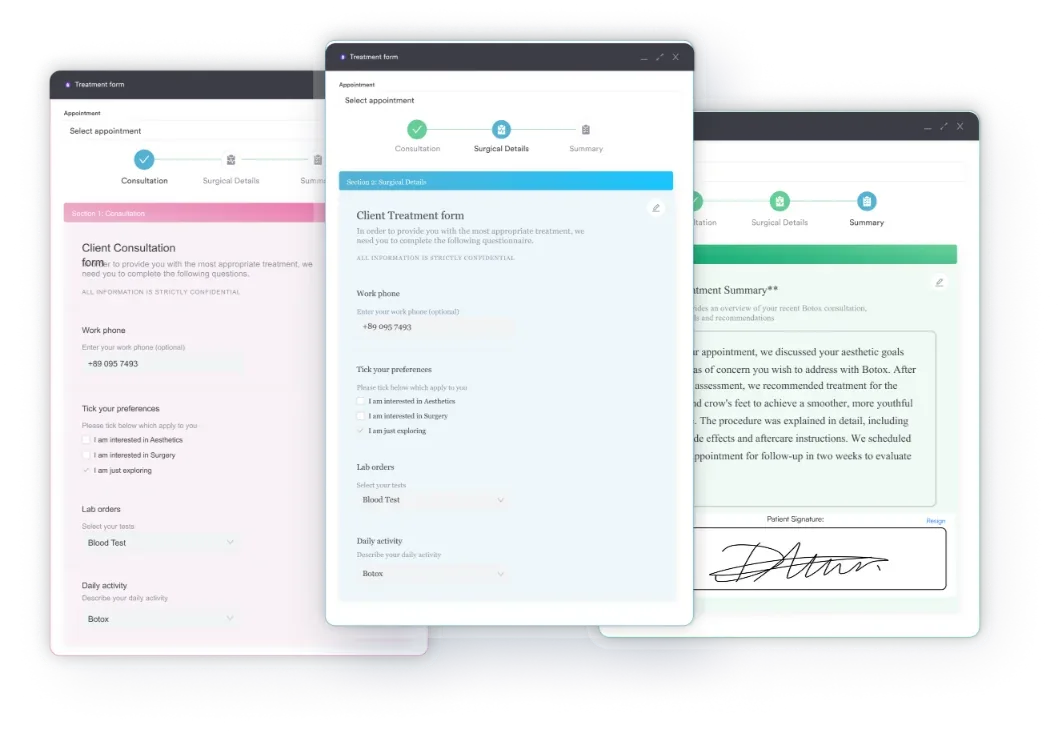
Digital forms cover the other half of the audit trail. Consent, intake, and surgical detail forms are captured in the client record and signed on screen. The paperwork a reviewer asks for is already filed against the case.

Pabau builds the claim from the chart, checks the required fields, and tracks its status through Claim.MD, so nothing stalls after submission.

CPT code 21263 pays well and gets read closely, which puts the weight on the operative note rather than the claim form. Match the descriptor line by line, name the approach, and the coding decision makes itself.
The trade-off worth remembering is timing. Every check you run before submission costs minutes. The same check after a denial costs a whole appeal cycle. On a claim this size, that is a long wait for money you already earned.
Set the note template, the modifier rules, and the global period flag once, and the next case runs on rails. Book a demo to see how Pabau builds craniofacial claims straight from the client record.

Waiting on approvals before a surgical date? Prior authorization software compares the tools that chase payer approvals for you.
Coding an unspecified drug finding? ICD-10 code R78.4 covers a drug finding in blood that falls outside alcohol, opiates, cocaine, and hallucinogens.
Coding osteotomies outside the skull? CPT 22214 walks through lumbar spinal osteotomy billing and its documentation rules.
Coding an unexplained lab chemistry result? ICD-10 code R79.89 covers a documented abnormal blood chemistry finding that does not fit a more specific category.
Coding an abnormal respiratory specimen finding? ICD-10 code R84.4 covers an abnormal immunological finding in a respiratory specimen, distinct from a culture-growth result.
Report it once per case. Hypertelorism correction addresses both orbits, and CPT carries separate unilateral codes at 21267 and 21268. Modifier -50 does not apply here. If the note describes work on a single orbit, look at the unilateral codes instead.
Yes, when the operative note explains why an assistant was needed. Use -80 for a physician assistant surgeon, and -AS for a PA, NP, or clinical nurse specialist. Medicare’s assistant-at-surgery indicator on the fee schedule decides whether it pays at all.
Yes. Most hypertelorism correction happens in childhood, but the code carries no age restriction. An adult with an untreated deformity is reported the same way, with the same descriptor requirements and the same 090-day global period.
Medicare allows 12 months from the date of service. Commercial payers set their own windows, and some run as short as 90 days. Note the deadline when the case is booked, because one appeal cycle can eat most of the time left.
Send the full operative report, the pre-operative imaging, and a short letter answering the exact denial reason. Point the reviewer to the lines documenting osteotomies, grafts, and forehead advancement. Add the authorization number if the payer issued one.