CPT code 93503: Swan-Ganz catheter billing and modifiers
CPT code 93503: Official descriptor and procedure overview In the AMA CPT code s...

Last Updated: Oct 23, 2026

CPT code 19325 covers breast augmentation with implant(s), the AMA descriptor adopted in 2021 for cosmetic and reconstructive implant placement.
Medicare treats cosmetic augmentation as a statutory exclusion, so no Advance Beneficiary Notice is required before you bill the patient.
Bilateral augmentation needs modifier 50, or RT and LT on two line items, depending on the payer’s billing manual.
Missing modifiers and mismatched diagnosis codes cause most 19325 denials, so check both before the claim leaves the practice.
Pabau’s claims management software captures codes, applies modifiers, and tracks prior authorization inside one billing workflow.
CPT code 19325 is the billing code for breast augmentation with an implant. Plastic surgeons, breast surgeons, and reconstructive specialists use it whenever they place a prosthetic breast implant. It covers cosmetic volume enhancement as well as reconstruction after mastectomy or trauma.
The American Medical Association (AMA) publishes the official descriptor for 19325 and issues coding guidance through CPT Assistant. AMA reworded that descriptor in 2021, so older payer policies often quote language the code book no longer uses. The AMA code set also governs HIPAA-compliant electronic claims, which makes 19325 the recognized procedure code for every US payer.
How the procedure is documented decides whether the claim pays. Practices that standardize plastic surgery EMR documentation around the operative record have far less to fix on appeal. This reference covers the code description, RVU data, modifiers, Medicare rules, ICD-10 pairings, documentation requirements, and related breast codes.
The official AMA descriptor for CPT code 19325 reads: Breast augmentation with implant(s). The code covers surgical insertion of a breast implant for augmentation. It applies to subglandular, submuscular, and dual-plane approaches, and to both saline and silicone gel implants.
Before 2021 the same code read “Mammoplasty, augmentation with prosthetic implant”, and 19324 covered augmentation without an implant. AMA deleted 19324 that year and reworded 19325. If a payer policy still quotes the old descriptor, the code number itself has not changed. Bill 19325 and cite the current wording in any appeal.
CPT 19325 covers the primary augmentation only. If the surgeon also performs a breast lift, that component may be reported separately with 19316, subject to payer bundling rules. Tissue reinforcement under 15777 is sometimes billed alongside 19325, though payer policies vary on it.
Most breast augmentation billed under 19325 is cosmetic, so neither Medicare nor most commercial plans pay for it. Where the procedure is covered as reconstruction, payment follows the CMS Physician Fee Schedule. The CMS fee schedule lookup returns current facility and non-facility rates by locality.
RVU values and the conversion factor change every year. Check each component against the fee schedule for the year you are billing before quoting a rate. Commercial payers set their own schedules, which often differ from Medicare. For cosmetic augmentation the surgeon’s fee is paid by the patient rather than an insurer.
Track reimbursement rates by payer inside your billing platform rather than relying on reference tools alone. Payment depends on your contracted rate, the geographic GPCI adjustment, and whether the claim is filed at facility or non-facility rates.
Medicare does not cover CPT code 19325 when the augmentation is cosmetic. CMS treats cosmetic surgery as a statutory exclusion under Section 1862(a)(10) of the Social Security Act.
Because that exclusion is statutory, Medicare does not require an Advance Beneficiary Notice (ABN) before you bill the patient. Many practices still issue one voluntarily and append modifier GX to the claim line. That puts it in writing that the patient was told the service is not covered.
Reconstructive implant placement may qualify for coverage when the record shows a medical or surgical indication. Covered scenarios usually include post-mastectomy reconstruction, correction of a congenital breast deformity, or reconstruction after trauma. Anyone setting up a cosmetic surgery practice should separate the two case types in the record from the first visit.
Commercial payers such as BCBS, Aetna, Cigna, and UnitedHealthcare each maintain their own medical policy for breast augmentation, so coverage for reconstruction varies by plan. Some policies cover post-mastectomy reconstruction under the Women’s Health and Cancer Rights Act (WHCRA). That law requires a plan covering mastectomy to cover reconstruction as well.
Prior authorization for 19325 depends on the payer and on whether the case is cosmetic or reconstructive. Cosmetic procedures rarely need it, because they are not covered in the first place. For reconstructive cases, most commercial payers require authorization before the procedure is performed.
Never rely on verbal confirmation of an authorization. Get written approval and file it in the patient record before the procedure date. Practices using plastic surgery billing software can track authorization status next to the appointment, so nobody operates on an unconfirmed case.
Modifier selection decides whether a 19325 claim pays in full, pays at a reduced rate, or denies outright. Check the AAPC code reference and the payer’s own modifier policy before you submit. Name the clinical scenario first, then pick the modifier that matches it.
Bilateral augmentation is the standard case, and the billing approach follows payer preference. Most payers accept modifier 50 on a single line of 19325. Others want two consecutive lines, 19325-RT and 19325-LT. Check the payer’s billing manual before you submit. With modifier 50, reimbursement is typically 150% of the single-procedure rate.
The diagnosis code paired with 19325 tells the payer whether the procedure is cosmetic or reconstructive. Cosmetic augmentation uses Z codes. Reconstructive indications need a code that documents the clinical reason for surgery. Confirm the accepted pairings in your payer’s medical policy before submitting.
Pairing Z41.1 with a reconstructive claim is a compliance risk. The diagnosis code has to match the operative report and the pre-operative notes. A cancer history coded Z85.3 supports the reconstructive context, but it does not establish medical necessity on its own. Payers audit these pairings, and mismatches are a leading cause of post-payment review in plastic surgery.
Incomplete documentation is the main reason 19325 claims fail on appeal. Every claim needs a complete operative record behind it before it goes out the door. Practices using digital intake forms can standardize the pre-operative record, so the file is already complete at the point of care.
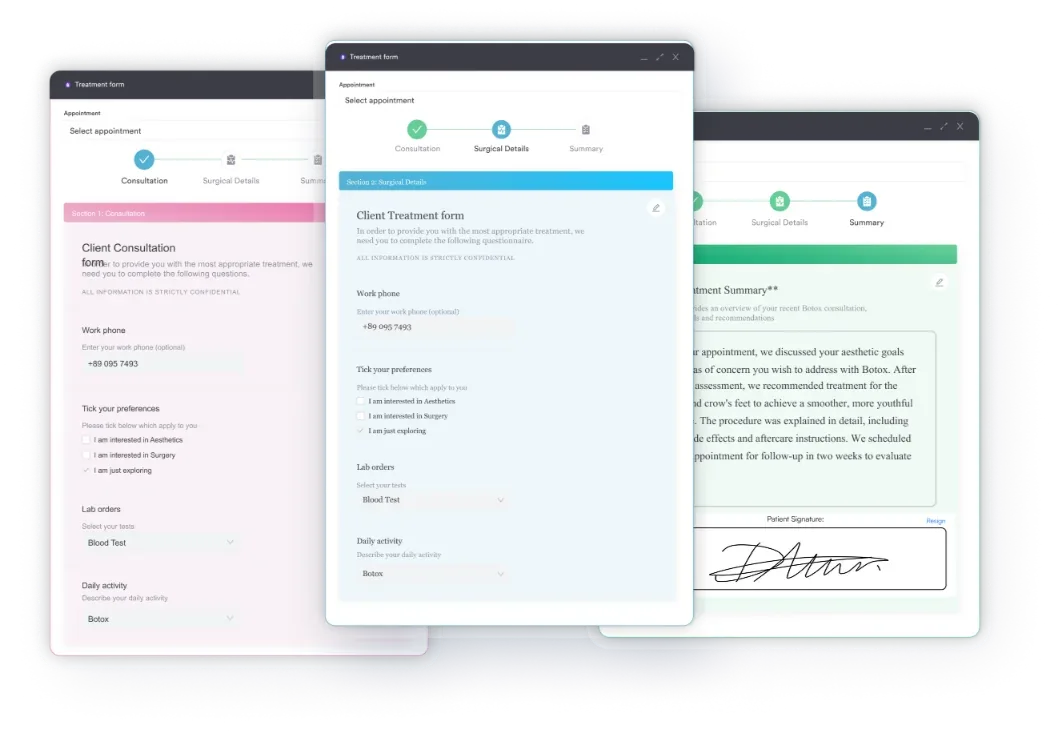
For reconstructive billing, the record has to connect the implant placement to the covered indication. A cosmetic operative note filed with a reconstructive diagnosis code is an audit trigger. Specific documentation from the first consultation through to the operative report is what protects the practice during payer review.
CPT code 19325 carries a 90-day global surgery period under the standard CMS rules for major procedures. The surgeon’s post-operative care inside those 90 days is bundled into the 19325 payment. Routine follow-up visits within the window cannot be billed separately.

Billing a routine follow-up inside the 90-day window without the right modifier is a common compliance error. Practices billing 19357 hit the same problem, because every expansion visit inside its global period is bundled too. A system that flags open global periods against incoming appointments removes most of that risk.
Plastic surgery billing staff cross-reference 19325 with the adjacent breast codes constantly. Most coding errors in this specialty come from picking the wrong one, or from billing two together where the payer bundles them. Revision work on a reconstructed breast belongs to 19380 rather than 19325.
Do not rebill 19325 when a later operation only tightens or partially removes the scar capsule, because that revision is 19370.
Augmentation with a simultaneous breast lift is a common combination. AMA CPT Assistant guidance allows 19325 and 19316 to be reported together when both procedures are distinctly performed. Many commercial payers still bundle them and pay only the higher-value code. Verify the payer’s bundling edits first. Append modifier 59 to the secondary code where policy permits separate reporting. Most claim errors are structural rather than clinical, which is why scrubbing rules catch them. Self-pay does not mean uninsured, and many patients recover part of the fee with a superbill.
CPT 19318 covers breast reduction, the removal of tissue to reduce breast size. 19325 does the opposite and adds volume with an implant. The two are not interchangeable and never belong on the same claim for the same breast. Coverage differs as well. Reduction for documented macromastia is often covered where cosmetic augmentation is not.
CPT 19325 claims fail for predictable reasons. Five root causes account for most of the denials plastic surgery coders see.
A pre-submission checklist built into the billing workflow catches most of these before the claim leaves the practice. It matters most for practices running on med spa software, where aesthetic and surgical procedures are billed side by side and modifier discipline slips easily.
Billing 19325 spans pre-operative documentation, prior authorization, the operative note, modifier selection, and global period tracking. Every one of those steps can sink the claim. Looking a code up in a reference tool and retyping it into a billing platform adds transcription errors and missed modifiers on top.
Practice management software like Pabau brings code capture, modifier application, and claim submission into a single workflow. Pabau’s claims management software is built for aesthetic and surgical specialties, so 19325 surfaces during documentation rather than after it. The same platform gives plastic surgery practices one place to track authorization status against the patient record.
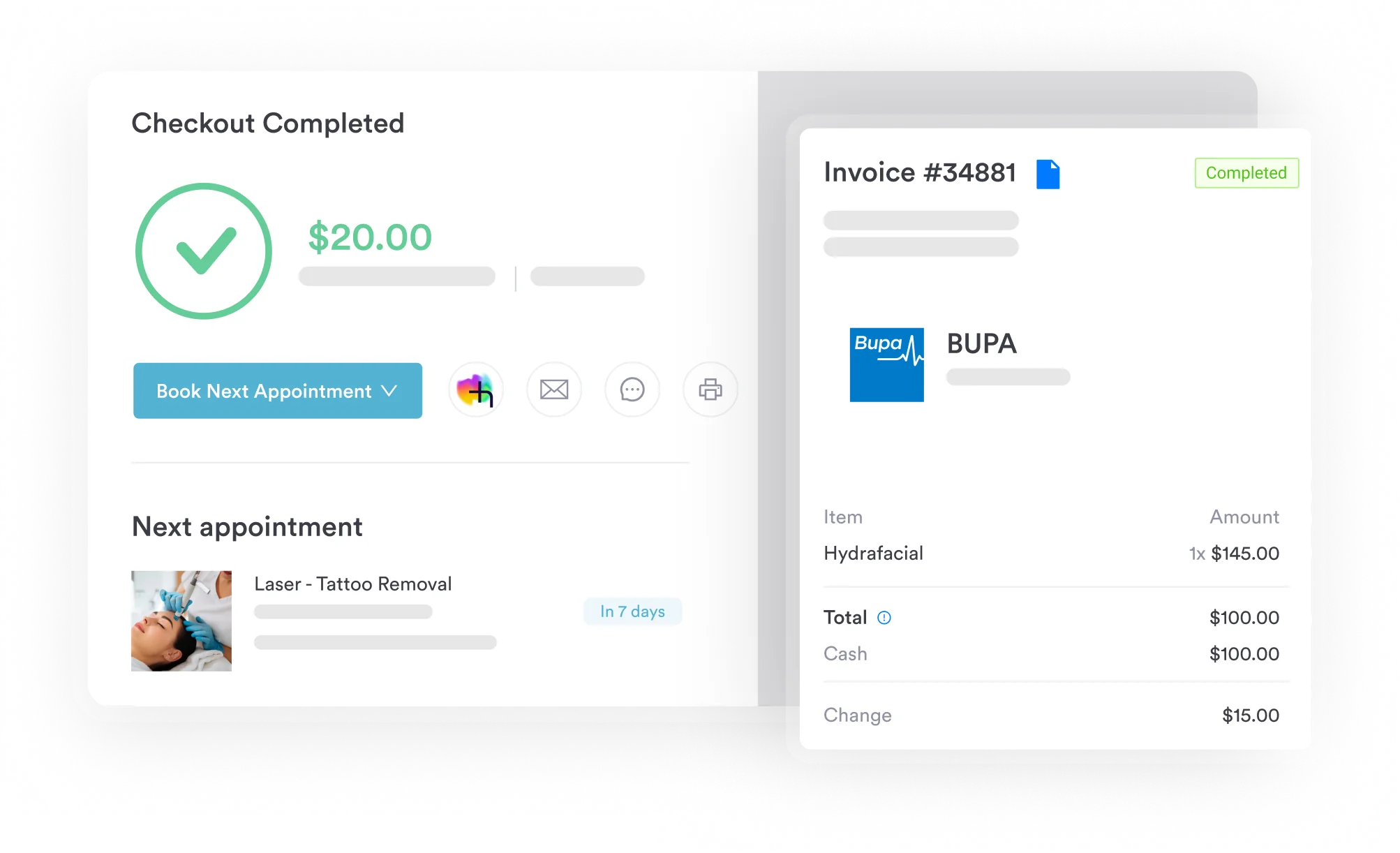
The payoff is fewer modifier errors, faster claim submission, and denial trends you can see across the whole practice. Take a practice billing 20 bilateral augmentations a month at the unilateral rate because modifier 50 was missing. A year of that is a serious amount of underpayment a systematic workflow would have caught.
Audit your 19325 claims from the past six months for bilateral procedures billed without modifier 50 or RT and LT. Resubmit corrected claims inside the payer’s timely filing limit. One modifier correction on a bilateral case recovers the difference between the unilateral and bilateral rate.

Pabau helps plastic surgery and aesthetic practices capture CPT codes, apply modifiers, manage prior authorizations, and submit claims without switching between systems.

Three decisions settle a 19325 claim, and all of them happen before it is submitted. Is the procedure cosmetic or reconstructive, which modifier applies, and does the operative note support both answers? Get those right at the point of care and there is nothing to appeal later.
Cosmetic work is straightforward to bill, because the patient pays and no coverage decision is involved. Reconstructive work only pays when the record earns it. That record is built in the consultation room, not in the billing queue.
If your denial log keeps showing the same two or three causes, the fix belongs in the workflow rather than with the coder. Book a demo to see how Pabau captures codes, applies modifiers, and tracks prior authorization in one place.

Billing the anesthesia side of a breast case? CPT code 00402 covers anesthesia for reconstructive breast procedures, including augmentation.
Coding an open excision instead of an implant placement? CPT code 19125 explains how to bill a lesion excision guided by a preoperative marker.
Need the rules for a localization device? CPT code 19286 sets out billing for breast localization performed under ultrasound guidance.
Billing a diagnostic biopsy before the surgical plan? CPT code 19083 covers ultrasound-guided breast biopsy, including the units and modifiers.
Reporting an add-on alongside a primary surgical code? CPT code 15005 shows how add-on units are counted and billed.
CPT code 19325 is breast augmentation with implant(s), which is the current AMA descriptor. It covers surgical placement of a breast implant, for cosmetic volume enhancement or as part of reconstruction. The code applies to saline and silicone implants, and to subglandular, submuscular, and dual-plane approaches.
Medicare does not cover CPT 19325 for cosmetic breast augmentation, because Section 1862(a)(10) of the Social Security Act excludes cosmetic surgery. Since the exclusion is statutory, no Advance Beneficiary Notice is required before you bill the patient. Reconstructive placement after mastectomy, trauma, or a congenital deformity may qualify under the LCD issued by your MAC, provided the documentation supports it.
The most common modifier is 50, for a bilateral procedure where both breasts are augmented in the same session. Some payers require two line items with RT and LT instead. Modifier 22 applies to unusually complex cases and modifier 58 to staged related procedures inside the global period. Modifier 79 covers an unrelated procedure performed while the global period is open.
Yes. Bilateral augmentation is usually billed with modifier 50 on a single line item of 19325. That pays at roughly 150% of the single-procedure rate. Some payers prefer two separate line items with RT and LT. Verify the payer’s billing instructions first, to avoid a unilateral payment on a bilateral procedure.
CPT 19325 has a 90-day global surgery period. Routine post-operative visits, wound checks, and management of expected complications inside that window are bundled into the procedure payment. Services unrelated to the augmentation can be billed separately during the global period. Use modifier 24 for an E/M service, or modifier 79 for unrelated surgery.
Cosmetic augmentation pairs with Z41.1, the encounter code for cosmetic surgery. Reconstructive cases use other codes. Examples include Z42.1 for reconstruction following mastectomy, Q83.8 for a congenital breast malformation, and N64.89 for another specified breast disorder. The diagnosis code has to match the operative documentation rather than the coverage outcome you want.
Cosmetic augmentation under CPT 19325 rarely requires prior authorization, because most payers do not cover it. For reconstructive cases that may qualify, most commercial payers require authorization before the procedure. Submit clinical notes, the planned CPT and ICD-10 codes, and any relevant prior surgical history with the request.