



CCSD code G5100: Bypass of duodenum billing guide
CCSD code G5100 bills a bypass that leaves the duodenum in place CCSD code G5100...

Last Updated: Oct 16, 2026

CPT code 10004 is the add-on code for fine needle aspiration biopsy without imaging guidance on each additional lesion – it has no first-lesion descriptor and is never billed by itself
CPT 10004 must always be reported alongside CPT 10021, the primary first-lesion code. In the 2019 FNA restructuring, the AMA deleted code 10022, not 10021 – 10021 was revised to add a first-lesion descriptor, and +10004 was created as its new add-on partner
The CAP Medicare Physician Fee Schedule impact tables put the non-facility rate for +10004 at approximately $51.75 (2025) to $52.44 (2026), against roughly $97.69 (2025) to $100.54 (2026) for primary code 10021 – verify current figures via the CMS Physician Fee Schedule Look-Up Tool
Pabau’s claims management software helps practices link procedure documentation to the correct primary-plus-add-on code pair at the point of care, catching a standalone CPT 10004 claim before it goes out the door
CPT code 10004 is an add-on code. It covers each additional lesion sampled without imaging guidance in the same session, and it can only be reported alongside CPT 10021, the primary first-lesion code.
The mix-up traces back to the AMA’s 2019 restructuring of the FNA code set, which replaced a two-code system with ten codes in one pass.
The American Medical Association (AMA) defines CPT code 10004 as: Fine needle aspiration biopsy, without imaging guidance; each additional lesion (List separately in addition to code for primary procedure).
In the CPT code book it’s printed as +10004. The leading “+” is the AMA’s standard symbol marking it as an add-on code, though claims are filed with the plain numeric code.
CPT 10004 sits in the General subsection of the CPT Surgery codes, home to the Fine Needle Aspiration Biopsy codes 10004 through 10021. That’s just before the Integumentary System subsection begins at code 10030. CPT 10004 has been in effect since January 1, 2019.
Fine needle aspiration biopsy uses a thin needle to withdraw cells or fluid from a mass or lesion for cytological analysis, with no incision required.
It’s commonly performed on thyroid nodules, lymph nodes, salivary gland masses, and superficial soft tissue lumps that a clinician can locate and sample by palpation alone.
CPT +10004 applies only when the clinician performs the additional aspiration entirely by palpation, with no real-time imaging used to guide needle placement, and only when a first lesion in that same session was already reported under CPT 10021.
If ultrasound, CT, fluoroscopy, or MRI guided the needle, a different add-on code in the 10004-10012 family applies instead, not +10004.
Before 2019, the FNA code family had two members: 10021 (without imaging guidance) and 10022 (with imaging guidance, which also required a separate radiological guidance code such as 76942). Neither distinguished between a first and an additional lesion, and neither identified which imaging modality was used.
Effective January 1, 2019, the AMA CPT Editorial Panel restructured the set to match how FNA is actually performed and resourced:
+10004 is one of those nine new codes. It was created specifically as the add-on partner to the revised CPT 10021, mirroring the first/each-additional pattern the AMA applied to every imaging modality: 10005/+10006 for ultrasound, 10007/+10008 for fluoroscopy, 10009/+10010 for CT, and 10011/+10012 for MRI.
It has never had a “first lesion” descriptor and was never a standalone code. Some billing resources get this backward, treating +10004 as if it replaced 10021.
If anything was replaced in 2019, it was 10022. Its replacement is the imaging-guided 10005-10012 series, not +10004.
Selecting the correct pair requires two decisions: whether imaging guidance was used and what type, and whether a given lesion is the first or an additional one in that session. For how the AMA differentiates complexity tiers across specialties more broadly.
Notice the pattern: every add-on code in this family (10004, 10006, 10008, 10010, 10012) is never reported alone, and each one only pairs with the primary code for its own imaging modality. Practices sampling multiple lesions without imaging in one session use 10021 for the first lesion and +10004, once per additional lesion, for every lesion after that. A payer reviewing this code looks for the reasoning in the note, not only the conclusion, so the documentation level matters. Practices that age their receivables weekly catch claims approaching a filing limit while an appeal is still possible.
For a look at how the primary code itself works in detail.
The imaging and lesion-count decisions happen at the time of the procedure, not at the time of coding. Accurate clinical documentation in the patient record must capture the guidance method and the lesion count before the claim goes out.
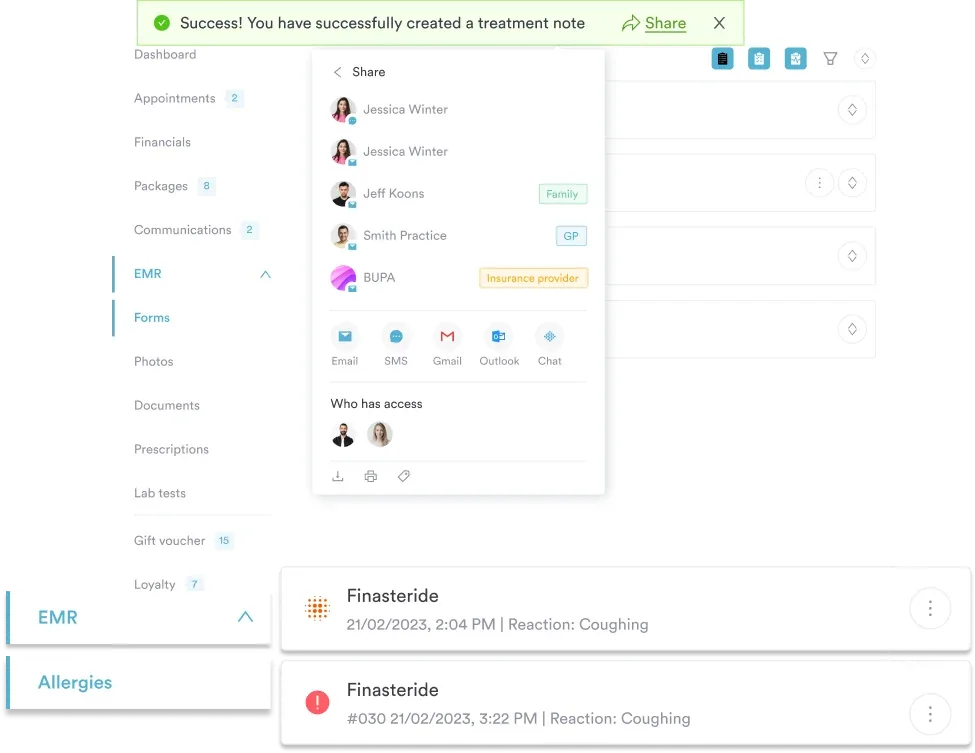
Use this logic to select the correct codes:
Endocrinology and head/neck surgery practices sampling multiple palpable thyroid nodules or cervical lymph nodes in one visit, without ultrasound, are the most common clinical scenario for +10004.
Dermatology practices see the same pattern for superficial soft tissue lumps, and primary care practices sampling a palpable lump in the office rather than referring out add to the volume too.
Radiology departments performing image-guided FNA should almost never use it. Their add-on code is 10006, 10008, 10010, or 10012, depending on modality.
No. CPT +10004 has no independent value on a claim filed on the CMS-1500 form. It describes work that only makes sense in addition to a first-lesion procedure that’s already been billed. Because of that, payers process it strictly as a companion code:
If your billing team has ever been told “use 10004 for the first lesion, it replaced 10021” – that guidance is backward, and it’s worth auditing recent claims and charge capture templates for the error before it compounds.
The CMS Physician Fee Schedule sets reimbursement for both codes annually. Because +10004 is only ever billed with 10021, it’s most useful to look at the pair together. Per the College of American Pathologists’ published Medicare Physician Fee Schedule impact tables, the national non-facility (office-setting) payment amounts are:
CMS reviewed the entire FNA code family (10021, +10004, 10005, +10006) as a potentially misvalued set during recent rulemaking cycles. Both times, it declined to change the valuation, concluding the RVUs already reflect the typical work and practice-expense inputs involved.
Facility-setting rates are lower than non-facility rates for both codes, since practice-expense costs shift to the facility rather than the billing physician.
Geographic Practice Cost Index (GPCI) adjustments mean the paid amount varies by locality, and figures change with each annual fee schedule update. Confirm the current-year, locality-specific rate using the fee schedule lookup tool before billing.
Medicaid rates vary by state and are typically lower than Medicare. Commercial payers may use their own contracted fee schedules.
Audit your FNA claims quarterly against the current MPFS using the CMS fee schedule lookup, and check both codes in the pair – not just the primary code. Because +10004 depends on 10021 being present on the same claim, a data-entry error that drops 10021 (for example, a claim scrubber that flags it as a duplicate) silently denies the add-on line too.
Because +10004 is an add-on code, several modifier rules apply differently than they would to a standalone procedure code. Verify payer-specific policy before billing, as requirements vary across commercial plans.
The core NCCI rule to remember: +10004 is designed to pair with 10021 in the same session, so no modifier is needed to “unbundle” them. They’re billed together by definition.
Do not bill a separate imaging guidance code, such as ultrasound guidance, alongside +10004. By definition, this code family involves no imaging, and adding one signals upcoding.
Cytopathology codes (e.g., 88172, 88173) may be billed separately from the FNA codes when performed, as they represent distinct services.
For practices managing complex FNA billing workflows across multiple providers.
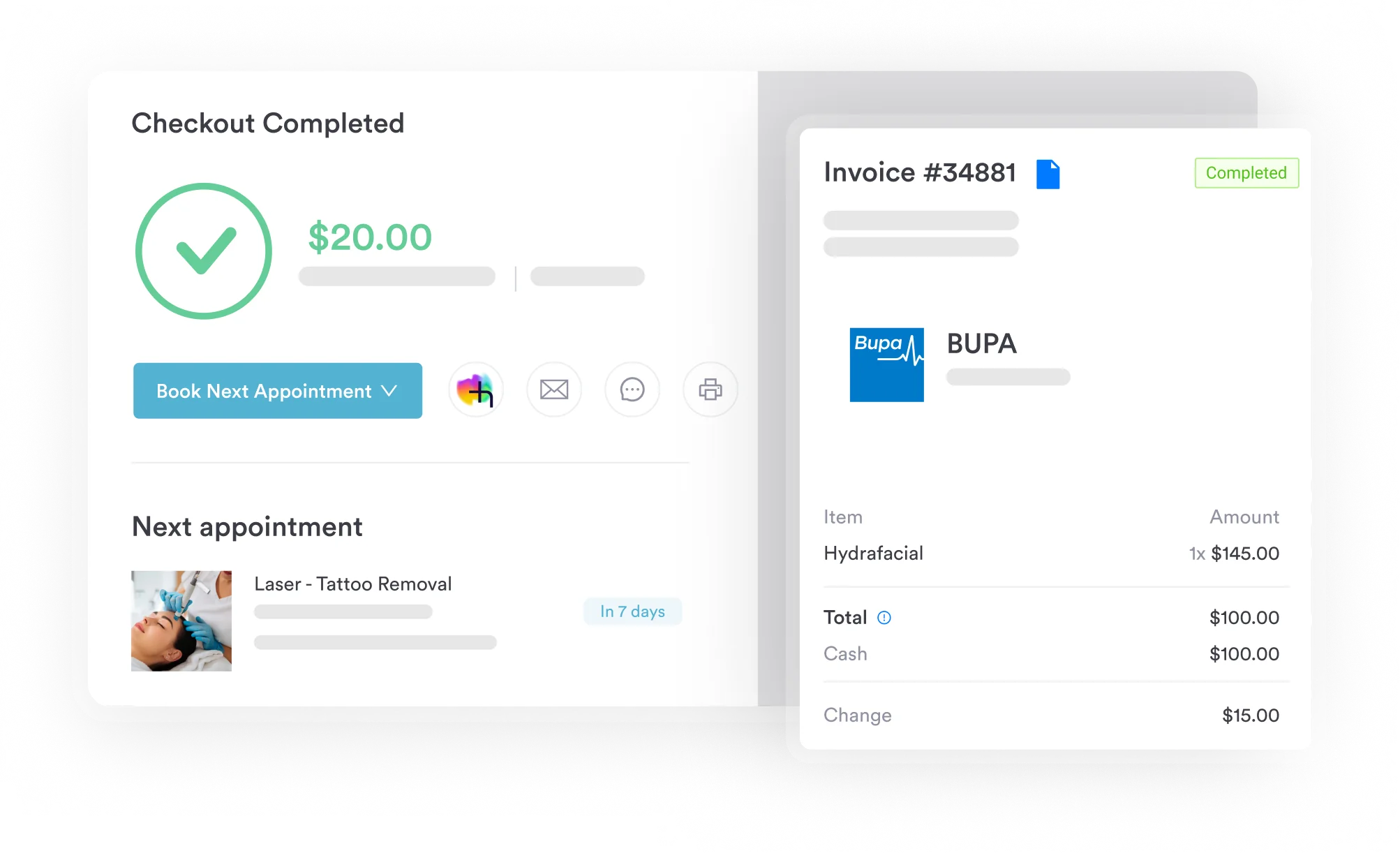
Medical necessity for the FNA session is established through the ICD-10-CM diagnosis code(s) tied to each lesion sampled.
Because +10004 covers additional lesions in the same session as 10021, each lesion’s diagnosis code should reflect that lesion’s specific clinical finding rather than a single generic code reused across lines.
For a complete lookup reference, the AAPC CPT-to-ICD-10 crosswalk maps common procedure codes to compatible diagnosis codes.
If cytology confirms a benign thyroid neoplasm, the follow-up claim uses diagnosis code D34 rather than the working diagnosis used to justify the FNA itself.
Payers may deny a +10004 line when the linked diagnosis code doesn’t establish medical necessity for that specific additional lesion. Document the clinical rationale for each lesion sampled, not just the encounter overall.
The procedure note is the single most important document for defending a +10004 claim. It has to prove two things at once: that this is genuinely an additional lesion, and that the primary lesion (billed under 10021) was also documented in the same encounter.
Practices using digital forms and structured procedure note templates reduce documentation errors by prompting clinicians to record the required elements at the point of care.
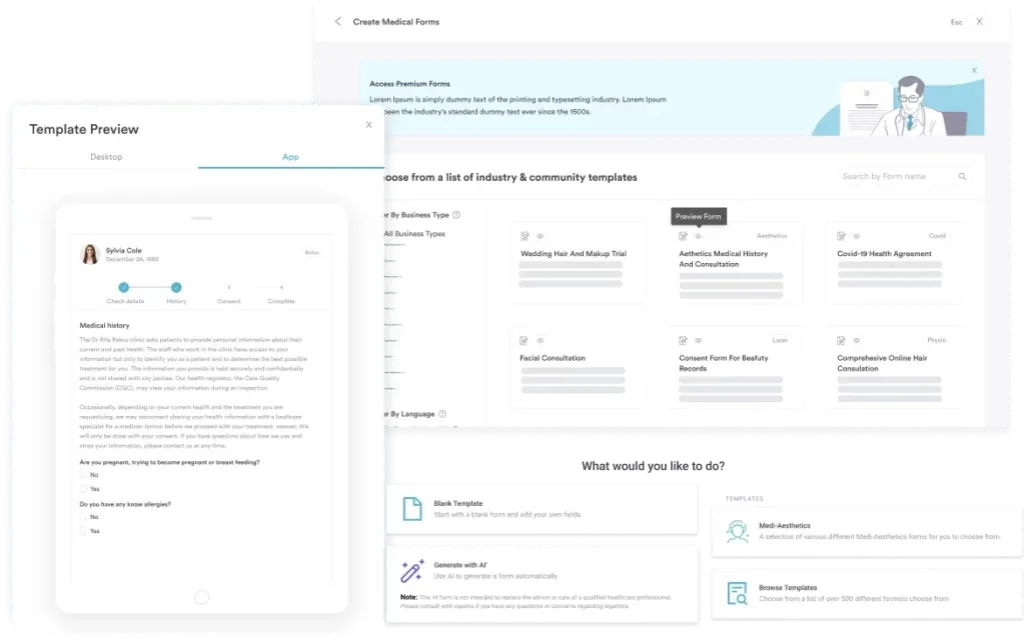
Every +10004 claim requires documentation of these elements:
For practices building structured documentation workflows, standardized medical forms across the practice ensure procedure notes capture per-lesion detail consistently, rather than relying on individual clinicians to remember it case by case.
Most +10004 denials trace back to the same handful of root causes – and the first one is by far the most common.
Review your FNA charge capture superbill at least once per CPT update cycle, and specifically check how it lists 10021 and +10004. If the superbill presents them as alternatives rather than as a required primary-plus-add-on pair, every claim built from it inherits the same error. A single superbill audit takes under an hour and prevents systematic miscoding across hundreds of claims.
Most FNA billing errors are systemic, not individual. When coders work from incomplete procedure notes, outdated superbills, or charge capture tools that mislabel the primary-plus-add-on relationship, the same error repeats across every claim.
Practices using practice management software like Pabau benefit from structured clinical documentation. It captures imaging guidance status and lesion count, per lesion, at the point of care, before the claim reaches the billing team.
The claims workflow then links that documentation to CPT code selection and flags an add-on code submitted without its required primary code, closing the distance between what happened clinically and what gets submitted to the payer.
The add-on pattern isn’t unique to FNA billing. HCPCS code G2211, the visit-complexity add-on for E/M services, works the same way. It can’t be billed without its own primary visit code either.

Pabau links procedure documentation directly to CPT code selection, flags a missing primary code when an add-on code is billed, and supports NCCI compliance at the point of care – helping billing teams catch errors before claims go out.

CPT +10004 is easy to misfile if you don’t know what it is: an add-on code for each additional non-image-guided FNA lesion, never a standalone first-lesion code.
The 2019 restructuring deleted 10022, revised 10021 into the current first-lesion code, and created +10004 as its permanent companion.
Getting the claim right comes down to two documentation decisions made before the procedure note leaves the room: was imaging used, and how many lesions were sampled. One rule is easy to forget. +10004 never travels alone.
Pabau’s claims management software connects procedure documentation to CPT code selection at the point of care, so billing teams aren’t reconstructing the clinical picture from incomplete notes. To see how it works for your practice, book a demo.

Wondering what code follows a benign FNA result? D34 is the diagnosis code used once cytology confirms a benign thyroid neoplasm.
CPT code 10004 is an add-on code used to report each additional fine needle aspiration biopsy lesion sampled without imaging guidance in the same session. It’s always billed alongside CPT 10021, the primary code for the first lesion – never on its own. It applies when a clinician uses palpation alone to guide the needle into a superficial mass or lesion, such as a thyroid nodule or lymph node.
CPT 10021 is the primary code for the first non-image-guided FNA lesion in a session. CPT 10004 is the add-on code for every lesion after that, in the same session, using the same no-imaging approach. They are not alternatives to each other and 10004 does not replace 10021 – the code deleted in the AMA’s 2019 restructuring was 10022, and 10021 was revised (not retired) to add the ‘first lesion’ descriptor that +10004 now complements.
No. CPT 10004 explicitly covers additional lesions sampled without imaging guidance. If any real-time imaging – ultrasound, CT, fluoroscopy, or MRI – was used to guide needle placement on an additional lesion, the matching add-on code (10006, 10008, 10010, or 10012) must be used instead. Billing 10004 when imaging was performed constitutes miscoding and creates compliance risk.
Per the College of American Pathologists’ published Medicare Physician Fee Schedule impact tables, the national non-facility rate for CPT 10004 is approximately $51.75 for 2025 and $52.44 for 2026, compared with roughly $97.69 (2025) and $100.54 (2026) for primary code 10021. These are national figures before geographic adjustment; verify the exact current-year, locality-specific rate using the CMS Physician Fee Schedule Look-Up Tool before billing.
No. CPT 10004 is an add-on code and has no standalone value – it must be reported on the same claim as CPT 10021 (or the matching imaging-guided primary code, if an additional lesion used imaging). Claims editing systems, including Medicare’s NCCI, will deny 10004 if its required primary code isn’t present on the claim, regardless of how well the additional lesion itself was documented.
Common ICD-10 codes paired with CPT 10004 include E04.1 (nontoxic single thyroid nodule), E04.2 (nontoxic multinodular goiter), R59.0 (localized enlarged lymph nodes), K11.9 (salivary gland disease), and M79.89 (superficial soft tissue mass). Each additional lesion billed under 10004 should be linked to the ICD-10 code that establishes medical necessity for that specific lesion, not a single code reused across every claim line.



