



HCPCS code E0198: Water pressure pad billing guide
HCPCS code E0198 is a water pad for a standard mattress HCPCS code E0198 is the ...

Last Updated: Oct 13, 2026

CPT Code 11047 describes debridement of bone (including epidermis, dermis, subcutaneous tissue, muscle, and fascia if performed) for each additional 20 sq cm beyond the primary procedure
It is an add-on code: never billed alone, always reported with primary code 11044 (bone debridement, first 20 sq cm)
Common billing errors include missing surface area documentation, incorrect unit calculation, and billing 11047 without a valid primary code
Pabau’s claims management software supports wound dimension capture and structured billing workflows that reduce claim errors for the full 11042-11047 debridement series
CPT Code 11047 is an add-on procedure code for debridement of bone, including the epidermis, dermis, subcutaneous tissue, muscle, and fascia if performed, for each additional 20 sq cm or part thereof beyond the primary procedure.
It’s a per-unit code: every additional 20 sq cm documented in the record becomes a billable unit, and it’s always reported alongside primary code 11044.
Bone-level debridement is most often billed by wound care and general surgery practices.
CPT Code 11047 is defined by the American Medical Association (AMA) with the following official descriptor: Debridement, bone (includes epidermis, dermis, subcutaneous tissue, muscle and/or fascia, if performed); each additional 20 sq cm, or part thereof.
The parenthetical instruction notes it must be listed separately in addition to the code for the primary procedure.
Breaking down what that means in practice:
The code sits at the deepest level of the debridement series, meaning it signals to payers that the procedure reached bone. Payer reviewers and Medicare auditors look specifically for documentation confirming that depth.
Add-on code rules apply firmly here. CPT Code 11047 pairs with exactly one primary code: 11044 (debridement of bone, first 20 sq cm). This is the only valid parent code for 11047.
Billing 11047 without 11044 on the same claim results in an automatic denial.
Key billing rules specific to add-on codes:
Selecting the right code from this family requires matching two variables: tissue depth reached and surface area. Practices running physical therapy billing workflows or wound care services need a clear crosswalk.
The table below covers the full series. The same each-additional-area billing logic shows up elsewhere in the integumentary code set, including excision code 11450 and skin biopsy code 11102.
The key distinction between 11043 and 11044 is tissue depth. Code 11043 covers debridement that reaches muscle and/or fascia but does not extend to bone. Code 11044 covers debridement that continues through to bone, including any epidermis, dermis, subcutaneous tissue, muscle, and fascia removed along the way.
Use 11043 with its add-on code 11046 when the procedure stops at muscle or fascia. Use 11044 with its add-on code 11047 only when bone-level debridement is documented.
Dermatology practices bill these codes daily, and a dermatology EMR keeps body maps, photos, and pathology results together.
Medicare reimbursement for CPT Code 11047 is set annually through the MPFS final rule. National rates reflect Relative Value Units (RVUs) that include a work component, practice expense, and malpractice component. Always verify current rates using the CMS Physician Fee Schedule, as rates are locality-adjusted and change each calendar year.
For 2026 reimbursement estimates, use the FastRVU lookup tool to convert RVU values to dollar amounts using the current conversion factor and geographic practice cost index (GPCI) for your locality. National payment rates are illustrative benchmarks; actual reimbursement varies by MAC jurisdiction and practice location.
Because 11047 is a per-unit add-on code, total reimbursement scales directly with wound size. A wound requiring three units of 11047, covering an additional 60 sq cm beyond the primary code area, generates three times the per-unit rate.
Precise measurements at the point of care affect more than audit risk. They determine how much the practice gets paid.
Private payer considerations: commercial payers negotiate their own rates, which may be higher or lower than Medicare. Many payers also impose maximum unit limits per session (commonly two to three units of 11047 per claim). Check individual payer contracts and prior authorization requirements before billing multiple units.
Track reimbursement outcomes for CPT Code 11047 by payer using your practice management system’s reporting module. Identify which payers are consistently underpaying against the contracted rate, and flag claims with multiple units for secondary review before submission.
Because CPT Code 11047 is an add-on code, some modifier rules differ from standalone procedure codes. The table below covers the modifiers that matter most for global period billing, staged procedures, and distinct service documentation.
What does NOT apply: modifier 51 (multiple procedures reduced payment rule) never applies to add-on codes. Medicare and most commercial payers flag its use on 11047 as a billing error. Similarly, modifier 22 (increased procedural services) is rarely appropriate for an add-on code whose additional work is already captured through the unit increment structure.
Medical necessity for bone-level debridement requires a supporting ICD-10 diagnosis code that justifies the depth of tissue removal. The following diagnoses are among the most frequently paired with CPT Code 11047. Payer LCDs, particularly those from CMS and MAC-specific bulletins, define which diagnoses support coverage for this code.
Osteomyelitis, the first diagnosis in the table, is also a common indication for nuclear bone imaging. Practices evaluating suspected bone infection often order a three-phase bone scan, billed under 78315.
Coverage for CPT Code 11047 depends on LCD policy for your MAC jurisdiction. Not all ICD-10 codes automatically support coverage, and payer-specific LCD guidance determines which diagnoses meet medical necessity thresholds. Always document the clinical rationale for bone-level intervention in the procedure note, not just the diagnosis code.
The healthcare documentation compliance requirements for CPT Code 11047 are specific and auditable. CMS LCD L34587 explicitly requires wound measurements and tissue depth documentation for debridement code selection.
Missing any element gives payers grounds to deny or downcode the claim. Proper clinical record documentation at the point of care is the foundation of first-pass claim acceptance.
One pattern that consistently triggers post-payment audit review: the billed unit count exceeds what the documented wound dimensions support. If a clinician bills three units of 11047, implying 60+ sq cm beyond the primary, but the note records a 4 cm x 3 cm wound (12 sq cm total), the discrepancy is immediately flagged.
The same logic applies to related deep-tissue codes like 11004: documentation requirements for add-on codes are strict precisely because the unit count is the billing driver.
Billing errors for CPT Code 11047 cluster around a predictable set of mistakes. Recognizing them upfront prevents claim denials, recoupment requests, and audit exposure.
The 97597/97598 series has its own add-on rules worth checking before you submit. The billing guide for 97598 covers unit calculation and documentation, so you can see which code pathway the note supports.
CPT Code 11047 carries a ZZZ global period indicator in the MPFS. This indicator means the add-on code’s services are always bundled into the global period of the primary procedure it accompanies (11044). The add-on code itself does not create a separate global period.
The more complex scenario arises when debridement falls during the global period of a different prior surgery (not the debridement primary code). Two modifiers address this:
MAC-specific LCD guidance on global period rules for wound debridement varies. Check your local MAC or AAPC coding resources for jurisdiction-specific interpretations rather than relying on universal statements.
Document the clinical reason for return debridement in every note where a global period modifier applies. Payers reviewing modifier 78 or 58 claims look for evidence in the record that the return visit was genuinely unplanned (modifier 78) or was part of a documented staged plan (modifier 58). A note that says only ‘wound debridement performed’ without context will not support the modifier.
The billing accuracy for CPT Code 11047 depends entirely on structured documentation at the point of care. Pabau’s claims management software supports wound care practices by embedding measurement fields directly into clinical note templates, so clinicians capture wound length, width, and tissue depth before the note is finalized. That data flows into the billing record without a manual transcription step. Time-based and complexity-based selection can point at different codes, so the documented medical decision making decides. A paper claim is scanned before it is read, so alignment and legibility affect whether it processes.
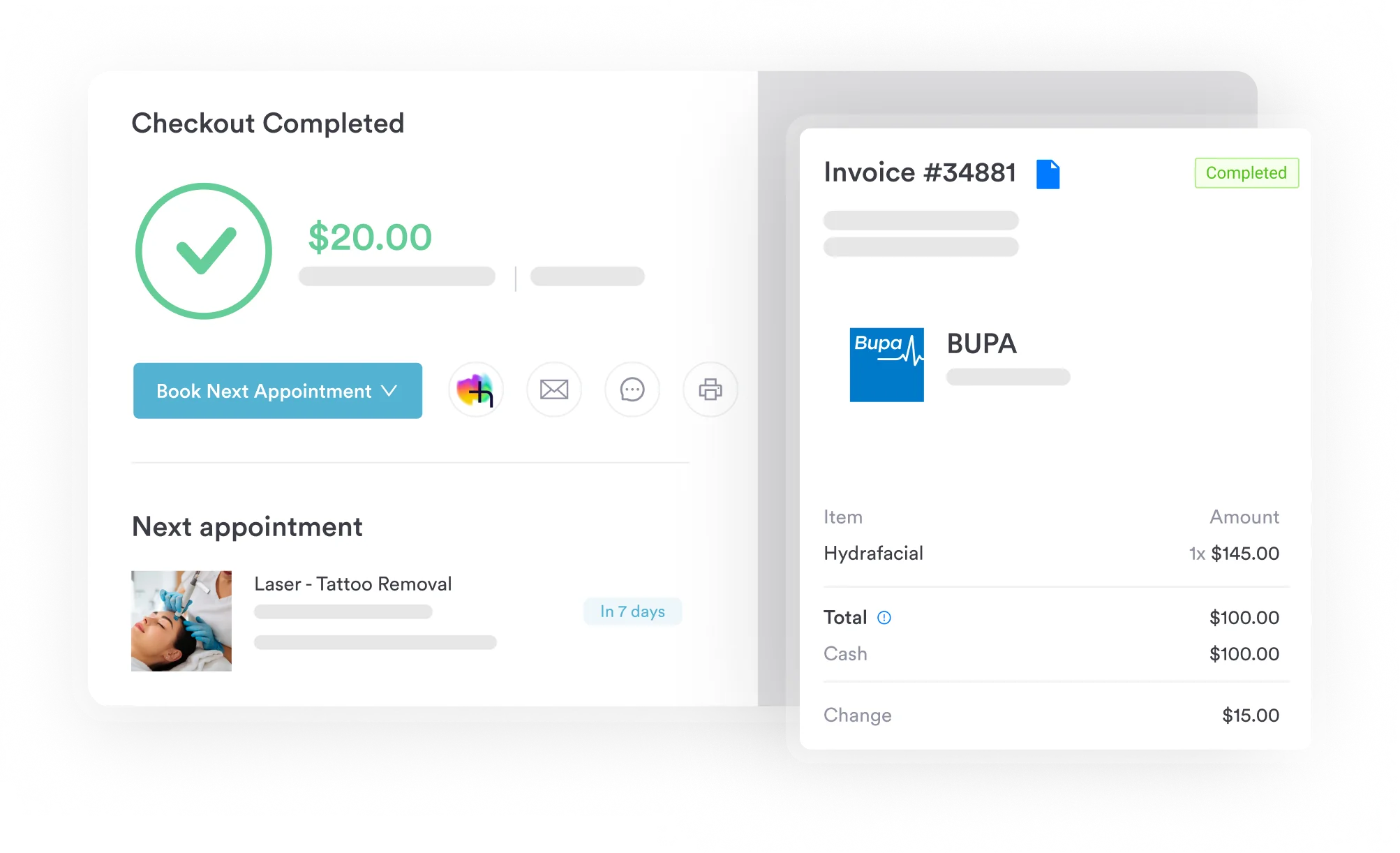
Pabau’s digital clinical forms can be configured to require surface area calculation fields, tissue depth selection, and debridement instrument notation as mandatory completion criteria. This closes the most common documentation shortfall for 11047: a completed procedure with no numeric wound dimensions in the chart.
Practices using structured form workflows see lower rates of claim correction cycles for add-on codes, because the billing data is captured correctly the first time.


Pabau’s integrated wound care documentation and claims management workflows help practices capture the exact measurements, tissue depth, and clinical context needed for compliant CPT 11047 billing. See how it works in a live demo.

Most bone debridement claims fail on documentation, not on the procedure itself. CPT Code 11047’s per-unit structure rewards practices that measure precisely and document thoroughly, and penalizes those that don’t with denials, downcoding, and audit exposure.
Pabau’s structured clinical documentation and automated billing workflows give wound care practices a systematic way to capture the measurements and tissue depth documentation that 11047 requires at the point of care rather than after the fact. To see how Pabau handles wound care documentation from procedure note to claim submission, book a demo.

CPT Code 11047 is an add-on procedure code describing debridement of bone (including epidermis, dermis, subcutaneous tissue, muscle, and fascia if performed) for each additional 20 sq cm or part thereof beyond the first area reported with the primary procedure code. It must always be billed alongside primary code 11044 and cannot appear on a claim as a standalone code.
Yes. CPT 11047 is designated as an add-on code with a plus (+) symbol in the AMA CPT codebook. It cannot be billed independently and must always appear with primary code 11044 (bone debridement, first 20 sq cm). Modifier 51 does not apply to add-on codes.
The 2026 Medicare rate for CPT 11047 varies by practice setting and geographic locality. The national non-facility total RVU is approximately 1.86 and the facility total is approximately 1.31; convert using the current MPFS conversion factor and your locality’s GPCI. Verify exact current rates using the CMS Physician Fee Schedule lookup tool at cms.gov, as rates update annually.
Required documentation includes: wound location (specific anatomical site), wound dimensions in centimeters (length x width), total surface area in sq cm, tissue depth reached (explicit confirmation of bone involvement), type of debridement instrument, clinical necessity statement, supporting ICD-10 diagnosis, and provider signature with date of service. CMS LCD L34587 is the primary coverage determination document for wound debridement codes.
CPT 11046 and CPT 11047 are both add-on codes, but for different tissue depths. CPT 11046 adds on to primary code 11043 for each additional 20 sq cm of muscle and/or fascia debridement, and is never billed with a bone-level primary code. CPT 11047 adds on to primary code 11044 for each additional 20 sq cm of bone debridement. For a 40 sq cm bone-level wound, bill 11044 + one unit of 11047. For 60 sq cm, bill 11044 + two units of 11047.
Billing CPT 11047 and CPT 97597 on the same date of service may trigger NCCI bundling edits. The 11042-11047 surgical debridement series and the 97597/97598 active wound care series address similar services through different code pathways, and CMS edits can prevent simultaneous billing. Check the current quarterly NCCI edit tables for the specific code pair combination before submitting both on the same claim.



