



CCSD code G5100: Bypass of duodenum billing guide
CCSD code G5100 bills a bypass that leaves the duodenum in place CCSD code G5100...

Last Updated: Oct 16, 2026

CPT Code 11010 describes debridement, including removal of foreign material, at the site of an open fracture or dislocation, covering skin and subcutaneous tissue.
Select 11010 when debridement reaches skin and subcutaneous tissue only, use 11011 once it reaches muscle fascia and muscle, and use 11012 once it reaches bone.
Modifier 51 (multiple procedures) and modifier 59 (distinct procedural service) are the most commonly applied modifiers; always verify current NCCI edits before billing.
Pabau’s claims management software can flag missing documentation, attach modifiers automatically, and reduce open-fracture claim rejections before submission.
CPT Code 11010 covers debridement, including removal of foreign material, at the site of an open fracture or dislocation, limited to skin and subcutaneous tissue. It’s the first of three depth-based codes in the family: 11011 extends to muscle fascia and muscle, and 11012 extends to bone. The correct code is whichever one matches the deepest tissue level documented in the operative report.
CPT Code 11010 is published by the American Medical Association (AMA) as part of the integumentary system section of the CPT code set. Its official descriptor reads: Debridement including removal of foreign material at the site of an open fracture and/or dislocation; skin and subcutaneous tissues.
Coders use CPT Code 11010 when debridement of an open fracture wound reaches skin and subcutaneous tissue, but does not breach the muscle fascia. The key selection criterion is tissue depth.
If the surgeon removes necrotic skin and subcutaneous tissue, clears embedded debris, and irrigates the wound without reaching muscle fascia, muscle, or bone, 11010 applies. Any deeper involvement changes the code entirely.
Open fractures present unique coding complexity because the wound is by definition contaminated. Debris, bone fragments, and devitalized tissue must be removed surgically before fracture repair. That debridement step is separately reportable under the 11010 family, making correct code selection both a clinical and a financial priority.
Because these codes represent a hierarchy, selecting 11010 when the operative report clearly describes muscle fascia or muscle involvement is an upcoding risk. Equally, selecting 11011 or 11012 without documented tissue depth beyond skin and subcutaneous tissue is a compliance exposure that audits routinely flag.
The three codes form a depth-based ladder. Each higher code subsumes the tissue levels below it. Surgeons do not separately report 11010 and 11011 for the same wound at the same session; the deepest level reached is the single correct code for that encounter.
A common question from newer coders is whether these codes can be billed together. The answer is no for the same fracture site in the same operative session.
The National Correct Coding Initiative (NCCI) edits, maintained by CMS, establish bundling relationships across the 11010 family. Reporting two depth codes for one wound triggers an automatic edit. For multiple wounds at different anatomical sites, a modifier may allow separate reporting, but each site’s documentation must independently justify its depth classification.
The 11010 series is also distinct from the more commonly searched CPT 11042 through 11047 series. Those codes apply to chronic wound debridement (diabetic ulcers, pressure injuries, venous stasis wounds) and are measured by wound surface area. The 11010 family is specific to open fracture wounds, regardless of size. Coders should not cross-apply these families.
For a comprehensive reference on other CPT codes across practice types.
CPT Code 11010 applies when an open fracture wound requires surgical debridement of skin and subcutaneous tissue, without reaching muscle fascia. Typical scenarios include a tibial shaft fracture with a small laceration where necrotic skin and subcutaneous tissue are excised and the wound is irrigated, with no muscle fascia or deeper involvement documented in the operative report.
Orthopedic surgeons and trauma teams bill this code most often. It can also turn up on claims from physical therapy practices managing post-fracture rehabilitation or sports medicine practices treating acute athletic injuries, when a physician on the team performs the debridement.
The most reliable guide to correct selection is the surgeon’s intraoperative description. If the report states debridement stayed within skin and subcutaneous tissue, without reaching fascia, muscle, or bone, 11010 is the appropriate code. If the report mentions fascia, muscle, or periosteum, 11010 is insufficient.
Operative note documentation must support the specific tissue level billed. Payers routinely request medical records when debridement claims accompany fracture repair codes, and incomplete documentation is the leading cause of post-payment audits on these claims. The same scrutiny applies to medical decision making documentation on any evaluation and management code billed at the same encounter.
Practices using digital intake forms and structured operative note templates, including a family medical history form completed before surgery, can capture these elements systematically rather than relying on free-text dictation, which frequently omits depth specificity.
For teams prioritizing paperless HIPAA-compliant documentation, structured templates reduce audit vulnerability by ensuring every required element is prompted at point of care.
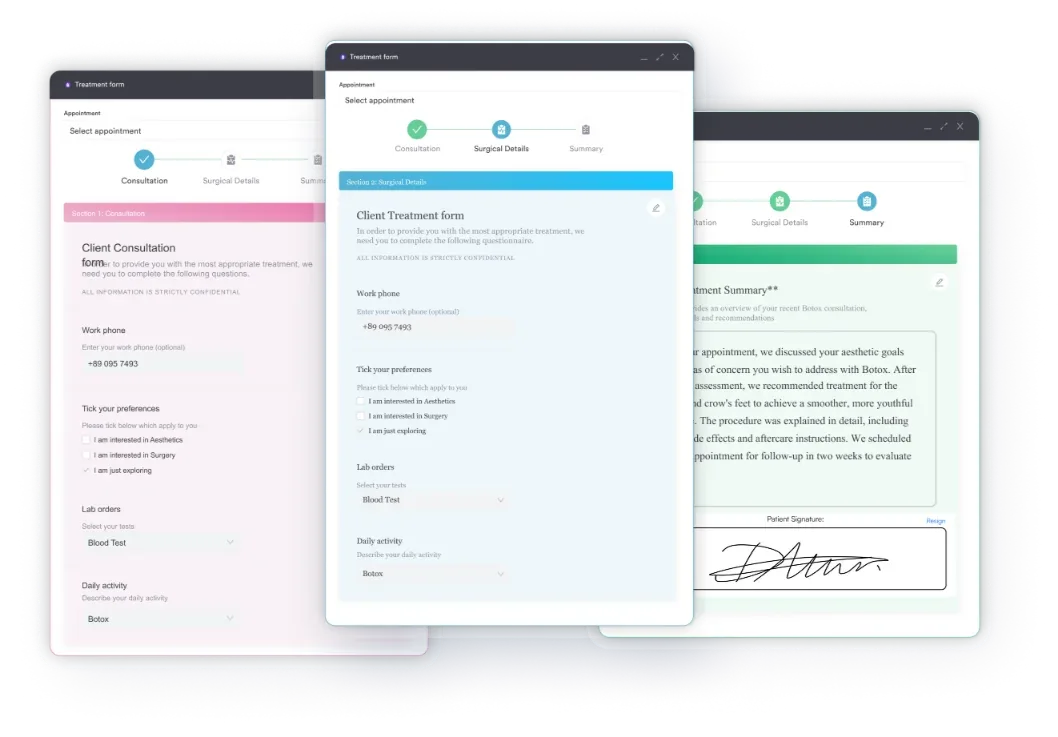
Surgeons billing these codes often run the whole workflow inside dedicated plastic surgery software.
Modifiers communicate additional clinical context to payers and prevent or trigger NCCI edits. For CPT Code 11010, the modifiers most frequently encountered are listed below. Always verify current NCCI edit tables before applying modifier 51 or 59, as CMS updates bundling rules annually.
One specific compliance caution: modifier 59 is frequently misused as a blanket “bypass the edit” tool. The CMS Physician Fee Schedule and NCCI guidelines require modifier 59 only when the circumstances genuinely meet one of the four XE/XS/XP/XU definitions. Appending modifier 59 without clinical justification documented in the record is a compliance risk under the False Claims Act.
Practices managing high volumes of surgical modifiers benefit from claims management software that prompts modifier selection at charge entry and flags NCCI conflicts before submission.
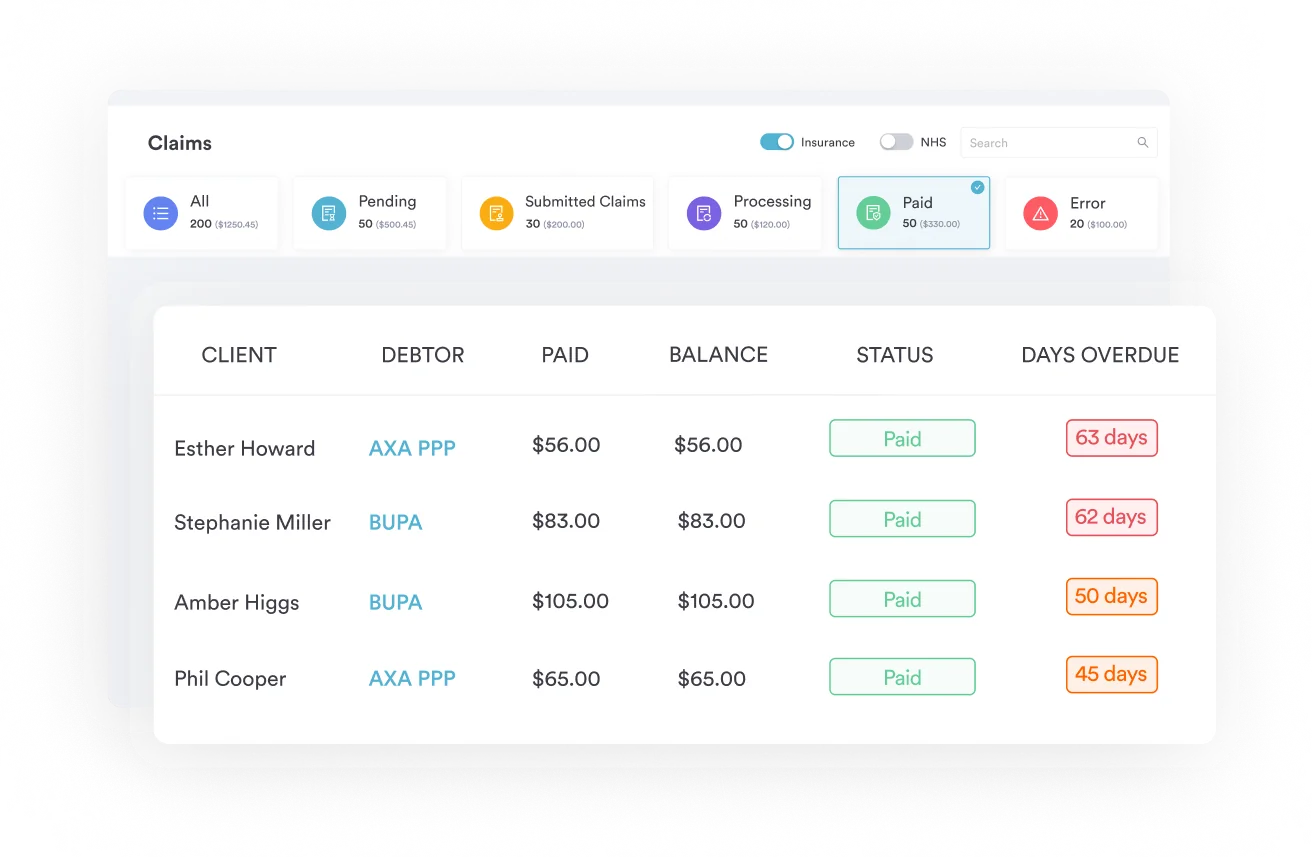
Medicare reimbursement for CPT Code 11010 is calculated using the Medicare Physician Fee Schedule (MPFS), updated annually by CMS each January. Rates vary by geographic locality and by site of service (facility vs. non-facility).
The table below reflects approximate national average rates; verify your rates using the FastRVU 2026 RVU lookup tool or the CMS MPFS search tool, as locality-adjusted figures differ significantly from the national average.
CPT Code 11010 is assigned a 0-day global period under Medicare, meaning post-operative services are billed separately from the debridement itself. This is significant when debridement accompanies a fracture repair code that carries a 90-day global period; the debridement’s own global period does not extend the fracture repair’s surgical package. Verify the current global period assignment via CMS MPFS, as designations can change with annual rule updates.
Private payers negotiate their own fee schedules, typically expressed as a percentage of the Medicare rate (110%, 125%, etc.) or as flat fee amounts. Some commercial payers require prior authorization for open fracture debridement, particularly when billed alongside fracture repair. Contact the specific payer’s provider relations team or consult their online authorization portal before scheduling to avoid clean-claim delays.
Geographic payment adjustments apply to Medicare rates through the Geographic Practice Cost Index (GPCI). Urban markets in California, New York, and Massachusetts typically carry higher locality multipliers than rural markets.
Teams managing billing across multiple practice locations should pull locality-adjusted rates for each site.
A claim for CPT Code 11010 requires a paired ICD-10-CM diagnosis code that confirms the medical necessity of open fracture debridement. The diagnosis code must reflect an open fracture, not a closed fracture or a chronic wound. Using a closed fracture code with an open fracture debridement CPT creates a clinical inconsistency that most payer edits catch automatically.
ICD-10-CM open fracture codes follow the seventh-character extension system. For most fracture codes, “A” identifies the initial encounter for a closed fracture, “D” identifies a subsequent encounter, and “S” identifies a sequela.
An open fracture’s initial encounter instead uses “B” (Gustilo type I or II, or unspecified) or “C” (Gustilo type IIIA, IIIB, or IIIC). Because CPT Code 11010 is only reported for open fractures and dislocations, the paired diagnosis code’s initial-encounter extension should be “B” or “C,” never “A.”
Always select the most specific ICD-10-CM code available. For open long bone fractures, use the seventh-character extension that matches the documented Gustilo-Anderson type at the initial encounter: “B” for Type I or II (or unspecified), and “C” for Type IIIA, IIIB, or IIIC.
Submitting an unspecified fracture code when the operative report clearly states the Gustilo classification is a missed specificity that some payers use to justify downcoding. See the AAPC code reference for crosswalk tools linking CPT debridement codes to their corresponding ICD-10 diagnosis codes.
Open fracture debridement billing generates a consistent set of denial patterns. Most stem from incomplete documentation rather than coding errors, which is why tightening the operative note template addresses most of them at once.
Teams using HIPAA-compliant clinical documentation systems with structured charge capture reduce these errors by building the required fields into the note template. Using electronic client records that link operative documentation directly to the charge entry process eliminates the manual re-entry step where depth and modifier data most often gets lost.
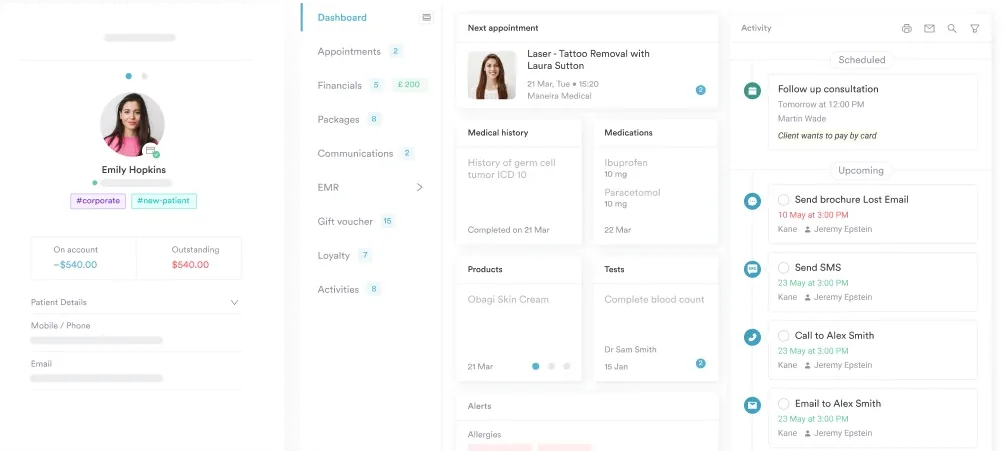
Before submitting any claim pairing CPT Code 11010 with a fracture repair code, run the code pair through the current CMS NCCI edit table for your claim type (professional vs institutional). NCCI edits update quarterly and a code pair that was separately reportable last year may now require a modifier or be fully bundled.
The most preventable revenue losses in open fracture coding happen between the operating room and the billing queue. Surgeons complete their note, the coder pulls the claim, and somewhere in that handoff the tissue depth qualifier disappears or the modifier gets dropped. Practice management software fixes that disconnect by connecting clinical documentation directly to charge capture.
Pabau’s practice management software supports surgical teams billing high-complexity codes by automating modifier checks and flagging missing documentation before submission. When a coder assigns CPT Code 11010, the system can prompt for the required operative note elements and alert when NCCI edit conflicts are detected. This replaces the manual review step that most denial analyses trace as the origin point for rejections.
For practices handling orthopedic and trauma billing regularly, the ability to track claim status by CPT code family gives revenue cycle managers visibility into denial patterns. If claims for CPT Code 11010 are denying at a higher rate than 11011 or 11012, that pattern points to a documentation issue at the tissue-depth specificity level, not a coding error. Surfacing that pattern requires practice management software features that segment denial data by procedure code. Practices billing in Australia check the current MBS descriptor before submitting, because descriptors are revised on a schedule.
Structured digital medical forms built into the clinical workflow ensure that operative notes capture every required element consistently, reducing the variability that causes documentation-driven denials. Teams that have adopted automated billing workflows report fewer rework cycles on complex surgical claims.
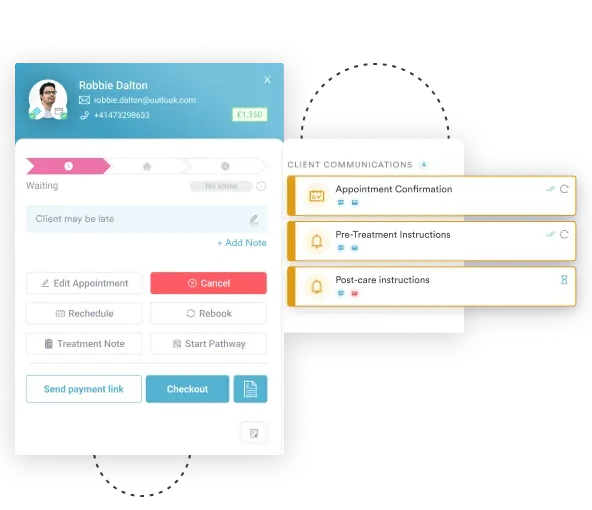
Structured intake and charge capture are the most practical first step for practices working to reduce open-fracture claim rejections. Connecting documentation directly to billing, rather than treating them as separate steps, cuts down on the depth and modifier errors that drive most of these denials.
CPT Code 11010 is deceptively narrow. Its scope is precisely one tissue level, one fracture type, and one operative scenario. Getting it right means documenting depth explicitly, applying modifiers defensively, and pairing it with the correct ICD-10 open fracture code and the right seventh-character extension. Most denials on this code are preventable.
Want to see how Pabau handles complex CPT billing? Book a demo to walk through the claims management workflow with the team.

Need a form to assign patient benefits? Assignment of benefits form template covers patient identification, insurance details, payment direction, and state-specific compliance notes.
Looking to reduce claim denials across your surgical practice? Healthcare revenue cycle management covers the workflow stages that reduce administrative bottlenecks in high-volume billing environments.
Wondering how the 2026 bulk billing changes affect you? 2026 bulk billing incentive changes breaks down the verified incentive amounts by location tier for July 2026.
CPT Code 11010 describes debridement including removal of foreign material from an open fracture or dislocation wound, covering skin and subcutaneous tissue. It applies to surgical cleaning and debridement of an open (compound) fracture wound that reaches skin and subcutaneous tissue, without extending into muscle fascia, muscle, or bone.
The three codes represent increasing depths of open fracture debridement: 11010 covers skin and subcutaneous tissue, 11011 extends through muscle fascia and muscle, and 11012 includes bone-level debridement. Only one code is reported per wound per session; the correct choice is determined by the deepest tissue level documented in the operative report.
The most common modifiers are 51 (multiple procedures, when billed alongside fracture repair) and 59 (distinct procedural service, when NCCI edits would otherwise bundle the codes). Modifiers LT/RT may be required by some Medicare Administrative Contractors for laterality. Always verify current NCCI edit tables before applying modifier 59, as misuse carries compliance risk.
CPT Code 11010 itself carries a 0-day global period, but whether it can be billed separately when performed during the global period of a concurrent fracture repair depends on your MAC’s local coverage determination and current NCCI edit status for the specific code pair. This is a nuanced compliance question; consult your MAC or a certified coder before billing this combination to avoid compliance exposure.
ICD-10-CM open fracture codes are the required diagnosis pairing for CPT 11010. Common families include S82.xxx (tibia/fibula), S52.xxx (forearm), and S72.xxx (femur), each requiring the appropriate seventh-character extension for fracture type and encounter. Because CPT 11010 is only used for open fractures, the initial-encounter extension is “B” (Gustilo type I or II, or unspecified) or “C” (Gustilo type IIIA, IIIB, or IIIC), never “A,” which denotes a closed fracture. The diagnosis code must confirm an open fracture; closed fracture codes paired with this procedure code trigger automatic payer edits.
Yes. Open fracture debridement uses the 11010 to 11012 code family, which is specific to compound fracture wounds and does not measure wound surface area. Standard wound debridement for chronic wounds (diabetic ulcers, pressure injuries) uses CPT codes 11042 through 11047, which are area-based codes measured in square centimeters. The two families should never be cross-applied.



