



CCSD code G5100: Bypass of duodenum billing guide
CCSD code G5100 bills a bypass that leaves the duodenum in place CCSD code G5100...

Last Updated: Oct 16, 2026

CPT code 01670 covers anesthesia for procedures on the veins of the shoulder and axilla, billed by anesthesiologists and CRNAs.
The code carries 4 base units; reimbursement follows (Base Units + Time Units) x Conversion Factor, at one time unit per 15 minutes.
Modifier AA (personal performance by anesthesiologist) or QZ (unsupervised CRNA) must be appended to every 01670 claim; missing modifiers are the top denial reason.
Pabau’s practice management software keeps anesthesia records structured and audit-ready, helping staff catch missing time data or modifier errors before an 01670 claim goes out.
Central line and port placement in the axillary or subclavian vein is routine in oncology, dialysis, and vascular access care, and CPT code 01670 is the anesthesia code that goes with it. In practice, though, the code itself is rarely the problem on a denied claim. Instead, what trips up billing staff is the modifier stack, the time-unit count, and the ICD-10 pairing. Ultimately, all three variables must align perfectly before CMS or a commercial payer approves payment.
This reference covers the official code description, base unit value, and the reimbursement formula with a worked example. In addition, it covers applicable modifiers, Medicare rates, ICD-10 pairings, documentation requirements, and the errors that cause the most claim denials.
CPT code 01670 describes anesthesia services for procedures on the shoulder and axilla. Specifically, it covers procedures on the veins in that region, such as central venous catheter or port placement. For context, the code sits within the AMA’s CPT code set anesthesia section, which spans the 00100-01999 range. That section, in turn, organizes anesthesia codes by the anatomical region of the surgical procedure, not the anesthesia technique used.
Both anesthesiologists and Certified Registered Nurse Anesthetists (CRNAs) bill this code, with the appropriate supervision modifier determining which provider type is the billing entity. Importantly, the code applies to anesthesia care, not the surgical procedure itself. If the encounter included an assessment and a plan, the evaluation and management component needs its own documentation.
The following venous procedures of the shoulder and axilla are commonly reported with CPT code 01670 as the anesthesia code:
First, coders should confirm the operative note documents a venous procedure rather than an arterial or musculoskeletal one. Otherwise, procedures on shoulder arteries, or on nerves, muscles, tendons, and bursae, fall under adjacent codes in the 01610-01680 range instead.
CPT code 01670 carries a base unit value of 4. In essence, base units reflect the inherent complexity of providing anesthesia for a given type of procedure. Specifically, they are assigned by the AMA CPT Editorial Panel and ratified against CMS’s Medicare Physician Fee Schedule.
Anesthesia reimbursement does not use the standard RVU-based formula. Instead, CMS calculates payment using the anesthesia-specific formula below.
Most reference pages state the formula without applying it. To illustrate, here is a concrete worked example for a 90-minute axillary vein thrombectomy billed to Medicare in a mid-range locality (conversion factor $23.00):
Medicare payment varies by geographic locality, so use the CMS fee schedule lookup to find the current conversion factor for your Medicare Administrative Contractor (MAC) region. By contrast, commercial payer rates are negotiated separately and typically exceed Medicare rates.
Always document the exact start and stop time of anesthesia on the claim. CMS defines anesthesia time as the period from when the anesthesia provider begins preparing the patient for anesthesia induction through to the point when the provider is no longer in continuous attendance. Discrepancies between the operative report time and the claimed time units are a top audit trigger for anesthesia claims.
Every anesthesia claim requires at least two modifiers: one indicating the supervision level of care and one indicating the patient’s physical status. Consequently, missing either is a near-certain denial. In this respect, CPT code 01670 follows the same modifier rules as all anesthesia codes under CMS billing guidelines.
QZ modifier eligibility depends on whether the state has submitted a letter to CMS opting out of the federal physician supervision requirement for CRNAs. Therefore, practices should confirm their state’s opt-out status before submitting QZ on a 01670 claim. Because state-level rules vary, blanket use of QZ across all states is a compliance risk.
Physical status modifiers, defined by the American Society of Anesthesiologists (ASA), are appended to CPT code 01670 to document the patient’s pre-anesthesia health classification. Not all payers add units for higher-acuity classifications, but the modifiers must still be present for documentation purposes.
Qualifying circumstances codes (99100-99140) may be reported alongside CPT code 01670 when the clinical situation adds unusual complexity to the anesthesia service. However, these are add-on codes, not standalone, and payer acceptance varies. In particular, Medicare has specific rules governing their use.
For example, report 99100 when the venous procedure is performed on a patient younger than 1 year or older than 70. This applies often, since central-line and port placement is common in oncology, dialysis, and neonatal care. Even so, verify the specific payer’s policy before adding these codes, as some commercial payers bundle them without additional payment.
Selecting an ICD-10 code that matches the surgical diagnosis is essential for medical necessity on 01670 claims. Typically, the anesthesia provider uses the same principal diagnosis listed on the surgeon’s claim. As a result, mismatched diagnosis codes are a common source of payer denials for venous access anesthesia claims. Beyond this code, Pabau’s coding library also covers diagnostic codes across other specialties.
Always use the most specific code available, since laterality matters. Indeed, unspecified axillary or subclavian vein codes (without right/left designation) are increasingly flagged by commercial payers. This is because the ICD-10-CM coding guidelines require laterality designation whenever the condition is unilateral and the side is known. Separately. Meanwhile.
Both anesthesiologists and CRNAs are eligible to bill CPT code 01670. Specifically, the provider type determines which supervision modifier is appended, which then affects the Medicare payment percentage. For this reason, understanding provider eligibility rules is especially important for practices running anesthesia care team models.
Anesthesiologists billing under medical direction (QK modifier) must document that they performed all seven required pre-anesthesia steps defined by CMS’s TEFRA rules. Otherwise, missing documentation of any one step can void the medical direction modifier and reduce payment.
For related CPT billing workflows and how different supervision models affect reimbursement across specialties, Pabau’s procedure code library covers multiple code types.
Payer audits of anesthesia claims focus almost entirely on the anesthesia record. Consequently, a claim that cannot be fully supported by the record is subject to recoupment, even if the service was performed correctly. For this reason, the anesthesia record must document specific data points to support 01670. In practice.

For HIPAA-compliant record retention, anesthesia records must be maintained according to state law for the applicable retention period, typically a minimum of seven years. For anesthesia practices handling these records digitally.
CPT code 01670 sits within the 01610-01680 shoulder and axilla anesthesia range. Even so, selecting the wrong adjacent code is a preventable billing error. Specifically, the distinctions between these codes are anatomical: whether the procedure addresses nerve, artery, bone/joint, or vein determines the correct code. For reference on how procedure code fee schedules work across different payer systems, Pabau’s billing reference library covers the comparison in detail.
A coder encountering a shoulder arthroscopy claim should note that 01630 carries 5 base units. It applies to open or arthroscopic procedures on the humeral head, sternoclavicular joint, or acromioclavicular joint. By contrast, anesthesia for a venous procedure in the same region, such as axillary vein catheter placement or thrombectomy, is reported with 01670 (4 base units) instead. When in doubt, review the operative note to confirm whether the procedure addressed bone and joint, artery, or vein. For IVF or other surgical contexts where code selection follows similar anatomical specificity logic. Anesthesia coders working across multiple specialties will also encounter CPT code 00756, which follows the same base-unit and modifier logic in a different anatomical region.
Anesthesia claims are denied at higher rates than most other claim types, and venous access procedures generate a specific subset of recurring errors. Consequently, understanding these CPT code 01670 pitfalls helps billing staff catch them before submission. A rejected electronic claim never reaches adjudication, so it does not appear in denial reporting.
Building a billing compliance protocol around these six failure modes significantly reduces denial rates for CPT code 01670 claims. A well-structured medical practice billing plan should include pre-submission claim review rules specific to anesthesia codes.
Manual anesthesia billing requires staff to track three separate data points per claim: base units, time units calculated from the anesthesia record, and the correct modifier combination. Consequently, getting any one of these wrong generates a denial, and practices using disconnected tools repeat this calculation at every claim submission.
Pabau’s practice management software keeps the anesthesia record structured, connecting documented start and stop times, modifier rationale, and the physical status classification in one place. As a result, that removes the manual re-entry from a paper anesthesia record, which is where most 01670 documentation errors originate.
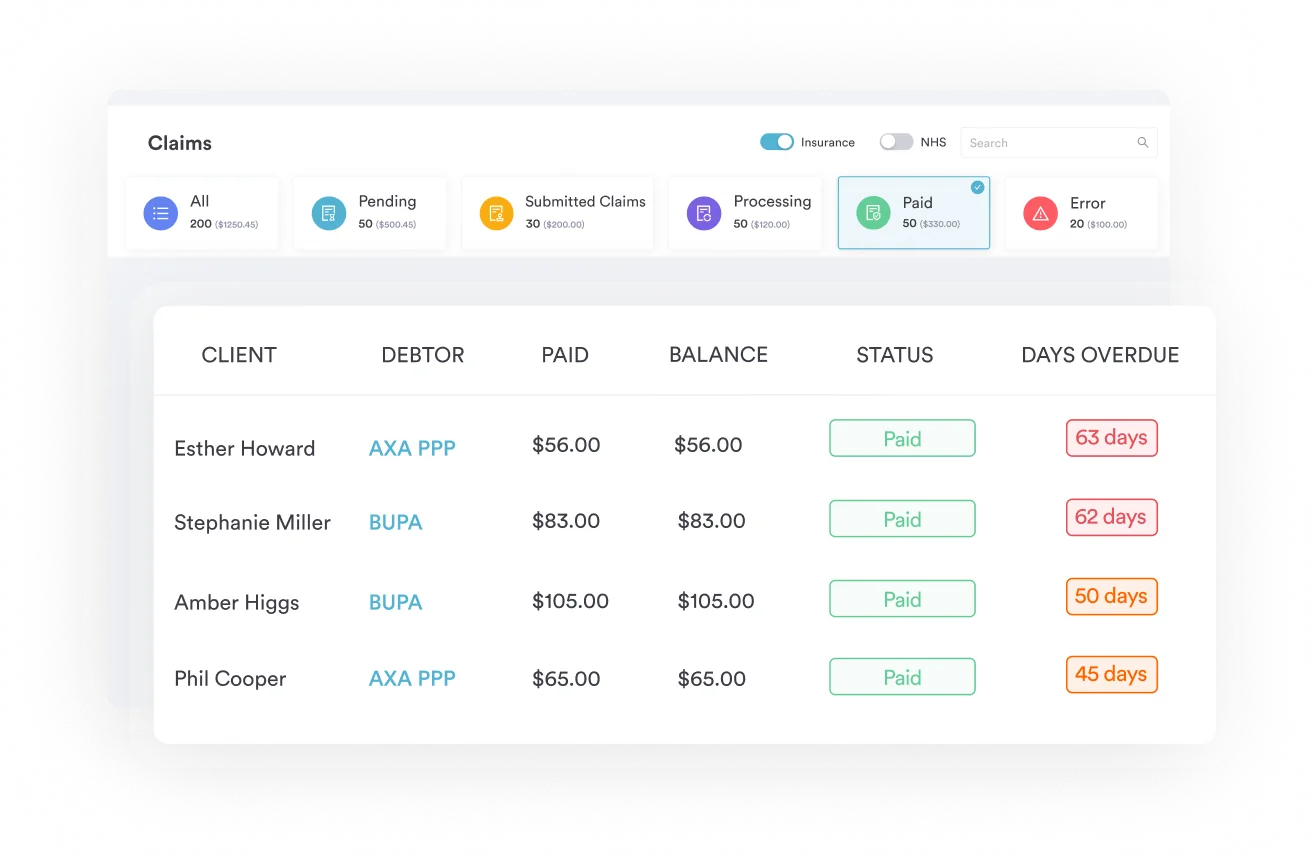
Practices that standardize anesthesia documentation in automated billing workflows also benefit from audit-ready records. Every anesthesia record captures start time, stop time, provider credentials, and modifier rationale in one structured format. In turn, that format supports both claim submission and payer audit responses. For practices evaluating practice management software for billing workflow automation, the key criteria are time-unit automation, modifier rule libraries, and integrated claim scrubbing.
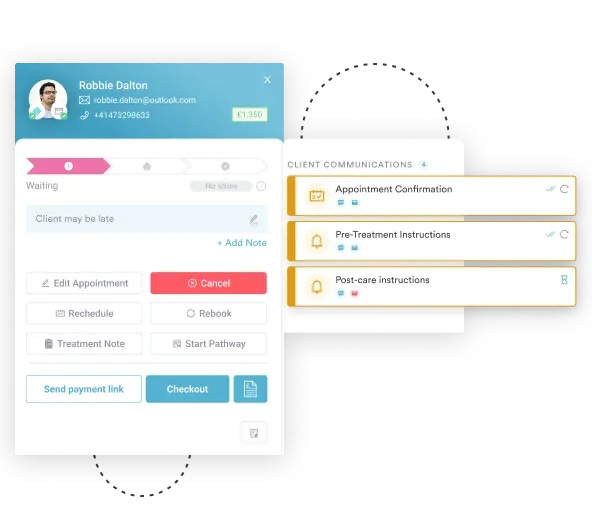
Run a monthly claim audit specifically on anesthesia modifier combinations. Pull all 01670 claims from the prior month and verify that each has exactly one supervision modifier and one physical status modifier. Claims with duplicate modifiers, missing modifiers, or mismatched QK/QX pairs (where the CRNA and anesthesiologist submitted different modifier combinations) are denial risks that a pre-submission scrub catches before they reach the payer.

Pabau’s practice management software keeps anesthesia records structured, from the pre-anesthesia evaluation through start and stop times, so the documentation behind every CPT code 01670 claim stays complete and audit-ready.

Overall, CPT code 01670 is a straightforward code with a well-defined scope: anesthesia for procedures on the veins of the shoulder and axilla. It carries 4 base units and is billed using the (B+T)xCF formula. In short, the complexity is in the execution, specifically the modifier stack, time-unit accuracy, and ICD-10 specificity that payers scrutinize most closely.
Pabau’s practice management software helps anesthesia practices reduce those errors. In particular, it keeps anesthesia record documentation structured and connected to the billing record, cutting the manual re-entry that generates most preventable denials. To see how it works for your billing workflow, book a demo and ask about anesthesia documentation workflows.

Billing anesthesia alongside a nursing facility visit? CPT code 99304 covers the initial nursing facility care visit that often follows a procedure requiring anesthesia.
Administering injectable medications during the same encounter? HCPCS code J0139 explains the billing rules for a commonly paired injectable drug code.
Need the diagnosis code for a shoulder injury with a retained foreign body? ICD-10 code S41.022A covers laceration with a foreign body of the left shoulder.
CPT code 01670 is the anesthesia code for procedures on the veins of the shoulder and axilla. Specifically, anesthesiologists and CRNAs bill it for venous procedures such as axillary vein catheter placement, port placement, or axillary vein thrombectomy. Importantly, it covers the anesthesia service, not the surgical procedure itself.
CPT code 01670 has 4 base units. Then, add time units, at one per 15 minutes of anesthesia time, to get the total units. Finally, multiply that total by the Medicare conversion factor for your locality to calculate the allowed payment amount.
Every 01670 claim requires two modifiers: a supervision modifier (AA, QZ, or QK/QX) and a physical status modifier (P1 through P6) showing the patient’s pre-anesthesia health classification. Consequently, submitting 01670 without both will typically result in denial.
Yes. A CRNA bills CPT code 01670 using modifier QZ in states that have opted out of the CMS physician supervision requirement, or modifier QX under a medical direction arrangement. The modifier determines whether the CRNA bills at 100% or 50% of the allowed Medicare amount.
The anesthesia record must include a pre-anesthesia evaluation with physical status classification, exact anesthesia start and stop times, and intraoperative monitoring data recorded at timed intervals. In addition, it must show medications administered with doses and times, any complications or significant events, a post-anesthesia evaluation note, and the provider’s signature and credentials. Notably, missing start or stop times is the most common documentation deficiency in anesthesia audits.



