ICD-10 code S61.201A: Open wound of left index finger without nail damage
ICD-10 code S61.201A covers a left index finger wound of unstated type ICD-10 co...

Last Updated: Oct 16, 2026
Billable Code Specific Code
S41.022A is the billable ICD-10-CM code for laceration with foreign body of left shoulder, initial encounter.
Let Pabau's smart automation suggest the right codes, reduce claim denials, and keep your practice compliant—effortlessly.
Automate repetitive tasks and focus on what matters most—your patients.
Reduce coding errors and ensure compliance with the latest regulations.
Clean claims, fewer denials, and faster reimbursements.
Powerful insights and reporting to help your practice thrive.
HIPAA compliant SOC 2 certified GDPR-compliant Trusted by 4,000+ clinics worldwide

ICD-10 Code S41.022A is a billable, specific ICD-10-CM code for a laceration with foreign body of the left shoulder, initial encounter.
The 7th character ‘A’ specifies initial encounter, or active treatment, while sibling codes S41.022D and S41.022S cover subsequent encounter and sequela.
Documentation must explicitly state laterality, wound type, foreign body presence, and encounter type, since missing any one element risks claim denial.
Practice management software like Pabau streamlines wound-care billing workflows through its claims management tools, helping practices submit clean claims with accurate diagnosis and CPT pairings.
S41.022A is a billable, specific ICD-10-CM code, valid for submission on CMS-1500 and UB-04 claim forms and accepted by Medicare, Medicaid, and most private payers. The 2026 edition became effective October 1, 2025.
Wrong laterality, missing foreign-body notation, and an incorrect encounter-type extension are the documentation failures behind most denials on this code.
S41.022A sits within the S40-S49 block of ICD-10-CM, which covers injuries to the shoulder and upper arm. Understanding its position helps coders verify they are at the most specific billable level and supports audit defense when payers question laterality.
The same hierarchy and 7th-character logic apply to sibling injury codes such as S61.122D.
The code is specific enough to bill without further subdivision. Coders must not stop at S41.02 or S41.022. Those parent codes lack the 7th character and are not valid for claim submission.
The 7th character is where most encounter-type errors occur. According to the CMS ICD-10-CM Official Guidelines, injury codes require a 7th character at every encounter to indicate the phase of care.
Misapplying “D” on a first visit is a common coding error flagged during payer audits. So is continuing to bill “A” during routine follow-up. The same A/D/S logic applies to sibling codes such as S11.82XS.
Key rule: “Initial encounter” does not mean the first calendar visit. It means the patient is still in active treatment. A patient seen three times for the same wound repair, all under active treatment, should receive “A” throughout. Switch to “D” only when the wound is healing and care becomes routine monitoring.
In software built for occupational therapists, each S-code links to the functional goals guiding a patient’s recovery.
Laterality errors are a consistent denial trigger for shoulder wound codes. S41.022A specifies the left shoulder. Billing it when the clinical note says “right” will generate a payer edit.
The table below shows the three sibling codes, confirmed by AAPC’s ICD-10-CM code reference.
Avoid S41.029A whenever the clinical note specifies a side. Payers prefer the most specific code, and using “unspecified” when documentation supports laterality can trigger downcoding or additional information requests.
ICD-10-CM lists the following accepted synonyms for S41.022A. These appear in the alphabetical index and may be used by clinicians in their notes. All map to the same billable code.
When a clinical note uses any of these phrases, coders can confidently assign ICD-10 Code S41.022A provided the encounter type and laterality are confirmed. Accurate synonym recognition reduces query time and speeds up the coding workflow.
Every element of the code must be supported by the clinical record. Payers cross-reference diagnosis codes against documentation during audits, and a missing element, particularly foreign body notation, is a consistent denial trigger.
The same documentation discipline applies to codes such as S01.129S, where each required element must be confirmed at the point of care.
Document the foreign body in both the diagnosis and procedure sections of the clinical note. Payers often audit both sections independently. A foreign body removal CPT code without a corresponding foreign body diagnosis creates a coding inconsistency that flags for manual review.
S41.022A is valid for submission on both CMS-1500 (professional) and UB-04 (facility) claim forms. It is accepted by Medicare, Medicaid, and most commercial payers. The code is present-on-admission (POA) exempt as a traumatic injury, so POA reporting is not required.
Clean claim submission requires that the diagnosis code, encounter type, and CPT procedure codes are consistent. Practices using claims management software can automate payer-specific edits and reduce manual review time before submission.
Ensuring HIPAA-compliant billing workflows protects both claim integrity and patient data across the billing cycle.
The diagnosis code S41.022A does not stand alone on a claim. It must be paired with a procedure code (CPT) that reflects what was done during the encounter. The table below lists the CPT codes most commonly billed alongside ICD-10 Code S41.022A on wound repair and foreign body removal claims.
Verify payer-specific medical necessity policies before submitting, as coverage may vary. Wound care crosses several specialties: physical therapy practices and sports medicine practices encounter the same CPT pairing requirements when treating traumatic shoulder injuries.
When billing wound repair alongside foreign body removal, confirm whether the payer bundles these under a single CPT or allows separate billing. Some payers follow the AMA’s multiple procedure rules. Others apply payer-specific bundling policies instead.
Review the applicable LCD/NCA before submitting both codes on the same claim.
Legacy billing systems, workers’ compensation carriers, and older EHR data may reference ICD-9-CM codes. The table below provides the approximate ICD-9-CM equivalent per the CMS General Equivalence Mappings (GEMs). ICD-9-CM codes are no longer valid for claim submission in the US. They are kept here only for reference and legacy data migration. Medicare billing rules for this code differ from commercial payer rules, including the documentation asked for.
The ICD-9 crosswalk is approximate because ICD-9-CM did not support the same laterality granularity as ICD-10-CM. Code 880.01 describes an open wound of the scapular region without mention of complication, with no foreign body or side specified.
Because ICD-9-CM lacked laterality, the GEM forward map from 880.01 resolves to S41.029A, the code’s unspecified-shoulder version. It does not resolve to the left-sided S41.022A covered here.
For research, historical billing reconciliation, or workers’ compensation data, use PGM Billing’s crosswalk tool to verify GEM mappings against the current CMS file.
When migrating legacy ICD-9 data to ICD-10, treat GEM crosswalk results as a starting point only. The forward map from 880.01 may resolve to multiple ICD-10-CM codes. Review clinical documentation to assign the most specific current code rather than relying solely on the automated crosswalk result.
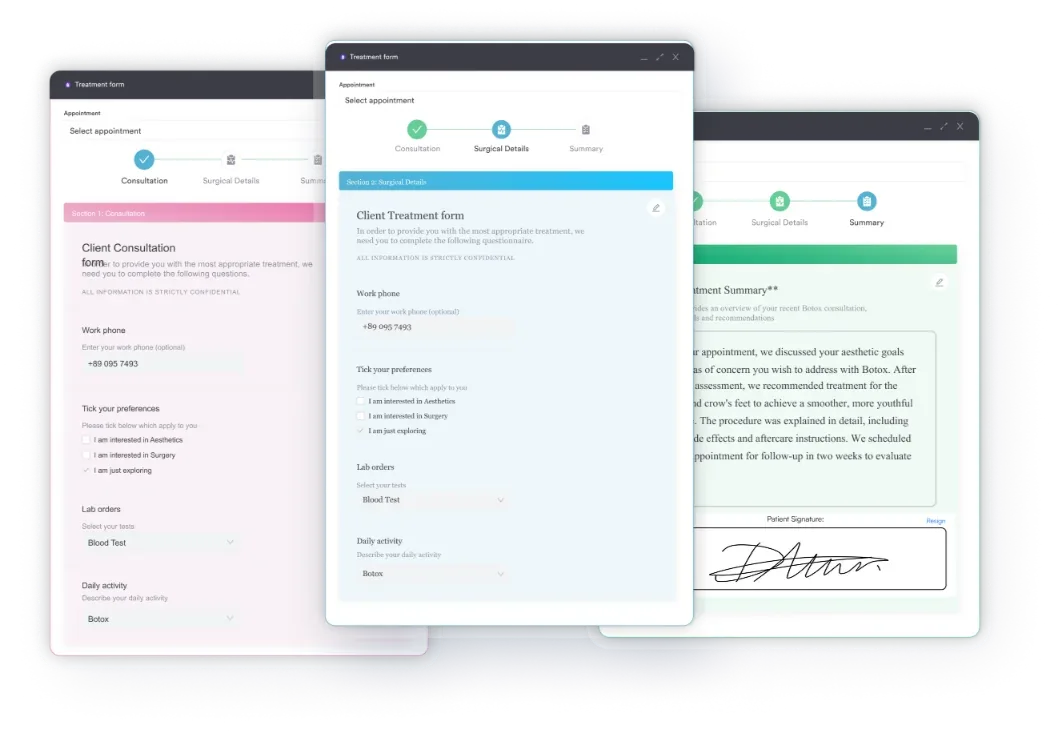
Many wound care and urgent care practices still document laterality, wound type, and foreign body details across separate intake forms, EHR fields, and paper charts. When those systems don’t talk to each other, a detail confirmed at check-in can go missing from the clinical note a coder relies on.
Pabau keeps intake forms, treatment notes, and billing inside one patient record. The laterality and foreign body details a clinician confirms at check-in carry straight through to coding and claims. Its documentation tools capture these fields at the point of care, without a separate re-entry step.
The result is fewer claims kicked back for missing laterality or foreign body notation, and less time coders spend chasing clarification from the treating clinician.

Pabau’s claims management tools help wound care and urgent care practices submit cleaner claims with accurate ICD-10 and CPT pairings. That reduces rework and speeds up reimbursement.

S41.022A only works as a clean claim when the clinical note nails all four elements: left shoulder, laceration, foreign body, and the right encounter character. Treat the 7th character as a decision made at every visit, not a default carried over from the first note.
Coders who standardize on these four elements avoid the back-and-forth of additional-information requests and keep reimbursement moving on schedule. Book a demo to see how Pabau helps wound care and urgent care practices capture accurate coding elements from intake through to claims submission.

Need another open-wound code with the same initial-encounter logic? S21.112A covers laceration documentation and 7th-character rules for a thorax injury.
Pairing wound care with a drainage procedure instead of a repair? CPT code 10060 covers incision and drainage billing for infected or abscessed wounds.
Need a code for wound closure requiring tissue transfer? CPT code 15241 details adjacent tissue transfer billing for complex wound repairs.
Coding a subsequent-encounter visit instead of an initial one? S90.416D shows how the 7th character shifts to routine follow-up care.
ICD-10 Code S41.022A is a billable ICD-10-CM diagnosis code. It describes a laceration with foreign body of the left shoulder during an initial encounter for active treatment. It is valid for use on Medicare, Medicaid, and private payer claims submitted on CMS-1500 or UB-04 forms. The code became effective October 1, 2025 under the FY2026 ICD-10-CM edition.
Yes, S41.022A is a billable and specific ICD-10-CM code valid for claim submission. It can be used on both CMS-1500 (professional claims) and UB-04 (facility claims) and is accepted by Medicare, Medicaid, TRICARE, and most commercial insurers. Parent codes S41.022 and S41.02 are not billable on their own.
The difference is the encounter type. S41.022A applies to the initial encounter, when the patient is in active treatment. S41.022D applies to the subsequent encounter, covering routine care during healing. S41.022S applies to a sequela, a late complication from the original injury such as chronic pain or scar contracture. Coders must select the appropriate 7th character based on the phase of care at each visit, not just the date of service.
The clinical record must explicitly document four elements. These are laterality (left shoulder), wound type (laceration, not abrasion or contusion), foreign body presence, and encounter type. Missing any one of them, especially the foreign body notation, is a common audit finding and a trigger for claim denial.
Common CPT pairings include wound repair codes 12001 and 12002 (simple repair by length) and 12032 (intermediate repair). Other frequent pairings are foreign body removal codes 20520 and 20525 (by depth), debridement code 97597, and ED visit code 99283. The appropriate CPT depends on the complexity of the repair and depth of foreign body removal. Always verify payer-specific bundling rules before submitting multiple CPT codes on the same claim.
Assign S41.022A for the initial encounter when the clinical note confirms: (1) left shoulder, (2) laceration wound type, (3) foreign body present. If the patient is in follow-up during the healing phase, use S41.022D instead. Use S41.022S for any late complications arising from the original injury. Verify the appropriate 7th character at every encounter, not just the first visit.