HCPCS code E0198: Water pressure pad billing guide
HCPCS code E0198 is a water pad for a standard mattress HCPCS code E0198 is the ...

Last Updated: Oct 13, 2026

CPT code 00948 describes anesthesia for vaginal procedures including biopsy of labia, vagina, cervix, or endometrium, and cervical cerclage.
The code carries a base unit value of 4 per the ASA Relative Value Guide. Total payment adds time units, then applies the Medicare conversion factor and GPCI.
Physical status modifiers (P1-P6), qualifying circumstance codes (99100-99140), and procedural modifiers like 59 and QS can all affect reimbursement. Not every commercial payer reimburses each add-on.
Practice management software like Pabau helps OB/GYN and women’s health practices track anesthesia billing workflows, modifier requirements, and documentation compliance in one place.
CPT code 00948 describes anesthesia for vaginal procedures, including biopsy of the labia, vagina, cervix, or endometrium, and cervical cerclage. It carries a base unit value of 4 under the ASA Relative Value Guide. Anesthesiologists bill it for two scenarios: diagnostic biopsy and therapeutic cervical cerclage during pregnancy.
Selecting the wrong code from the 00940-00952 family is the most common error in vaginal-procedure anesthesia billing. IVF and reproductive coding presents similar challenges, so confirm the operative note supports cerclage or labia biopsy before billing 00948.
According to the American Medical Association (AMA), CPT code 00948 describes: Anesthesia for vaginal procedures (including biopsy of labia, vagina, cervix, or endometrium; cervical cerclage). This is the official AMA descriptor. Coders should use it verbatim when verifying coverage with payers.
The procedures covered under CPT code 00948 fall into two distinct clinical categories. Biopsy procedures address diagnostic tissue sampling from female genital structures. Cervical cerclage is a separate therapeutic intervention used during pregnancy to reinforce an incompetent cervix. Both fall within the same anesthesia code because they share a similar level of anesthetic complexity and patient positioning requirements.
CPT code 00948 is part of the AMA’s anesthesia section for procedures on the female genital system. It sits in the 00940-00952 family, which covers the full range of vaginal, vulvar, and perineal anesthesia services. The OB/GYN practice software context matters here: anesthesiologists billing for these cases need to document the specific procedure performed to justify code selection.
Every anesthesia CPT code carries a base unit value assigned by the American Society of Anesthesiologists (ASA) Relative Value Guide. For CPT code 00948, the base unit value is 4 units. This figure reflects the relative complexity of providing anesthesia for vaginal procedures compared to other anesthesia services.
Base units are not reimbursement dollars. They are one input in the anesthesia payment formula. A code with 3 base units needs fewer billable units to reach the same reimbursement as a code with 7 or 10 base units. That holds true all else being equal. Coders working with other CPT codes in different specialties will recognize this same base-unit logic, though the values vary substantially by procedure complexity.
The ASA updates the Relative Value Guide annually. Always verify the current base unit value against the most recent ASA RVG or CMS tables before billing, as values can change between fiscal years.
Medicare uses a standardized formula for all anesthesia reimbursement. Understanding it prevents calculation errors that cause underpayments or claim adjustments. The claims management workflows for anesthesia differ from standard E/M billing precisely because of this time-based formula.
Place of service matters too. CPT 00948 claims from an ambulatory surgical center, hospital outpatient department, or inpatient hospital can carry different payer-contracted rates. The code and base units stay the same regardless of setting.
The standard CMS formula is: (Base Units + Time Units) x Conversion Factor x GPCI
Assume a cervical cerclage case with 45 minutes of anesthesia time in a standard Medicare locality (GPCI = 1.0):
This example is illustrative. Actual reimbursement varies by locality, payer, and any applicable modifier unit add-ons. Commercial payers may use different conversion factors and may not apply GPCI in the same way as Medicare. Always confirm rates using the FastRVU RVU lookup tool or the CMS MPFS search for current figures.
Medicare anesthesia payment rates shift each year when CMS finalizes the Medicare Physician Fee Schedule (MPFS). Two variables drive the change: the anesthesia conversion factor and the GPCI values for each locality.
For 2026, CMS finalized the Medicare anesthesia conversion factor at $20.4976 per unit for clinicians not participating in a qualifying Alternative Payment Model (APM). Participants in a qualifying APM use $20.5998 per unit instead. Locality-specific GPCI adjustments still apply on top of this base figure. Use the CMS MPFS lookup tool to confirm the current rate for your locality.
The AAPC Codify CPT lookup provides a searchable reference for code verification alongside payer policy crosswalks. For locality-specific Medicare payment calculations, the CMS Physician Fee Schedule lookup tool remains the primary source. Geographic adjustments can shift expected payment by 15-25% between high-cost localities (such as San Francisco or Manhattan) and low-cost rural localities.
Track anesthesia conversion factor updates each November when CMS releases the MPFS final rule. Set a calendar reminder to update your internal fee schedule templates before January 1 to avoid billing using the prior year’s rates.
Anesthesia coding uses two distinct modifier categories that do not apply to most other CPT codes. Both affect reimbursement and must be applied correctly. The documentation requirements for compliance in medical billing underscore why proper modifier selection matters: payer audits routinely flag miscoded anesthesia claims.
Physical status (P) modifiers reflect the patient’s health condition at the time of anesthesia. The ASA developed these classifications; they appear on the claim to justify the complexity of care provided. Not all payers reimburse additional units for P modifiers; verify payer policy before billing.
Medicare does not reimburse additional units for P modifiers. Many commercial payers do. Include the appropriate P modifier on every anesthesia claim regardless of payer, as it supports medical necessity and satisfies documentation standards.
Qualifying circumstance codes (99100-99140) are add-on codes reported alongside CPT code 00948 when specific clinical conditions complicate the anesthesia. These carry additional unit values. Again, commercial payer acceptance varies.
General anesthesia provider modifiers also apply to CPT code 00948 claims. Modifier AA means the anesthesiologist personally performed the service, while QK covers medical direction of two to four concurrent procedures. QX marks a CRNA service under medical direction, and QY covers medical direction of a single CRNA. Modifier AD applies when a physician provides medical supervision for more than four concurrent anesthesia procedures. Each modifier affects the billing percentage and payer reimbursement calculation, so report the modifier that matches the supervision arrangement documented in the record. A payer reviewing this code looks for the reasoning in the note, not only the conclusion, so the documentation level matters. Where a payer still requires a paper claim, the practice needs the current revision of the form.
A smaller set of procedural modifiers can also apply to CPT code 00948 claims, though less often than the physical status and provider modifiers above. Documentation must support each one before it goes on the claim.
Modifier 47 also exists for anesthesia billing, but the operating surgeon reports it, not the anesthesiologist billing CPT code 00948. Skip it on the anesthesia claim itself.
Payers require a supporting ICD-10-CM diagnosis code on every anesthesia claim to establish medical necessity. For cervical cerclage anesthesia billing, the diagnosis code links the anesthetic service to the documented obstetric indication. The fee schedule documentation requirements across payer types reinforce why clean ICD-10 pairing is essential before submission.
Verify ICD-10 pairings against current payer Local Coverage Determinations (LCDs) before submitting. Some payers publish specific covered diagnosis lists for anesthesia claims. Anesthesia-specific diagnosis coding follows the same logic used for ICD-10 code ICD-10 code O74.4. The diagnosis must match the documented clinical indication exactly, not merely approximate it.
Selecting the wrong sibling code is the single most common error in vaginal anesthesia billing. The 00940-00952 family covers the full range of female genital system procedures. Understanding where each code’s scope begins and ends prevents the upcoding and downcoding denials that account for a meaningful share of anesthesia claim rejections. Practices managing multiple CPT code types across different specialties benefit from structured reference tables for each code family.
The key distinction between 00940 and 00948 is cervical cerclage. Both codes cover biopsy of the labia, vagina, cervix, or endometrium, but only 00948 adds cervical cerclage to its descriptor. When the surgical record documents a cerclage procedure, CPT code 00948 is the correct selection.
Incomplete anesthesia records are a leading cause of post-payment audits. Medicare’s Claims Processing Manual Chapter 12 and payer policies generally require the same core documentation elements for any anesthesia claim. Using digital clinical forms structured around these requirements reduces the risk of missing documentation that triggers denials.

CPT code 00948 carries no standard surgical global period, so Medicare’s global surgery indicator does not apply to it. National Correct Coding Initiative edits and Medically Unlikely Edits still apply. Verify the current CMS edit tables before submitting a claim with multiple codes on the same date.
Practices billing CPT code 00948 for obstetric cerclage cases should also retain the obstetric indications in the record. The same documentation principle applies to ICD-10 code O85. The diagnosis record must independently support the procedure code selected.
Anesthesia billing denials for vaginal procedure codes cluster around a predictable set of errors. Addressing them proactively is more efficient than managing appeals after submission. CPT code 00792 follows a similar pattern. Specificity and documentation alignment are the two most consistent failure points across anesthesia claims.
Audit five consecutive CPT 00948 claims each quarter: pull the operative note, the anesthesia record, and the billed claim. Cross-check time units, P modifier documentation, and ICD-10 pairing. Most billing errors are systematic – one audit cycle typically reveals a pattern you can fix once rather than case by case.
OB/GYN and women’s health practices billing CPT code 00948 juggle physical status modifiers, qualifying circumstance codes, and ICD-10 pairings across every cerclage and biopsy case. Practice management software built for pelvic health practices keeps that documentation trail in one place. Missing one piece on a single claim is what triggers most of the denials covered above.
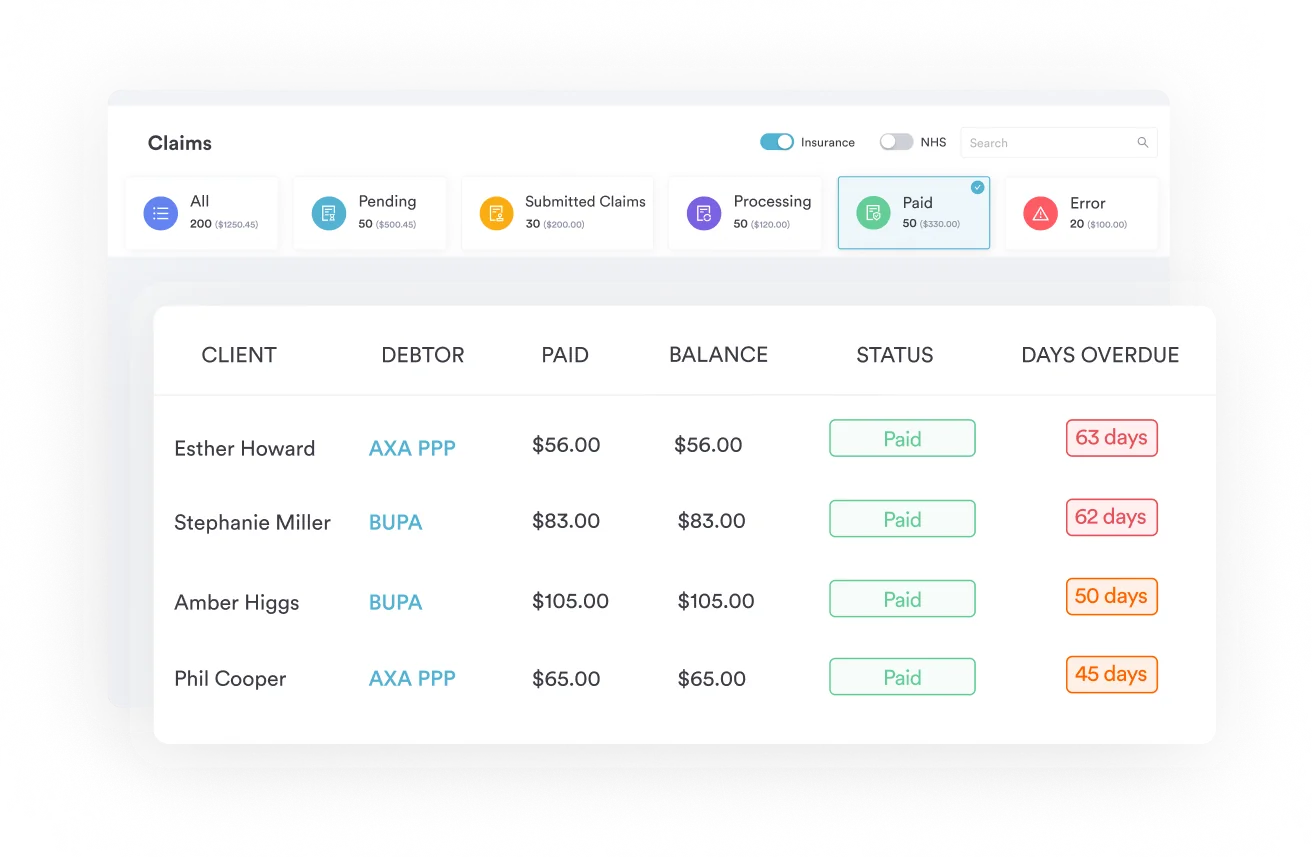
Pabau centralizes the anesthesia record, the operative note, and the billed claim in one patient file. A biller can then confirm the P modifier, the qualifying circumstance code, and the ICD-10 pairing before submission, not after a denial. Pabau’s claims management tools flag missing documentation and track modifier use across a provider’s caseload.

Pabau’s claims management tools help OB/GYN and women’s health practices track anesthesia records, modifier requirements, and documentation compliance. See how it works for your practice.

CPT code 00948 is a straightforward code to identify but easy to bill incorrectly. The base unit value, time calculations, modifier requirements, and ICD-10 pairing each introduce a point of failure that experienced anesthesia billers know to check systematically.
For OB/GYN and women’s health practices managing cerclage and biopsy cases, Pabau’s claims management software tracks documentation requirements and flags modifier inconsistencies. It also supports clean claim submission. To see how it works for your anesthesia billing operations, book a demo.

Coding an obstructed labor case? ICD-10 code O66.9 covers the diagnosis pairing for obstructed labor, unspecified.
Coding an intrapartum complication? ICD-10 code O67.8 covers the diagnosis pairing for other intrapartum hemorrhage claims.
Billing a mandibular reconstruction case? Mandibular reconstruction billing guide covers sagittal split reconstruction of the mandible using wire or intermaxillary fixation instead of plates and screws.
CPT code 00948 is an anesthesia code that describes services for vaginal procedures including biopsy of the labia, vagina, cervix, or endometrium, and cervical cerclage. It carries a base unit value of 4 per the ASA Relative Value Guide. Anesthesiologists and CRNAs use it to bill for these procedures under Medicare and commercial payers.
CPT code 00948 has a base unit value of 4 per the American Society of Anesthesiologists Relative Value Guide. Base units are combined with time units and multiplied by the anesthesia conversion factor and GPCI to calculate total reimbursement.
Three modifier categories apply to CPT code 00948. Physical status modifiers (P1-P6) reflect patient health complexity, and provider modifiers (AA, QK, QX, QY, QZ, AD) reflect the supervision arrangement. Procedural modifiers like 22, 59, or QS may also apply, and qualifying circumstance codes (99100-99140) can apply when documented.
The most common ICD-10 pairing for cerclage cases is O34.30, for maternal care for cervical incompetence. Cervical biopsy cases pair with N87.0 or N87.1, for mild or moderate cervical dysplasia. Endometrial biopsy cases pair with N85.0, for endometrial hyperplasia. Always verify pairings against current payer LCDs for your locality.
Under Medicare, one time unit equals 15 minutes of anesthesia time. For a 45-minute case, that produces 3 time units. Adding the 4 base units gives a total of 7 units before applying the conversion factor and GPCI. Some commercial payers use different time increments, so verify payer policy before calculating expected reimbursement.
Prior authorization requirements for CPT code 00948 vary by payer and plan. Medicare generally does not require prior authorization for covered anesthesia services, but commercial payers may require it, particularly for elective biopsy procedures. Check payer-specific authorization policies before scheduling.
The Geographic Practice Cost Index (GPCI) adjusts anesthesia reimbursement for regional cost differences. High-cost localities such as San Francisco or Manhattan have GPCI values above 1.0, increasing payment. Rural or lower-cost localities have GPCI values below 1.0, reducing payment. Locality-specific GPCI values are published annually in the CMS MPFS final rule.