ICD-10 Code Y76.0: Diagnostic obstetric and gynecological devices
ICD-10 Code Y76.0: Definition and billable status ICD-10 Code Y76.0 is a valid, ...

Last Updated: Oct 23, 2026
Billable Code Specific Code
O74.4 is the billable ICD-10-CM code for toxic reaction to local anesthesia during labor and delivery.
Coders reach for the code when a chart note like "reaction to epidural" turns out to describe a genuine systemic toxic event. An allergic response or a procedural complication, such as a dural puncture, reads differently in the chart, and only the toxic reaction maps to O74.4.
Let Pabau's smart automation suggest the right codes, reduce claim denials, and keep your practice compliant—effortlessly.
Automate repetitive tasks and focus on what matters most—your patients.
Reduce coding errors and ensure compliance with the latest regulations.
Clean claims, fewer denials, and faster reimbursements.
Powerful insights and reporting to help your practice thrive.
HIPAA compliant SOC 2 certified GDPR-compliant Trusted by 4,000+ clinics worldwide

ICD-10 code O74.4 is a billable, specific ICD-10-CM code for a toxic reaction to local anesthesia during labor and delivery.
It’s valid for the 2026 ICD-10-CM code year, effective October 1, 2025, and falls under parent category O74.
Document local anesthetic systemic toxicity (LAST) symptoms, whether CNS or cardiovascular, explicitly in the clinical record to support this code.
Practice management software like Pabau checks that a claim’s insurer-submission fields are complete before an O74.4 claim goes out.
ICD-10 code O74.4 is a billable, specific ICD-10-CM diagnosis code. Its full official description is: Toxic reaction to local anesthesia during labor and delivery. Coders and clinicians can use it directly for reimbursement without selecting a more specific sub-code, since there are no further subdivisions beneath O74.4.
The 2026 edition of ICD-10-CM O74.4 became effective on October 1, 2025. The annual update cycle is maintained jointly by the Centers for Medicare and Medicaid Services (CMS) and the CDC’s National Center for Health Statistics (NCHS). It has been valid since the original ICD-10-CM implementation date of October 1, 2015.
O74.4 captures the clinical event known as local anesthetic systemic toxicity (LAST). LAST is a rare but serious complication where a local anesthetic agent enters the systemic circulation at a concentration high enough to produce toxic effects.
In obstetric patients, this typically follows epidural, spinal, or pudendal nerve block administration during labor and delivery.
LAST presents through two primary organ-system pathways. CNS toxicity appears first, at lower anesthetic plasma concentrations. It includes perioral numbness, metallic taste, tinnitus, and agitation, progressing to seizures and loss of consciousness at higher levels.
Cardiovascular toxicity follows at higher concentrations, producing arrhythmias, conduction blocks, and in severe cases ventricular fibrillation.
Obstetric patients carry specific risk factors. Increased cardiac output during labor accelerates systemic absorption. Physiologic changes in pregnancy, including reduced plasma protein binding and elevated progesterone, can alter anesthetic pharmacokinetics.
The CDC’s ICD-10-CM coding tool classifies the resulting complication under O74 when it occurs specifically intrapartum.
None of these mechanisms changes the ICD-10-CM code. The code is event-based: toxic reaction to local anesthesia, occurring during labor and delivery. The specific agent or mechanism is documented in the clinical record but does not alter code selection.
Coders searching by clinical description rather than code number will encounter several accepted alternate names. All of the following map to ICD-10 code O74.4 for documentation and reimbursement purposes:
When querying records or auditing obstetric charts, any of these terms in the clinical documentation can support assignment of O74.4. The event must occur during labor and delivery, not after it, for that support to hold. Post-delivery anesthetic reactions would require separate code consideration outside the O74 block.
When a delivery chart notes ‘adverse reaction to epidural’ without specifying the reaction type, query the delivering provider before assigning O74.4. Confirm whether the reaction was toxic (systemic absorption), allergic (immune-mediated), or a procedural complication such as dural puncture. Each maps to a different O74 sibling code.
O74.4 sits within the O74 category, which covers all anesthesia-related complications arising specifically during labor and delivery. O74 itself is a non-billable header code. You must select a specific child code instead. The full sibling code set within O74 is listed below.
The siblings split by the kind of event the chart documents. O74.0 covers aspiration pneumonitis due to anesthesia, not a toxic reaction to a local anesthetic agent.
The distinction between O74.4 and O74.2 or O74.3 is a common coding question. When LAST produces cardiac arrhythmia as its primary manifestation, coders must determine how to sequence the two conditions.
Either the arrhythmia is a sequela of the toxic reaction, coded as O74.4 with O74.2 added, or the cardiac complication stands independently. For obstetric anesthesia teams using OB/GYN EMR software, structured documentation workflows reduce this ambiguity at the point of care.
O74.4 follows the general ICD-10-CM coding guidelines for obstetric conditions. These are published by the AAPC’s code database and the official ICD-10-CM guidelines for coding and reporting. Key rules to apply:
The clinical record must contain enough specificity to support O74.4 over a less-specific sibling code. Coders relying on complete, structured obstetric records will code faster and with fewer queries.
Facilities using intake and clinical forms can embed anesthesia documentation prompts directly into the labor and delivery workflow. Practices across women’s health.
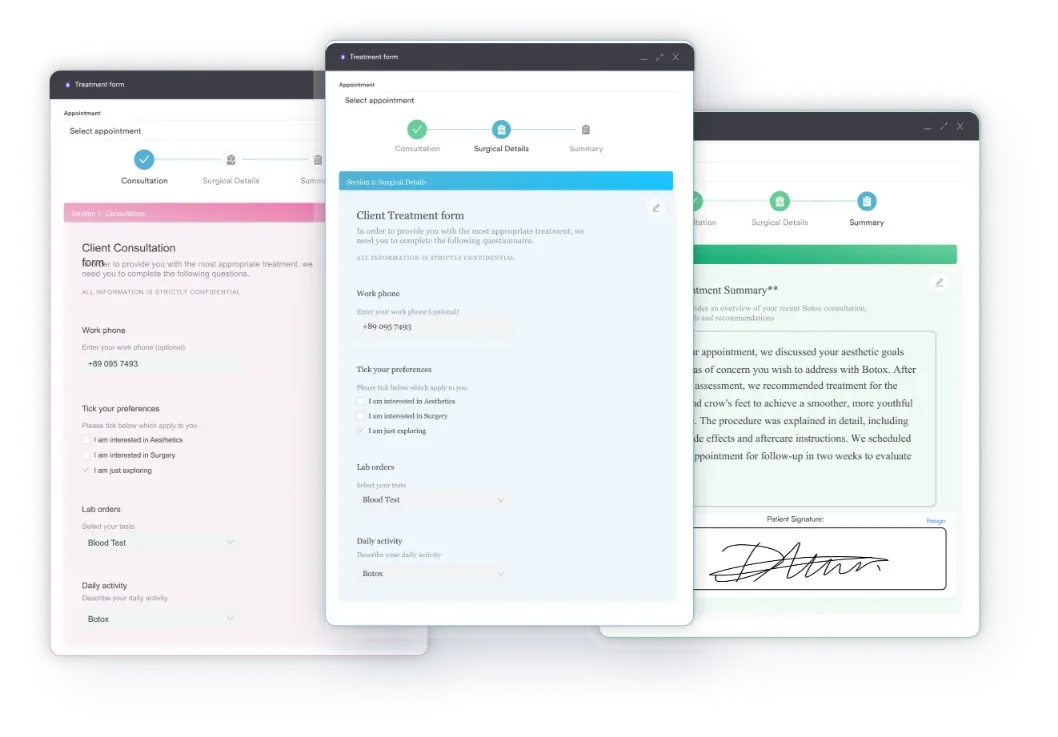
Minimum documentation elements to support O74.4:
When any of these elements is absent, the coder should query the provider before assigning O74.4. Assigning a specific code without supporting documentation creates claim denial risk.
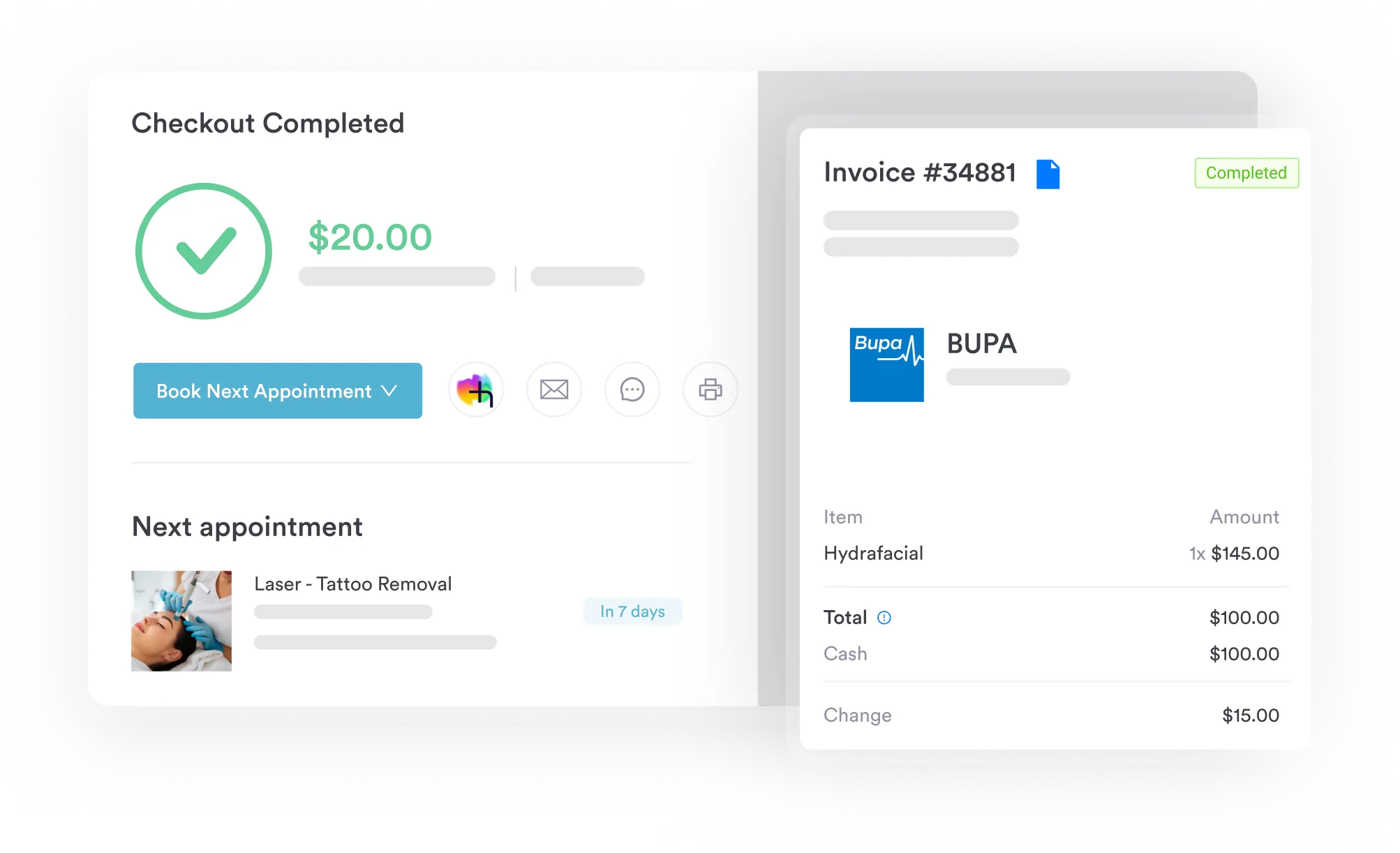
Practice management software like Pabau addresses a narrower piece of this problem. Its claims management tools check whether the insurer-submission fields on a claim, such as membership numbers and authorization codes, are complete before it goes out.
That check doesn’t extend to the clinical documentation itself, so the query step above still falls to the coder.
For inpatient hospital claims, O74.4 carries a POA indicator. Because anesthetic complications by definition arise during the hospital encounter, O74.4 is typically coded as “N,” not present on admission. This matters for hospitals subject to the CMS Hospital-Acquired Condition (HAC) program.
DRG assignment for labor and delivery encounters with an anesthetic complication depends on the principal diagnosis and the presence of complicating or comorbid conditions (MCC/CC). O74.4 may function as a CC, depending on the MS-DRG grouper year in use.
Check the applicable fiscal year’s DRG weight tables for the exact figures. Reimbursement amounts are payer-specific and aren’t guaranteed by code assignment alone.
For practices managing HIPAA compliance across their offices, keeping anesthesia complication records clean reduces audit exposure and supports clean claims submission.
For facilities still referencing legacy systems or reconciling historical records, the General Equivalence Mapping (GEM) for O74.4 traces back to ICD-9-CM. Note that ICD-9 to ICD-10 crosswalks are approximate mappings, not exact equivalents.
Always apply ICD-10-CM guidelines for current encounters rather than relying on crosswalk output alone.
The ICD-9 coding system did not have a code dedicated exclusively to local anesthetic toxic reaction during delivery. The 668.xx block covered broader anesthesia complications, making the ICD-10 O74.4 a more clinically precise code than its legacy predecessors.
Research teams working with historical Medicare data can use the WHO ICD-10 browser and CMS GEM files to validate bidirectional mappings for retrospective analysis.
When using GEM files for retrospective research involving O74.4, flag records coded under ICD-9 668.81 or 668.82 as ‘approximate matches’ rather than exact equivalents. The ICD-9 block captured broader anesthesia complications. Not all mapped records will represent true local anesthetic toxicity events.
Obstetric practices coding O74.4 usually hit the same snag. The anesthesia detail lives in one clinician’s note, and the delivery summary lives in another. The coder has to piece both together before a claim can go out clean.
Pabau keeps documentation and claims submission inside the same record instead of splitting them across systems. Digital intake and treatment-note tools let the delivering team log the anesthetic agent, route, and timing directly against the encounter. That detail then doesn’t depend on a separate note written later.
The claims side already checks that insurer-submission fields are complete before a claim goes out. That catches the kind of missing field that gets a submission bounced back from the payer. Together, the two pieces cut down on coder queries chasing missing anesthesia detail. They also cut down on O74.4 claims denied over an incomplete submission field rather than the clinical picture itself. Coverage verification also surfaces the deductible position, which changes what the practice collects at the desk. The billing cycle for one claim can run weeks, and most of that time is spent waiting on a payer.

Pabau keeps clinical documentation and claims management in a single obstetric workflow, so anesthesia detail reaches the coder complete and O74.4 claims go out clean.

Anesthesia complication coding in obstetrics comes down to precision. O74.4 applies only when a local anesthetic, not a general one, produces a genuine systemic toxic reaction during labor and delivery. Getting a coder to that answer fast depends on one thing. The chart needs to capture the reaction type, the agent, the route, and the timing before it closes.
Building that documentation habit into the workflow beats chasing missing details after a claim bounces. Book a demo to see how Pabau keeps anesthesia documentation and O74.4 claims moving together.

Coding a delivery complicated by unexplained bleeding? O67.8 covers intrapartum hemorrhage that doesn’t fit the coagulation-defect code next to it.
Need the code for labor that stalls without a clear mechanical cause? O66.9 is the code for obstructed labor when the record doesn’t specify why.
Looking for the code covering weak or uncoordinated contractions? O62.2 applies to other uterine inertia during labor.
Only local anesthetics. A toxic reaction to general anesthesia during labor and delivery isn’t coded O74.4. A different O74 sibling code applies instead, most often O74.8 for other complications, depending on how the reaction presents.
No. O74.4 applies to a local anesthetic toxic reaction during the labor and delivery encounter, regardless of delivery method. The mode of delivery gets captured separately, through an outcome-of-delivery or procedure code on the same claim.
No. Coding conventions require a provider’s diagnosis statement, not just a nursing observation. A nurse can document symptoms like tremor or tinnitus, but confirming the toxic reaction itself needs a note from the anesthesiologist, CRNA, or delivering physician.
Rarely on its own. Obstetric coding guidelines generally sequence the outcome-of-delivery code first, for an encounter that ends in delivery. O74.4 is then reported as a secondary diagnosis for the complication that occurred during that same encounter.