



HCPCS code E0198: Water pressure pad billing guide
HCPCS code E0198 is a water pad for a standard mattress HCPCS code E0198 is the ...

Last Updated: Oct 13, 2026

CPT code 00873 describes anesthesia for extracorporeal shock wave lithotripsy (ESWL) performed without water bath immersion
The code carries 5 base anesthesia units; total payment uses the formula (Base + Time + Modifying Units) times the Medicare conversion factor
Modifier selection is the most common denial trigger: AA, QX, QY, QK, and QS each apply in distinct provider and supervision scenarios
Practice management software like Pabau keeps anesthesia documentation, treatment notes, and diagnosis records organized and audit-ready, though it doesn’t calculate anesthesia units or submit claims itself
Most ESWL claims that get denied come back for the same two reasons: a missing modifier or a mismatched ICD-10 code. CPT code 00873 sits at the intersection of anesthesia billing and urological procedure coding, and that overlap is where documentation gaps quietly become revenue losses.
The American Medical Association (AMA), which maintains the CPT code set, assigns 00873 specifically to shock wave lithotripsy performed without water bath immersion, a distinction that directly determines which code you submit and at what reimbursement level.
This reference covers the official code description, base unit value, the anesthesia payment formula, applicable modifiers, paired ICD-10 diagnosis codes, and the billing guidelines that keep 00873 claims clean on first submission.
CPT code 00873 describes anesthesia for lithotripsy, extracorporeal shock wave, without water bath. It sits within the CPT anesthesia section covering procedures on the lower abdomen (codes 00800-00882). The AMA CPT Editorial Panel maintains the code, which is used primarily for ESWL cases where the patient is not immersed in a water tank during the procedure.
Extracorporeal shock wave lithotripsy uses focused acoustic pulses to fragment kidney stones, ureter stones, or other calculi without surgical incision. In the early generations of ESWL equipment, patients were submerged in a water bath to transmit the shock waves.
Modern “dry” lithotripsy systems use a water cushion at the contact point instead of full immersion, which is the clinical distinction that separates 00873 from its adjacent code, 00872. Kidney stones are more common in men.
CPT code 00873 carries 5 base anesthesia units, as confirmed by the American Society of Anesthesiologists (ASA) Relative Value Guide and the CMS Physician Fee Schedule. Base units represent the complexity and risk inherent to the procedure itself, independent of how long the case runs.
Total anesthesia payment uses this formula:
For the example above, a P3 patient with a 60-minute ESWL case produces 10 total anesthesia units. Multiply by the Medicare conversion factor for your locality, published annually at the CMS Anesthesiologists Center, to arrive at the allowable amount.
Always verify the conversion factor in effect for the service date, as CMS updates it each calendar year through the Medicare Physician Fee Schedule final rule.
Reimbursement for CPT code 00873 varies by payer and geographic locality. Anesthesia codes do not follow the facility/non-facility payment split that applies to most Physician Fee Schedule codes. Instead, Medicare pays (base units + time units) multiplied by a locality-specific anesthesia conversion factor, regardless of whether the case is performed in a hospital, ambulatory surgical center, or office setting. Risk of complications carries more weight than volume of notes when the visit level is questioned.
For the current anesthesia conversion factor by locality, check the PFS final rule Addenda D and E published each year. The conversion factor changes annually and varies by locality, so confirm the figure in effect for the service date before estimating reimbursement.
Private payer rates are negotiated separately and typically expressed as a percentage of Medicare or as a fixed contracted rate. Medicaid rates by state are published on individual state Medicaid fee schedule pages and are generally lower than Medicare allowables.
Always confirm coverage and any prior authorization requirements with the specific payer before performing the procedure, as coverage policies for ESWL anesthesia can vary by plan and region.
Comparing practice management systems for medical teams is worth the effort before anesthesia time-unit billing becomes a spreadsheet job.
Modifier selection is the most frequent source of claim denials for anesthesia codes. Each modifier signals to the payer who administered the anesthesia, what level of supervision was in place, and whether the service qualifies as monitored anesthesia care (MAC). Submitting the wrong modifier, or omitting one entirely, triggers a medical necessity review or outright denial.
Physical status modifiers (P1 through P6) are appended separately and affect the modifying unit calculation. P1 and P2 carry 0 additional units; P3 adds 1 unit; P4 adds 2 units; P5 adds 3 units.
Document the physical status in the anesthesia record and confirm it matches the modifier submitted on the claim. Mismatches between the record and the claim are a common audit trigger.
CPT code 00873 requires a supporting ICD-10 diagnosis code that reflects the documented indication for the lithotripsy procedure. The diagnosis must be present in the clinical record before the claim is submitted, ensuring the code reflects documented findings rather than a billing-driven selection.
The digital documentation workflows used to capture pre-procedure assessments are the right place to confirm the diagnosis is recorded before anesthesia is administered.
Practices treating bladder and pelvic-region calculi. Always confirm paired diagnosis codes against your payer’s local coverage determination (LCD) before submitting.
Some payers publish approved ICD-10 lists for ESWL coverage, and submitting an unlisted code, even one that is clinically accurate, can result in a medical necessity denial. Payer-specific guidance supersedes general coding conventions when coverage is at issue.
The single clinical distinction between 00872 and 00873 is whether the patient undergoes water bath immersion during the procedure. Early ESWL systems (notably the Dornier HM3) required full patient immersion in a water tank for shock wave transmission.
Modern dry lithotripsy systems couple the shock waves through a water-filled cushion pressed against the skin, eliminating the bath entirely. That engineering shift is what makes the 00872 vs 00873 choice a documentation question, not just a lookup: the operative note must specify the technique used.
CPT 00872 carries 7 base units to CPT 00873’s 5, a 2-unit difference that changes the total payment calculation even though the two scenarios look similar on paper. The payer cannot distinguish between them without the operative report.
Submitting 00873 when the record says water bath, or 00872 when the record says dry coupling, is a coding error that can trigger an audit of the entire anesthesia record. The correct code follows the documentation, not the coder’s assumption about which system the facility uses.
Audit your lithotripsy operative notes quarterly. Confirm each note specifies the ESWL coupling method. A single template note that omits this detail across dozens of cases creates systematic 00872/00873 miscoding that payers flag in retrospective claim reviews.
Clean claims for CPT code 00873 require four elements to be correct simultaneously: the procedure code, the modifier reflecting provider type and supervision, the physical status modifier, and the paired ICD-10 diagnosis code. Any one of these being missing or inconsistent with the clinical record produces a denial.
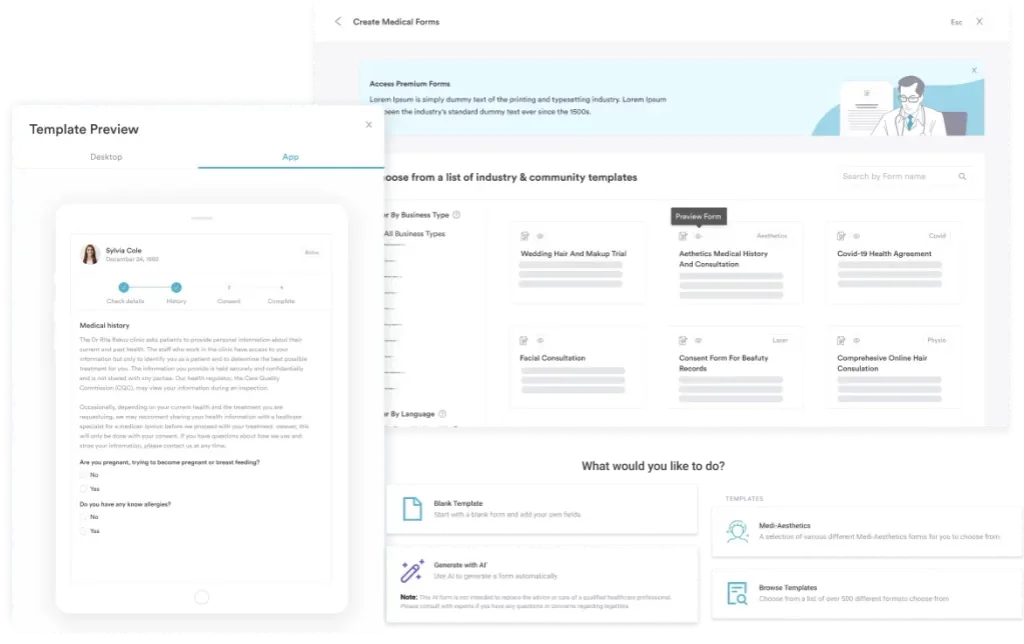
The standardized medical forms and pre-submission checklists that billing teams use daily exist precisely because the same denial patterns recur. Below are the top triggers for 00873 claims, based on standard payer claim edit logic.

Practice management software like Pabau centralizes anesthesia records, treatment notes, and diagnosis documentation, so your billing team always has clean, complete records to work from.

CPT code 00873 sits within a short series of anesthesia codes covering lower abdomen and urological procedures. Knowing the adjacent codes reduces coding errors when documentation is ambiguous about which procedure was actually performed. The same base-plus-time-unit formula applies across the entire anesthesia code set.
Manual anesthesia billing is where small arithmetic errors compound into large revenue problems. Time unit rounding, physical status modifier mismatches, and missing provider supervision modifiers are not complex conceptually, but they are easy to get wrong under volume when each step is handled separately.
Well-organized documentation and records management tools keep the physical status, anesthesia times, and diagnosis codes attached to the same record, so billing staff aren’t assembling a clean claim from paper charts and separate systems.
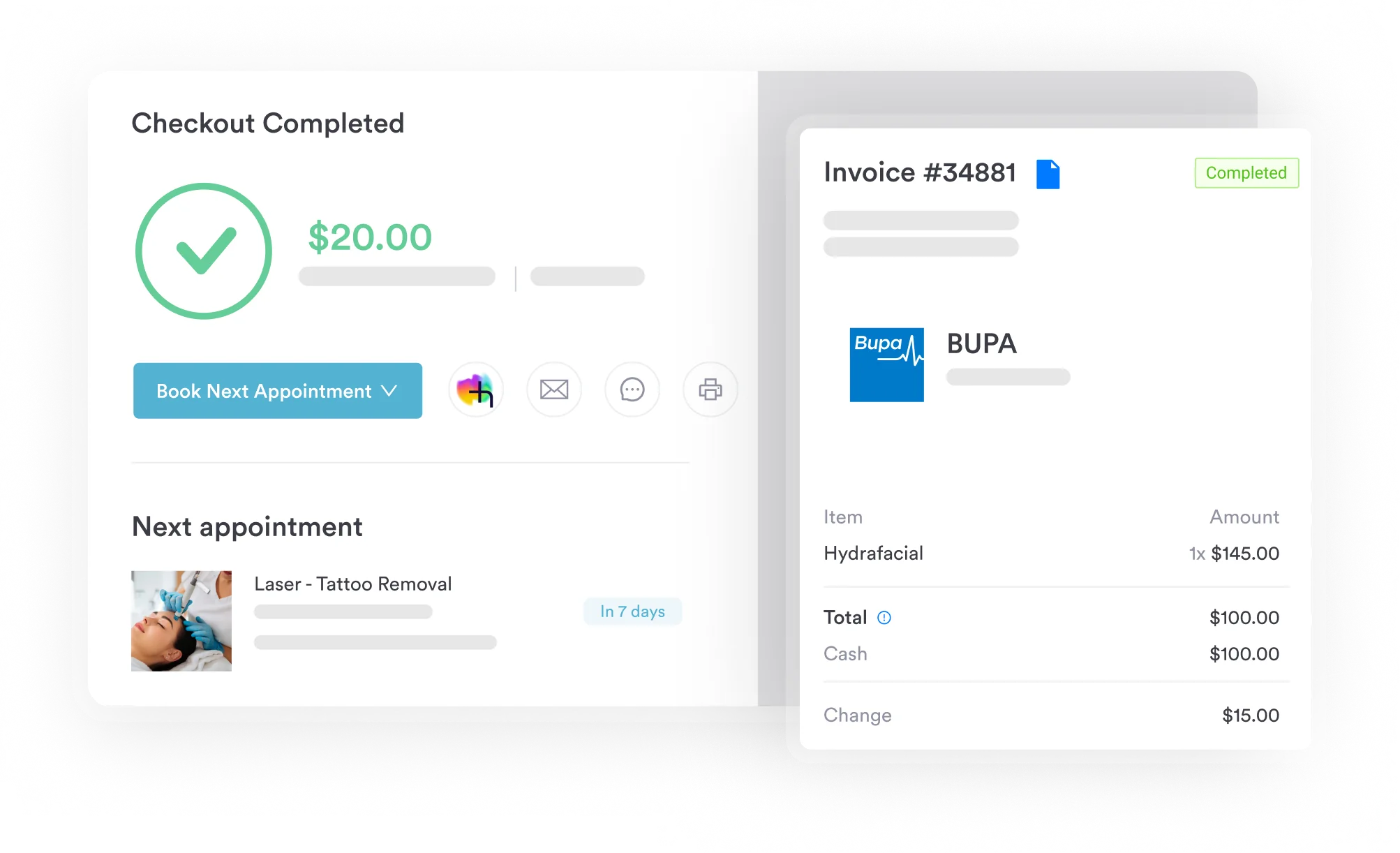
Centralized documentation also makes it easier for billing staff to catch missing modifiers and ICD-10 codes that aren’t on the payer’s LCD before a claim leaves the practice, since the anesthesia record and the diagnosis sit in the same system.
For practices building out their billing workflows, the practice management software features that support revenue cycle management include denial tracking, payer-specific rule libraries, and automated eligibility verification.
These connect directly to patient data security requirements, keeping claim data protected across every step from documentation to payment posting. The AAPC Codify CPT lookup is also useful for cross-referencing code-level guidance during the pre-submission review process.
Set a payer-specific rule in your claim scrubber: any 00873 claim missing both an AA/QX/QY/QK/QZ modifier AND a physical status modifier should be blocked at scrubbing, not returned after submission. Catching it at the scrubber costs nothing; chasing the denial costs staff time and delays payment by 30-60 days.
CPT code 00873 is a specific, well-defined anesthesia code with a straightforward clinical trigger: ESWL performed without water bath immersion. The billing complexity sits in the modifier layer and the ICD-10 pairing, not in the code itself. Getting those two elements right consistently is the difference between a clean claim and a denial queue that requires rework.
Pabau’s billing compliance checklist framework and documentation tools help anesthesia practices keep records, treatment notes, and diagnosis codes organized and audit-ready, so billing staff can focus on the cases that genuinely need clinical judgment rather than chasing down missing paperwork. If you want to see how that works in practice, book a demo with the Pabau team.

Billing a subcutaneous filler injection? Subcutaneous filler injection billing guide covers injections of filling material such as collagen between 1.1 and 5.0 cc, the middle tier of a four-code family.
Need another manifestation-code sequencing example? N08 follows the same etiology-code-first sequencing logic as the N22 pairing above.
Billing anesthesia for a related urologic procedure? 00920 has its own base units and modifier rules worth checking.
Coding anesthesia outside urology? 00539 uses the same base-plus-time-unit formula for a different procedure type.
CPT code 00873 is used to bill anesthesia provided for extracorporeal shock wave lithotripsy (ESWL) performed without water bath immersion. It applies when an anesthesiologist or CRNA administers or monitors anesthesia during a kidney stone, ureter stone, or bladder stone fragmentation procedure using a modern dry-coupling ESWL system.
CPT 00873 has 5 base anesthesia units, as established by the ASA Relative Value Guide and confirmed in the CMS Physician Fee Schedule. These 5 units are added to time units (1 per 15 minutes) and any modifying units from the patient’s physical status to calculate total units for payment.
The primary modifiers are AA (anesthesiologist personally performing), QX (CRNA with physician direction), QY (anesthesiologist directing one CRNA), QK (directing 2-4 CRNAs), QZ (CRNA without medical direction), and QS (monitored anesthesia care). G8 or G9 apply when MAC is justified by procedure or patient complexity. A physical status modifier (P1-P6) is also required.
The fee equals (Base Units + Time Units + Modifying Units) multiplied by the Medicare conversion factor. For 00873: base units = 5; time units = total anesthesia minutes divided by 15; modifying units = physical status add-on (P3 = 1, P4 = 2, P5 = 3). Multiply the total by the current CMS locality-specific conversion factor, which changes annually with the Medicare Physician Fee Schedule.



