



HCPCS code E0198: Water pressure pad billing guide
HCPCS code E0198 is a water pad for a standard mattress HCPCS code E0198 is the ...

Last Updated: Oct 13, 2026

CPT Code 00920 describes anesthesia for procedures on male genitalia, including open urethral procedures, not otherwise specified.
The code carries 3 base units per the ASA Relative Value Guide; reimbursement is calculated as (Base Units + Time Units) x Conversion Factor.
Modifier selection is critical: AA for physician personally performing anesthesia, QZ for unsupervised CRNA, QK for medical direction – wrong modifier choice is a common False Claims Act risk.
Pabau’s claims management software helps anesthesia and urology billing teams apply modifiers accurately, track time units, and submit clean claims.
Anesthesia billing denials rarely stem from the wrong procedure code. More often, a claim for CPT Code 00920 fails because of a missing modifier, a miscounted time unit, or a diagnosis code that doesn’t support medical necessity.
The AMA’s CPT code set assigns this code to anesthesia services for male genitalia procedures, including open urethral work, but the billing mechanics around it require precise documentation to hold up under payer review.
This reference covers the official description, reimbursement formula, modifier table, 2026 fee schedule, ICD-10 crosswalk, and the documentation requirements that keep claims clean.
Anesthesiologists, CRNAs, and urology billing teams dealing with men’s health clinic workflows will find the modifier and documentation sections especially relevant, as those are the highest-risk areas for denial under this code.
CPT Code 00920 covers anesthesia for procedures on the male genitalia, including open urethral procedures, not otherwise specified.
The phrase “not otherwise specified” matters: this is the residual code for male genitalia anesthesia when no more specific code applies. If the procedure has its own dedicated anesthesia code (for example, 00921 for vasectomy), that more specific code takes precedence.
The code sits within the anesthesia genitourinary section. Procedures it commonly covers include anesthesia for penile surgery, scrotal procedures, and open urethral repairs when no more procedure-specific code is available.
Vasectomy under local anesthesia is not typically billed with 00920; a surgeon-administered local block is bundled into the surgical fee.
CPT Code 00920 carries 3 base units per the ASA Relative Value Guide as referenced by AAPC. Base units reflect the complexity and risk inherent in the procedure type, independent of how long the case takes. Time units are added on top, calculated separately from the actual anesthesia duration.
That is why base units vary so widely across the anesthesia section. Under CPT code 00562, anesthesia with a pump oxygenator carries 20 base units, nearly seven times the 3 assigned here.
Medicare calculates one time unit for every 15 minutes of anesthesia time. Most commercial payers follow the same 15-minute convention, though some use 10-minute increments. Count from when the anesthesia provider begins preparing the patient for anesthesia induction to the point when the patient can safely be placed under post-anesthesia care supervision.
The standard formula, confirmed by the CMS Physician Fee Schedule, is:
Total reimbursement = (Base Units + Time Units) x Conversion Factor
For a 30-minute case under CPT Code 00920 with a Medicare conversion factor of $21.00 (locality-specific; verify current rates via the CMS fee schedule lookup before billing): Base Units = 3, Time Units = 2, Total Units = 5. Reimbursement = 5 x $21.00 = $105.00 before any geographic adjustment. Always pull the current locality-specific conversion factor directly from the FastRVU 2026 RVU lookup or the CMS MPFS lookup tool, as figures change annually. Time-based and complexity-based selection can point at different codes, so the documented medical decision making decides. Box-by-box requirements on the professional claim form change by payer, so one filled sample is not a universal template.
Track anesthesia start and stop times in your records to the minute. Rounding up aggressively on time units is one of the most common OIG audit triggers for anesthesia claims. Document the exact clock times in the anesthesia record, then apply your payer’s rounding convention consistently.
Medicare reimbursement for CPT Code 00920 varies by MAC locality and is updated each calendar year. The table below shows representative 2026 ranges; verify exact rates for your locality via the CMS Physician Fee Schedule lookup before submitting claims.
Geographic adjustments under Medicare use the Geographic Practice Cost Index (GPCI). High-cost localities like Manhattan or San Francisco carry higher conversion factors than rural regions. Commercial payers negotiate their own multipliers, so the same 30-minute case may reimburse very differently across payers in the same market.
Reviewing private payer procedure code fee schedules alongside Medicare rates gives anesthesia billing teams a clearer picture of expected revenue per case.
Modifier selection determines both who gets paid and how much. Using the wrong modifier for CPT Code 00920 is not a technical error that gets corrected on appeal. It can constitute a False Claims Act violation if the modifier misrepresents the provider’s role in the anesthesia service.
The table below covers the modifiers most commonly applied to anesthesia claims.
CRNAs practicing in states that have opted out of the federal physician supervision requirement may bill CPT Code 00920 with modifier QZ and receive 100% of the Medicare allowed amount. In non-opt-out states, a CRNA working independently cannot bill under QZ – the claim will deny.
Verify your state’s opt-out status before assuming QZ applies.
Pairing CPT Code 00920 with a diagnosis code that doesn’t support the procedure is one of the fastest routes to a medical necessity denial.
The ICD-10 codes below are the most commonly paired diagnoses for male genitalia procedures requiring anesthesia. Unlike IVF procedure codes and diagnosis pairings, which involve a narrower set of reproductive diagnoses, anesthesia for male genitalia covers a wider diagnostic spread.
Use the most specific ICD-10 code available. For example, N35.9 covers urethral stricture when the cause is unspecified, but if the record documents a post-traumatic stricture specifically, N35.010 or a more granular code is appropriate.
Claim reviewers and audit contractors flag generic “unspecified” codes when the clinical record contains enough detail to support a more specific designation.
Before billing CPT Code 00920, confirm no more specific code applies. The genitourinary anesthesia section contains several closely related codes, and selecting the wrong one – even an adjacent one – results in a code mismatch denial.
This selection process differs from coaching and wellness procedure coding, where the distinction between codes is more about service type than anatomical specificity.
A clean claim for CPT Code 00920 depends on an anesthesia record that independently supports both the procedure performed and the provider’s role.
Documentation gaps are the most common reason clean-code claims still get denied. This applies across provider types – and the same principle underlies ADHD screening procedure code documentation requirements, where record gaps routinely trigger post-payment audits.
Using digital anesthesia record forms that prompt for each required field reduces the risk of documentation-based denials. Manual paper records frequently miss start/stop times or provider signature requirements when cases run quickly.
Maintaining HIPAA compliance for medical offices also requires that anesthesia records containing PHI are stored and transmitted securely, separate from general patient scheduling systems.

Run a quarterly internal audit of your 00920 claims. Pull 10-15 claims, confirm every modifier matches the provider role documented in the anesthesia record, and verify time unit counts against start/stop times. Catching a systemic documentation gap internally costs far less than an OIG audit.
Most denials on CPT Code 00920 claims fall into a small number of repeating patterns. Fixing them once prevents them from recurring across every future case.
Incorrect ICD-10 pairings overlap with the same documentation failure that drives denials in mental health billing. The root cause is the same whether the case involves situational anxiety ICD-10 documentation or male genitalia anesthesia: the diagnosis on the claim must match what the clinical record actually says.

Pabau’s claims management tools help anesthesia and surgical billing teams apply modifiers accurately, track anesthesia time, and reduce claim denial rates. See how it works for your practice.

Anesthesia billing for CPT Code 00920 involves more moving parts than most surgical procedure codes: provider role tracking, time unit calculation, modifier selection, and diagnosis pairing must all align before a claim goes out.
Practice management platforms built for clinical billing environments handle these interdependencies systematically rather than leaving them to manual checklists.
Pabau’s claims management software supports structured claim workflows where modifier fields are required entries rather than optional fields that get skipped under time pressure.
The result is fewer missed fields and faster submission to payers.
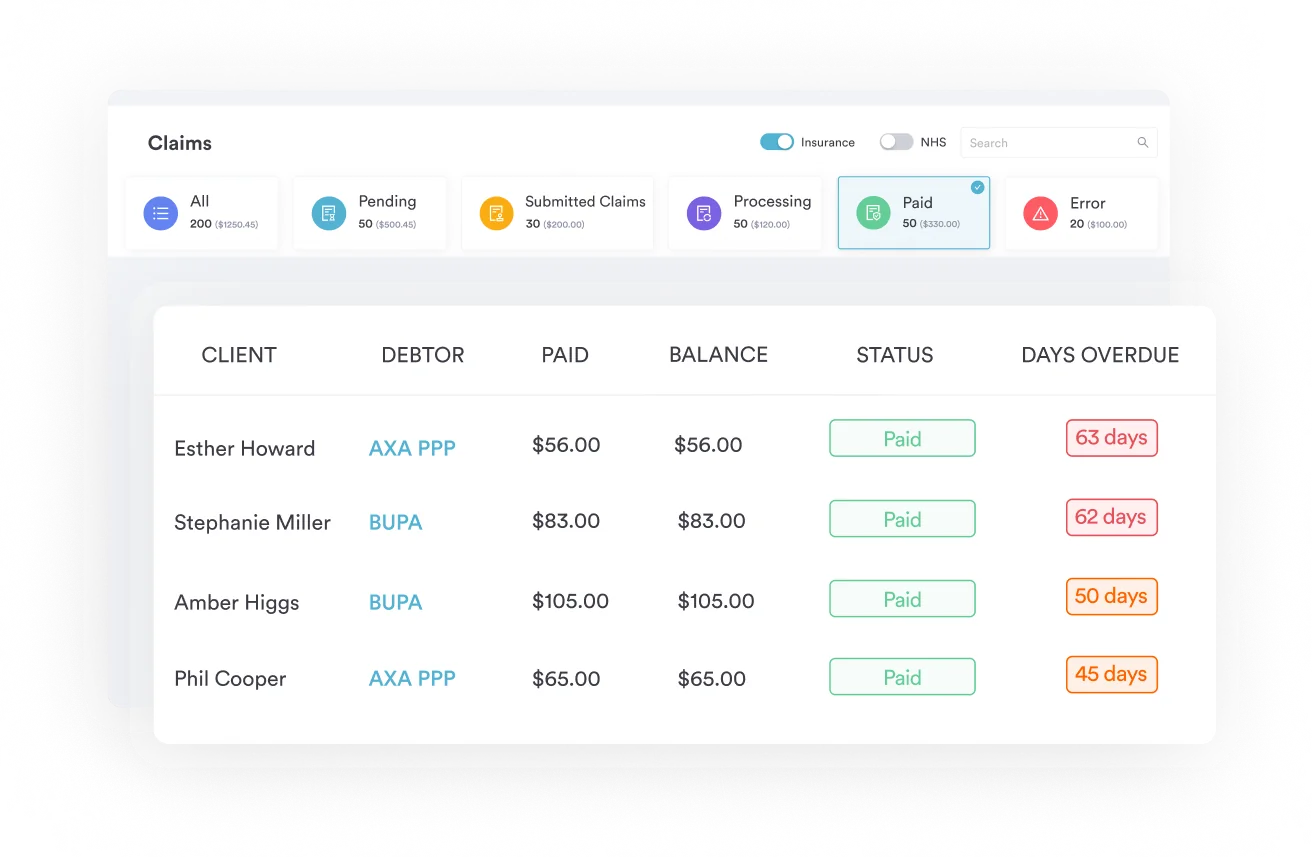
Teams that use practice management software with built-in claim validation catch the most common errors – missing modifiers, unsupported diagnosis codes – before submission rather than after a denial. That matters most in anesthesia billing, where denial turnaround times are long and corrected claims require re-documentation from the clinical team, not just a billing fix.
CPT Code 00920 is a residual anesthesia code for male genitalia procedures, and its billing accuracy depends on three things: the right modifier for the provider’s actual role, time units derived from documented anesthesia times, and a diagnosis code that matches the operative indication. Get all three right and the claim pays cleanly. Miss any one and the denial cycle begins.
Pabau’s structured claim workflows and built-in modifier prompts help anesthesia billing teams close those gaps systematically. To see how it works for your practice, book a demo with the Pabau team.

Need a reference for ADHD procedure code documentation requirements? ADHD Screening CPT Code covers documentation standards and code selection for ADHD assessment billing.
Billing a stereotactic breast biopsy? Stereotactic breast biopsy billing guide covers the first lesion biopsied under stereotactic guidance, since the guidance, clip, and specimen image are bundled into the code.
Billing extra MRI-guided biopsy lesions? MRI-guided breast biopsy billing guide covers the add-on code for each extra lesion biopsied under MRI guidance, always billed alongside code 19085.
CPT Code 00920 is an anesthesia procedure code that covers anesthesia services for procedures on the male genitalia, including open urethral procedures, not otherwise specified. It carries 3 ASA base units and is used by anesthesiologists, CRNAs, and anesthesiologist assistants billing for urological and genital procedures when no more specific anesthesia code applies.
CPT Code 00920 has 3 base units per the ASA Relative Value Guide. These base units represent the inherent complexity of anesthesia for male genitalia procedures and are added to time units (one unit per 15 minutes under Medicare) before multiplying by the locality conversion factor to calculate total reimbursement.
The most commonly used modifiers are AA (anesthesiologist personally performs), QZ (CRNA without medical direction in an opt-out state), QK (anesthesiologist directing 2-4 CRNAs), and QX (CRNA under medical direction). Modifier selection must reflect the provider’s actual documented role in the anesthesia service; using the wrong modifier is a compliance risk.
Yes, CRNAs can bill CPT Code 00920. In states that have opted out of the federal physician supervision requirement, a CRNA bills with modifier QZ and receives 100% of the Medicare allowed amount. In non-opt-out states, a CRNA working under medical direction uses modifier QX and receives 50% of the allowed amount, while the directing physician bills QK or QY.
Common diagnosis codes paired with CPT Code 00920 include N40.0 (benign prostatic hyperplasia), N35.9 (urethral stricture), N48.6 (Peyronie’s disease), Q55.69 (congenital penile malformation), and N44.0 (torsion of testis). The diagnosis code must match the documented surgical indication and support medical necessity for anesthesia.



