



HCPCS code E0198: Water pressure pad billing guide
HCPCS code E0198 is a water pad for a standard mattress HCPCS code E0198 is the ...

Last Updated: Oct 13, 2026

CPT code 00211 covers anesthesia for craniotomy or craniectomy performed specifically for evacuation of a hematoma.
The code carries 10 base units, a mid-range value in the intracranial anesthesia series.
Reimbursement is calculated as (Base Units + Time Units + Qualifying Circumstance Units) multiplied by the applicable conversion factor, which varies by Medicare Administrative Contractor locality.
Pabau, practice management software with structured anesthesia documentation tools, keeps start/stop times, provider identity, and qualifying circumstances organized and audit-ready for high-complexity codes like 00211.
CPT code 00211 is the anesthesia billing code for craniotomy or craniectomy performed to evacuate a hematoma. It carries 10 base units, and getting the base units, time units, modifier, and any qualifying circumstances right on a single claim matters because hematoma evacuation is billed as a genuine surgical emergency.
This guide covers the base units, reimbursement formula, modifiers, fee schedule, and documentation requirements for billing CPT code 00211 correctly.
CPT code 00211 is the anesthesia procedure code for intracranial surgeries performed to evacuate a hematoma, specifically craniotomy or craniectomy. When a patient presents with a subdural, epidural, or intracerebral hematoma requiring surgical decompression, this is the code that anesthesia providers bill for their services during that procedure.
The official American Medical Association (AMA) CPT descriptor reads: Anesthesia for intracranial procedures; craniotomy or craniectomy for evacuation of hematoma. This distinguishes it from adjacent codes in the 00210 series, which cover other intracranial indications. Billing 00211 for a non-hematoma craniotomy (such as a tumor resection) is an upcoding error with audit consequences.
The code sits within the CPT Anesthesia section (00100-01999), which uses a fundamentally different payment mechanism than surgical procedure codes. Ultimately, understanding that distinction is the starting point for correct billing.
Indeed, hematoma evacuation is a neurosurgical emergency. The clinical scenarios that trigger CPT code 00211 include traumatic subdural hematoma (typically from head injury in elderly patients), epidural hematoma from temporal bone fracture, and spontaneous intracerebral hemorrhage with mass effect.
Anesthesia services under 00211 may be provided by a physician anesthesiologist, a certified registered nurse anesthetist (CRNA), or a care team involving both. As a result, the provider type determines which modifier is required, which directly affects reimbursement rates.
Practices in plastic surgery and OB/GYN billing face similar high-acuity coding decisions, where the wrong modifier or missed qualifying circumstance carries the same reimbursement risk.
CPT code 00211 carries 10 base units. Base units are assigned by the American Society of Anesthesiologists (ASA) and reflect the inherent complexity, risk, and skill required for each anesthesia procedure. Comparatively, with 10 base units, 00211 sits in the middle of the intracranial anesthesia series. Code 00216 carries 15 base units and code 00218 carries 13, both higher than 00211.
Furthermore, the 10 base units are non-negotiable and do not change based on patient acuity or case duration. They are the fixed starting value before time and qualifying circumstance units are added.
Cross-check your base unit value against the current ASA Relative Value Guide annually. While 00211 has held at 10 base units for several consecutive years, payer contracts sometimes apply different base unit tables. Confirm which base unit schedule your MAC and commercial payers use before finalizing your fee schedule.
A claims management tool flags underpaid anesthesia claims quickly, so base-unit and time-unit errors don’t quietly cost you revenue.
Anesthesia reimbursement does not follow the standard relative value unit (RVU) formula used for surgical codes. Instead, it uses a units-based formula confirmed by the ASA and CMS anesthesia billing rules:
Formula: (Base Units + Time Units + Qualifying Circumstance Units) x Conversion Factor = Reimbursement
For CPT code 00211, base units = 10. This is fixed regardless of anesthesia duration.
Time units are calculated at 1 unit per 15-minute increment of anesthesia time. For example, a 3-hour craniotomy equals 12 time units (180 minutes / 15). Payer rules on rounding partial units vary: Medicare generally rounds to the nearest unit, but commercial payers may use different increments. Always verify with the specific payer policy.
Qualifying circumstance codes add 1 unit each to the total when documented. These are covered in the next section.
The conversion factor (the dollar value per anesthesia unit) is set by Medicare Administrative Contractor (MAC) locality and changes annually. In fact, there is no single national dollar figure. Check the current rate for your locality via the CMS Physician Fee Schedule lookup tool.
Worked example: A 3-hour hematoma evacuation with an elderly patient (qualifying circumstance 99100 applies).
However, this 23-unit total assumes a payer that pays qualifying circumstances separately. Under traditional, fee-for-service Medicare, 99100 (like 99116, 99135, and 99140) carries CMS status indicator “B,” meaning it’s bundled into the base unit payment rather than paid on top of it.
A separate per-unit payment for the qualifying circumstance only applies under ASA Relative Value Guide (RVG) methodology, which some commercial and Medicaid payers use, not traditional Medicare.
Medicare reimburses anesthesia services at a rate calculated from the formula above, with the conversion factor set per MAC locality. Moreover, rates change annually under the Medicare Physician Fee Schedule (MPFS). Because CPT code 00211 reimbursement figures shift with each January update, publishing a single dollar figure here would risk becoming outdated.
For the current rate in your locality, use the CMS fee schedule lookup, select “Anesthesia” as the service type, and search by code 00211. Then, the result will show both the facility and non-facility payment amounts for your MAC region. You can also cross-reference base unit values through the ResDAC coding resources for Medicare claims data context.
In contrast, commercial payer rates diverge significantly from Medicare. Many Blue Cross and Aetna contracts negotiate higher conversion factors, while Medicaid rates are typically lower. Track each payer’s conversion factor in your fee schedule documentation to avoid underbilling on high-unit cases like 00211 or airway procedures billed under 00548.
Anesthesia modifier codes are required on virtually every claim. Notably, missing or incorrect modifiers are the single leading cause of claim denials for CPT code 00211. The modifier signals who provided the anesthesia service and in what supervision context, which determines the applicable payment rate.
When a care team model applies (modifiers QK and QX), both the anesthesiologist and the CRNA submit claims separately, each at 50%. Overall, the combined payment equals 100% of the allowed amount. Practices handling HIPAA-compliant claim documentation should ensure care team billing records clearly distinguish each provider’s role to support modifier accuracy on audit.
Qualifying circumstances are add-on codes that reflect unusual conditions making anesthesia delivery significantly more difficult. Additionally, each adds 1 unit to the reimbursement calculation. They require supporting documentation in the anesthesia record.
Code 99140 is particularly relevant for 00211 claims because hematoma evacuations are frequently emergency procedures. In particular, the medical record must document the specific condition making anesthesia an emergency. Consequently, appending 99140 without supporting documentation is a common audit trigger. Using digital documentation workflows helps ensure anesthesia records capture the necessary clinical detail at the point of care. Under current evaluation and management rules, the counted elements changed but the need to show reasoning did not. A pre-authorization number has to reach the claim, and a missing reference is a common avoidable denial.
Remember that all four qualifying circumstance codes carry CMS status indicator “B” under traditional Medicare, meaning they’re bundled into the base unit payment rather than reimbursed separately. Documenting them still matters for medical necessity and for payers that use ASA RVG-based methodology, where separate per-unit payment can apply.


Pabau, practice management software with built-in treatment notes and documentation tools, helps anesthesia practices keep start/stop times, provider identity, and qualifying circumstances organized for high-complexity codes like CPT 00211. See how it works for your practice.

Selecting the correct code from the intracranial anesthesia series depends entirely on the surgical indication. Specifically, the codes below cover distinct clinical scenarios and carry different base unit values. Therefore, billing 00211 for any of these alternative procedures is an upcoding error.
CPT 00212 is not a hematoma-location variant of 00211 — it covers subdural taps, an entirely different procedure. Furthermore, no CPT code distinguishes a supratentorial hematoma evacuation from an infratentorial one. 00211 applies to craniotomy or craniectomy for hematoma evacuation regardless of location.
Confirm the operative report documents a hematoma evacuation, not a subdural tap, before selecting 00211. Verify current code descriptors through the AAPC CPT code lookup.
Thorough anesthesia record documentation is the first line of defense against denial, and the basis for appeal if a hematoma evacuation anesthesia claim is rejected.
Required documentation for CPT code 00211 includes:
Anesthesia claims for complex neurosurgical procedures attract heightened payer scrutiny. These are the billing errors that most commonly trigger denials or post-payment audits for CPT code 00211:
Practices handling high-complexity anesthesia billing benefit from keeping the underlying record clean before a claim is even prepared. Pabau’s structured patient records keep start and stop times, provider identity, and qualifying circumstance notes tied to the case, so a biller reviewing the chart doesn’t have to chase missing details.
For a broader look at how practice management software supports high-complexity procedure coding, see Pabau’s practice management overview.
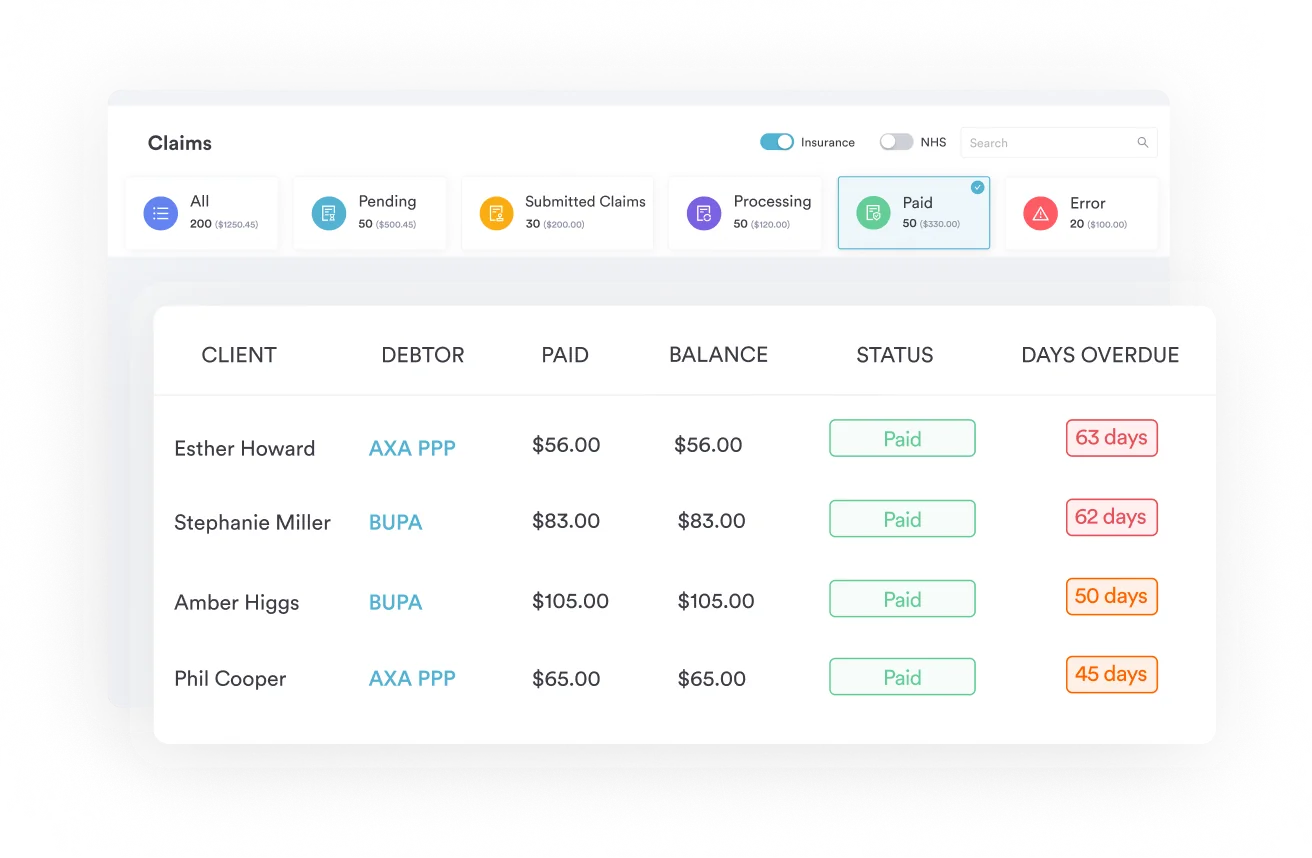
Audit your 00211 claims quarterly: pull all submissions, verify modifier presence, cross-check time start/stop against the anesthesia record, and confirm qualifying circumstance documentation exists for every 99100 and 99140 appended. A 15-minute quarterly check prevents far more expensive post-payment recovery audits.
High-unit anesthesia codes like 00211 involve more moving parts than lower-unit outpatient codes such as 00812: time capture, modifier logic by provider type, qualifying circumstance tracking, and payer-specific conversion factor management. Manual, paper-based record-keeping creates multiple points where one of those details can go missing.
Structured digital anesthesia notes address this directly. Intake and consent forms capture patient age, ASA physical status, and planned procedure before the case starts.
The anesthesia note itself records start and stop times, the provider or care team on the case, and any qualifying circumstance as it happens, rather than being reconstructed from memory afterward. That record is what a biller reviews to select the modifier and calculate time units.
For anesthesia practices evaluating practice management software, the key capability is that the record is captured once, at the point of care, and stays attached to that patient’s file. Time, provider, and qualifying circumstance data don’t need to be re-entered or re-keyed later.
Notably, that matters on codes where a single missed unit or wrong modifier can mean hundreds of dollars per case.
Pabau’s digital intake forms and treatment notes are built for exactly this workflow, and the broader platform covers scheduling, patient records. For practices managing multi-provider anesthesia teams, keeping each provider’s time and role documented against the same case supports modifier accuracy on audit.
CPT code 00211 covers high-acuity anesthesia for a genuine surgical emergency, and the billing complexity matches that clinical intensity. In short, getting the 10 base units, the right modifier, accurate time units, and any qualifying circumstances correctly documented on a single claim takes a clean record from the start.
Pabau’s structured treatment notes and digital intake forms keep that record organized from the first patient touchpoint, so anesthesia teams spend less time reconstructing details after the fact and more time on patient care. To see how Pabau supports complex anesthesia and surgical documentation, book a demo with our team.

Billing anesthesia for a screening colonoscopy? CPT code 00812 covers the base units and reimbursement rules for colonoscopy anesthesia.
Coding anesthesia for airway procedures? CPT code 00548 covers anesthesia for procedures on the trachea and bronchi.
Need the code for thoracic spine anesthesia? CPT code 00625 covers the anterior transthoracic approach.
Looking for anesthesia coding on genitourinary procedures? CPT code 00920 covers anesthesia for male genitalia procedures.
Billing an IV antibiotic infusion code? HCPCS code J1364 billing guide covers the erythromycin lactobionate injection code and its per-500-milligram unit structure.
CPT 00211 is the anesthesia code for craniotomy or craniectomy performed to evacuate a hematoma (subdural, epidural, or intracerebral). It does not cover craniotomies for tumor resection, shunt placement, or other non-hematoma indications.
It carries 10 base units under the ASA Relative Value Guide. Base units are fixed; time units and qualifying circumstance units are added before the conversion factor is applied.
It depends on who gave anesthesia: AA (physician personally), QZ (independent CRNA), or, in a care team, QK plus QX, each paid at 50%. AD applies when a physician supervises more than four concurrent cases.
Reimbursement equals (base + time + qualifying units) multiplied by the MAC locality conversion factor. A 3-hour elderly case (99100) totals 10 + 12 + 1 = 23 units. Under traditional Medicare, qualifying circumstances carry status indicator B and are bundled, not paid separately.
Four may apply: 99100 (extreme age), 99116 (hypothermia), 99135 (controlled hypotension), and 99140 (emergency), which often fits since evacuations are frequently emergent. Each adds 1 unit, but traditional Medicare bundles all four rather than paying them separately.
00210 covers an intracranial procedure not otherwise specified (11 base units); 00211 is specific to craniotomy or craniectomy for hematoma evacuation (10 base units). Select by surgical indication, not base units.
Common errors include missing modifiers (automatic denial), incomplete time documentation, billing 00211 for non-hematoma craniotomies (upcoding), skipping documentation before appending 99140, care team modifier mismatches, and an outdated MAC conversion factor.



