ICD-10 code S12.591B: Nondisplaced C6 fracture, open
ICD-10 code S12.591B: Definition and billable status ICD-10 code S12.591B is the...

Last Updated: Nov 2, 2026
Billable Code Specific Code
Z92.0 is the billable ICD-10-CM code for personal history of contraception.
OB/GYN and primary care coders apply it when a patient's past contraceptive use shapes the current visit, such as a fertility workup. The code sits in category Z92 (Personal history of medical treatment) within the Z77-Z99 block. It is almost always reported as a secondary diagnosis alongside a primary condition.
Z92.0 covers past use only. Its Excludes1 notes bar it from any claim that carries Z30.- (contraceptive management), Z79.3 (current hormonal contraceptive use) or Z97.5 (an IUD in place).
Let Pabau's smart automation suggest the right codes, reduce claim denials, and keep your practice compliant—effortlessly.
Automate repetitive tasks and focus on what matters most—your patients.
Reduce coding errors and ensure compliance with the latest regulations.
Clean claims, fewer denials, and faster reimbursements.
Powerful insights and reporting to help your practice thrive.
HIPAA compliant SOC 2 certified GDPR-compliant Trusted by 4,000+ clinics worldwide

Z92.0 is a billable ICD-10-CM code for personal history of contraception, valid in the FY 2026 and FY 2027 code sets.
In practice it is reported as an additional code alongside the condition being treated, not first-listed.
Z92.0 has Excludes1 notes for Z30.-, Z79.3 and Z97.5, so it never shares a claim with those codes. It records past contraceptive use only.
Missing documentation of the prior method and its clinical relevance is a common reason Z92.0 claims are denied.
ICD-10 Code Z92.0 is the billable ICD-10-CM code for personal history of contraception.
It records a method the patient used in the past and has since stopped. It sits in chapter 21 (Factors influencing health status and contact with health services) and is usually reported as an additional code. The table below sets out the core reference data.
Z92.0 applies when a patient’s clinical record documents prior use of any recognized contraceptive method and that history is relevant to the current encounter. The code is not method-specific. Any contraceptive method falls within its scope, provided the use is historical rather than ongoing.
According to the CDC/NCHS ICD-10-CM web tool, the code descriptor does not restrict which contraceptive method was previously used. Methods typically captured under Z92.0 include:
The key qualifier is “history.” If the patient is still using a method, Z92.0 does not apply. Current use of a hormonal contraceptive is Z79.3, and an intrauterine device in place is Z97.5. A visit to start, check, change or remove contraception takes a Z30.- code instead. Z92.0 fits only once the patient has stopped the method and that past use matters to a different condition.
Z92.0 carries three Excludes1 notes in the CDC/NCHS ICD-10-CM tabular. An Excludes1 note means “not coded here,” so the excluded code never appears on the same claim as Z92.0. All three describe current contraception: Z30.- for contraceptive management, Z79.3 for long-term use, and Z97.5 for an intrauterine device in place.
The parent category Z92 adds an Excludes2 note for postprocedural states (Z98.-). Per the CMS ICD-10-CM coding guidelines, an Excludes2 note means the excluded condition is not part of the code’s descriptor. It may still be coded alongside it when both are present and documented.
Z30.- codes an encounter for active contraceptive management, while Z92.0 records contraception the patient no longer uses. Z92.0’s Excludes1 note makes the two mutually exclusive, so they never appear on the same claim. Coders most often confuse them when a visit touches on both past and present contraceptive use.
When a patient switches methods, code the management encounter with Z30.- and leave Z92.0 off the claim. Current use without a management visit is Z79.3 for a hormonal contraceptive or Z97.5 for an IUD in place. Z92.0 belongs only to past use that matters to a different primary condition, such as a fertility workup.
The flow below puts those checks in order, so the first question that gets a yes decides the code.
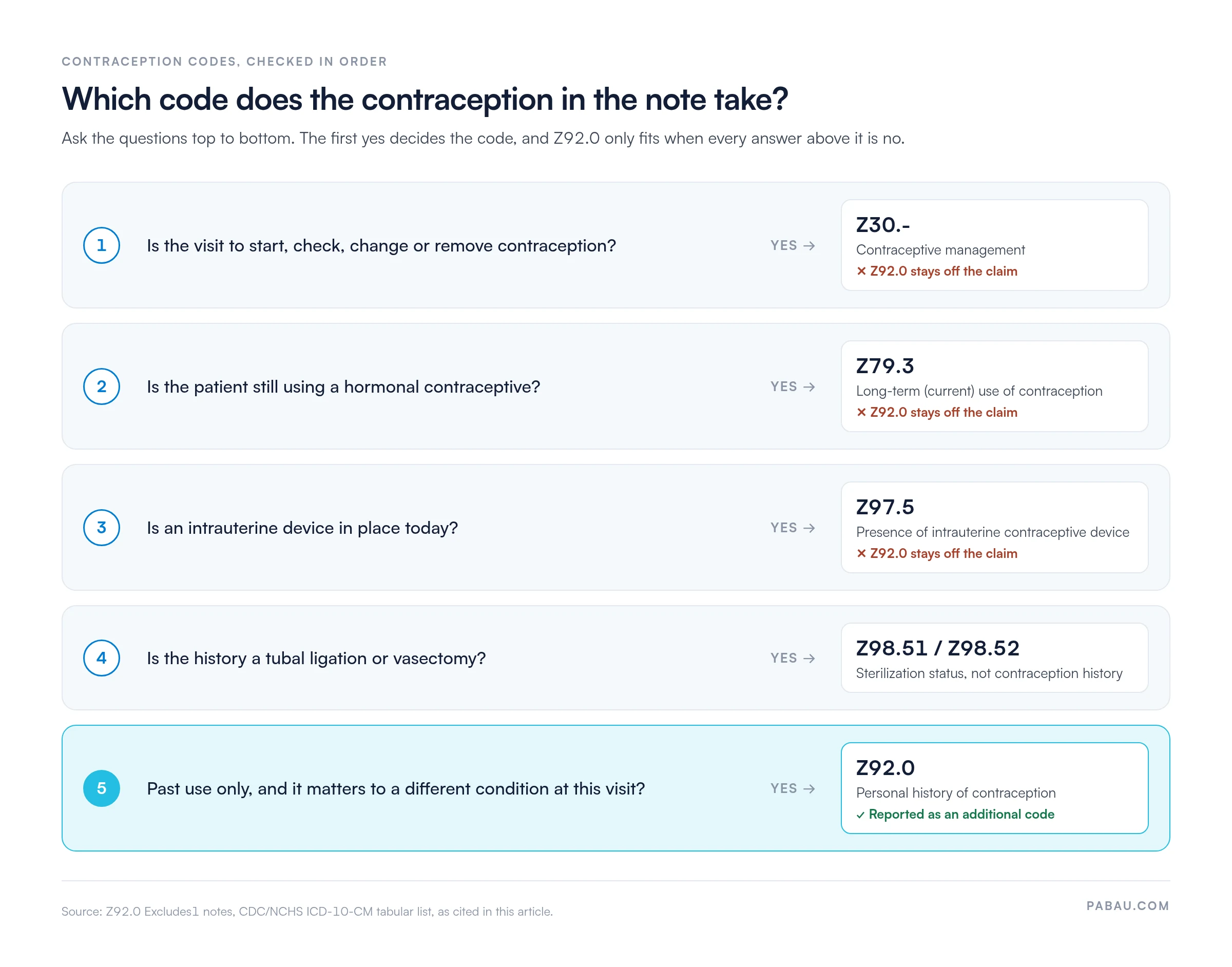
The Z92 category covers personal history of medical treatment, and its codes sit close together in the tabular list. Confirm Z92.0 is the right pick before billing, especially against Z92.23 when the past hormone use was menopausal therapy. Codes outside Z92 are indexed in our diagnostic codes guide.
ICD-10-CM Section I.C.21 governs Z-code use. Z92.0 is a history code that gives context, so in practice it is reported as an additional code alongside the condition being treated, not first-listed. It belongs on the claim when the history of contraception is relevant to the care provided at the visit.
Clinical scenarios where Z92.0 appropriately appears as a secondary code:
On its own, Z92.0 tells the payer little. Pair it with the diagnosis that explains why the history matters at this encounter.
Run a quarterly audit of claims carrying Z92.0 as the only or first-listed code. A solo Z92.0 as principal diagnosis usually signals a sequencing error. Pull those encounters, confirm the primary condition was documented, and resequence before the filing deadline.
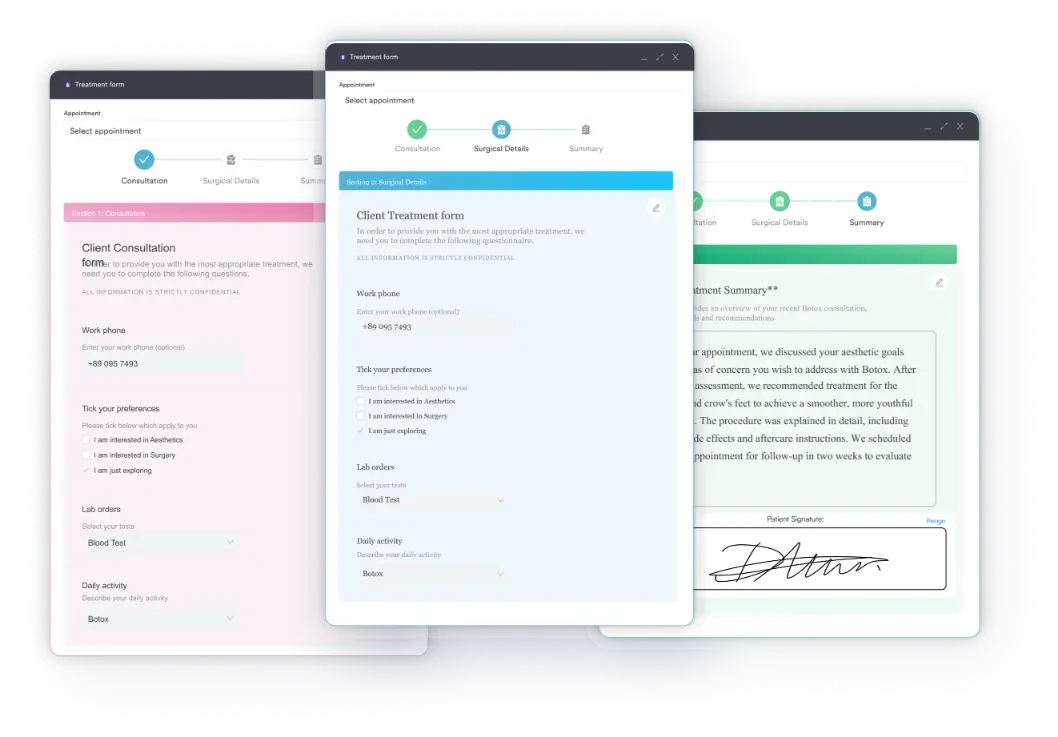
Payer audits on Z92.0 claims focus primarily on documentation. The provider note must explicitly support the code, not merely imply it. Intake forms in Pabau, the practice platform we build, can record the method, dates and reason for stopping before the consultation starts. Consistent medical billing compliance across reproductive-history encounters also protects against post-payment audits.
The clinical note supporting Z92.0 must contain:
Z92.0 payer requirements vary across Medicare, Medicaid, and commercial insurance. There is no single national policy that mandates prior authorization specifically for Z92.0. However, payers do apply medical necessity standards when reviewing claims carrying Z code secondary diagnoses.
Meeting clean claim submission standards is the baseline. Beyond that, key payer-specific considerations include:
Z92.0 claim denial reasons are mostly predictable and preventable. The denial management workflows a practice uses will determine how quickly these are caught and corrected. A claim scrubber adds a validation layer before submission. It catches sequencing and coverage errors before the claim reaches the payer. The most common denial triggers are listed below.
Accurate Z92.0 coding depends on three details in the provider note. They are the specific method, the duration or timeline, and the clinical relevance to today’s visit. When intake forms and clinical notes are unstructured, coders routinely find themselves chasing down providers for addenda before claims can go out. Pabau’s OB/GYN tools address this at the intake and charting stages rather than at the billing stage.
Pabau’s claims management software connects documentation directly to the billing workflow. Reproductive history fields captured in the intake form feed into the clinical note that supports the Z92.0 secondary code. Clinicians can document contraceptive method, duration, and discontinuation reason in structured fields rather than free text, which makes coder review faster and audit defense straightforward.

Pabau’s clinical documentation tools help OB/GYN and primary care teams capture the reproductive history details payers need, before the claim goes out. See how it fits your workflow.

Z92.0 has a narrow job: it records contraception the patient has stopped, as secondary context for a different condition. Treat any current contraception as a signal to drop it. A management visit takes Z30.-, ongoing hormonal use takes Z79.3, and an IUD in place takes Z97.5. Sequence Z92.0 second and name the method in the note, and the claim holds up.
Pabau’s structured intake and documentation tools capture the details that support Z92.0 at the point of care. OB/GYN and primary care coders then get a complete note. Tired of chasing addenda on reproductive history encounters? Then book a demo and see how Pabau captures those details before the claim goes out.

Coding an active contraception visit instead? HCPCS code J7307 explains how the contraceptive implant supply is billed when the device goes in.
Want to understand how denials work across code types? Denial codes in medical billing explains the CARC and RARC denial code system and how to build a structured appeals workflow.
Looking for guidance on Z-code documentation compliance? Medical billing compliance covers the documentation standards that protect practices during payer audits, including secondary Z-code support requirements.
ICD-10 Code Z92.0 is a billable ICD-10-CM diagnosis code that documents a patient’s personal history of contraception. It records that the patient previously used a contraceptive method, such as oral contraceptives, an IUD, an implant, an injectable or a barrier method. That history is relevant to the current encounter. It does not indicate active contraceptive use.
Yes. Z92.0 is a valid, billable ICD-10-CM code in the FY 2026 and FY 2027 code sets. It is a history code that gives context, so in practice it is reported as an additional code alongside the condition being treated, not first-listed.
Z92.0 should be added as a secondary code when the patient’s prior contraceptive history is clinically relevant to the current encounter. Common scenarios include fertility evaluations, hormone workups, thromboembolism risk assessments, and annual well-woman visits where reproductive history is reviewed and documented.
Z30.- codes cover active contraceptive management encounters, such as a prescription, IUD insertion or counseling. Z92.0 records contraceptive use that has stopped and matters to the current visit. The two never appear on the same claim, because Z30.- is an Excludes1 code for Z92.0. Current use without a management visit takes Z79.3 or Z97.5 instead.
The most common causes are coding Z92.0 as the principal diagnosis and missing documentation of the specific method used. A code-year mismatch with the date of service also triggers denials. So does a primary code with no clinical link to contraception history, or reporting Z92.0 with one of its Excludes1 codes (Z30.-, Z79.3 or Z97.5).
Rarely. Z92.0 is a history code that gives context, so in practice it is reported as an additional code alongside the condition being treated, not first-listed. The first-listed code explains why the contraceptive history matters at this encounter.