

HCPCS code E0198: Water pressure pad billing guide
HCPCS code E0198 is a water pad for a standard mattress HCPCS code E0198 is the ...

Last Updated: Oct 13, 2026
A4358 is the HCPCS Level II code for urinary drainage bag, leg or abdomen, vinyl, with or without tube, with straps, each.
Get those three right and the rest of the claim tends to fall into place, starting with what the code actually describes.
Let Pabau's smart automation suggest the right codes, reduce claim denials, and keep your practice compliant—effortlessly.
Automate repetitive tasks and focus on what matters most—your patients.
Reduce coding errors and ensure compliance with the latest regulations.
Clean claims, fewer denials, and faster reimbursements.
Powerful insights and reporting to help your practice thrive.
HIPAA compliant SOC 2 certified GDPR-compliant Trusted by 4,000+ clinics worldwide

HCPCS code A4358 describes a urinary drainage bag, leg or abdomen, vinyl, with or without tube, with straps, each, a Level II HCPCS supply code for DME billing.
Medicare Part B covers A4358 under LCD L33803 with a routine quantity limit of up to two bags a month; more requires documented medical necessity such as infection, obstruction, or clotting.
KX confirms documentation is on file when LCD criteria are met, not a modifier required on every claim; GA or GZ apply instead when coverage is expected to be denied.
Practice management software like Pabau checks that a claim’s required fields are complete before it’s sent, gates submission until they are, and shows claim status on one dashboard.
The CMS descriptor for A4358 is: Urinary drainage bag, leg or abdomen, vinyl, with or without tube, with straps, each. It’s a Level II HCPCS supply code maintained by CMS and updated annually, sitting inside the A4310-A4360 incontinence devices and supplies range alongside external catheters and related urological items billed to Medicare Part B as durable medical equipment (DME).
The “with or without tube” part of the descriptor is intentional. A single code covers bags sold with or without attached tubing, so coders don’t need to hunt for a different code over that one accessory. The straps that hold the bag in place are already priced into A4358, they aren’t billed as a separate item (more on that in the FAQ below).
The table below captures the key administrative facts coders need before billing A4358.
Note that A4358 covers only vinyl bags worn on the leg or abdomen. The latex version, night drainage bags, and replacement leg straps all have their own codes in the same range, covered in the FAQ below and the Related Codes section further down.
Medicare Part B covers HCPCS A4358 under Local Coverage Determination L33803 (Urological Supplies), administered by the DME Medicare Administrative Contractors (DME MACs).
The claim has to meet the criteria in LCD L33803, and since A4358 isn’t on Medicare’s Written-Order-Prior-to-Delivery list, the supplier can dispense the bag on a verbal order but needs a complete Standard Written Order (SWO) on file before the claim goes out.
Medicare covers A4358 when all of the following are met:
The routine Medicare quantity limit for A4358 is up to two bags a month. That covers scheduled changes.
Going beyond it takes documentation showing why, an infection, obstruction, sludging, or clotting that forces an unscheduled swap, not just a preference for a fresh bag. Quantities get checked at adjudication, so a claim over the routine allowance without that documentation and the right modifier gets denied.
Verify the exact limit with your DME MAC before billing. Two contractors cover all four DME MAC jurisdictions between them: Noridian Healthcare Solutions runs Jurisdictions A and D, and CGS Administrators runs Jurisdictions B and C. Either can publish a policy article that clarifies or adds to the national LCD.
The best medical practice management systems tie supply usage to invoices, so dressing changes stop being free.
Medicare reimbursement for A4358 is set through the annual DMEPOS fee schedule published by CMS. Rates are adjusted for geographic locality using the Fee Schedule Area (FSA) corresponding to the beneficiary’s permanent residence, not the supplier location.
The 2026 national average Medicare fee for A4358 was not available from a verified primary source at time of writing. Always confirm the current rate directly from the CMS fee schedule lookup tool before billing, as rates change each January 1. Using a stale rate from a third-party aggregator risks underbilling or triggering a payment discrepancy audit.
Suppliers participating in the CMS DMEPOS Competitive Bidding Program may receive contract amounts that differ from the published fee schedule rate. Check with your DME MAC to confirm whether your service area falls under a competitive bidding arrangement for urological supplies.
Every A4358 claim requires a supporting ICD-10-CM diagnosis code that establishes medical necessity under LCD L33803. Submitting without a covered diagnosis code, or pairing A4358 with a non-covered code, is one of the most common reasons these claims are denied on initial submission.
The table below lists the primary ICD-10-CM codes that CMS and DME MACs accept as establishing medical necessity for urinary drainage bags. Verify current codes against the active LCD version, as ICD-10 code sets update annually on October 1.
Always confirm the full covered and non-covered code lists in the active version of LCD L33803 via the CMS Medicare Coverage Database. Codes that appear covered under a prior LCD version may have been removed in subsequent updates.
Inadequate documentation is the single biggest driver of A4358 post-payment audits. The DME MAC wants a specific set of documents on file at the time of billing, not assembled after a request letter arrives.
A gap in any one of them gives the MAC grounds for recoupment. Good medical forms and documentation workflows make that closer to automatic than manual.
Maintaining HIPAA documentation requirements isn’t optional in DME billing. CMS auditors routinely request the full file, and a missing item means recoupment regardless of whether the clinical need was genuine.
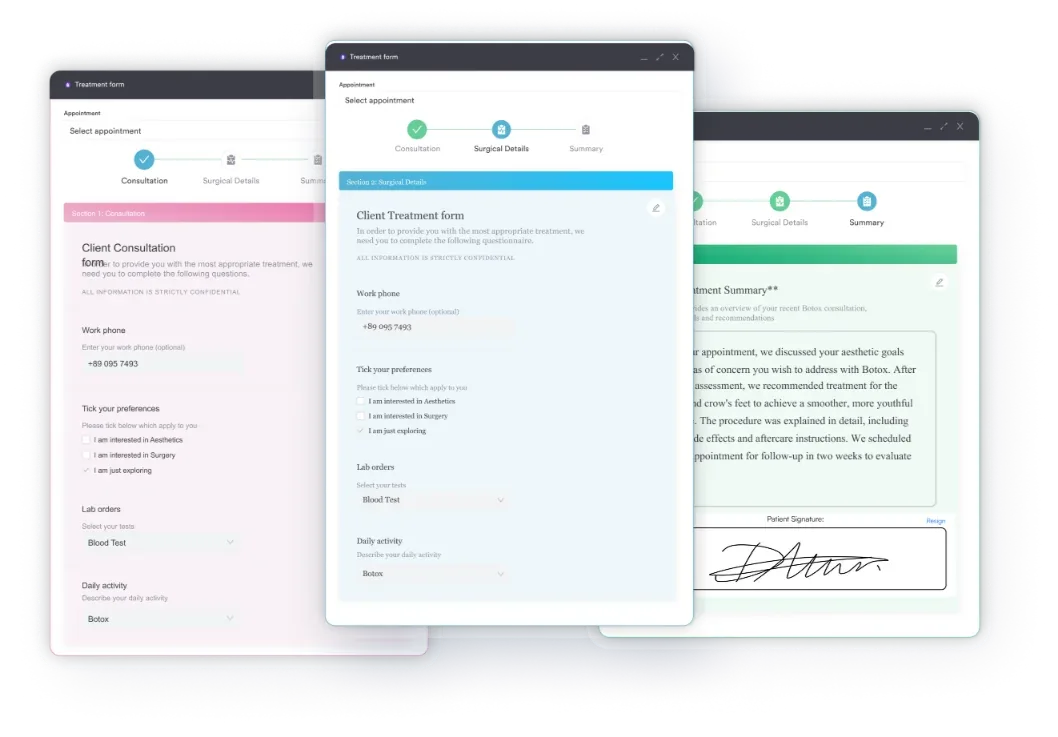
Audit your A4358 documentation files quarterly. Pull five random claims and check that each has a signed SWO, matching proof of delivery, and a supported ICD-10 diagnosis code. Catching a missing document before an audit is far less costly than post-payment recoupment.
Here is the order things actually happen in, from the physician’s office to a paid claim:
Correct modifier use on A4358 claims directly determines whether Medicare pays, holds, or denies the claim. Three modifiers govern most A4358 submissions.
Using the wrong one signals a coverage status to the MAC that does not match your documentation, which triggers a denial or an Advanced Beneficiary Notice (ABN) liability issue.
The KX modifier is the default for routine A4358 claims once your file backs it up. Attach it when the record includes a complete SWO, a supporting ICD-10 diagnosis, and proof of delivery. Applying GA or GZ to a claim that’s actually covered is a coding error, not a cautious choice.
Keeping paperless billing records current keeps signed ABNs, delivery records, and physician orders on hand for both modifier decisions and post-payment review.
Worked example: a supplier dispenses two A4358 bags in March under a documented UTI-driven change, with a complete SWO and ICD-10 code N39.41 on file. That claim goes out with KX. A different patient wants a third bag the same month with no documented reason beyond wanting a spare, and no ABN was issued before the supplier shipped it anyway. That claim should carry GZ, and the supplier, not the patient, absorbs the cost if Medicare denies it. Denials on this code repeat until someone reads the pattern rather than reworking each claim. When a claim on this code comes back unpaid, the denial reason codes on the remittance name the cause.
Additional billing rules to observe:

Practice management software like Pabau checks that a claim’s required fields are complete before it is sent, gates submission until they are, and shows claim status on one dashboard instead of a spreadsheet.

A4358 is one of several urological supply codes in the A4310-A4360 range. Selecting the wrong adjacent code is a common audit trigger: each code has a specific product configuration, and billing A4358 for a product that belongs under A4354 or A4356 creates a mismatch between the claim and the delivery documentation.
Quick question: can you bill A4358 and a catheter insertion tray in the same month? Quick answer: only if the tray code doesn’t already bundle a bag. Check the tray’s own descriptor (A4310, A4311, A4314) before adding A4358 to the same claim.
When a patient receives both a catheter kit and a separate drainage bag in the same month, check whether the catheter kit code already bundles a bag. If it does, billing A4358 separately creates an unbundling issue.
Review the full HCPCS Level II code range with the AAPC code lookup to confirm component relationships before you submit. Pabau’s procedure codes hub has the rest of the CPT and HCPCS billing guides for more context.
Before billing A4358 in the same month as any A4311-A4315 catheter kit code, check the kit’s own descriptor first. If it already includes a drainage bag, you can’t bill A4358 separately. Unbundling these codes is one of the top DMEPOS audit findings.
DME billing teams juggling A4358 claims by hand keep hitting the same wall: the documentation package isn’t complete when the claim is ready to go, and nobody catches it until the payer bounces it back. That’s the specific problem the right practice management software closes.
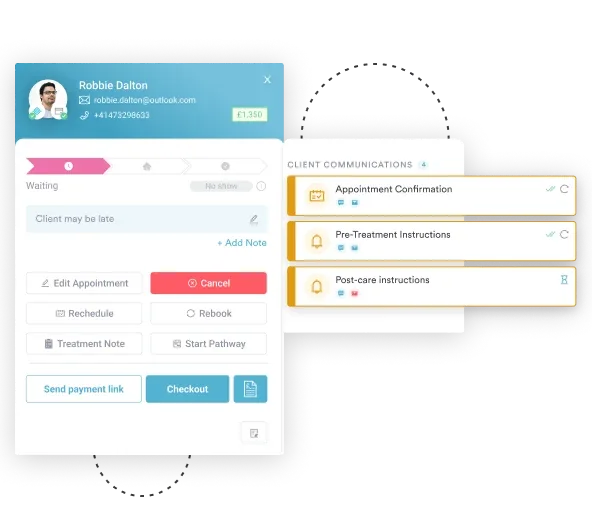
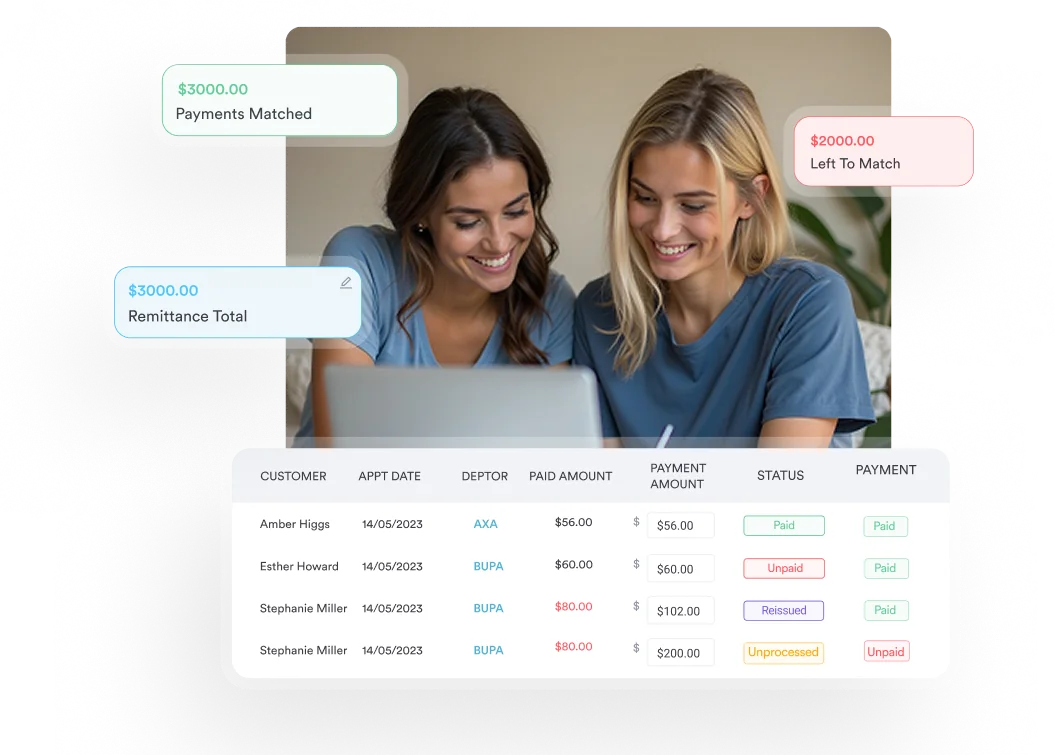
Pabau’s claims management software checks that the fields a payer actually needs are filled in, then gates the send button until they are. Nothing goes out half-finished, and a claim’s status, pending, submitted, processing, paid, or flagged as an error, sits on one dashboard instead of a string of phone calls to the payer.
A4358 denials almost always trace back to the same three things: documentation that isn’t actually on file, a modifier that doesn’t match it, or a diagnosis code the LCD doesn’t recognize. All three are preventable with the checklist earlier in this guide and a quick MAC verification before you submit.
Pabau won’t pick your modifier or write your SWO for you, but it will stop a claim that’s missing a required field from going out the door, and it’ll show you exactly where every A4358 submission stands.
Book a demo to see how it fits DME billing into the rest of your practice’s workflow.

Billing a family behavioral health assessment? family assessment billing guide covers who can bill this Medicaid-only code for a licensed behavioral health family assessment.
What about psychosocial rehabilitation billing? psychosocial rehabilitation billing guide explains the 15-minute billing increments for this Medicaid-only psychosocial rehabilitation code.
Need to bill therapeutic behavioral services? therapeutic behavioral services billing guide covers the reimbursement rates, modifiers and documentation requirements for this 15-minute Medicaid behavioral health code.
HCPCS code A4358 describes a vinyl urinary drainage bag worn on the leg or abdomen, with the tube and straps included in the same code. Enrolled Medicare DMEPOS suppliers bill it to Part B and other payers for patients with chronic urinary incontinence or retention who need catheter drainage.
Medicare’s routine allowance is two bags a month for scheduled changes. Extra bags need documentation of medical necessity, such as infection, obstruction, or clotting that forces an unscheduled change, along with a physician order supporting the higher quantity.
A4357 is a bedside drainage bag for day or night use, generally attached to an indwelling catheter at the bedside. A4358 is the leg bag worn on the body so a patient can be up and about. Many patients use both, A4358 by day and A4357 overnight.
No. Extension tubing (A4331) and the straps that hold the bag in place are already part of the A4358 allowance. Replacement leg straps only get their own code, A5113 for latex or A5114 for foam or fabric, when the original straps wear out and need swapping on their own.
Generally not under A4358. Leg bags are reasonable and necessary for patients who are ambulatory or spend time in a chair or wheelchair. A patient who is bedridden full-time is expected to use a bedside drainage bag, A4357, instead, and a leg bag claim for that patient risks denial.



