ICD-10 Code S63.034A: Midcarpal joint dislocation, right wrist
ICD-10 Code S63.034A: Official descriptor and quick reference ICD-10 Code S63.03...

Last Updated: Oct 21, 2026
Billable Code Specific Code
S92.321K is the billable ICD-10-CM code for displaced fracture of second metatarsal bone, right foot, subsequent encounter for fracture with nonunion.
Use it when a right second metatarsal break, already treated, has stopped healing and the provider documents nonunion. The K tells the payer that bone union has failed, so the chart must say so clearly. Without that statement, the visit belongs under D or G instead. Imaging that shows no bridging across the fracture line makes the claim far easier to defend.
Let Pabau's smart automation suggest the right codes, reduce claim denials, and keep your practice compliant—effortlessly.
Automate repetitive tasks and focus on what matters most—your patients.
Reduce coding errors and ensure compliance with the latest regulations.
Clean claims, fewer denials, and faster reimbursements.
Powerful insights and reporting to help your practice thrive.
HIPAA compliant SOC 2 certified GDPR-compliant Trusted by 4,000+ clinics worldwide

S92.321K codes a displaced fracture of the right second metatarsal at a follow-up visit where the provider has diagnosed nonunion.
The sixth character carries both side and displacement, so 1 means displaced on the right foot and 4 means nondisplaced on the right.
Choose K only when the note states nonunion. Healing that is slow but still progressing takes G, and normal healing takes D.
Nonunion care keeps the K even when it includes surgery, such as a metatarsal nonunion repair billed with CPT code 28322.
A stress fracture of the second metatarsal codes to M84.374- instead, even when it later fails to heal.
ICD-10 code S92.321K reports a displaced fracture of the second metatarsal bone in the right foot, at a subsequent encounter for nonunion.
Put simply, the bone broke out of alignment, was treated, and has since failed to unite. It is a valid, billable code in the current ICD-10-CM code set, according to the CDC/NCHS ICD-10-CM browser tool.
The second metatarsal is the long bone behind the second toe, so toe fracture codes never apply here. Use the reference table below to confirm where the code sits before you assign it.
Read S92.321K from left to right and it tells the whole clinical story. A wrong digit at any position points the claim at a different bone, foot or stage of care.
The sixth character does double duty. Values 1 to 3 mean displaced, for the right, left and unspecified foot. Values 4 to 6 mean nondisplaced, in the same order.
Laterality is therefore built into the code, and the foot named in the note must match it. When the record never says displaced or nondisplaced, the official guidelines default to displaced. An unstated open or closed status defaults to closed.
Each part of the descriptor maps to a finding the provider must have recorded.
Category S92 offers seven 7th characters, and each one describes a different encounter. Unlike some arm and leg fracture categories, S92 has no C option. Every open metatarsal fracture therefore takes B at the initial encounter.
G and K turn on one word in the note. G means the bone is still knitting, just more slowly than expected. K means union has stopped, and the provider has said so. When healing stays on track, the visit codes to S92.321D instead. Moving from G to K needs a new provider statement, not another month on the calendar.
Ask the questions in the order below, and the first yes sets the 7th character for the visit.
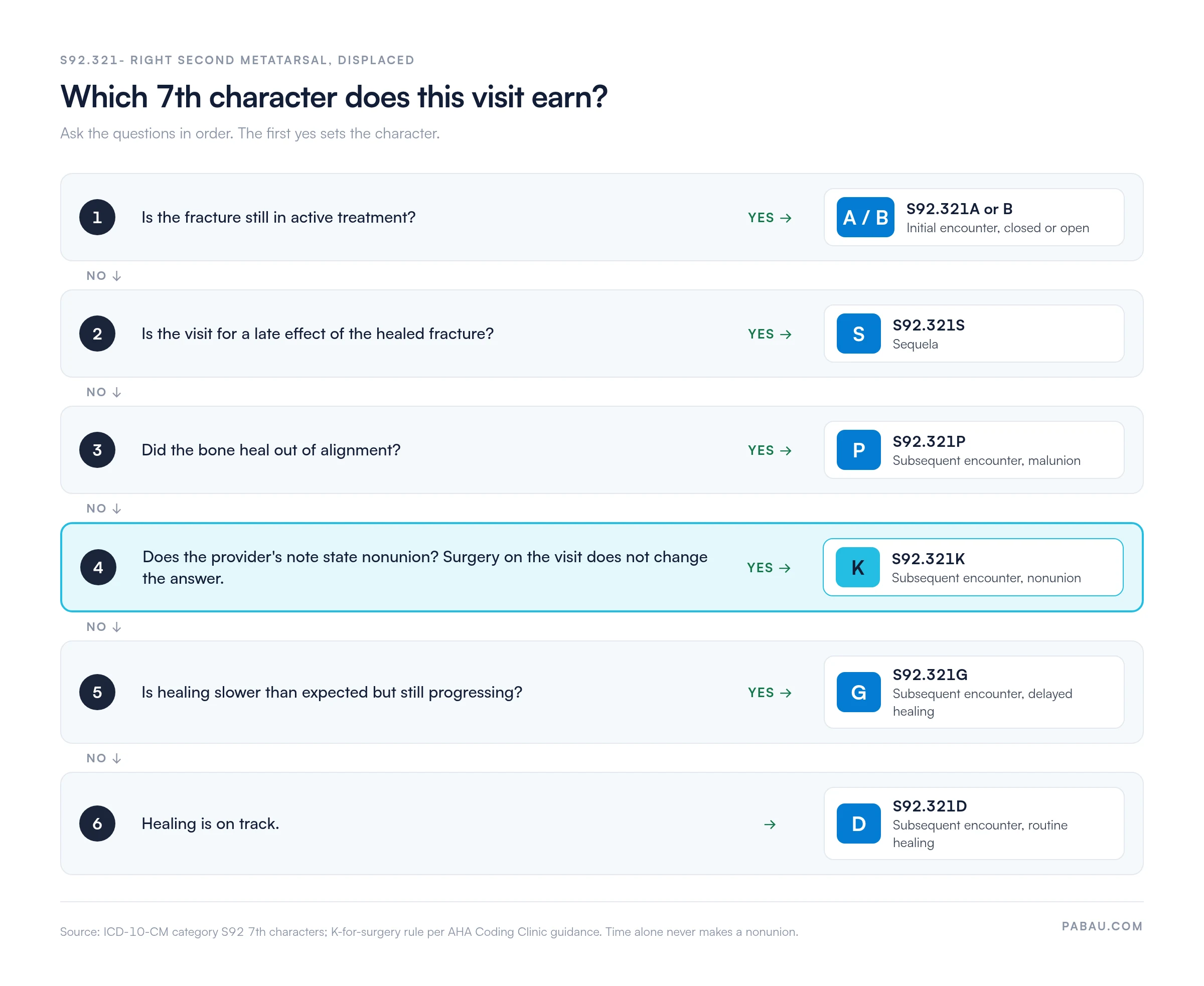
One rule surprises many coders. AHA Coding Clinic guidance keeps the K character for nonunion care, even when the visit includes surgery. A nonunion repair is therefore coded S92.321K, never S92.321A.
Search the visit note for the word nonunion or nonunited before you assign this code. A note that says only slow healing or not yet healed points to delayed healing instead. When the wording is unclear, send the provider a query before the claim goes out.
Most S92.321K errors involve a close neighbor. Check the codes below before you finalize the claim, and browse the full family in the AAPC ICD-10-CM lookup if you need more.
When imaging confirms a metatarsal nonunion but the note never names the bone, S92.301K is the fallback, though a provider query is the better fix.
A 52-year-old patient fell from a stepladder 14 weeks ago. The first visit was coded S92.321A for a displaced right second metatarsal fracture. The foot was then managed in a walking boot.
Today, the patient still has pain when bearing weight. A three-view foot series shows a persistent fracture line with no bridging bone. The podiatrist writes “displaced right second metatarsal fracture, nonunion” and plans a bone stimulator.
Had the note said only that healing was slow, the same visit would code S92.321G. That single word changes the 7th character and the claim’s story.
A nonunion claim is easy to audit, because the record either supports K or it doesn’t. Use this checklist on every S92.321K visit, and keep your wider medical billing compliance process in step with it.
A bone growth stimulator raises the bar for Medicare patients. LCD L33796 counts the metatarsals as long bones. It also needs two sets of radiographs, taken at least 90 days apart, that show no clinically significant healing. That record supports the stimulator line, whether it is 20974 or 20979.
The procedure lines on a nonunion claim should describe nonunion care. Codes for fresh fracture treatment belong to the original injury instead.
Watch the dates, too. Metatarsal fracture care carries a 90-day global period. If the nonunion visit falls inside it, Medicare generally bundles follow-up care unless the patient returns to the operating room.
A US claim for S92.321K passes through six handoffs. Each one can catch an error before it costs money.
Each of these errors is cheap to prevent and slow to fix after a denial.
When a mismatch does slip through, the remittance often shows CO-11, which means the diagnosis is inconsistent with the procedure. Our guide to denial codes in medical billing explains how to read and work these.
ICD-10-CM has no national rule that makes external cause codes mandatory. Some states and payers require them, though, so check your contracts. The official CMS guidelines set out how to report them.
When you do report one on a K visit, it takes D as its 7th character. Place of occurrence (Y92), activity (Y93) and status (Y99) codes are reported only at the initial encounter. Common causes for a second metatarsal fracture include:
A last look takes under a minute and saves weeks of back-and-forth. Confirm each point before the claim leaves the practice.
Fracture follow-ups often stretch over months and several providers. Over that time, sides, dates and 7th characters can drift apart.
Pabau, the practice management and billing platform we build, pre-fills the CMS-1500 from the invoice. Its built-in ICD-10-CM and CPT libraries make S92.321K and its siblings quick to find. Its claims management software then validates the claim before it goes to the clearinghouse.
US claims go out through Pabau’s Claim.MD integration. Eligibility checks, claim-status tracking and ERA posting sit in the same place, so a nonunion follow-up never needs a second system.
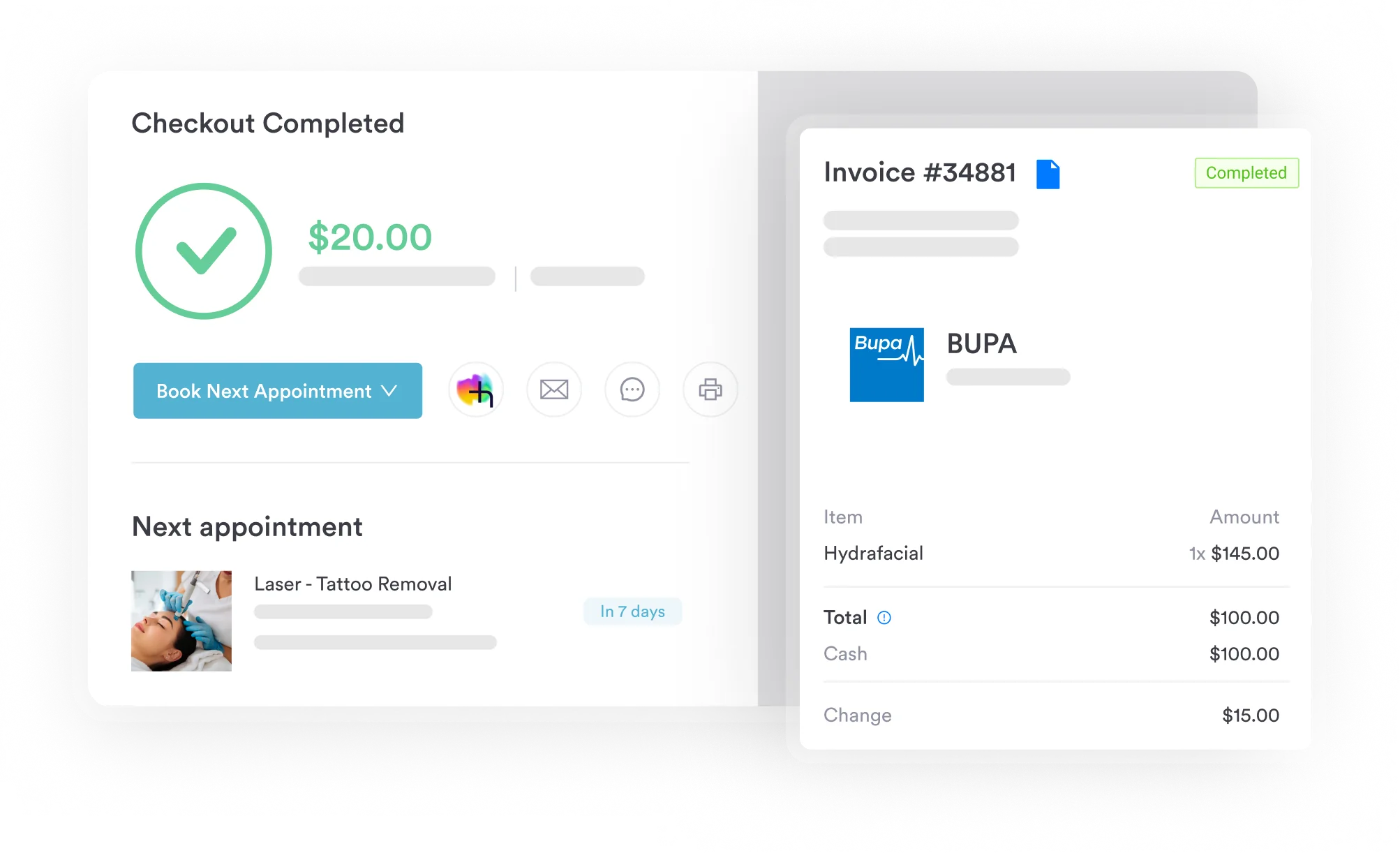

Pabau pre-fills claims from the invoice, checks required fields and sends them through Claim.MD, so nonunion follow-ups reach the payer complete.

S92.321K rewards precision more than speed. The code is only as strong as the visit note behind it, so the provider’s words decide the claim.
Make three facts a habit on every follow-up: the foot, the displacement and the healing status. If one is missing, query before you code. That short pause costs far less than a records request later.
Book a demo to see how Pabau turns each fracture follow-up into a complete, validated claim.

Coding the same fracture while it heals normally? ICD-10 code S92.321D covers routine-healing follow-ups for the right second metatarsal.
Need guidance on managing claim denials across your practice? Denial management in healthcare covers the workflows that prevent write-offs on complication codes.
Want to understand how clearinghouse edits catch errors before submission? How the Claim.MD clearinghouse works explains what happens between your system and the payer.
Looking for a practical overview of medical billing? What is medical billing covers the claim lifecycle from code assignment through payment posting.
Yes. S92.321K remains a billable code in the FY2027 ICD-10-CM set, effective October 1, 2026.
Yes. When a patient is admitted for nonunion repair, S92.321K can be sequenced first. It describes the condition chiefly responsible for the admission.
Yes, when the therapist treats the patient for the nonunion. Many payers also expect a treatment diagnosis, such as R26.2 for difficulty in walking.
Often, yes. The diagnosis already carries laterality, but many payers still expect RT on foot procedure lines, such as 28322.
ICD-9-CM had no single code for it. Older records usually show 733.82, nonunion of fracture, often alongside 825.25 for the closed metatarsal fracture.