ICD-10 Code S52.101P: Right radius fracture with malunion
ICD-10 Code S52.101P: definition and code details ICD-10 Code S52.101P is a bill...

Last Updated: Oct 19, 2026
Billable Code Specific Code
S72.102J is the billable ICD-10-CM code for unspecified trochanteric fracture of left femur, subsequent encounter for open fracture type IIIA, IIIB, or IIIC with delayed healing.
Most claim denials on hip fracture follow-up visits trace back to one decision: the wrong 7th character. Medical billing fundamentals apply here, but fracture coding adds a layer of specificity that trips up even experienced coders. ICD-10 code S72.102J captures a precise clinical moment: A patient returning for care on a closed, unspecified trochanteric fracture of the left femur where healing has stalled beyond the expected timeline.
S72.102J is a fully billable ICD-10-CM (International Classification of Diseases, 10th Revision, Clinical Modification) code, valid for submission on HIPAA-covered electronic transactions. According to the Centers for Medicare and Medicaid Services (CMS), the code is active for FY2025 and FY2026 billing, though coders should verify against the current annual tabular list update before submitting.
Let Pabau's smart automation suggest the right codes, reduce claim denials, and keep your practice compliant—effortlessly.
Automate repetitive tasks and focus on what matters most—your patients.
Reduce coding errors and ensure compliance with the latest regulations.
Clean claims, fewer denials, and faster reimbursements.
Powerful insights and reporting to help your practice thrive.
HIPAA compliant SOC 2 certified GDPR-compliant Trusted by 4,000+ clinics worldwide

S72.102J is a billable ICD-10-CM code for an unspecified trochanteric fracture of the left femur, subsequent encounter for a closed fracture with delayed healing.
The 7th character J is mandatory and signals a follow-up visit where the closed fracture is healing more slowly than clinically expected.
Confusing J (delayed healing) with K (nonunion) is a top denial trigger; the physician’s documentation must explicitly support whichever character is selected.
Pabau’s claims management software helps orthopedic and physical therapy practices submit S72.102J claims accurately and track denial patterns across payers.
Use this quick-reference table before submitting a claim. Every field maps directly to what payers verify during adjudication.
The 7th character is not optional in category S72. The ICD-10-CM Official Guidelines for Coding and Reporting make it mandatory for every traumatic fracture code, and omitting it causes an automatic claim rejection. For S72.102, sixteen valid 7th characters exist, each encoding a different combination of encounter type, fracture openness, and healing outcome.
Select the character that matches the current encounter type and the fracture’s documented healing status at that visit.
Notice that J appears twice in that table. That is not a typo: ICD-10-CM allocates J to both open-fracture type I/II subsequent encounters with delayed healing (for some code families) and to closed fractures with delayed healing depending on the code’s specific 7th character schema. For S72.102 specifically, J always means closed fracture with delayed healing.
These three outcomes look similar in a chart note but require different 7th characters and carry different reimbursement and compliance implications. Per the ICD-10-CM Official Guidelines for Coding and Reporting, the physician’s documentation must explicitly support whichever character the coder selects.
Delayed healing and nonunion are the most commonly conflated pair. The key distinction: delayed healing implies the fracture is still biologically active and progressing. Nonunion means biological activity has stopped. Coding K when the documentation describes slow-but-ongoing healing is an overcoding error that auditors and payers flag regularly.
Document the 7th character rationale explicitly in the medical record at every subsequent encounter visit. A note that says ‘fracture healing well’ supports character D (routine). A note that says ‘callus present but incomplete bridging at 14 weeks’ supports character J (delayed). Imaging dates and findings should appear in the note, not just in a radiology report. This one documentation habit prevents the majority of 7th character denials.
Understanding where ICD-10 code S72.102J sits in the classification hierarchy helps coders select the right code family from the outset. Hip fracture coding sits within the injury chapter, not the musculoskeletal chapter, which surprises some newer coders. For ICD-10 diagnostic coding for neurological conditions, the chapter structure is different, but the 7th character logic follows the same ICD-10-CM conventions.
The “unspecified” label at S72.102 does not mean the laterality is unknown. Laterality is fully specified: left femur. “Unspecified” refers to the fracture subtype within the trochanteric region. When imaging identifies the fracture specifically as intertrochanteric, pertrochanteric, or subtrochanteric, coders should use the more specific code if available, rather than defaulting to S72.102.
A nondisplaced intertrochanteric fracture of the left femur, for example, is coded under S72.145. When that fracture was open type I or II and has gone on to nonunion, the follow-up visit takes ICD-10 code S72.145M.
ICD-10 code S72.102J applies at follow-up visits after the active treatment phase has concluded. The initial encounter, coded with 7th character A, covers every visit where the provider is actively managing the fracture, including surgery, casting, and immediate post-operative care. Once management transitions to monitoring and rehabilitation, the subsequent encounter characters (D, G, J, K, P) take over.
S72.102J is appropriate when all four of these conditions are met at the visit being coded:
Common visit types where this code appears include orthopedic follow-up appointments, physical therapy progress evaluations ordered by an orthopedic surgeon, and skilled nursing facility encounters managing the fracture’s rehabilitation phase.
Coders working in physical therapy practice management settings frequently encounter this code during post-fracture rehabilitation episodes. Assessment tools like musculoskeletal injury assessment tools help clinicians standardize the clinical rationale documentation that underpins 7th character selection.
The physician note must do more than list the diagnosis. Per the ICD-10-CM Official Guidelines and AAPC coding guidance, the documentation should include:
The physical therapy return-to-activity protocols used in rehabilitation can provide supporting functional milestones that reinforce the physician’s delayed healing assessment. When a patient is far behind expected functional recovery benchmarks, that clinical observation belongs in the record alongside imaging findings. The AHA Coding Clinic for ICD-10-CM/PCS is the official guidance resource for edge-case documentation questions on delayed healing definition thresholds.
S72.102J sits within a family of closely related codes. Selecting the wrong code from this group is the second most common error after incorrect 7th character selection. The table below organizes the most relevant codes. For a broader view of ICD-10-CM coding reference resources, see our ICD-10 mental health diagnosis codes article, which demonstrates how the same chapter-level hierarchy applies across different clinical domains.
When the fracture resulted from a fall, the ICD-10-CM Official Guidelines recommend adding the appropriate external cause code (W-series) as an additional diagnosis code alongside S72.102J. This supports claims for fall-related fracture programs and quality metrics.
The ResDAC ICD codes in Medicare claims data guide explains how these additional codes appear in administrative data for research and compliance purposes.
ICD-10 code S72.102J is a diagnosis code. It appears on claims alongside CPT procedure codes that describe the services rendered at the subsequent encounter visit. The pairing must reflect actual services documented at that visit. The ICD-10-CM coding reference convention applies: every diagnosis code on the claim must be linked to the procedure codes it supports, and each procedure must be medically necessary for the documented condition.
When submitting claims with S72.102J and physical therapy CPT codes, practices using electronic claims via Claim.MD can validate payer-specific pairing rules before submission. The medical claims clearinghouse workflows built into Pabau’s billing pipeline flag mismatched diagnosis-to-procedure pairings before the claim leaves the practice, reducing the turnaround time on corrections.
Practices can access the claims management software directly within the platform to track S72.102J claim status across payers.
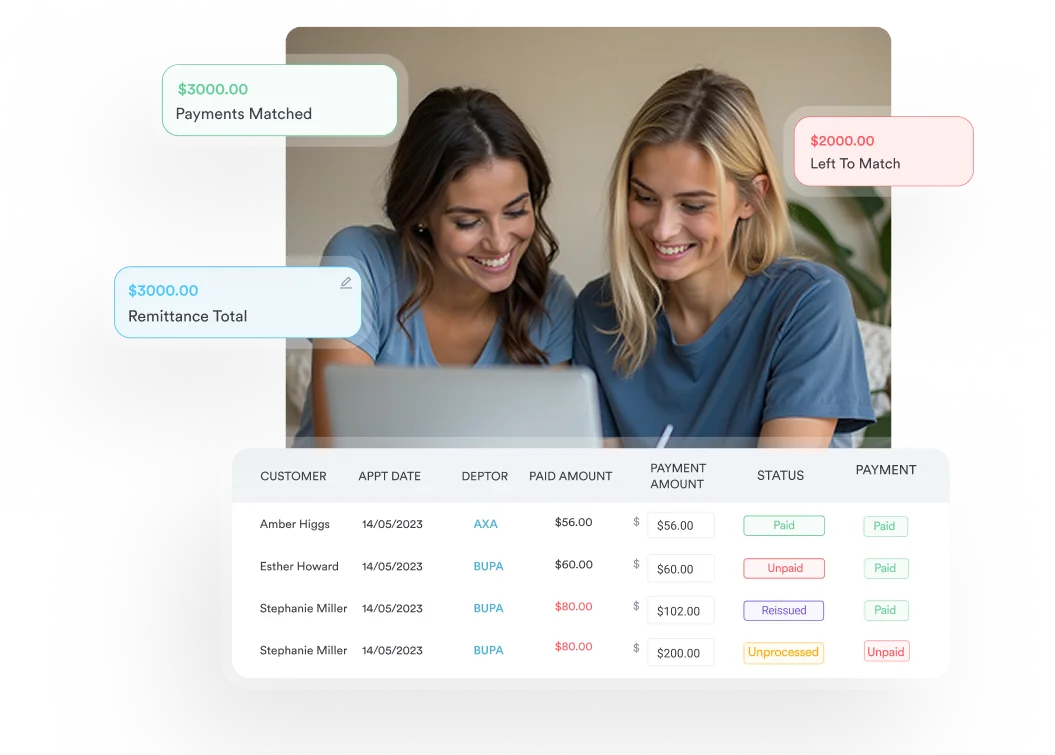

Pabau’s billing workflow tools help orthopedic and physical therapy practices submit ICD-10 subsequent encounter codes accurately, track denial patterns by payer, and manage the full claims lifecycle without switching between systems.

Medicare treats hip fracture encounters as high-scrutiny claims. CMS groups inpatient hip fracture admissions under MS-DRG assignments that change with each fiscal year update, so coders should verify current groupings against the CMS IPPS final rule rather than relying on prior-year references. For outpatient subsequent encounters coded with S72.102J, the clinical documentation burden falls on demonstrating medical necessity for the visit and the specific healing status.
The CDC/NCHS ICD-10-CM web tool provides the official annual tabular list and index, which coders should consult to confirm that S72.102J remains valid for the fiscal year being billed. CMS also publishes specific documentation requirements for subsequent encounter coding in the Medicare Claims Processing Manual, Chapter 12. Key payer considerations include:
Sound medical billing compliance practices for hip fracture coding include periodic internal audits of 7th character selections across the practice, comparing the distribution of D (routine), J (delayed), K (nonunion), and P (malunion) against clinical expectations for the patient population being treated. A practice where 40% of subsequent encounters carry the J character warrants a documentation review.
Hip fracture coding generates a predictable set of errors. Recognizing them before a claim goes out prevents the denial cycle that costs practices both time and revenue. Practices experiencing high denial rates on ICD-10 code S72.102J or related codes should review their claim denial management workflows systematically rather than correcting individual claims in isolation.
Run a quarterly audit pulling all claims with S72.102J and related codes (S72.102A through S72.102S). Calculate the distribution across 7th characters. A healthy distribution in a typical orthopedic practice shows D (routine) as the most common subsequent encounter character, with J (delayed) representing a meaningful but smaller subset. If J outnumbers D, investigate whether documentation is actually supporting the delayed healing assertion or whether coders are selecting J as a default when healing details are vague.
ICD-10 code S72.102J is a precise, billable code that requires three things to be right simultaneously: correct fracture site (left femur trochanteric, unspecified subtype), correct encounter type (subsequent, not initial), and correct healing status (delayed, not routine, nonunion, or malunion). Getting any one of these wrong creates a denial or a compliance exposure.
Pabau’s claims management software gives orthopedic and physical therapy billing teams the tools to validate diagnosis-to-procedure pairings, track 7th character usage patterns across the practice, and manage the full claims lifecycle without leaving the platform. To see how Pabau handles fracture follow-up billing workflows, book a demo with the team.

Need guidance on ICD-10-CM coding conventions across clinical specialties? ICD-10 coding for neurological hemorrhage diagnoses covers the same chapter-level hierarchy logic applied to a different clinical domain.
Managing claim denials across your practice? Denial management in healthcare walks through the systematic approach to identifying, correcting, and preventing the most common denial patterns.
Want to understand how clearinghouses fit into the billing workflow? Medical claims clearinghouse overview explains how electronic claim submission works end-to-end, from practice management system to payer adjudication.
ICD-10 code S72.102J is a billable ICD-10-CM diagnosis code for an unspecified trochanteric fracture of the left femur, subsequent encounter for a closed fracture with delayed healing. It is valid for submission on HIPAA-covered electronic transactions and is used at follow-up visits where the fracture is healing more slowly than clinically expected.
Yes, S72.102J is a fully billable ICD-10-CM code valid for HIPAA-covered transactions. It is active for FY2025 and FY2026; coders should verify against the current CMS annual tabular list for the specific fiscal year being billed.
Delayed healing (J) means the fracture is still biologically active and progressing toward union, but slower than expected. Nonunion (K) means the healing process has ceased entirely and the fracture will not unite without further intervention. The physician’s documentation must explicitly support whichever character is selected; coders cannot upgrade a delayed healing case to nonunion without physician documentation stating nonunion.
Use S72.102D when the physician documents that healing is progressing on schedule. Use S72.102J when healing is occurring but more slowly than expected, supported by imaging and a physician note describing delayed progress. Use S72.102K only when the physician explicitly documents that healing has stopped and nonunion is present. The distinction between D, J, and K must always rest on physician documentation, not coder inference.
S72.102J applies exclusively to closed fractures. Open fractures with delayed healing use different 7th characters: G for open fracture Gustilo type I or II with delayed healing, and H for open fracture type IIIA, IIIB, or IIIC with delayed healing. Using J for an open fracture subsequent encounter is a coding error.
Yes. CMS requires documentation to support the healing status selected in the 7th character. For subsequent encounter coding, the physician must document the healing status at that visit. Some Medicare Administrative Contractors have Local Coverage Determinations specifying documentation criteria for fracture healing status codes, and coders should check their MAC’s LCD policies alongside the ICD-10-CM Official Guidelines.