

ICD-10 Code S42.444P: Medial epicondyle fracture, right humerus
ICD-10 Code S42.444P: full descriptor and code validity ICD-10 Code S42.444P car...

Last Updated: Oct 13, 2026
Billable Code Specific Code
S52.333C is the billable ICD-10-CM code for displaced oblique fracture of shaft of unspecified radius, initial encounter for open fracture type IIIA, IIIB, or IIIC.
One detail decides the suffix, and that is the Gustilo grade in the operative note. Without it, the coder can confirm the fracture is open but cannot separate S52.333B from S52.333C.
Let Pabau's smart automation suggest the right codes, reduce claim denials, and keep your practice compliant—effortlessly.
Automate repetitive tasks and focus on what matters most—your patients.
Reduce coding errors and ensure compliance with the latest regulations.
Clean claims, fewer denials, and faster reimbursements.
Powerful insights and reporting to help your practice thrive.
HIPAA compliant SOC 2 certified GDPR-compliant Trusted by 4,000+ clinics worldwide

ICD-10 Code S52.333C describes a displaced oblique fracture of the shaft of an unspecified radius. It applies at the initial encounter for Gustilo open fracture types IIIA, IIIB, or IIIC.
S52.333C is a billable ICD-10-CM code valid for HIPAA-covered transactions, effective under the 2026 ICD-10-CM edition (October 1, 2025).
The 7th character C is specific to open fractures graded Gustilo IIIA, IIIB, or IIIC. Using suffix A or B instead is a frequent error in this code family.
Radial shaft CPT codes such as 25500, 25505, and 25515 pair with S52.333C. The 25600 to 25609 family covers distal radius fractures instead.
Practice management software like Pabau captures the Gustilo grade, laterality, and encounter type at the point of care. That gives coders what they need before the claim goes out.
ICD-10 Code S52.333C is a billable, specific ICD-10-CM diagnosis code. Its full official description reads: Displaced oblique fracture of shaft of unspecified radius, initial encounter for open fracture type IIIA, IIIB, or IIIC.
The code is valid for submission in HIPAA-covered transactions and is current under the 2026 ICD-10-CM edition, effective October 1, 2025.
Billable status is the first thing to confirm before the claim goes out. That check belongs in the same review as the rest of your HIPAA-compliant billing workflows.
S52.333C sits in the S52 category, fracture of forearm. That category falls under the S50-S59 block for injuries to the elbow and forearm, inside Chapter 19 of ICD-10-CM. Every code in the S52 category requires a 7th character to indicate encounter type, per the CMS ICD-10 resource.
Every character in S52.333C encodes a specific clinical decision. Reading it character by character shows exactly what the clinical note has to say. Coders who know the structure can spot a missing detail before the claim goes out, rather than after a denial.
The CDC ICD-10-CM tool carries the official tabular list for verifying each character.
The 6th character is where unnecessary unspecified coding creeps in. If the note names the right radius or the left radius, use S52.331x or S52.332x instead of S52.333x. Defaulting to unspecified when laterality is documented invites payer queries. Practices using structured clinical records capture laterality in the initial encounter note. An appeal filed after the timely filing window is denied on timeliness alone, whatever the coding showed. Front-desk data entry and back-office coding both feed cash collection, so errors compound downstream.
The Gustilo-Anderson classification grades open fractures worldwide, and it determines the 7th character in S52.333C. Coders cannot assign this code until the treating clinician records the Gustilo grade in the operative note or emergency record.
The AAPC ICD-10 reference treats Gustilo grading as a required documentation element for open fracture codes in the S52 series. S52.333C covers types IIIA, IIIB, and IIIC only. The three differ by wound severity, bone coverage, and vascular involvement.
These descriptions reflect widely cited orthopedic consensus, and institutional protocols vary. Always verify the grade against the operative note or the emergency record.
The note has to state the Gustilo type by name for S52.333C to hold up. “Open fracture, extensive soft tissue damage” does not qualify on its own.
Document the Gustilo type in the operative note using the exact grade designation, either Type IIIA, IIIB, or IIIC. Descriptions like ‘extensive wound’ without a named grade leave the coder without the specificity required for S52.333C and increase audit exposure.
The 7th character is the most critical coding decision for every code in the S52.333x family. It determines whether the encounter is initial, subsequent, or a sequela, and it further specifies the fracture healing status for subsequent visits. Selecting the wrong character is the single most frequent coding error for this series.
The ICD-10-CM Official Guidelines for Coding and Reporting, Section I.C.19, govern 7th character selection for injury codes. The same suffix logic runs through other open fracture families. Soft-tissue injury codes in the same chapter carry a much shorter set. S66.292D has only A, D and S, so hand therapy after an extensor repair stays on D.
S52.333C belongs to a family of displaced oblique radius shaft fracture codes. Laterality splits it three ways, into right radius, left radius, and unspecified radius. Each encounter type then carries its own suffix.
Other injury categories follow the same pattern. The table below lists the laterality and initial encounter variants referenced most often alongside S52.333C.
Six documentation elements must appear in the clinical note before S52.333C can be assigned with confidence. Miss one and the coder either drops to a less specific code or holds the claim for clarification.
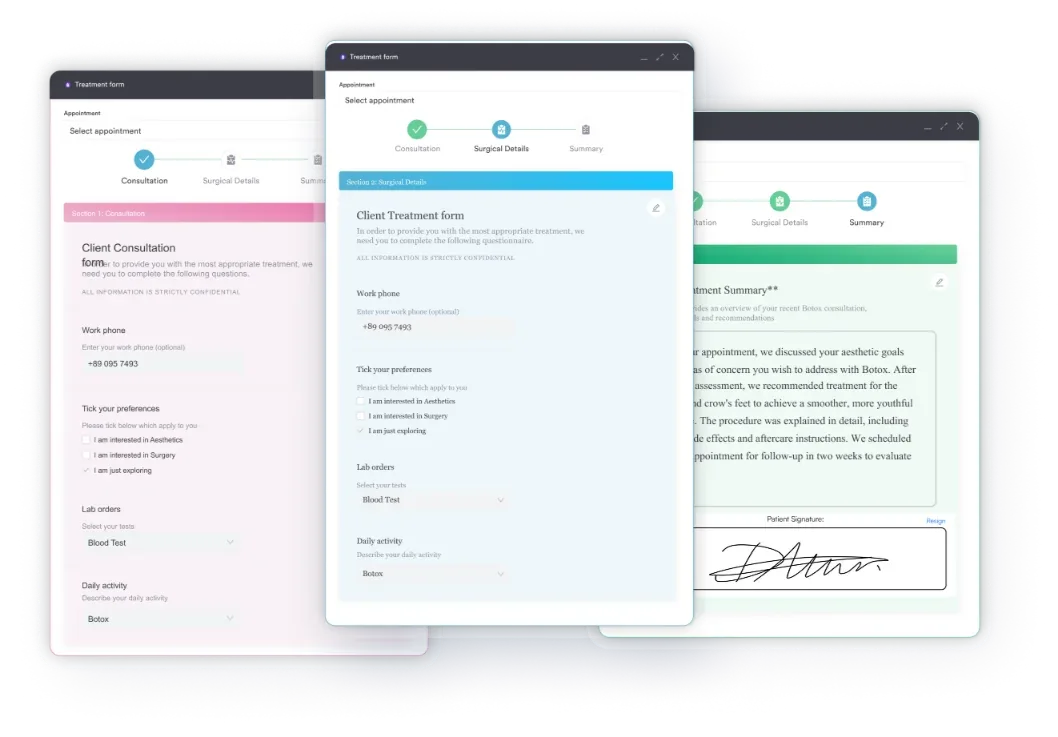
The checklist below tracks ICD-10-CM Official Guidelines Section I.C.19. Practices that build these fields into digital intake forms and structured note templates capture them at the point of care.
Two failures show up again and again. Operative notes describe wound irrigation and debridement without ever stating the Gustilo classification. Emergency records document an open fracture without wound measurement or contamination severity.
Both create coding holds that delay reimbursement.
The S52.333 series generates a predictable set of errors across orthopedic and trauma practices. Understanding them before submission prevents the most common denial patterns.
The ICD-10-CM tabular includes several notation types that govern how S52.333C interacts with other codes. These apply at the S52 category level and affect claim submission decisions.
Excludes2 (S52 category level): Fracture at wrist and hand level (S62.-) is excluded. The S52 category covers the forearm shaft. Distal radius fractures at the wrist joint may fall under a different code. Always verify the anatomical location before assigning an S52.3x code.
Code Also: For any open fracture, code also any associated wound of forearm (S51.-) when separately documented and when coding guidelines permit dual reporting. Verify payer-specific rules before adding a wound code.
Applicable To: Broken arm (upper) NOS sits at the S52 category level. S52.333C inherits that guidance from its parent category. The code is specific enough that coder discretion is limited, so confirm current edition exclusions in the official tabular before submission.
Check Excludes1 at both the S52 category level and the S52.3 subcategory level before submitting S52.333C. Excludes1 restrictions at the parent category apply to all codes within it, including S52.333C, even if not repeated at the code-specific level.
S52.333C is an initial encounter code for a high-complexity open fracture. The CPT code submitted alongside it depends on the treatment. Open reduction with internal fixation is standard for a displaced oblique radius shaft fracture at Gustilo type III severity.
Staged care often starts with external fixation. Confirm every descriptor and modifier against the AAPC CPT code reference before submission.
Pairing errors drop when claims management software links the ICD-10 and CPT codes in one workflow. That matters most for sports medicine and trauma practices submitting these claims at volume.

These codes describe fractures of the radial shaft, which is the anatomy S52.333C covers. The 25600 to 25609 family describes distal radius fractures at the wrist and does not belong on this claim.
Check the location in the operative note against the descriptor, and confirm the pairing in the current CPT codebook.
The documentation problems behind S52.333C errors are preventable when the right fields sit in the clinical workflow from the start. A coder who receives “Gustilo type IIIA, right radius shaft, oblique pattern, displaced, initial encounter” can assign the code in seconds.
A coder who receives “open fracture, right forearm” has to query the provider, delay the claim, and risk a denial. Pabau Scribe.
Fracture type, Gustilo grade, laterality, and encounter context all live in one structured note rather than arriving as afterthoughts. For physical therapy teams handling long recovery timelines, that consistency carries through every follow-up visit.
At the claim level, the ICD-10 diagnosis and the CPT procedure code are linked together, so mismatched pairs and unsupported diagnoses surface before submission.

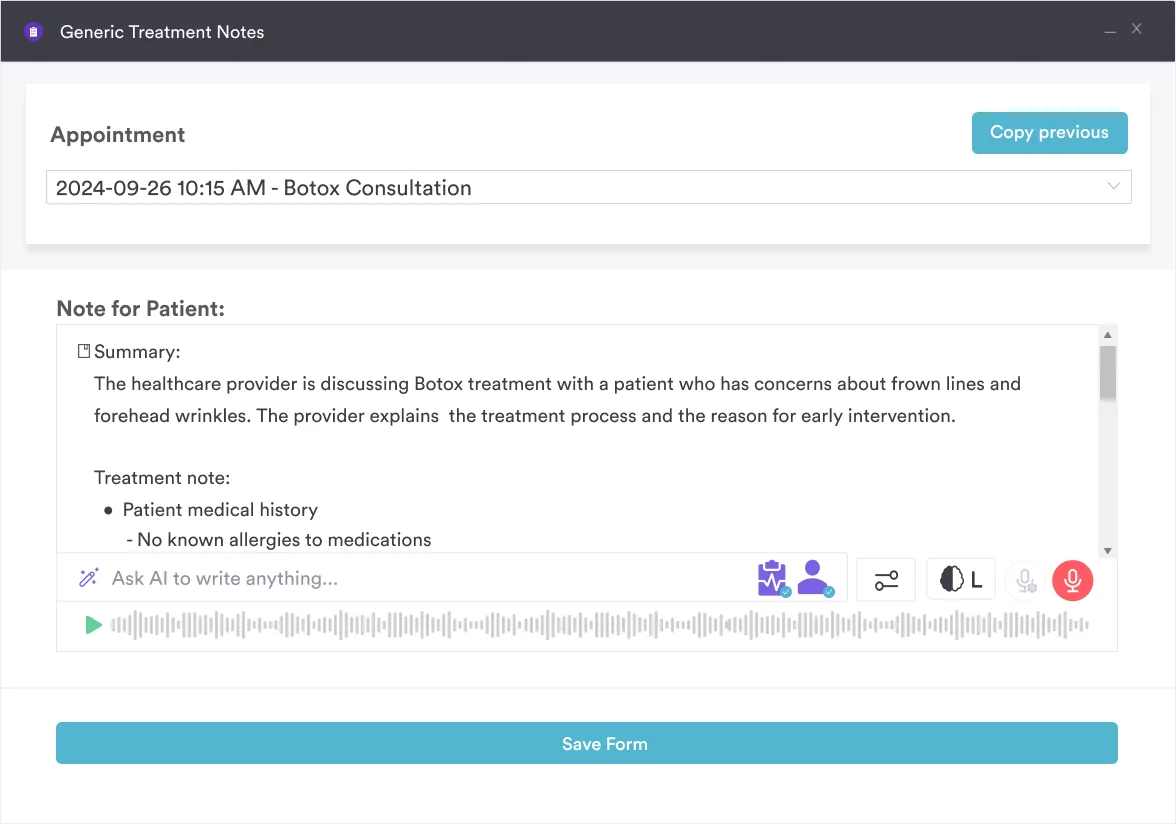
Pabau captures Gustilo grades, laterality, and encounter types in structured clinical records. Coders get what they need before the claim goes out.

S52.333C stands or falls on one line in the operative note. If the Gustilo grade is named, the rest of the code follows from the anatomy and the encounter. If it is missing, no amount of coder judgment fills the space, and the claim waits.
So the work sits upstream of the coder, in how the note is built rather than how the claim is reviewed. Get the fields into the template and the S52.333 series stops being a guessing exercise. Book a demo to see how Pabau captures fracture documentation at the point of care.

Reporting a closed fracture reduction? 23605 shows how manipulation changes the procedure code you submit.
Billing a separate forearm procedure? 25110 covers the descriptor and the documentation for forearm and wrist work.
Coding an amputation alongside the fracture? S78.922S explains how the sequela suffix works once active treatment ends.
Handling a late effect years after the injury? S12.14XS walks through sequela coding for a fracture that has healed.
S52.333C is a billable ICD-10-CM code for a displaced oblique fracture of the shaft of an unspecified radius. It applies at the initial encounter for an open fracture graded Gustilo type IIIA, IIIB, or IIIC. The code is valid for HIPAA-covered transactions under the 2026 ICD-10-CM edition, effective October 1, 2025.
Yes. S52.333C is a specific, billable ICD-10-CM code valid for submission in HIPAA-covered transactions. It is current under the 2026 ICD-10-CM edition, effective October 1, 2025. Nothing restricts its use as a primary diagnosis code for the covered encounter type.
The Gustilo-Anderson classification grades open fractures by wound size, soft tissue damage, and vascular involvement. Type I is a clean wound under 1 cm, and Type II is a wound of 1 to 10 cm with moderate tissue damage. Type IIIA has extensive soft tissue damage with bone coverage intact. Type IIIB involves periosteal stripping and needs flap coverage. Type IIIC involves an arterial injury requiring vascular repair. S52.333C covers IIIA, IIIB, and IIIC.
The 7th character distinguishes the encounter type and the fracture severity. S52.333A is the initial encounter for a closed fracture. S52.333B is the initial encounter for an open fracture of Gustilo type I or II. S52.333C is the initial encounter for an open fracture of Gustilo type IIIA, IIIB, or IIIC. Subsequent encounter codes such as D, E, F, G, H, and J follow the same progression.
Procedures submitted alongside S52.333C come from the radial shaft fracture family. Closed treatment is reported with 25500 or 25505, and open treatment with internal fixation is reported with 25515. A Galeazzi fracture-dislocation uses 25520 or 25525. The 25600 to 25609 codes describe distal radius fractures at the wrist, so they do not fit a shaft-level fracture. Confirm each descriptor against the current CPT codebook.
Use S52.333C only when laterality is genuinely unspecified in the clinical record. If the note documents the right radius, use S52.331C. For the left radius, use S52.332C. Defaulting to the unspecified code when laterality is documented is a coding error. It increases audit exposure even when the payer accepts the claim.




