ICD-10 code S61.201A: Open wound of left index finger without nail damage
ICD-10 code S61.201A covers a left index finger wound of unstated type ICD-10 co...

Last Updated: Oct 16, 2026
Billable Code Specific Code
S06.2X4A is the billable ICD-10-CM code for diffuse traumatic brain injury with loss of consciousness of 6 hours to 24 hours, initial encounter.
Let Pabau's smart automation suggest the right codes, reduce claim denials, and keep your practice compliant—effortlessly.
Automate repetitive tasks and focus on what matters most—your patients.
Reduce coding errors and ensure compliance with the latest regulations.
Clean claims, fewer denials, and faster reimbursements.
Powerful insights and reporting to help your practice thrive.
HIPAA compliant SOC 2 certified GDPR-compliant Trusted by 4,000+ clinics worldwide

ICD-10 code S06.2X4A describes diffuse traumatic brain injury with loss of consciousness of 6 to 24 hours, initial encounter – it is a fully billable 7-character ICD-10-CM code.
The ‘4’ in position 6 specifies loss of consciousness duration of 6 to 24 hours; the ‘7th character A’ designates initial encounter – selecting the wrong character is a common audit finding.
External cause codes from the V/W/X/Y chapters are required alongside S06.2X4A per ICD-10-CM Official Coding Guidelines Section I.C.20; do not submit the injury code alone.
Pabau’s claims management software and AI medical scribe help clinical teams document LOC duration, select the correct 7th character, and submit accurate claims without manual lookups.
The table below summarizes the core facts coders and billing staff need before processing a claim using ICD-10 code S06.2X4A.
Every character in S06.2X4A carries specific clinical meaning. Misreading any one of them – particularly the LOC-duration digit or the 7th character – is a frequent cause of claim rejection and payer audit flags. According to the CMS ICD-10-CM code files, the full 7-character structure is required for this code to be billable.
The placeholder “X” in position 5 is a structural requirement of ICD-10-CM, not a shorthand or error. Omitting it – submitting “S06.24A” rather than “S06.2X4A” – creates an invalid code that payers will reject outright. The CDC/NCHS ICD-10-CM web tool confirms the placeholder requirement for the entire S06.2 subcategory.
The 7th character is the most commonly misapplied element of injury codes in ICD-10-CM. For S06.2X4 (diffuse TBI with LOC 6-24 hours), three valid 7th characters exist – and the correct selection depends entirely on where the patient is in their episode of care, not on how severe the injury is.
A common misconception: “initial encounter” does not mean the first time a patient visits that specific provider. It means the patient is still receiving active treatment for the injury. A patient transferred from a community hospital to a trauma center may still warrant the “A” extension at the receiving facility if active management is ongoing.
Athletic injuries coded here are managed day-to-day in sports medicine software, through assessment, treatment, and return-to-play.
Understanding the full hierarchy helps with crosswalk decisions and related-code lookups. The breadcrumb path for S06.2X4A is:
The parent code S06.2 is not billable on its own – only the fully specified 7-character codes (S06.2X0A through S06.2X9S) are accepted for claims. Submitting S06.2 without the remaining characters results in an invalid-code rejection.
Diffuse traumatic brain injury (diffuse TBI) involves widespread neuronal damage across multiple brain regions rather than a localized contusion or hemorrhage. It most commonly results from rotational forces, common in motor vehicle collisions and falls, causing diffuse axonal injury (DAI) at the microscopic level.
The LOC duration of 6 to 24 hours encoded in position 6 represents moderate-to-severe injury on standard TBI severity scales. For clinical documentation to support S06.2X4A, the treating physician must record the duration of loss of consciousness explicitly. Coders cannot infer or estimate this duration from GCS scores alone.
Concussion (S06.0) is classified as mild TBI and typically involves brief or no loss of consciousness. Diffuse TBI (S06.2) implies more severe, widespread axonal involvement and a longer LOC duration.
The distinction matters at the code level because they occupy entirely separate subcategories. Never substitute one for the other based on clinical judgment without explicit physician documentation of the diagnosis type.
Document the exact LOC duration in hours, not just ‘prolonged’ or ‘extended.’ Payers reviewing S06.2X4A claims will look for physician notes stating a specific duration window. Vague language like ‘unconscious for several hours’ can trigger a request for additional records or a downcode to an unspecified LOC duration code.
The WHO ICD-10 classification framework and its US clinical modification both attach instructional notes to code categories that govern correct use. For S06.2X4A, the relevant notes at category and subcategory level are:
The Excludes 1 distinction is particularly important in polytrauma cases. If the attending physician documents both diffuse TBI and a separate focal contusion, code each injury to its most specific code – not S06.2X4A alone.
Documented cerebral edema moves the coder out of S06.2 entirely and into the S06.1X- subcategory. For a late effect where the record shows no loss of consciousness, the code is S06.1X0S.
Per ICD-10-CM Official Coding Guidelines Section I.C.20, external cause codes are required to capture the mechanism, place of occurrence, and activity for injury codes. Submitting S06.2X4A without an appropriate external cause code is technically incomplete. This can result in payer-specific denials for facilities with mandatory external cause reporting policies. Accurate documentation at the time of encounter prevents downstream audit exposure. A coding error surfaces as a cash flow problem weeks later, which is why the healthcare revenue cycle is measured end to end. A superbill form is not a claim form, but it carries the same data the patient insurer will ask for.
External cause codes always carry the same 7th character as the primary injury code. For an initial encounter, all external cause codes in the claim receive the “A” extension.
The S06.2X subcategory contains multiple codes that differ only in their LOC-duration digit. Understanding the full range is critical to selecting the right code when physician documentation specifies a duration falling outside the 6-24 hour window. Other S06 sibling codes follow the same 7th-character logic.
The AAPC’s ICD-10-CM code search tool allows coders to browse the full S06 subcategory range alongside crosswalk references for related CPT codes.
Accurate selection of ICD-10 code S06.2X4A hinges on specific physician documentation, and these requirements are non-negotiable for code validity. Facilities using digital intake forms and structured clinical templates capture that documentation more consistently, which cuts down on downcoding.
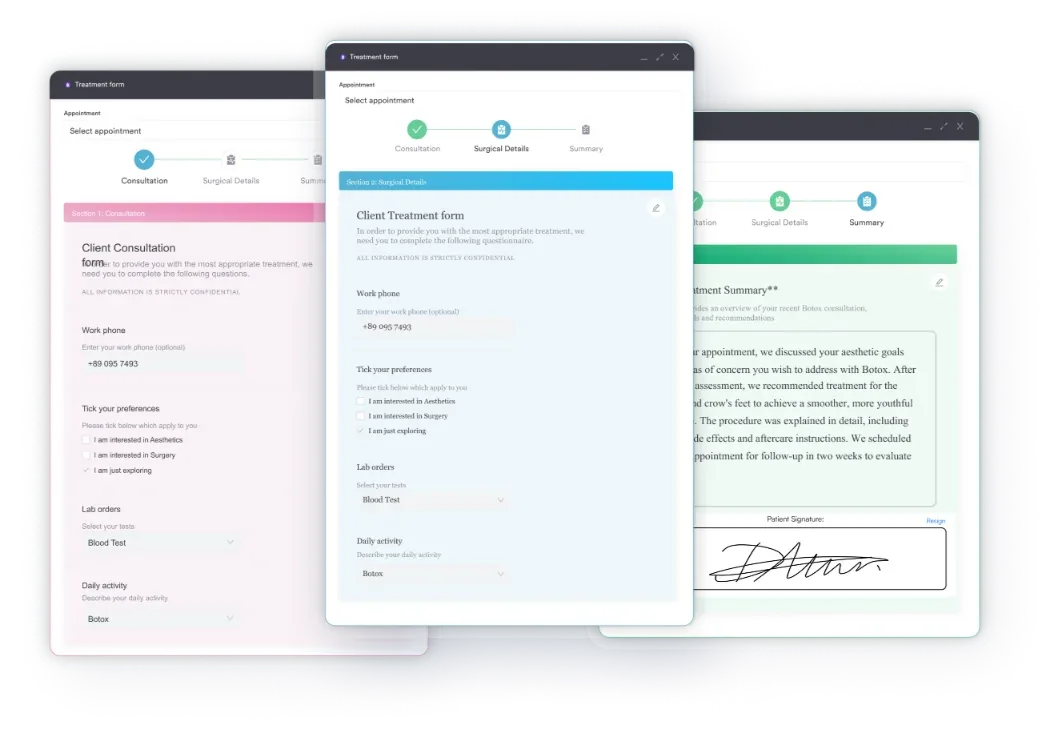
Maintaining HIPAA-compliant record-keeping alongside accurate ICD-10 code documentation is especially important for TBI cases, which are subject to higher levels of payer scrutiny and occasional audit referral.

Pabau’s claims management tools and AI medical scribe help clinical teams capture the exact documentation needed to support codes like S06.2X4A – LOC duration, encounter type, and external cause – at the point of care. Book a demo to see how it works.

S06.2X4A is accepted for Medicare claims submissions as a primary diagnosis when supported by adequate physician documentation. Diffuse TBI with 6-24 hours LOC typically maps to MS-DRG 082 (Traumatic Stupor and Coma, Coma Greater Than 1 Hour with MCC) or MS-DRG 083/084, depending on the presence of major or minor complications and comorbidities.
DRG assignments change annually and should always be verified against current CMS ICD-10-CM coding guidance.
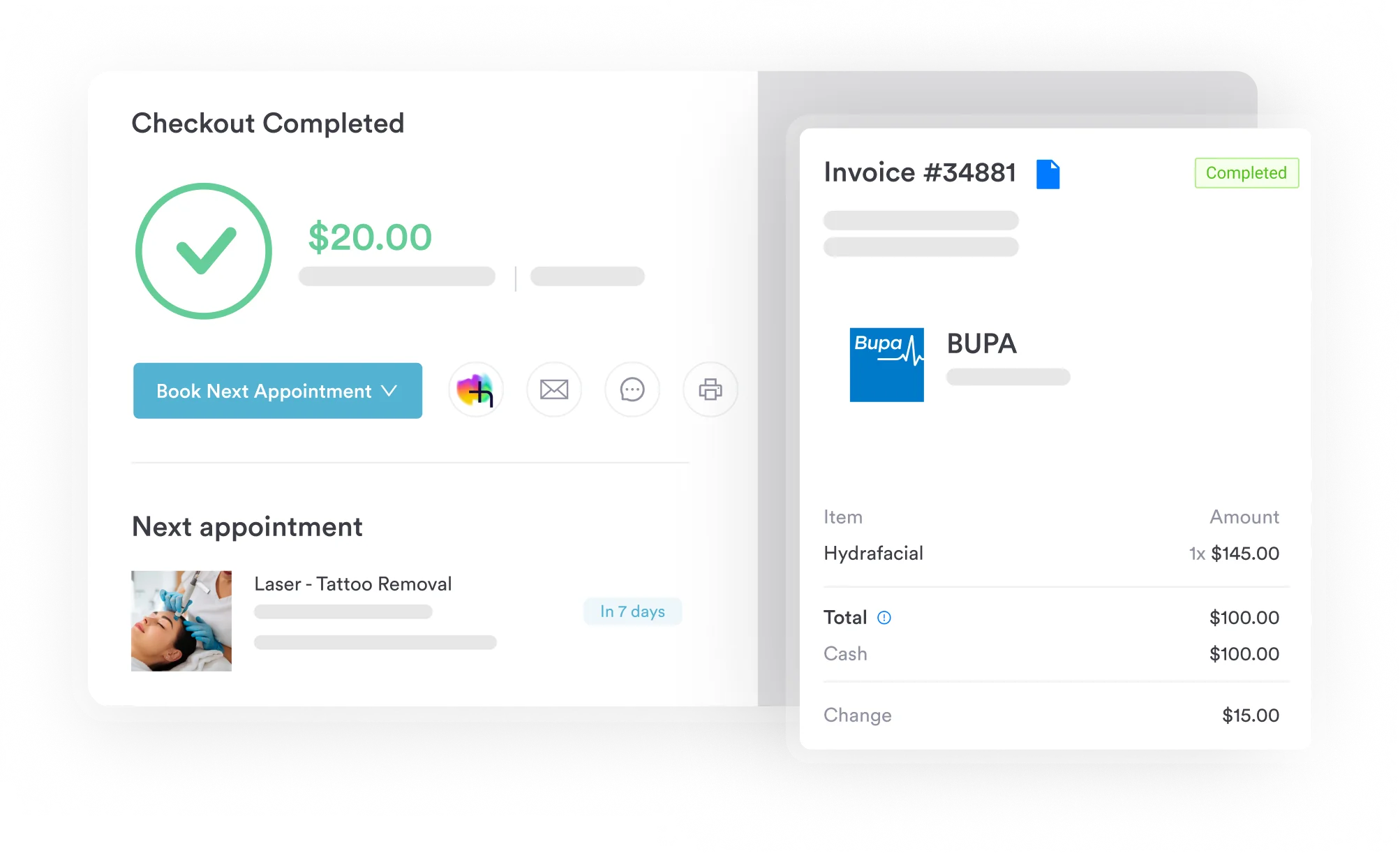
Using Pabau’s claims management software can help neurology and trauma billing teams flag incomplete external cause code entries and alert coders to missing documentation before claims are submitted. For teams handling high volumes of TBI admissions, structured workflows that surface the required documentation fields reduce both denial rates and rework time.
Payer-specific coverage policies for diffuse TBI vary. Some commercial payers require pre-authorization for extended inpatient stays even when the primary diagnosis is S06.2X4A. Always verify the individual plan’s policy before assuming standard Medicare coverage logic applies.
When building a TBI billing checklist, include a verification step that confirms the LOC duration field is populated with a specific numeric value – not just ‘prolonged’ or ‘extended.’ This single missing detail accounts for the majority of S06.2X4 downcodes to S06.2X9 (unspecified duration) identified in internal audits.
Documentation quality is what ultimately determines claims accuracy for S06.2X4A.
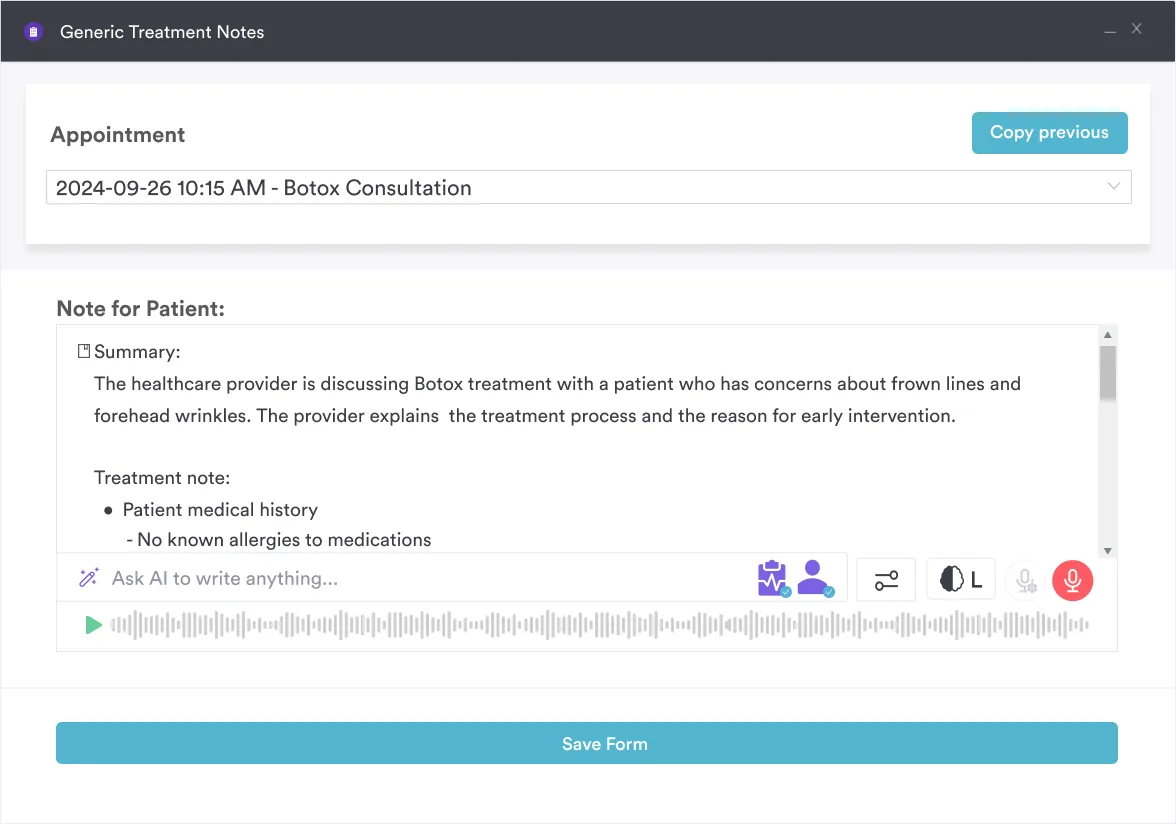
Pabau’s AI medical scribe records and structures consultation notes, helping clinicians capture the specific language that supports ICD-10-CM codes like S06.2X4A. Structured clinical documentation tools keep what the treating physician observed closely aligned with what ends up in the billable record, which is where most TBI coding errors originate.
For facilities managing high-acuity neurological admissions.
ICD-10 code S06.2X4A is a fully billable, 7-character code for diffuse traumatic brain injury with loss of consciousness of 6 to 24 hours at initial encounter. The most common errors – wrong LOC-duration digit, incorrect 7th character, missing external cause code, and confusion with concussion (S06.0) – are all preventable with structured documentation and a clear coder review checklist.
Pabau’s claims management software and AI scribe help neurology and trauma teams capture the documentation required to support this code accurately at the point of care. To see how Pabau supports ICD-10 coding workflows across specialties, book a demo.

Coding a vascular complication of head trauma? S06.821S covers left internal carotid artery injury as a sequela, a common companion finding in severe TBI cases.
Documenting an associated facial fracture? S02.642A covers fracture of the ramus of the left mandible, frequently coded alongside diffuse TBI in polytrauma cases.
Seeing vision complications after head trauma? H54.3 covers unqualified visual loss in both eyes, a recognized late effect of severe TBI.
ICD-10 code S06.2X4A is the billable ICD-10-CM code for diffuse traumatic brain injury with loss of consciousness of 6 hours to 24 hours, initial encounter. Each character segment specifies the injury category (S06 = intracranial injury), type (diffuse TBI), placeholder (X), LOC duration (4 = 6-24 hours), and episode of care (A = initial encounter).
Yes. S06.2X4A is a fully billable, 7-character ICD-10-CM code valid for claims submission as confirmed in the CDC/NCHS ICD-10-CM FY2026 tabular list. The 7-character structure is required – truncated versions such as S06.2X4 or S06.2 are not billable.
The 7th character ‘A’ designates initial encounter, meaning the patient is receiving active treatment for the injury for the first time. It does not mean the first visit to a specific provider. Subsequent follow-up visits during recovery use ‘D’; late effects or complications use ‘S’ (sequela).
Use S06.2X4A when the patient is still in active treatment for the diffuse TBI (including ED visits and acute inpatient admissions). Use S06.2X4D for subsequent encounters during the healing phase. Use S06.2X4S when coding a late effect or sequela – such as post-TBI cognitive impairment – that arises from the original injury.
External cause codes from ICD-10-CM Chapter 20 (V/W/X/Y) are required alongside S06.2X4A. Common examples include W19.XXXA for an unspecified fall and V49.40XA for a motor vehicle collision. The external cause codes must carry the same 7th character as the primary injury code – ‘A’ for initial encounter.
S06.2X4A codes diffuse traumatic brain injury – a moderate-to-severe injury involving widespread axonal damage – with LOC of 6 to 24 hours. S06.0X4A codes concussion (mild TBI) with the same LOC duration. They are distinct clinical entities; the choice must be driven by the treating physician’s documented diagnosis, not coder interpretation of severity.