

ICD-10 Code S42.444P: Medial epicondyle fracture, right humerus
ICD-10 Code S42.444P: full descriptor and code validity ICD-10 Code S42.444P car...

Last Updated: Oct 13, 2026
Billable Code Specific Code
S06.358A is the billable ICD-10-CM code for traumatic hemorrhage of left cerebrum with loss of consciousness of any duration with death due to other cause prior to regaining consciousness, initial encounter.
S06.358A sits inside category S06, intracranial injury, within chapter S00-T88 for injury and poisoning. It closes with a worked coding scenario and the errors that trigger denials.
Let Pabau's smart automation suggest the right codes, reduce claim denials, and keep your practice compliant—effortlessly.
Automate repetitive tasks and focus on what matters most—your patients.
Reduce coding errors and ensure compliance with the latest regulations.
Clean claims, fewer denials, and faster reimbursements.
Powerful insights and reporting to help your practice thrive.
HIPAA compliant SOC 2 certified GDPR-compliant Trusted by 4,000+ clinics worldwide

ICD-10 code S06.358A covers traumatic hemorrhage of the left cerebrum with loss of consciousness of any duration, ending in death from a separate cause.
The code is billable for FY2026, effective October 1, 2025, and the 7th character A marks the initial encounter.
S06.357A and S06.358A are both fatal codes, and the cause of death is what separates them.
Four elements must appear in the record: left-side laterality, a traumatic mechanism, documented loss of consciousness, and death from another cause.
Practice management software like Pabau helps coding teams capture that documentation at the point of care, before the chart closes.
S06.358A describes one narrow clinical picture. The patient has a traumatic left cerebral hemorrhage, loses consciousness for any length of time, and dies of a separate cause before waking. The Centers for Medicare and Medicaid Services (CMS) and the National Center for Health Statistics (NCHS) maintain the code.
What makes it unusual is the mortality qualifier built into the descriptor. Most TBI codes in the S06 category stop at injury severity and loss-of-consciousness duration. S06.357A and S06.358A go further, and both require death before consciousness returned. The pair then splits on what caused that death.
Coders in emergency and trauma settings meet S06.358A most often. It usually travels with injury codes describing the separate fatal mechanism. Milder head injuries from the same S06 category reach sports medicine practices too, though never with this descriptor.
Four terms in and around this descriptor decide which code you land on:
S06.358A sits at the bottom of a five-level chain that starts with chapter S00-T88. The S06 category holds every intracranial injury code, and S06.3 narrows that to focal traumatic brain injury. The table below traces each level down to the billable code.
Because S06.3 covers focal traumatic brain injury rather than diffuse injury, S06.358A is wrong for a hemorrhage crossing both hemispheres. The same applies when laterality is genuinely unspecified in the record. Working down the parent codes in order keeps denial risk down.
To confirm a level, run an ICD-10 code lookup in the CDC/NCHS ICD-10-CM web tool. It shows the includes and excludes notes at every step of the S06 tabular list, without hiding them behind a hover.
The parent code S06.358 needs a 7th character before it is billable, and three extensions are valid. Any other character, or none at all, makes the claim invalid under the ICD-10-CM Official Coding Guidelines.
For S06.358A, the initial encounter designation covers the first episode of active clinical management. That might be the emergency department, the operating room, or an inpatient bed.
Because the descriptor already includes death before consciousness returned, S06.358A rarely appears on an outpatient follow-up claim. S06.358S is rarer still, since a sequela code assumes a patient who lived long enough to have one. Late effects of survivable brain injuries are usually documented by physical therapy teams in rehabilitation. Most avoidable denials on this code trace back to eligibility verification that was never run.
The S06.35 group covers traumatic hemorrhage of the left cerebrum across every loss-of-consciousness threshold. Picking the wrong sibling from this group is the most common LOC error in TBI billing. The table below shows all of them, with S06.358A marked for reference.
For right-side laterality, the equivalent group is S06.34 (S06.340A through S06.349A). Unspecified laterality routes to S06.36. Verify laterality from the imaging report or the attending physician’s note before assigning any S06.35x code, and query the physician when left-side confirmation is missing.
There is no single ICD-10 acquired brain injury code, because acquired brain injury is a clinical umbrella term rather than an ICD-10-CM heading. Traumatic causes land in the S06 category. Non-traumatic causes, such as anoxic or hemorrhagic events, land in chapter IX instead.
The documented mechanism decides which chapter you code from. A medical coding cheat sheet is a quick way to keep those chapter boundaries straight at the desk.
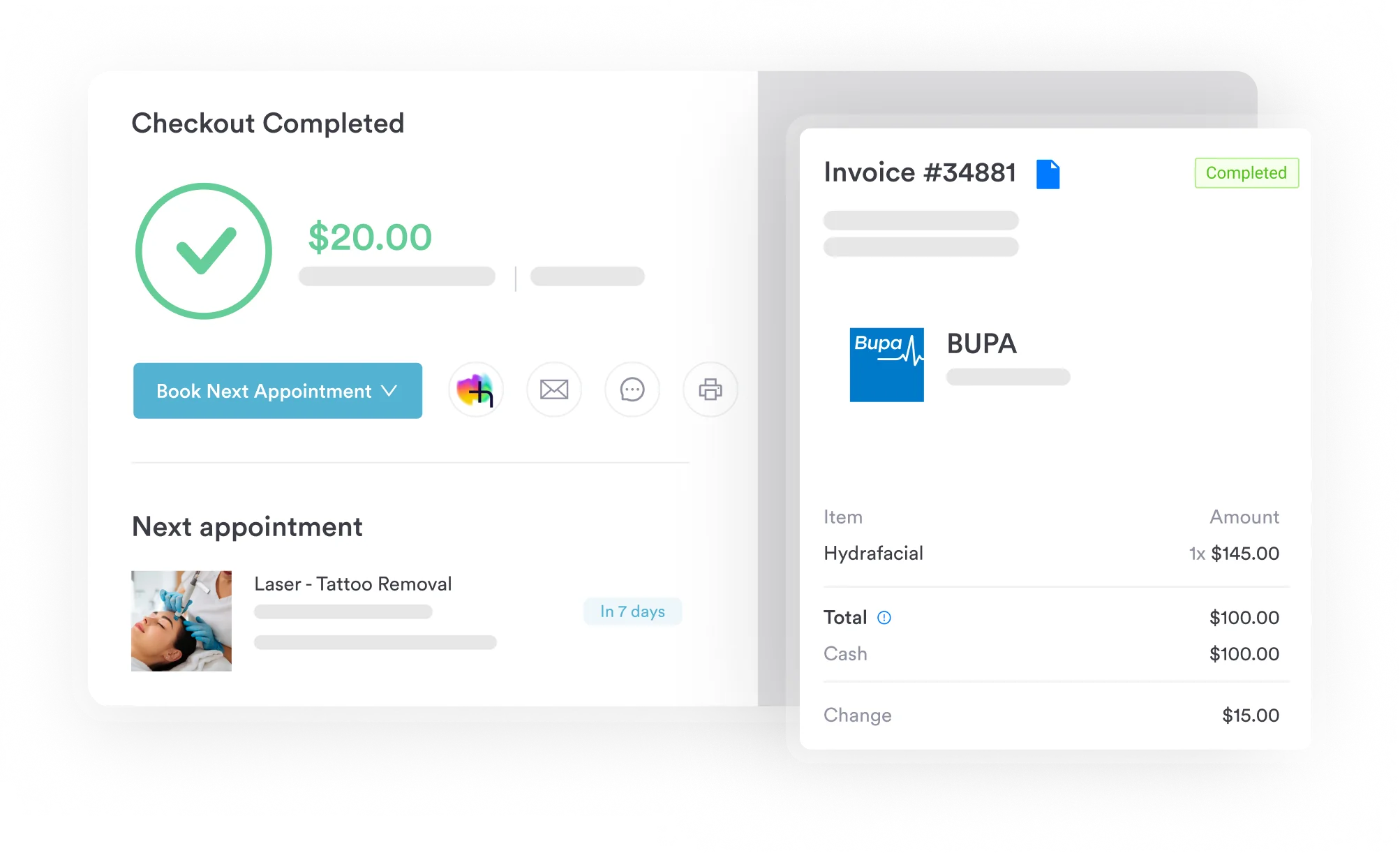
The medical record has to support all four of the code’s clinical qualifiers before a coder assigns it. Miss one and the code becomes unsupportable, which is what creates audit exposure. The ICD-10-CM Official Guidelines, maintained jointly by CMS and NCHS, require the treating clinician to document the diagnosis clearly.
Coders supporting trauma teams get further with a documentation checklist that prompts the attending physician on each of those four elements. Facilities handling complex TBI cases often use digital intake forms to standardize what the record captures. That cuts the number of post-discharge queries a coder has to raise.
S06.358A is fully billable for FY2026. It reaches payers almost only through inpatient and emergency department claims, because the death-before-consciousness scenario does not occur in outpatient care. Every brain injury ICD-10 code in this family carries the same payer expectations.
Polytrauma admissions rarely carry a single injury code. A spinal injury takes its own code. Vascular injuries follow the S25 series.
Run a monthly audit of S06.358A claims. Confirm each one carries a supporting external cause code and an explicit left-side laterality note from the attending physician. Claims missing either element drive most payer-initiated reopenings on this code.
TBI codes in the S06.3 category produce the same handful of errors year after year. Knowing where coders go wrong keeps the claim in step with the documentation. Practices running structured clinical record systems that flag coding conflicts at entry catch most of them before the claim leaves.
Applying ICD-10 code S06.358A correctly means every clinical element is present and traceable in the record. The scenario below runs the coding logic step by step.
Clinical scenario: a 52-year-old man arrives in the ED after a high-speed motor vehicle collision. CT head shows a left cerebral hemorrhage, and he is unconscious on arrival. He goes to the OR for emergency management of a ruptured spleen. He dies there of hemorrhagic shock from the splenic injury, without regaining consciousness.
Sequenced that way, the claim tells the payer the whole story in the right order. The intracranial injury explains the admission, the splenic injury explains the death, and the V-code explains both.
Complex TBI codes like S06.358A fail at claim review when one required element never reaches the note. Retrospective chart queries then add days to an already slow reimbursement cycle. Pabau, an all-in-one practice management system, moves that work to the point of care.
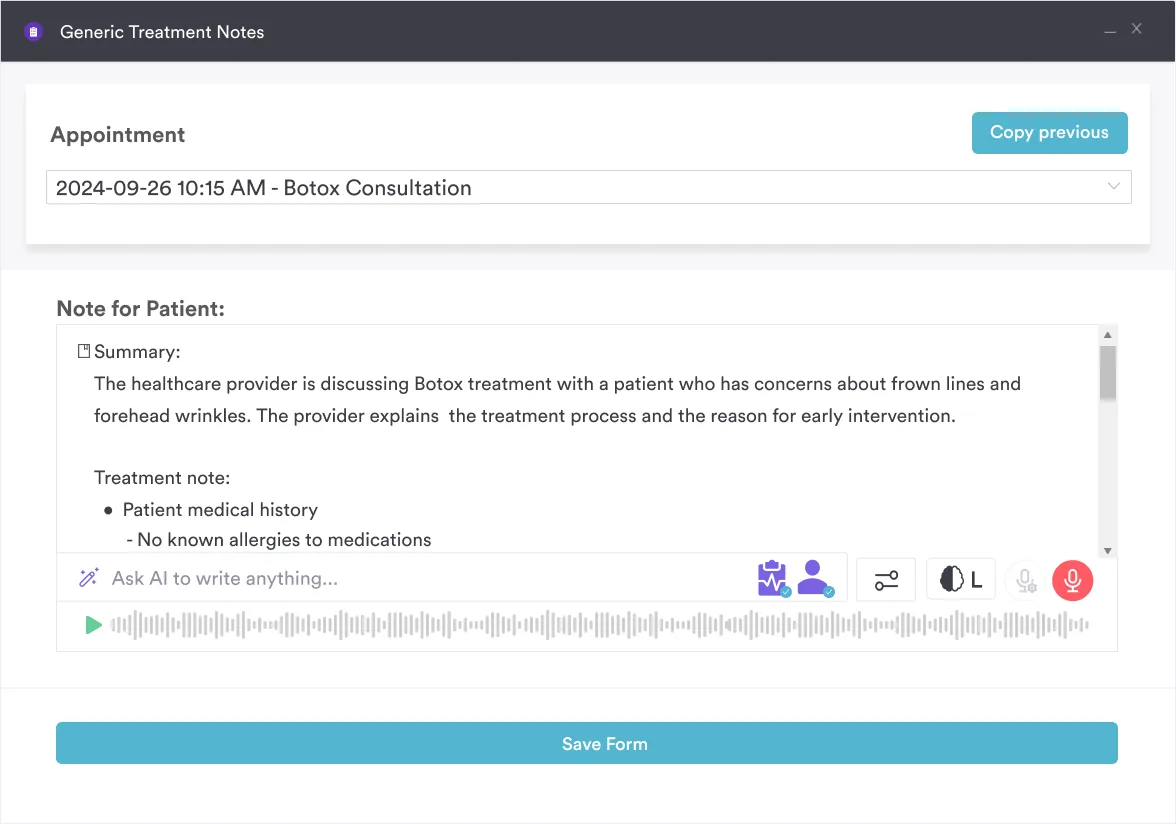
Clinicians using Pabau Scribe, our AI scribe, can structure the note while the encounter is still open. Laterality, LOC status, injury mechanism, and cause of death all land in the record before the chart closes.
Pabau’s integrated claims management software connects the clinical note to the billing workflow. Coders cross-reference the record in one place instead of switching between systems to answer a single laterality question.
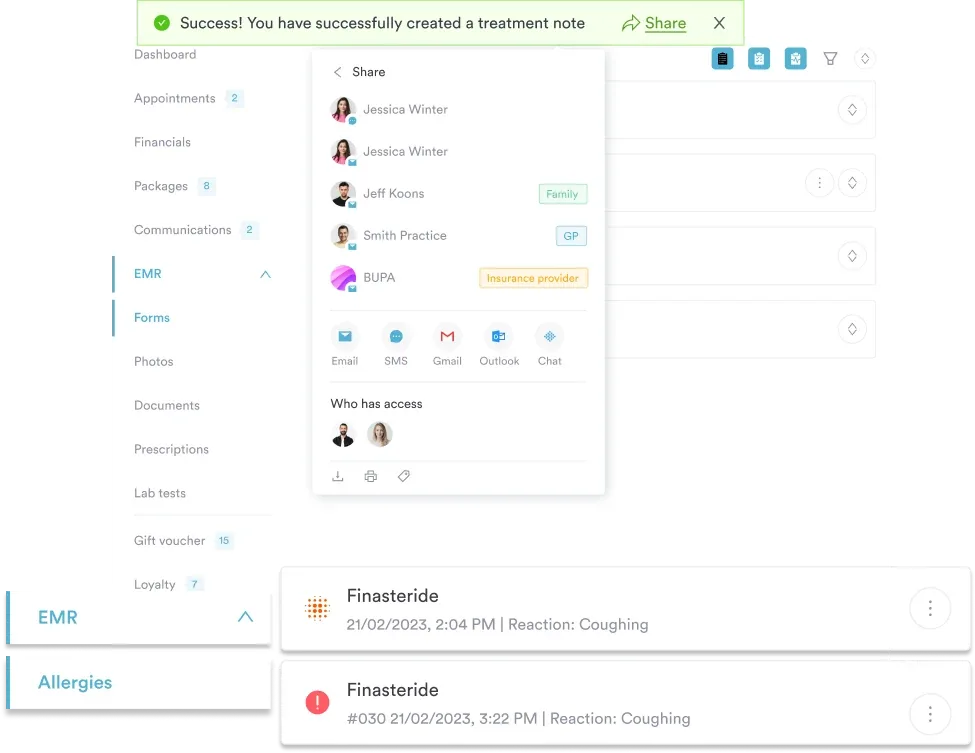
Teams handling high trauma volume can build note templates in Pabau that prompt for every element a code requires. That trims the physician query burden and shortens the documentation-to-billing cycle.

Pabau’s clinical records and coding workflows capture the exact documentation complex codes like S06.358A need. Your team can close the chart and the claim without a second pass.

ICD-10 code S06.358A is one of the most specific codes in the S06 category, and that specificity is deliberate. Three clinical conditions have to hold at once before you can assign it. Verify each one against the record rather than the discharge summary.
Trauma coding rarely fails on code selection. It fails when the note skipped laterality, mechanism, LOC, or cause of death while the patient was still in the room. Fix the documentation workflow first and the coding follows.
Pabau’s HIPAA-compliant clinical record tools keep those four elements in one place. Book a demo to see how Pabau supports TBI coding accuracy and cleaner trauma claims.

Coding a diffuse brain injury instead of a focal one? S06.2X4A shows how the diffuse TBI group handles loss of consciousness thresholds.
Need the fallback code when the head injury is not specified? S09.90XA covers unspecified head injury at the initial encounter.
Billing anesthesia for ear surgery? Ear surgery anesthesia billing guide covers the catch-all code billed when no more specific ear anesthesia code applies.
Billing the surgical side of an intracranial bleed? CPT code 00212 covers anesthesia for intracranial procedures and subdural taps.
ICD-10 code S06.358A is a billable ICD-10-CM code for traumatic hemorrhage of the left cerebrum at initial encounter. It applies when loss of consciousness of any duration ended in death from a separate cause. The record must show left-side laterality, a traumatic mechanism, documented LOC, and that separate cause of death.
Yes, S06.358A is a fully billable and specific ICD-10-CM code for the FY2026 edition, effective October 1, 2025. It is the most granular code in its group and can be submitted for reimbursement on its own. The parent code S06.358 is not independently billable.
The two codes describe the same condition but a different encounter. S06.358A covers the initial encounter, when the patient first receives active treatment for the injury. S06.358D covers a subsequent encounter during healing, after active treatment has ended. Because S06.358 describes a fatal outcome, S06.358D turns up rarely, mostly in mortality review or delayed complication documentation.
Four elements must appear in the record. Imaging or physician notes have to confirm left-side laterality. The note has to state a traumatic mechanism of injury. Loss of consciousness of any duration has to be recorded. The record must also show death from a separate cause before the patient regained consciousness. Query the physician whenever an element is ambiguous.
The cause of death separates the two codes. S06.357A applies when the brain injury itself killed the patient before consciousness returned. S06.358A applies when a separate cause, such as hemorrhagic shock from another injury, ended the patient’s life first. Neither code describes a patient who survived, and both require LOC of any duration. Confusing them is the most common specificity error in the S06.35 group.
S06.358A became effective on October 1, 2025, with the FY2026 ICD-10-CM edition. That edition applies to every encounter on or after that date. Always check which edition covers your date of service before cross-referencing the code list.
A motor vehicle accident has no single TBI code, because the code follows the brain injury documented. A left cerebral hemorrhage with LOC and death from another cause before waking is S06.358A. Whichever brain injury ICD-10 code applies, an external cause V-code for the collision accompanies it. The worked scenario above pairs S06.358A with V49.40XA for an injured driver.




