



CCSD code G5100: Bypass of duodenum billing guide
CCSD code G5100 bills a bypass that leaves the duodenum in place CCSD code G5100...

Last Updated: Oct 16, 2026

CPT code 0124U is a Proprietary Laboratory Analyses (PLA) code that has been deleted and is no longer valid for billing
Providers must use an appropriate crosswalk or unlisted laboratory procedure code when 0124U appears on legacy claims
Medicare coverage for PLA codes requires supporting ICD-10 diagnosis codes and compliance with CLFS payment rates
Practice management software like Pabau helps labs and practices track CPT code status changes and reduce claim rejections from deprecated codes
CPT code 0124U is a deleted Proprietary Laboratory Analyses (PLA) code that identified Eurofins NTD, LLC’s First Trimester Screen Fβ assay, a biochemical test reporting fetal trisomy risk scores. The American Medical Association (AMA) added the code effective October 1, 2019, and deleted it effective July 1, 2020.
Labs and billing teams still encounter 0124U on legacy records, remittance advice, and insurance correspondence years after its deletion. Submitting it on a new claim triggers an automatic rejection, with no opportunity for a simple correction. This guide covers the code descriptor, crosswalk options, ICD-10 pairings, and Medicare billing requirements, drawing on guidance from the AMA’s CPT code set overview.
CPT code 0124U belongs to the Proprietary Laboratory Analyses (PLA) code subset within the CPT system. PLA codes identify specific tests performed by a single, named laboratory or manufacturer, distinguishing them from conventional CPT laboratory codes that describe generic test methodologies any qualified lab may perform. The ADHD screening CPT code page illustrates how the AMA structures specialty-specific codes, and PLA codes follow a parallel but distinct process.
CPT code 0124U’s long descriptor read: fetal congenital abnormalities, biochemical assays of three analytes (free beta-hCG, PAPP-A, and AFP), time-resolved fluorescence immunoassay, maternal dried-blood spot, algorithm reported as risk scores for fetal trisomies 13, 18, and 21. Eurofins NTD, LLC held the code exclusively, marketing the test under the proprietary name First Trimester Screen Fβ.
Because PLA codes are manufacturer- or lab-specific, the descriptor identifies both the analyte or test methodology and the single laboratory that performed it. Once a lab discontinues a test, or the associated CPT Editorial Panel application lapses, the AMA deletes the code rather than retiring it to a non-billable category. That’s what happened here: the AMA added 0124U effective October 1, 2019, and deleted it effective July 1, 2020, alongside four related Eurofins NTD codes (0125U–0128U).
OB/GYN and fertility practices that order first-trimester screening tests like this one need practice management software built around prenatal and reproductive care workflows.
The AMA introduced PLA codes to solve a specific problem: conventional CPT laboratory codes describe test methodologies generically, but proprietary tests from a single manufacturer cannot be accurately identified by those same codes. PLA codes carry a “U” suffix (e.g., 0001U through 0XXX U) and each descriptor names the sponsoring laboratory or manufacturer explicitly.
According to the AMA’s CPT coding resources, the AMA releases PLA codes quarterly following an application process. Eligibility requires the test to be commercially available, performed by a named single-source laboratory, and distinct from any existing CPT code. This application-driven model means the code population changes every quarter as new tests are approved and older ones are deleted.
Coders working with in vitro diagnostic (IVD) tests should verify PLA code status at the start of each quarter.
CPT code 0124U has been deleted and is no longer active for billing. Confirmed by AAPC’s deleted code registry, the code path explicitly designates 0124U as a deleted PLA code. Submitting a deleted CPT code on a claim triggers an automatic rejection from the payer’s editing system, with no opportunity for the kind of resubmission that applies to a coding error on an active code.
Billing teams encountering 0124U on outstanding claims, prior authorization requests, or patient account histories should treat it as a legacy reference only. For services previously billed under 0124U, the correct path is to identify the appropriate crosswalk or alternative code for any resubmission or corrected claims. Pabau’s EHR integration guidance covers how software-level code validation can prevent deleted codes from reaching the claims submission queue.
Flag any CPT PLA code containing a “U” suffix in your charge master for quarterly review. The AMA releases updates in January, April, July, and October. A deleted code that remains active in your billing system will generate automatic rejections until corrected.
If you bill private insurers regularly, tightening up how you run your private practice pays off every time a schedule changes.
When a PLA code is deleted, providers have two main coding options: a confirmed AMA crosswalk to an active PLA or molecular pathology code, or the unlisted laboratory procedure code as a fallback. Crosswalk guidance for deleted PLA codes is issued by the AMA as part of each quarterly update. Because specific crosswalk assignments depend on the test analyte and methodology, providers should verify the current crosswalk against the AMA’s official quarterly release documentation before resubmitting any corrected claims.
When using an unlisted code, payers typically require a written description of the procedure and supporting documentation to adjudicate the claim. Submit with a letter of medical necessity and, where applicable, a reference to the deleted PLA code and the reason for submission under the unlisted category. The CrossCoder tool provides bidirectional procedure-to-diagnosis crosswalk lookups that can assist in identifying the most current code pairing for molecular pathology services.
The step-by-step workflow below applies to any active PLA code, and to the corrected-claim process when 0124U appears on legacy documentation. Because 0124U is deleted, steps 1 through 5 describe best-practice billing for PLA codes generally. Step 6 addresses the deletion scenario specifically.
Practices managing multiple CPT codes across laboratory and clinical departments benefit from centralized claims management software that validates code status at the point of charge entry, preventing deleted codes from reaching the submission queue in the first place.
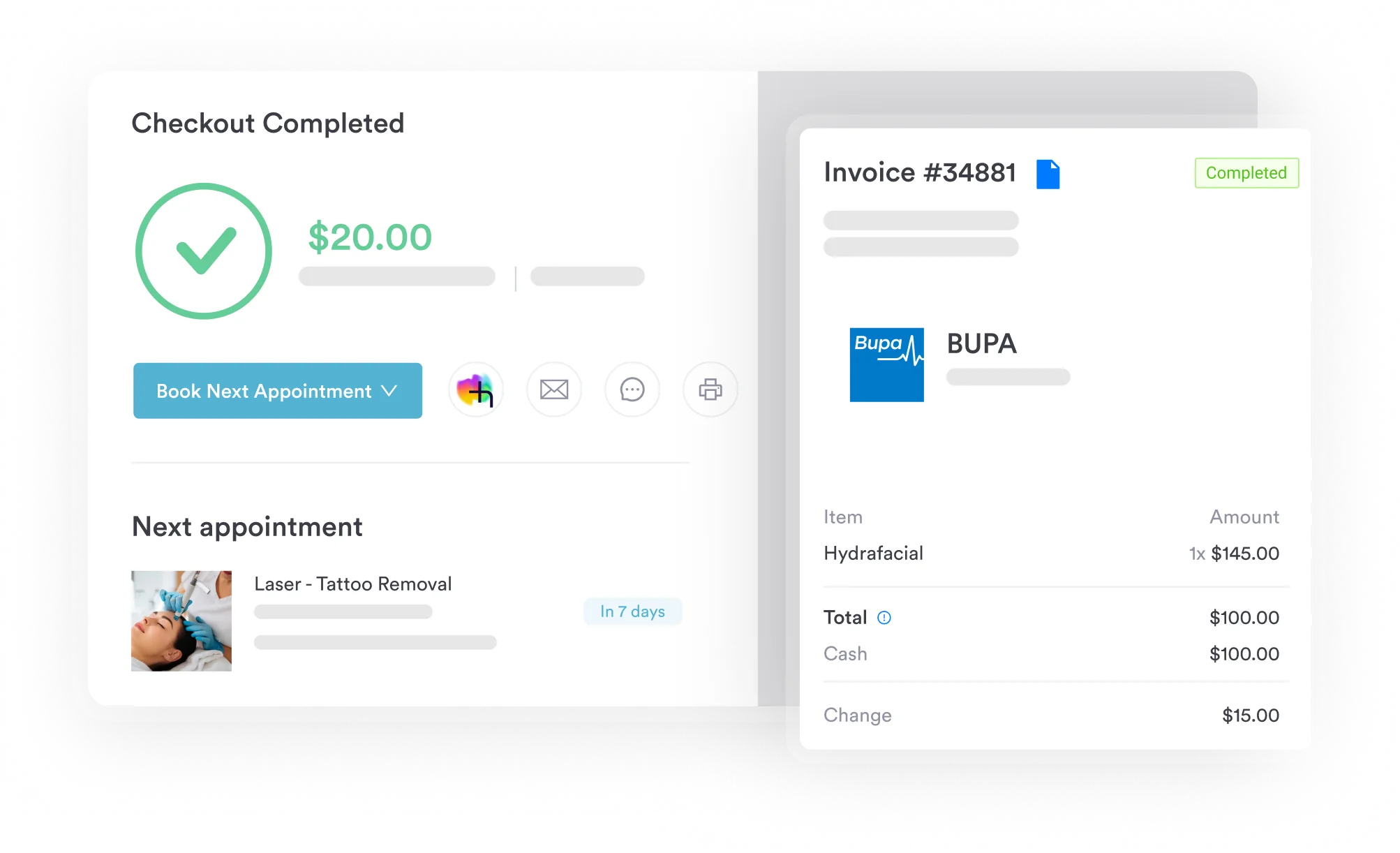

Pabau’s integrated billing tools help labs and practices track CPT code status changes, validate charges before submission, and manage lab billing workflows from a single platform.

Linking the correct ICD-10-CM diagnosis code is a universal requirement for laboratory claims under Medicare and most commercial payers. Medical necessity must be supported by a documented clinical indication, and the diagnosis code is the mechanism through which that necessity is communicated on the claim form. The specific ICD-10-CM codes that supported 0124U when it was active were determined by the test’s clinical application and the coverage policy of the applicable Medicare Administrative Contractor.
PLA codes carry no physician work RVU and aren’t priced through the Medicare Physician Fee Schedule. Instead, they’re priced and covered under the CMS Clinical Laboratory Fee Schedule; billers can check current rates in the CLFS files CMS publishes each quarter. Medicare pays for a molecular pathology or genetic test under the CLFS when the diagnosis code demonstrates clinical necessity, and the applicable ICD-10-CM codes vary by test, defined in Local Coverage Determinations (LCDs) issued by individual MACs. For any corrected claims related to 0124U, billers should:
Coders working on retrospective audits should cross-reference both the ICD-10-CM version in effect for the date of service and the current version to identify any code revision that may affect the claim’s validity. The same date-of-service verification habit applies elsewhere in ICD-10 coding. Pabau’s HIPAA compliance checklist covers the broader documentation requirements that support accurate diagnosis code reporting.
Medicare reimburses PLA codes through the Clinical Laboratory Fee Schedule (CLFS), administered by the Centers for Medicare and Medicaid Services (CMS). CMS sets CLFS payment rates for PLA codes based on the pricing methodology applicable at the time of code creation: either crosswalked from an existing laboratory code rate or gapfilled by CMS if no comparable code exists.
Because CPT code 0124U has been deleted, its CLFS rate is no longer applicable for new claims. However, for claims with dates of service during the period the code was active, the rate in effect at that time governs reimbursement. Providers disputing denied claims for services billed under 0124U during its active period should reference the CLFS rate published by CMS for the applicable calendar year.
National Correct Coding Initiative (NCCI) edits are a separate consideration. NCCI bundling rules for molecular pathology and PLA codes change quarterly alongside the NCCI policy manual updates, so practices should verify the current edit table before submitting PLA codes alongside related procedure codes. Checking for NCCI conflicts is especially important when a crosswalk code replaces a deleted PLA code, because the replacement code may carry different bundling rules than the original. The IVF CPT codes guide illustrates how procedure-specific bundling considerations affect claims in similarly specialized testing contexts.
Commercial and Medicaid payers do not automatically mirror Medicare’s CLFS rates or coverage policies for PLA codes. Coverage decisions for proprietary laboratory tests are made independently by each payer, and a test that Medicare covers may be non-covered or require prior authorization under a commercial plan.
Billing teams managing multi-payer claim workflows for laboratory services should maintain a payer-specific policy matrix that is updated whenever a PLA code changes status. A secure data management approach supports the audit trails that payers require when disputing PLA code claims. For practices also managing clinical workflows alongside billing.
Submitting a corrected claim for a service originally billed under a deleted PLA code takes more supporting documentation than a routine resubmission. Payers need enough detail to adjudicate a claim that no longer matches an active code, so include the following with every corrected or crosswalked submission:
Missing any one of these four items is a common reason payers return a corrected claim for additional information rather than processing it outright, adding weeks to the resubmission timeline.
PLA codes follow a quarterly lifecycle that differs from the annual update cycle governing most CPT codes. The deletion of 0124U follows this same process, from application to discontinuation, that governs every PLA code.
A laboratory or manufacturer submits an application to the AMA CPT Editorial Panel. The application must demonstrate that the test is commercially available, performed by a single named source, and not adequately described by an existing CPT code. The Panel reviews applications on a rolling quarterly basis.
Approved codes enter the CPT code set in the next quarterly release. The AMA deletes codes when the lab discontinues the test, the application lapses, or an existing code now adequately describes the test. The AMA publishes deletion notices and, where applicable, crosswalk designations in the same quarterly update documents. Providers relying on Coaching CPT codes for wellness-adjacent billing should apply the same quarterly verification habit to their PLA code inventory.
Once deleted, the code number is not reused. Labs must update their charge masters to remove the deleted code and substitute the crosswalk or unlisted code. Failure to update internal systems is the most common cause of PLA-related claim rejections in practices that perform or order molecular pathology tests. Synchronizing billing updates with clinical and scheduling workflows.
Static code lookup tools tell you what a code means. They don’t tell you when your billing system still contains a deleted code that will generate a rejection on the next batch submission. Practice management software solves that problem by validating code status automatically, as part of Pabau’s operational approach to code lifecycle management.
Pabau’s integrated claims management tools support labs and multi-specialty practices in three practical ways:
For practices operating across multiple locations or managing a diverse CPT code inventory. EHR integration extends that oversight to clinical documentation, ensuring that orders, notes, and billing codes stay aligned across every patient encounter.
Run a quarterly audit of all CPT PLA codes in your charge master against the AMA’s current active PLA code list. Schedule this for the first week of January, April, July, and October to stay ahead of each quarterly release cycle.
CPT code 0124U is deleted and cannot be submitted on active claims. For any encounter or legacy record where this code appears, the correct action is to identify the AMA crosswalk or use CPT 89240 (unlisted) with supporting documentation. ICD-10 diagnosis code linkage, claim format accuracy, and payer-specific prior authorization checks remain essential for any replacement code submitted in its place.
Managing PLA code status changes manually is a persistent operational risk. Pabau’s claims management and lab billing tools reduce that risk by validating codes at charge entry and surfacing rejection patterns before they affect revenue. Speak with the team about how Pabau can support your specific lab billing setup.

Want to see how another deleted billing code gets crosswalked? HCPCS code A4466 walks through the same replacement-code process for a discontinued elastic garment supply code.
Billing an introducer/sheath device instead? HCPCS code C1894 guide covers billing the non-laser introducer/sheath device and the attribute rules that avoid claim rejection.
Billing anesthesia services for a different specialty? CPT code 01260 covers the anesthesia billing requirements for upper leg procedures, with the same crosswalk and modifier logic that applies across specialty billing.
CPT code 0124U is a Proprietary Laboratory Analyses (PLA) code assigned by the AMA to identify a specific proprietary test performed by a single named laboratory, carrying the “U” suffix that identifies all PLA codes. It has been deleted and is no longer valid for claim submission.
CPT code 0124U has been deleted and is no longer active for billing. Submitting it on a claim generates an automatic rejection.
Check the AMA’s quarterly release documentation for a designated replacement code. If none exists, use CPT 89240 (unlisted miscellaneous pathology test) with a written procedure description and medical necessity documentation.
PLA codes are updated quarterly by the AMA, with changes taking effect in January, April, July, and October. Unlike standard CPT codes, PLA codes can be added or deleted at any quarterly update.
Yes, CPT 89240 is an accepted alternative when no AMA crosswalk exists. Verify the individual payer’s submission requirements before resubmitting.
Medicare covers PLA codes when the service meets the medical necessity criteria in the applicable Local Coverage Determination (LCD). Payment is made under the Clinical Laboratory Fee Schedule (CLFS), and the submitted ICD-10-CM code must match a covered indication.



