ICD-10 Code S42.444P: Medial epicondyle fracture, right humerus
ICD-10 Code S42.444P: full descriptor and code validity ICD-10 Code S42.444P car...

Last Updated: Oct 13, 2026
Billable Code Specific Code
O65.2 is the billable ICD-10-CM code for obstructed labor due to pelvic inlet contraction.
The CDC/NCHS ICD-10-CM web tool confirms O65.2 as a billable, specific diagnosis code for FY2026, maintained jointly by the Centers for Medicare and Medicaid Services (CMS) and the National Center for Health Statistics (NCHS) under HIPAA transaction requirements.
Let Pabau's smart automation suggest the right codes, reduce claim denials, and keep your practice compliant—effortlessly.
Automate repetitive tasks and focus on what matters most—your patients.
Reduce coding errors and ensure compliance with the latest regulations.
Clean claims, fewer denials, and faster reimbursements.
Powerful insights and reporting to help your practice thrive.
HIPAA compliant SOC 2 certified GDPR-compliant Trusted by 4,000+ clinics worldwide

ICD-10 Code O65.2 is a billable ICD-10-CM code for obstructed labor due to pelvic inlet contraction (Obstructed labor due to pelvic inlet contraction), valid for FY2026 HIPAA-covered claims submission.
Pelvic inlet contraction reduces the inlet’s anterior-posterior diameter, preventing fetal engagement. Physician or midwife documentation must specify the type of pelvic abnormality to support this code.
O65.2 applies only during active labor (intrapartum). Antepartum contracted pelvis documented before labor begins is coded under O33.x, not O65.2. Confusing the two is among the most common coding errors in this category.
Practice management software like Pabau helps OB/GYN practices submit accurate obstetric diagnosis codes, flag missing documentation elements, and reduce claim denials related to obstructed labor encounters.
The code is valid for FY2026 claims and has been continuously billable since the ICD-10-CM transition.
The CMS ICD-10 codes page provides the annual FY update files where coders can verify O65.2’s continued billable status each fiscal year .
Practices using HIPAA-compliant workflows for medical offices should confirm code currency at each annual update cycle.
The pelvic inlet is the superior opening of the true pelvis, bounded anteriorly by the pubic symphysis and posteriorly by the sacral promontory.
Pelvic inlet contraction occurs when the obstetric conjugate (the shortest anterior-posterior diameter of the inlet) is reduced below the threshold needed for fetal passage, typically below 10 cm. When the fetal presenting part cannot negotiate a contracted inlet, labor becomes obstructed.
Clinically, this obstruction manifests as failure of fetal descent despite adequate uterine contractions. The condition is a form of mechanical dystocia, distinct from uterine dystocia, where the cause is anatomical rather than functional. When no pelvic contraction is documented and the delay follows full dilation, coders report O63.1 instead.
Accurate documentation of the obstructed labor diagnosis drives the difference between a clean claim and a denial — the same timing-based precision applies elsewhere in Chapter 15. An authorization request approved for one code does not cover a different code billed on the day.
Understanding where O65.2 sits in the ICD-10-CM hierarchy helps coders navigate related codes confidently. The code descends from the ICD-10-CM Chapter 15 maternal pelvic abnormality category, and each level of the hierarchy narrows the clinical specificity.
The WHO’s international ICD-10 classification, from which ICD-10-CM is derived, provides the foundational structure for the O65 category. Coders can browse the WHO ICD-10 browser to understand the international parent codes before applying the U.S.-specific ICD-10-CM tabular rules.
The ICD-10-CM alphabetic index routes several clinical terms and documentation phrases to O65.2. Coders familiar with these synonyms can quickly verify whether a clinical note supports this code or requires a different selection.
When clinical notes use terms such as “pelvic inlet narrowing,” “contracted inlet,” or “mechanical dystocia from inlet,” these phrases route to O65.2 provided the context is intrapartum. Notes documenting the same findings before the onset of labor point to the O33.x antepartum category instead.
Payer audits on O65.2 claims most often flag insufficient specificity in the clinical note. The physician or midwife record must support each of the following elements to justify the code.
Using structured digital clinical documentation forms in the obstetric workflow reduces the risk of missing required fields at the time of the encounter. The same specificity requirement shows up just as often in unrelated categories.
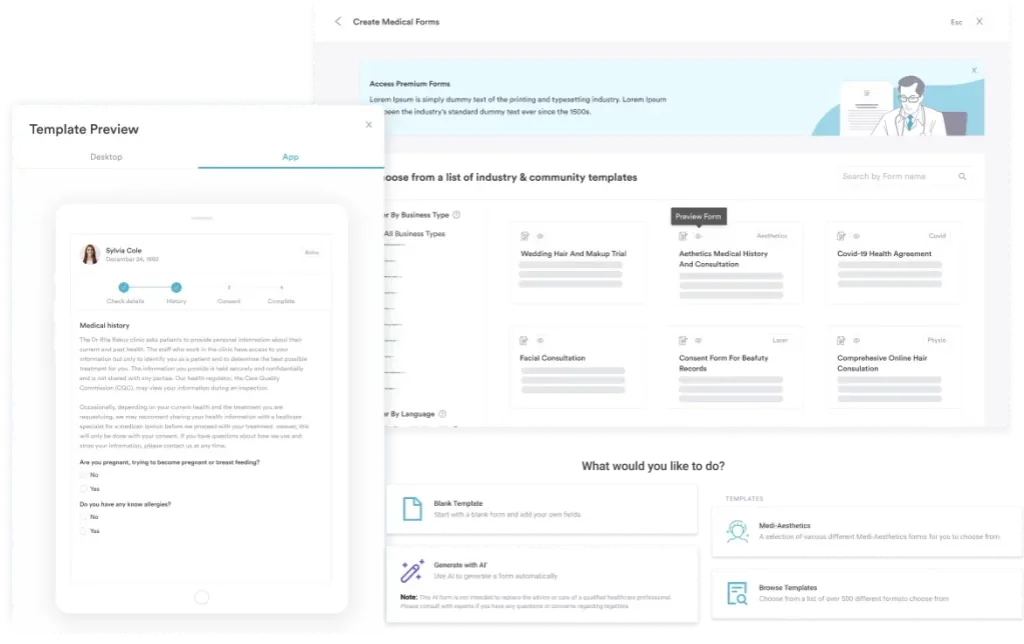
Practices supporting OB/GYN providers can reduce missing documentation elements by building obstetric note templates that prompt clinicians for all required coding elements at the point of care.
OB/GYN practice management software with integrated clinical documentation makes this part of the standard encounter workflow rather than a retrospective coding fix.
Structured clinical documentation workflows are the most reliable way to capture the specificity O65.2 requires before the claim is submitted. Seen end to end, revenue cycle management treats coding, submission and collection as one process rather than three handoffs.
Review every O65.2 claim for a linked Z37.x outcome of delivery code. Submitting O65.2 without a Z37.x code on the maternal record is the single most common sequencing error in this category and one of the fastest routes to a preventable denial.
The full O65 subcategory covers obstructed labor from six types of maternal pelvic abnormality. Coders must select the most specific code matching the documented anatomical cause. The table below shows all O65.x subcodes with their descriptions to support accurate differentiation.
For broader ICD-10-CM code lookups beyond the O65 category, the AAPC Codify ICD-10-CM lookup is widely used commercial tool that mirror the official CMS code set. The same hierarchical structure applies to O71.9 and other obstetric-adjacent codes.

Pabau helps OB/GYN practices capture the clinical detail that supports specific ICD-10 codes like O65.2, reducing denials and streamlining claims submission from the point of care.

The most consequential coding decision around O65.2 is whether the documented condition belongs in the O65 family at all, or whether the O33 antepartum category or O66 other obstructed labor category applies. Getting this wrong affects sequencing, reimbursement, and clinical data accuracy. When a fetal structural anomaly such as hydrocephalus blocks delivery, O66.3 applies.
The antepartum/intrapartum boundary is the most common source of O65.2 errors. When a provider documents a contracted pelvis during antenatal visits and again during labor, the encounter type determines the code.
For practices that need to track encounter-level documentation across the full obstetric episode.
Practices transitioning legacy records or working with older claims data may need to identify the approximate ICD-9-CM predecessor(s) for O65.2. Crosswalks are approximate; a single ICD-9-CM code may map to multiple ICD-10-CM codes, and payers may not accept legacy codes on current claims.
Because ICD-9-CM pelvic obstruction codes did not carry the anatomical specificity that ICD-10-CM requires, both 660.10 and 660.11 crosswalk approximately to O65.4 per the standard GEM tables, not to the inlet-specific O65.2. Coders working with historical data should treat this mapping as a starting point for clinical review, not an automatic substitution.
The reproductive health clinic software used by obstetric-adjacent practices often retains legacy encounter data; linking historical records to current ICD-10-CM codes requires manual review of the underlying clinical note.
ICD-9-CM 660.11 and 660.10 both map approximately to O65.4 per the standard GEM crosswalk, not to O65.2, but that mapping should not be applied automatically. If the original clinical note specified pelvic inlet contraction, outlet contraction, or a generally contracted pelvis, O65.2, O65.3, or O65.1 may be the more accurate ICD-10-CM equivalent. Always verify against the source documentation.
Several recurring error patterns drive avoidable denials on O65.2 claims. These are the distinctions that separate a clean obstetric claim from one that requires rework.
Practices looking to reduce coding errors across obstetric encounters can benefit from building pre-encounter documentation checklists that prompt providers for the specific elements each ICD-10-CM code requires.
The same documentation-first approach applies to the procedure side of the same encounter .
ICD-10 Code O65.2 is a precise, billable code for a specific clinical scenario: obstructed labor caused by pelvic inlet contraction occurring during active labor.
The code’s value depends entirely on documentation that names the inlet, confirms intrapartum timing, and includes the required Z37.x outcome code. Practices that build that documentation specificity into the clinical encounter workflow will see cleaner claims and fewer denial cycles in the O65 category.
Pabau’s OB/GYN practice management platform connects clinical documentation to claims submission, helping obstetric practices capture the coding-relevant details at the point of care .
To see how structured documentation workflows reduce obstetric claim denials, book a demo with the Pabau team.

Want to see how ICD-10-CM specificity plays out in a different chapter? I71.9 covers the same unspecified-vs-specific coding decision for aortic aneurysm diagnoses.
Coding a different unspecified-type diagnosis? H90.2 walks through the documentation needed for conductive hearing loss claims.
Billing a related procedure? 00812 covers the anesthesia billing rules for a screening colonoscopy.
ICD-10 Code O65.2 is a billable ICD-10-CM diagnosis code for obstructed labor due to pelvic inlet contraction. It is assigned when active labor is impeded because the obstetric diameters of the pelvic inlet are reduced, preventing normal fetal descent, and the condition occurs during the intrapartum period.
Yes. O65.2 is a billable, specific ICD-10-CM code valid for FY2026 HIPAA-covered transactions. It does not require a more specific subcode and can be submitted directly on claims when supported by appropriate clinical documentation.
O65.1 covers obstructed labor due to a generally contracted pelvis, meaning all major pelvic diameters are reduced. O65.2 is specific to pelvic inlet contraction, where the superior opening of the true pelvis is narrowed. When the clinical note specifies “inlet contraction,” O65.2 is correct; when it says “generally contracted” without specifying the anatomical location, O65.1 applies.
O65.4 (fetopelvic disproportion, unspecified) is used when the provider documents FPD or cephalopelvic disproportion without specifying which part of the pelvis is involved. O65.2 is the correct selection once the documentation names pelvic inlet contraction as the cause. O65.2 is always more specific than O65.4 when inlet contraction is documented.
Cephalopelvic disproportion (CPD) documented in the antepartum period is coded under O33.x, not O65.x. O65.2 is an intrapartum code that requires active labor to be in progress. If CPD is identified before labor begins, O33.2 (for contracted pelvic inlet) applies. When both conditions are documented across different encounters, each encounter receives the code appropriate to its timing.
The clinical note must specify pelvic inlet contraction (not just a broadly contracted pelvis), confirm the obstruction occurred during active labor, document evidence of failure of fetal descent or the clinical basis for intervention, and include a Z37.x outcome of delivery code as an additional required code on the maternal record.
Yes. ICD-10 Code O65.2 is valid for FY2026 HIPAA-covered claims submission. The code appears on the current CMS ICD-10-CM tabular list without revision and carries no addendum notes indicating a pending update or deletion for FY2026.