ICD-10 code S61.201A: Open wound of left index finger without nail damage
ICD-10 code S61.201A covers a left index finger wound of unstated type ICD-10 co...

Last Updated: Oct 16, 2026
Billable Code Specific Code
O21.8 is the billable ICD-10-CM code for other vomiting complicating pregnancy.
A pregnant patient is vomiting, and the chart already names the cause: gastritis, GERD, a metabolic disorder. The reflex is still to reach for a hyperemesis gravidarum code, and that reflex sends the claim down the wrong path. ICD-10 code O21.8 is the correct choice whenever an underlying disease, not the pregnancy itself, is driving the vomiting.
Let Pabau's smart automation suggest the right codes, reduce claim denials, and keep your practice compliant—effortlessly.
Automate repetitive tasks and focus on what matters most—your patients.
Reduce coding errors and ensure compliance with the latest regulations.
Clean claims, fewer denials, and faster reimbursements.
Powerful insights and reporting to help your practice thrive.
HIPAA compliant SOC 2 certified GDPR-compliant Trusted by 4,000+ clinics worldwide

ICD-10 code O21.8 applies to vomiting caused by another diagnosed disease, not hyperemesis gravidarum.
O21.8 is a billable, HIPAA-valid ICD-10-CM code, effective October 1, 2025 under the FY2026 edition.
Defaulting to O21.9 (unspecified) when the underlying disease is already documented is the most common coding error with this code.
Practice management software like Pabau keeps diagnosis documentation and claims in one place, flagging incomplete submissions before they go out.
ICD-10 code O21.8 is a billable, specific ICD-10-CM diagnosis code.
Its full official descriptor is “Other vomiting complicating pregnancy,” which the CDC/NCHS ICD-10-CM coding tool defines as vomiting due to diseases classified elsewhere, complicating pregnancy. The code is valid for HIPAA-covered transactions and can be submitted for reimbursement purposes.
The FY2026 edition of ICD-10 code O21.8 became effective October 1, 2025, consistent with the standard annual CMS update cycle.
No structural changes were made to the code descriptor or its hierarchy for this edition. Coders verifying code validity against the CMS ICD-10-CM files will find O21.8 listed as active and billable in the FY2026 Tabular List.
The O21 category covers the full spectrum of excessive vomiting in pregnancy. Each subcategory code captures a clinically distinct presentation, and selecting the wrong one is the most common source of obstetric coding denials.
The full O21 subcategory breakdown, as documented in the WHO ICD-10 browser and confirmed in the U.S. ICD-10-CM Tabular List, is as follows.
Hyperemesis gravidarum (HG) is a condition of its own, not a description of any severe vomiting in pregnancy. ICD-10 code O21.8 and the hyperemesis gravidarum codes (O21.0 and O21.1) are mutually exclusive. Applying an HG code when the vomiting has a separately documented cause is a clinical and billing error.
The core differentiator: O21.0 and O21.1 apply when hyperemesis gravidarum is itself the diagnosis. It typically starts before 20 completed weeks and isn’t attributable to another disease. O21.8 applies when the clinician identifies and documents an underlying condition that’s causing the vomiting.
Common examples include gastroparesis, peptic ulcer disease, or a metabolic disorder. The AAPC Codify ICD-10-CM lookup confirms O21.8 falls under “vomiting due to diseases classified elsewhere, complicating pregnancy.”
The includes note attached to ICD-10 code O21.8 sets the coding boundary. It covers vomiting due to a disease classified elsewhere that complicates pregnancy, and nothing broader. The FY2026 tabular list carries no Excludes1 or Excludes2 note specific to O21.8 or the O21 category itself.
Coders sometimes default to a general symptom code instead, and that’s the wrong direction. ICD-10 code R11.2 excludes vomiting of pregnancy. Once pregnancy is confirmed, an O21 code always takes precedence over it.
This “classified elsewhere” pattern isn’t unique to obstetrics either. ICD-10 code L45 applies the identical rule in dermatology: code the underlying disease first, then the manifestation code.
EHR search logic and clinical documentation often use terminology that differs from the official ICD-10-CM descriptor. The following terms map directly to ICD-10 code O21.8 in the ICD-10-CM Alphabetic Index and are recognized as clinically equivalent for code selection purposes.
Accurate medical form documentation should use terms that let the EHR or coding team locate this code without ambiguity.
A missing link between the vomiting and the underlying disease is the single most common reason O21.8 claims are denied on audit. The documentation must close four distinct requirements before the code is supportable.
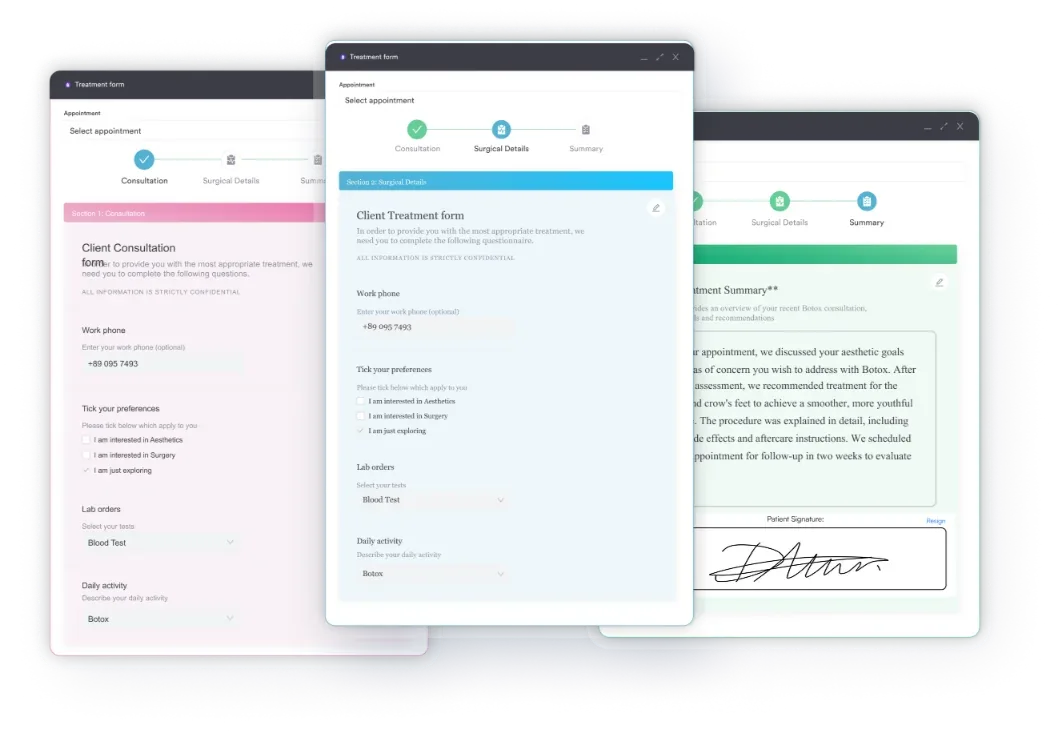
Using digital intake forms with structured prompts at the point of care helps capture these requirements without relying on retrospective chart review.
Payer requirements vary by plan and carrier. Documenting these four elements does not guarantee reimbursement, but it supports the code selection if the claim is reviewed.
Practices managing high volumes of obstetric claims benefit from structured documentation workflows that surface these prompts at the time of diagnosis selection. Practice management software like Pabau builds this structure into its claims management tools.
Those tools check that required fields are complete before a claim can be sent, and they show its status until it’s paid. Maintaining HIPAA-compliant documentation practices throughout this process protects the practice in the event of a payer audit.
Audit a sample of O21.8 claims monthly. Check that each one has: (1) the underlying disease coded separately, (2) the causal link stated explicitly in the note, and (3) gestational age documented. Claims missing any of these three elements are the most likely to be denied or flagged in a retrospective audit.
Coding teams that handle obstetric billing regularly see the same four errors surface with ICD-10 code O21.8. Each one is preventable with a structured review step before claim submission.
Documentation-driven specificity isn’t unique to obstetric codes. Trauma codes such as ICD-10 code S22.42XG and ICD-10 code S31.607S apply the same logic. The code only tells the full story once laterality, episode of care, or timing is documented.
Practices transitioning legacy data, running historical claim comparisons, or working with older systems occasionally need to map between ICD-9-CM and ICD-10-CM. The General Equivalence Mappings (GEMs) published by CMS provide the official crosswalk below. The mapping is approximate, not exact, since code specificity differs between the two systems. Coding names the service; medical billing gets it submitted, adjudicated and paid. The 1500 claim form and its electronic equivalent ask for the same data in a different layout.
The ICD-9-CM 5th digit distinguished episodes by trimester (0 = unspecified, 1 = delivered, 3 = antepartum). ICD-10-CM O21.8 absorbs this specificity through the Chapter 15 trimester documentation requirement rather than through code digits. That makes clinical documentation even more critical under the current system.
Standalone coding reference tools answer the “what does this code mean?” question. They don’t solve the workflow problem itself.
That problem shows up across OB/GYN groups. A clinician selects a diagnosis in one system, a coder verifies it in another, and a biller enters it into a third. Each handoff is a chance for a transcription error, a missing secondary code, or trimester data that never reaches the claim.
Pabau is practice management software built first for medical aesthetics. It has since broadened into OB/GYN practices and other specialties that bill obstetric codes like O21.8.
A clinician’s diagnosis sits in the same record as the trimester and gestational age data behind it. That means the coder and biller work from one file, not a chart chased across systems.
Pabau’s claims management tools check that required submission fields are complete before a claim goes out. That cuts down the re-entry errors that most often cause ICD-10 code O21.8 denials. Built-in data security practices protect that record throughout the process.
Build a structured obstetric coding checklist into your EHR note template: (1) gestational age or trimester, (2) underlying disease name and its ICD-10-CM code, (3) explicit statement linking the disease to the vomiting. Running this checklist at every O21.8 encounter eliminates the three most common denial reasons before the claim leaves the practice.

Pabau keeps diagnosis documentation and claims in one workflow, flagging incomplete submissions before they go out. See how OB/GYN practices use Pabau to manage clinical records and billing together.

The difference between O21.8 and the rest of the O21 subcategory comes down to one question: is there a documented underlying disease driving the vomiting? When the answer is yes, O21.8 is the correct code. Pair it with the underlying disease code, and support both with documentation of the causal link and gestational age.
Pabau’s clinical record and claims workflow helps OB/GYN practices capture these documentation requirements at the point of care, not after a denial. Book a demo to see how it works for obstetric billing.

Coding a patient’s history of pregnancy loss? ICD-10 code N96 covers recurrent pregnancy loss and its own documentation rules.
Need a code for a late complication of a past pregnancy? ICD-10 code O94 explains how sequelae of pregnancy complications get billed.
Handling an obstetric injury from delivery? ICD-10 code O71.9 walks through unspecified obstetric trauma and when a more specific code applies.
Yes. ICD-10-CM guidelines call for an additional code from category Z3A to show the weeks of gestation. This applies whenever an O-chapter code like O21.8 is the principal diagnosis. Z3A is assigned only on the maternal record, and only when the weeks are documented.
No. Unlike some obstetric codes, O21.8 stays the same code in every trimester. ICD-10-CM guidelines still require the note to document gestational age or trimester, but that detail lives in the documentation, not in a separate code.
No. O21.8 sits in the O21 category, grouped with the other antepartum vomiting-of-pregnancy codes, so it applies during pregnancy. Vomiting that starts after delivery needs a code that reflects the postpartum period or its actual cause.
Code to the highest level of certainty documented at that visit. If the cause isn’t confirmed yet, use O21.9 (unspecified) rather than guessing at O21.8. Correct the code once the underlying disease is diagnosed and documented.