

ICD-10 Code S42.444P: Medial epicondyle fracture, right humerus
ICD-10 Code S42.444P: full descriptor and code validity ICD-10 Code S42.444P car...

Last Updated: Oct 13, 2026
Billable Code Specific Code
N96 is the billable ICD-10-CM code for recurrent pregnancy loss.
It's also one of the more documentation-sensitive codes in the ICD-10-CM genitourinary chapter. Coders and reproductive medicine clinicians frequently hit claim denials not because the diagnosis is wrong, but because the supporting record doesn't establish "recurrent" in terms payers recognize.
Understanding exactly what the code covers, when to use it versus the O-chapter pregnancy codes, and how to pair it with CPT procedure codes prevents most of those denials before the claim leaves the practice.
Let Pabau's smart automation suggest the right codes, reduce claim denials, and keep your practice compliant—effortlessly.
Automate repetitive tasks and focus on what matters most—your patients.
Reduce coding errors and ensure compliance with the latest regulations.
Clean claims, fewer denials, and faster reimbursements.
Powerful insights and reporting to help your practice thrive.
HIPAA compliant SOC 2 certified GDPR-compliant Trusted by 4,000+ clinics worldwide

ICD-10 Code N96 is the billable ICD-10-CM diagnosis code for recurrent pregnancy loss (RPL), applicable to female patients only and valid for FY2026 (effective October 1, 2025).
N96 applies to non-pregnant patients with a history of two or more pregnancy losses before 22 weeks gestation; use O26.2- codes instead when the patient is currently pregnant.
Documentation must clearly establish the recurrent nature of the losses; payers commonly scrutinize claims lacking a documented workup or ASRM-aligned diagnostic rationale.
Pabau’s claims management software and digital clinical forms help reproductive medicine and OB/GYN practices code N96 accurately and submit cleaner claims the first time.
ICD-10 Code N96 is a billable, specific diagnosis code. Clinicians do not need to select a more detailed sub-code to submit a valid claim. The code applies exclusively to female patients, and payer edits will reject claims submitted against a male patient demographic. Verify that your practice management system enforces this sex-edit check before submission.
N96 sits within a specific chapter and block in the ICD-10-CM hierarchy. Knowing where the code lives helps coders cross-check adjacent codes and understand the excludes notes that govern when N96 does and does not apply. Clinics using OB/GYN EMR software with built-in code hierarchies can surface this context automatically during documentation.
Chapter 14 covers genitourinary system diseases. Within that chapter, the N80-N98 block groups noninflammatory disorders of the female genital tract, distinguishing them from inflammatory and infectious conditions coded elsewhere.
N96 is the only code in the N96- category: there are no sub-codes, so the three-character code is itself the billable unit. The CMS ICD-10-CM codes page publishes the full FY2026 tabular list and update files for reference.
Recurrent pregnancy loss (RPL) is defined by the American Society for Reproductive Medicine (ASRM) as two or more failed pregnancies before 22 weeks gestation. This is an important distinction from older clinical definitions that required three consecutive losses. Many payers and clinicians still encounter documentation using the older threshold, so the record should explicitly state the number of confirmed losses. Front-desk data entry and back-office coding both feed cash collection, so errors compound downstream.
Documenting the underlying etiology alongside N96 strengthens medical necessity and supports the CPT codes billed for workup. ASRM-recognized contributing factors include:
When a specific cause is identified, code the underlying condition in addition to N96 to capture the full clinical picture and support any procedure codes billed for that condition. For suspected endocrine causes.
Clinics treating urological conditions often run on men’s health clinic software designed for discreet, recurring care.
The ICD-10-CM tabular list includes “habitual aborter” as a synonym under N96. This is a legacy clinical term that coders may encounter in older records or imported documentation. It maps directly to N96 and requires no separate code.
The term is clinically outdated and not recommended for current patient-facing documentation, but it remains a valid index entry for lookup purposes. The CDC/NCHS ICD-10-CM web tool lists all approved synonyms and index references for N96.
Other commonly used phrasings that index to N96:
When clinical notes use any of these terms and the patient is not currently pregnant, N96 is the correct code.
Several coding rules govern when N96 is appropriate and when an alternative code set should be used instead. Getting these right prevents the most common claim denials associated with recurrent pregnancy loss billing.
N96 is NOT used when the patient is currently pregnant. During an active pregnancy, use the O26.2- code category (Habitual aborter in current pregnancy) instead. This is one of the most frequent coding errors in reproductive medicine practices. The O-chapter codes carry trimester specificity:
Switch back to N96 for visits when the patient is not pregnant and is presenting for evaluation, counseling, or workup. Tracking this distinction in the patient record is straightforward when the practice uses a system with episode-aware documentation.
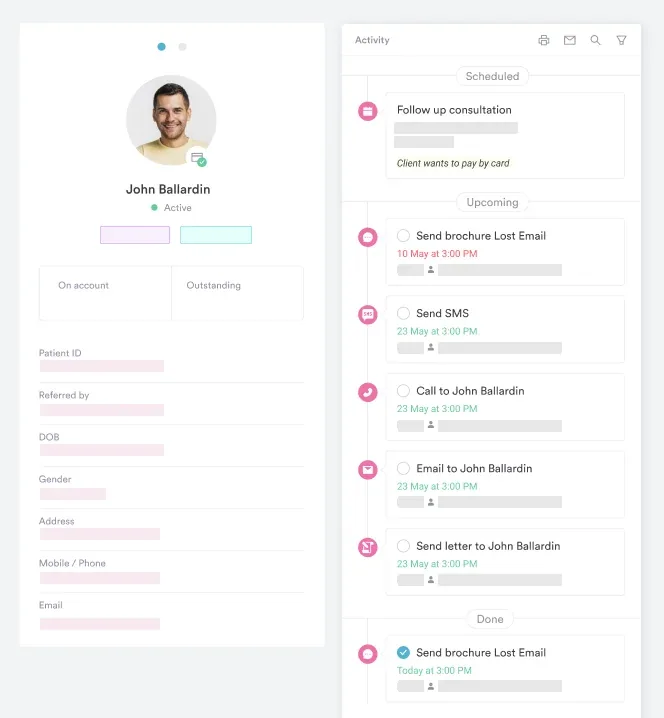
Pabau’s patient records allow clinicians to flag pregnancy status at the encounter level, reducing the risk of applying the wrong code family.
N96 is flagged in the ICD-10-CM tabular as applicable to female patients only. Any claim submitted with N96 against a male patient demographic will be rejected at the claim-edit level. Confirm your billing workflow includes a sex-edit validation step before claims reach the clearinghouse.
Payers auditing N96 claims typically look for:
For a broader discussion of ICD-10 documentation standards that hold up to payer scrutiny.
Practices tracking ovulation timing between losses sometimes use a BBT ovulation chart to correlate cycle patterns with workup results.
Run a quarterly audit of N96 claims to verify that O26.2- was used for all encounters where the patient was confirmed pregnant. A simple filter in your practice management system by diagnosis code and patient pregnancy status flag catches the most common denial trigger before it compounds.
N96 does not exist in isolation. Coders working in reproductive medicine encounter a cluster of adjacent codes regularly, and selecting the right one depends on whether the patient is currently pregnant, whether the visit is documenting history, and whether a complication is being coded. The table below maps the most important cross-references.
For history documentation specifically, Z87.59 is appropriate when the patient’s prior losses are clinically relevant to an ongoing encounter but RPL is no longer the primary reason for the visit. This code is frequently used in obstetric care once the patient achieves a viable ongoing pregnancy.
Using related diagnostic codes accurately is part of broader HIPAA-compliant documentation practices that protect both the patient record and the practice.
An RPL workup involves multiple service types billed with distinct CPT codes. The ASRM coding resources for recurrent pregnancy loss provide specialty-specific guidance on pairing these codes with N96. The table below summarizes the most commonly co-billed codes.
Note that the E&M code selected should reflect the complexity documented in the note. RPL initial workup visits typically support 99204 or 99205 (new) or 99214-99215 (established) given the decision-making complexity involved.
Using claims management software that checks medical necessity pairing between the ICD-10 diagnosis and the CPT procedure codes reduces the risk of mismatched coding denials.
Coverage for RPL evaluation varies widely by payer. N96 itself is a valid Medicare and Medicaid diagnosis code, but coverage of the workup procedures depends heavily on whether the payer recognizes RPL evaluation as a covered benefit distinct from infertility services.
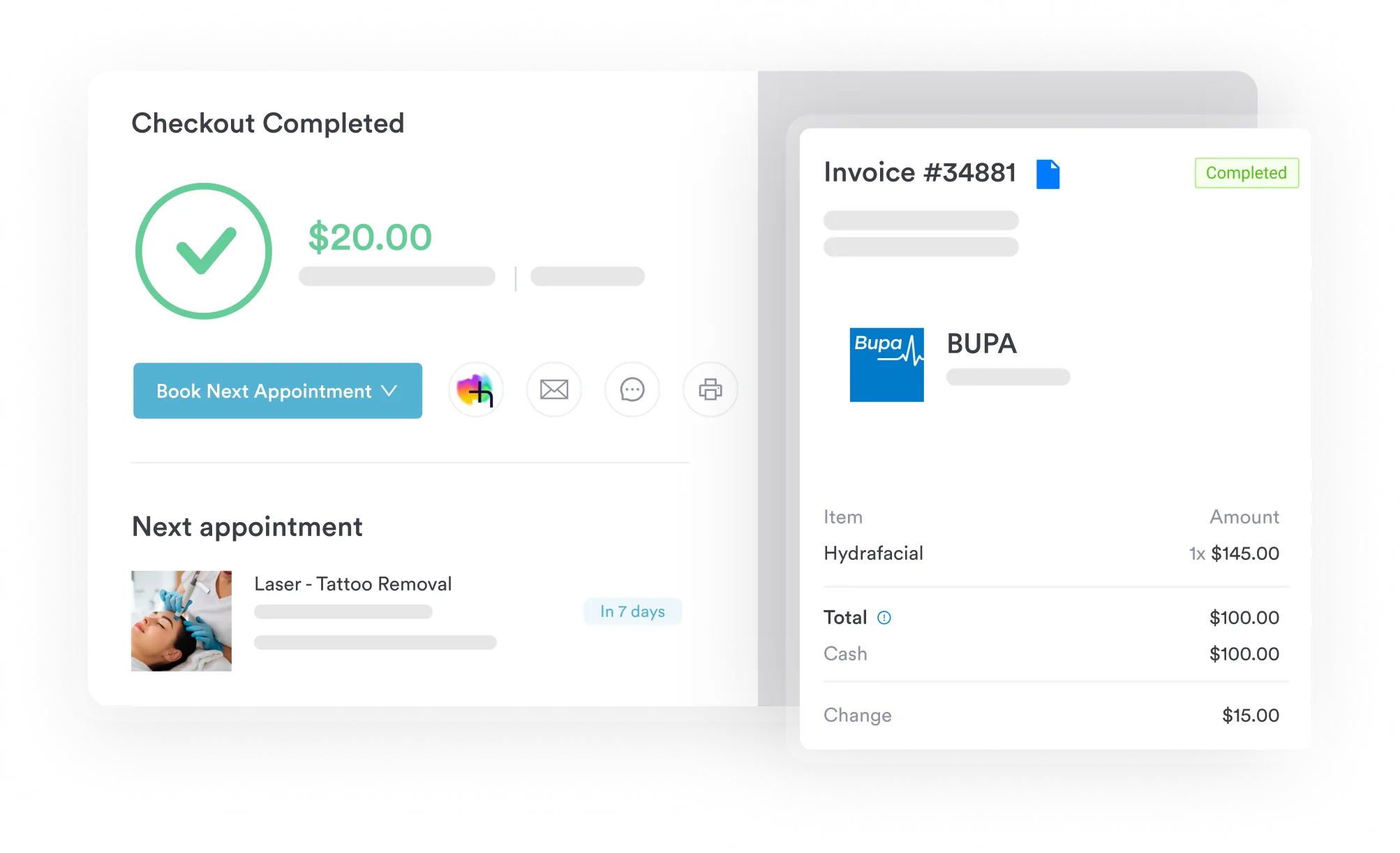
Claims for RPL workup are typically submitted on a CMS-1500 form, pairing the N96 diagnosis with the CPT codes billed for that visit.
This distinction matters: many commercial payers carve out infertility-related services and require separate prior authorization, but RPL workup may qualify under different medical necessity criteria.
Good compliance management within the practice includes a documented protocol for N96 prior auth checks and a process for tracking payer-specific coverage rules for RPL workup codes. The AAPC Codify ICD-10-CM reference includes payer guidelines notes for N96 that are updated regularly.

Pabau connects ICD-10 diagnosis codes directly to patient records and claim workflows so your team captures the right code at the right encounter, every time.

Most N96 denials are preventable documentation problems, not clinical errors. Practices that manage RPL cases at volume need workflows that enforce coding rules consistently across providers and coders.
Practice management software built for reproductive medicine and OB/GYN addresses this in three main areas.
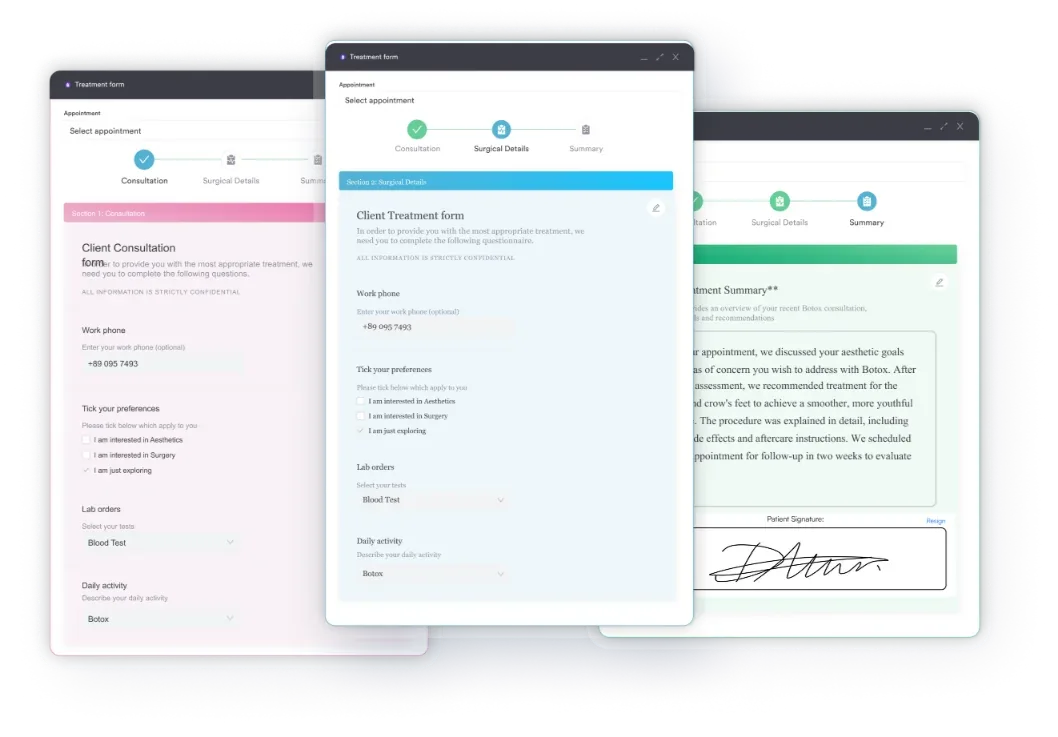
Digital intake forms that capture prior pregnancy history (number of losses, gestational ages, confirmed causes) give the coder the exact data needed to justify N96 at audit.
Pabau’s digital intake forms are configurable for reproductive medicine workflows, allowing practices to build RPL-specific intake fields that feed directly into the clinical note and the claim.
Note quality is one of the most consistent weaknesses in RPL claims. Clinicians document the diagnosis but omit the number of prior losses, gestational ages, or the clinical reasoning that supports medical necessity.
Better notes mean fewer addendum requests and faster claims adjudication.
Pairing N96 with the right CPT codes is straightforward in a low-volume practice but breaks down under high patient load. Automated claim validation that checks ICD-10 and CPT pairing before submission catches mismatches that manual review misses. Combined with claims management software that tracks denial patterns by code, practices build a feedback loop that continuously improves coding accuracy.
Set up a documentation template specifically for RPL initial workup visits that prompts the clinician to record: number of prior losses, gestational age at each loss, current pregnancy status, and any confirmed etiologies. Templates take five minutes to build and eliminate the most common audit vulnerabilities for N96 claims.
N96 is a straightforward billable code with a small set of documentation rules that most RPL claim denials trace back to: using N96 when O26.2- should apply during active pregnancy, missing the confirmed-recurrent threshold in the record, and failing to pair it correctly with workup CPT codes.
Practices that get N96 right consistently use structured documentation workflows rather than relying on provider recall. Pabau’s configurable digital forms, AI-assisted note capture via Pabau Scribe, our AI scribe, and integrated claims management give reproductive medicine and OB/GYN teams the infrastructure to code N96 cleanly on first submission.
To see how Pabau handles reproductive medicine documentation workflows end to end, book a demo.

Need the CPT codes for an IVF cycle instead of a loss workup? IVF CPT codes covers the codes billed for ovarian stimulation monitoring, retrieval, and embryo transfer.
Coding a skin graft complication? T86.828 skin graft code covers a named skin graft complication that is not rejection, failure, or infection, for allografts and autografts.
ICD-10 Code N96 is the billable ICD-10-CM diagnosis code for recurrent pregnancy loss (RPL), applicable to female patients only. It falls under Chapter 14 (Diseases of the genitourinary system), block N80-N98 (Noninflammatory disorders of female genital tract), and is valid for FY2026 with an effective date of October 1, 2025.
Yes. N96 is a billable, specific ICD-10-CM code, meaning no additional sub-code is needed to submit a valid claim. It is valid for HIPAA-covered electronic transactions in FY2026.
Per ASRM’s updated committee opinion, two or more pregnancy losses before 22 weeks gestation meet the diagnostic threshold for recurrent pregnancy loss coded as N96. Older clinical definitions required three losses. When documenting, state the number explicitly in the record since some payers still reference earlier criteria.
N96 applies to patients who are NOT currently pregnant. For a patient with recurrent pregnancy loss who is currently pregnant, use the O26.2- code category (Habitual aborter in current pregnancy), selecting the appropriate trimester-specific sub-code. Revert to N96 for visits where the patient is not actively pregnant.
Z87.59 (Personal history of other complications of pregnancy, childbirth and the puerperium) is used to document the history of recurrent pregnancy loss when it is clinically relevant to an encounter but RPL is no longer the active clinical concern, such as during a subsequent viable pregnancy.
Z87.59 is the primary history code paired with N96 when history of RPL is relevant to the encounter. When obstetric history is documented for preventive counseling or care planning, Z-code selection should reflect the specific historical complication documented in the patient’s record.




