ICD-10 Code S42.444P: Medial epicondyle fracture, right humerus
ICD-10 Code S42.444P: full descriptor and code validity ICD-10 Code S42.444P car...

Last Updated: Oct 13, 2026
Billable Code Specific Code
O94 is the billable ICD-10-CM code for sequelae of complication of pregnancy, childbirth, and the puerperium.
According to the Centers for Medicare and Medicaid Services (CMS), sequelae coding in ICD-10-CM follows timing rules that differ from active complication coding. Coders most often misapply O94 by using it at the original encounter instead of the later follow-up visit where the residual condition is actually being treated.
Let Pabau's smart automation suggest the right codes, reduce claim denials, and keep your practice compliant—effortlessly.
Automate repetitive tasks and focus on what matters most—your patients.
Reduce coding errors and ensure compliance with the latest regulations.
Clean claims, fewer denials, and faster reimbursements.
Powerful insights and reporting to help your practice thrive.
HIPAA compliant SOC 2 certified GDPR-compliant Trusted by 4,000+ clinics worldwide

ICD-10 Code O94 is a billable ICD-10-CM diagnosis code for sequelae of complication of pregnancy, childbirth, and the puerperium
O94 applies to late effects of prior obstetric complications, not to active or ongoing conditions during the pregnancy encounter
Coders often misapply O94 by using it during the original pregnancy admission instead of a subsequent follow-up encounter
Pabau’s claims management software and digital documentation tools help OB/GYN teams code sequelae accurately and reduce claim errors
ICD-10 Code O94 is a billable, specific ICD-10-CM diagnosis code. Its full official description is: Sequelae of complication of pregnancy, childbirth and the puerperium. It is valid for claim submission during fiscal year 2026 (October 1, 2025 through September 30, 2026), per the CDC/NCHS ICD-10-CM web tool.
O94 sits within the broader subcategory O94-O9A, “Other obstetric conditions, not elsewhere classified,” which itself falls under Chapter 15 (Pregnancy, Childbirth and the Puerperium, O00-O9A) of ICD-10-CM. It is the only code directly within its subcategory; there are no child codes beneath O94.
In ICD-10-CM, “sequelae” refers to the late effects or residual conditions that remain after the acute phase of an illness or complication has resolved. For obstetric coding, O94 captures those residual effects that persist after a complication of pregnancy, childbirth, or the puerperium (the postpartum period, typically the first six weeks after delivery).
This timing principle extends to other late-effect codes in obstetrics.
The original obstetric complication no longer needs to be present or active for O94 to apply. What must be present is a current, documentable condition that is the direct consequence of that prior complication.
ICD-10-CM Chapter 15 coding guidelines govern when O94 applies. The key principle: O94 is used when the patient is no longer pregnant and is being seen for a condition that is the direct late effect of a complication that occurred during pregnancy, childbirth, or the puerperium.
Supporting documentation is the foundation of a defensible O94 claim. The medical record must contain all three of the following elements to support the code:
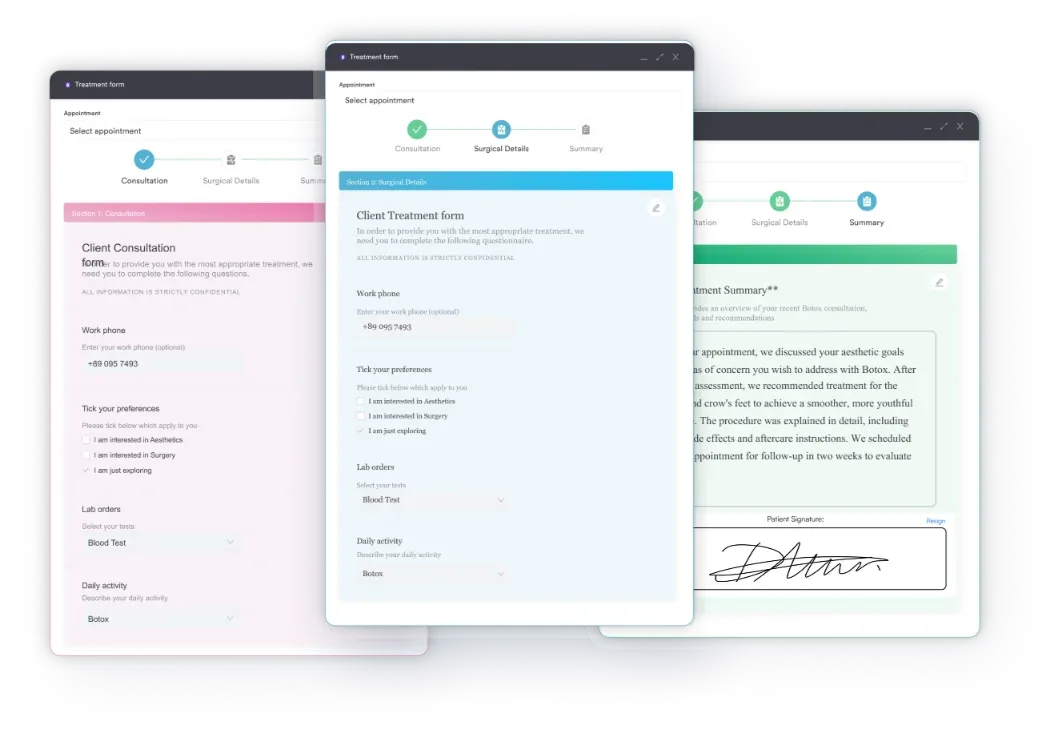
Using digital intake forms that capture prior obstetric history systematically makes it significantly easier to satisfy this documentation standard at follow-up encounters. The link between the original event and the residual condition should appear in the assessment and plan section of the note, not only in the patient history.
Always code the specific residual condition alongside O94. A claim submitted with O94 as the sole diagnosis often lacks the clinical specificity payers need to process reimbursement. The correct approach: O94 identifies the causal context (obstetric sequelae); a second code describes the actual condition being treated.
Many pregnancies coded here began in fertility care, managed in fertility clinic software from first consult to referral.
O94 does not carry Excludes1 or Excludes2 notes within its own code entry in the ICD-10-CM tabular list. However, the broader Chapter 15 (O00-O9A) carries overarching exclusion guidance that applies to all codes within it, including O94.
Chapter 15 (O00-O9A) carries its own Excludes1 and Excludes2 notes that apply to every code in the chapter, including O94. The Excludes1 note excludes supervision of normal pregnancy (Z34.-) from the chapter, since a normal pregnancy without complications is coded outside Chapter 15 entirely.
The Excludes2 note lists conditions that may be coded alongside a Chapter 15 code when both are documented: mental and behavioral disorders associated with the puerperium (F53.-), obstetrical tetanus (A34), postpartum necrosis of the pituitary gland (E23.0), and puerperal osteomalacia (M83.0).
Perinatal codes from Chapter 16 (P00-P96) sit outside this chapter scope entirely. They’re used only on the newborn’s own record, never the maternal chart, so they don’t appear as a tabular Excludes note on O94. Supervision of high-risk pregnancy (O09) isn’t excluded from Chapter 15 either — it’s a Chapter 15 code in its own right, alongside O94.
O94 opens the O94-O9A subcategory, which groups obstetric conditions that don’t fit cleanly within the more specific complication categories earlier in Chapter 15. Understanding where O94 sits within this range clarifies when it applies versus when a more specific sibling code is appropriate.
Practices offering pelvic health clinic software and postpartum care services often encounter the full breadth of this range, from malignant neoplasm complications (O9A.1) through documented abuse codes (O9A.3-O9A.5).
O94 sits at the tail end of Chapter 15, which spans O00 through O9A. Coders reviewing obstetric sequelae regularly cross-reference codes from across this chapter. The AAPC ICD-10-CM code lookup provides a searchable index for the full O-code range, including parent-to-child hierarchy.
Puerperium complications earlier in the chapter often precede an eventual O94 claim once they resolve with lasting effects. O89.2 and O92.3 are two examples coders reference when tracking whether an active puerperium complication is closing out or turning into a sequela.
When coding an encounter for the sequelae of a specific obstetric complication, such as residual pelvic floor dysfunction following a perineal laceration during delivery, icd10data.com provides efficient cross-referencing between O94 and the specific condition codes from earlier in Chapter 15.

Pabau helps OB/GYN and women’s health practices manage clinical records, digital forms, and claims workflows. Accurate coding starts with complete documentation.

ICD-10-CM index references and EHR auto-suggest tools may surface O94 under several alternate terms. Coders and clinicians should recognize these synonyms as mapping to the same code.
Most O94 claim rejections trace back to one of four patterns. These are the errors auditors look for first when reviewing obstetric sequelae claims. Auditors flag these patterns fastest when coders keep a coding cheat sheet on hand for a quick code lookup.
Accurate obstetric sequelae coding depends on complete documentation at every encounter. Practices using OB/GYN EMR software purpose-built for women’s health workflows can structure their intake, clinical notes, and follow-up records to capture the three documentation elements O94 requires: prior complication history, current residual condition, and the causal link between them.
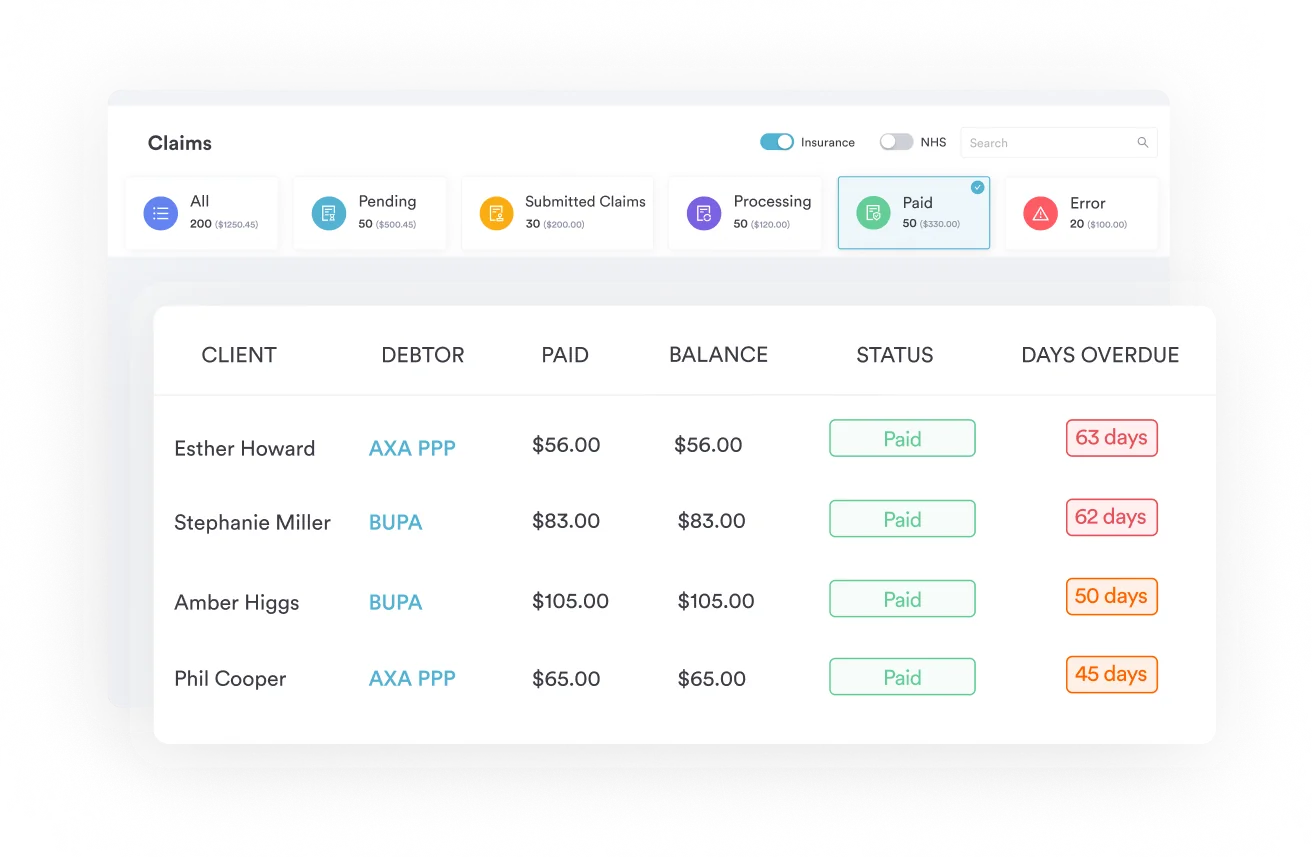
Pabau’s claims management software flags missing or incomplete diagnosis coding before submission, reducing the likelihood that a sequelae claim ships without the required supporting diagnosis. The platform’s electronic patient records maintain a longitudinal obstetric history, so follow-up providers can see the original complication documentation without reconstructing the timeline from scratch. Payment for this code arrives with a remittance advice that explains any adjustment line by line.
For practices that see postpartum patients across multiple providers or locations. Coders benefit from having all three O94 documentation requirements in one record rather than across disconnected notes.
Set up a structured postpartum follow-up template in your clinical documentation system that includes a mandatory field linking the current encounter’s clinical findings to any documented obstetric complication from the pregnancy record. This single step reduces O94 documentation rejections significantly.
ICD-10 Code O94 is a precise, single-code subcategory reserved for one specific clinical scenario: a patient seen after a prior obstetric complication has resolved, presenting with a documentable residual condition that resulted from it. Its correct application depends on encounter timing, paired coding, and documented causal links.
Pabau’s structured clinical documentation and claims management tools help OB/GYN and women’s health practices build that evidence trail consistently. If your practice is managing postpartum follow-up workflows, request a demo to see the claims workflow in action.

Coding a newborn’s complication after a difficult delivery? P51.9 covers umbilical hemorrhage of the newborn, coded on the infant’s own record rather than the mother’s.
Billing a genetic amplification test? CCSD code 0021G for Mdm2 testing explains the billing code for the Mdm2 gene amplification test used across UK private pathology labs.
Want another example of a puerperium code that can precede a sequela? O87.2 shows how an active puerperium complication is coded before it potentially becomes a documented sequela.
ICD-10 Code O94 is a billable ICD-10-CM diagnosis code that describes sequelae (late effects or residual conditions) of a complication that occurred during pregnancy, childbirth, or the puerperium. It is used at a follow-up encounter after the original obstetric complication has resolved, when the patient presents with a condition that is the direct result of that prior complication.
Yes, O94 is a billable and specific ICD-10-CM code, valid for claim submission during FY2026 (October 1, 2025 through September 30, 2026). It can be used as a principal or additional diagnosis code, but it must always be accompanied by a code for the specific residual condition being treated.
Use O94 at a subsequent encounter (after the original pregnancy or puerperium episode) when the patient is being treated for a condition that is a direct late effect of a prior obstetric complication. Do not use it during the same admission as the original complication, and always pair it with a code identifying the specific residual condition.
Yes, O94 may be sequenced as the principal diagnosis when the reason for the encounter is the residual obstetric sequelae. However, because O94 does not describe the specific condition being treated, a second code for the actual residual condition is required alongside it for the claim to be clinically complete and payable.
Other obstetric complication codes (earlier in Chapter 15, such as O10-O92) are used during the active pregnancy, delivery, or puerperium encounter when the complication is ongoing. O94 is used only after those episodes are closed, to capture the lasting effects of a prior complication at a later encounter. The distinction is entirely about timing and resolution status.
Three elements are required: documentation of the original obstetric complication (from the pregnancy, delivery, or postpartum record), documentation of the current residual condition being treated, and a clinician’s explicit statement linking the two causally. A history entry alone is insufficient; the causal link must appear in the assessment or clinical impression of the current note.
The O94-O9A subcategory covers other obstetric conditions not elsewhere classified in Chapter 15. O94 (sequelae) is the only billable code in the O94 subcategory itself. The O9A codes cover malignant neoplasms complicating pregnancy (O9A.1), injury and poisoning (O9A.2), physical abuse (O9A.3), sexual abuse (O9A.4), and psychological abuse (O9A.5) complicating pregnancy, childbirth, and the puerperium.